


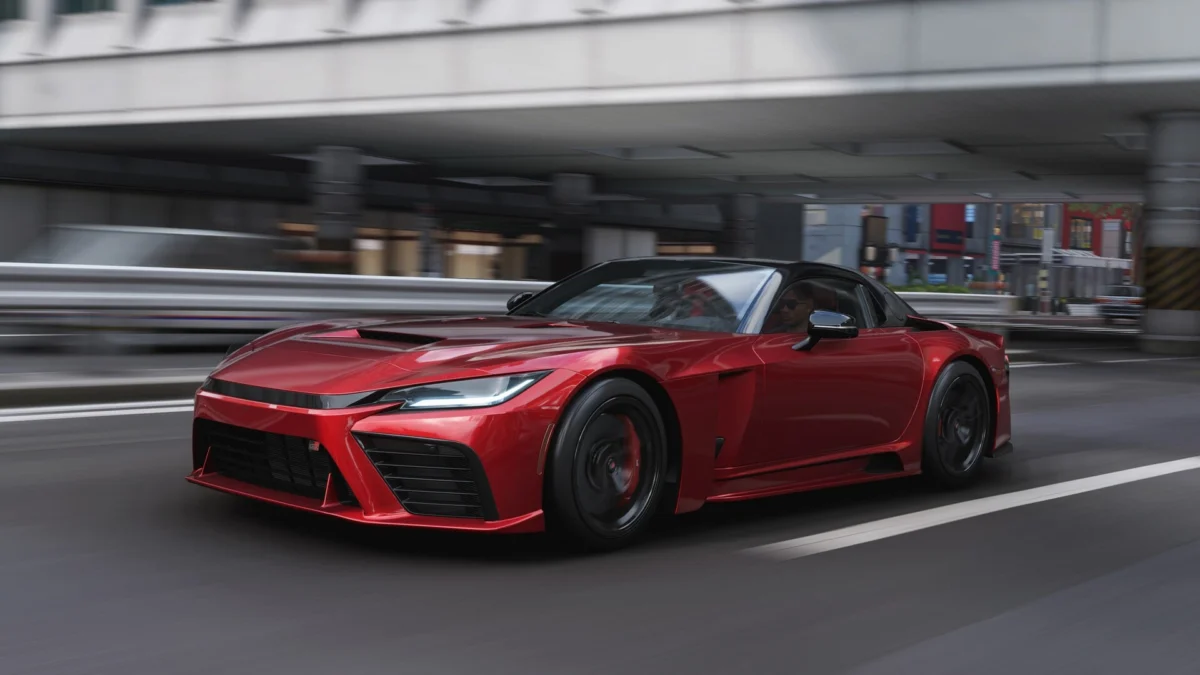
The collaborative landscape of Xbox Game Studios has undergone a significant strategic shift as Turn 10 Studios, the primary developer behind the Forza Motorsport series, has moved a substantial portion of its resources to assist Playground Games in the final stages of development for Forza Horizon 6. Recent technical previews and industry reports, including a detailed look provided by IGN, indicate that this partnership is focused on elevating the visual fidelity and mechanical depth of the upcoming open-world racer, which is slated for a 2026 release. This internal reallocation of talent follows a decision by Microsoft leadership to scale back major content updates for the 2023 reboot of Forza Motorsport, prioritizing the polish and technical innovation of the Horizon franchise’s next installment.
The partnership between the UK-based Playground Games and the Washington-based Turn 10 Studios is not a new phenomenon, as the two entities have shared engine technology and assets since the inception of the Horizon spin-off in 2012. However, the scale of cooperation on Forza Horizon 6 is reportedly unprecedented. According to members of the Playground Games development team, the current project has benefited from the largest vehicle art team in the studio’s history, bolstered significantly by the technical expertise of Turn 10’s staff. This surge in manpower is specifically targeted at refining vehicle models, enhancing customization systems, and implementing advanced physics simulations that were previously exclusive to the more simulation-oriented Motorsport entries.
A Strategic Realignment within Xbox Game Studios
The decision to transition Turn 10 Studios into a supporting role for Forza Horizon 6 reflects a broader trend within the Microsoft gaming ecosystem to maximize the impact of its flagship intellectual properties. While Forza Motorsport (2023) was designed as a "live service" platform intended to evolve over several years, the commercial and critical dominance of the Forza Horizon series has made it a primary driver for Xbox Game Pass subscriptions and hardware sales. By leveraging the track-racing specialists at Turn 10, Playground Games aims to bridge the gap between the accessible, arcade-style handling of Horizon and the technical precision of Motorsport.
Official statements from Playground Games emphasize that this collaboration allowed them to "leverage resources" that were previously unavailable, facilitating investment in specific vehicle features that require deep technical knowledge of automotive engineering and digital rendering. The influx of Turn 10’s specialists has reportedly allowed Playground to focus on "current-gen only" optimizations, moving away from the cross-generational constraints that influenced the development of Forza Horizon 5. As the first Horizon title built from the ground up for the Xbox Series X|S architecture without the need to support the aging Xbox One hardware, the expectations for visual and mechanical benchmarks are exceptionally high.
Technical Innovations and Vehicle Fidelity
The integration of Turn 10’s resources has already yielded tangible improvements in the vehicle systems of Forza Horizon 6. Among the most notable advancements are the new tire wear mechanics and heat simulation profiles. Traditionally, the Horizon series has simplified tire physics to maintain an accessible "pick-up-and-play" feel. However, with the assistance of Turn 10’s physics engineers, Forza Horizon 6 will introduce a more nuanced tire model that accounts for compound degradation, surface temperature, and pressure changes, offering players a more immersive driving experience without sacrificing the series’ signature fun.
Furthermore, the vehicle art team has utilized Turn 10’s advanced photogrammetry and CAD (Computer-Aided Design) workflows to improve the accuracy of car models. This includes a complete overhaul of interior textures, engine bay detailing, and the implementation of more complex damage models. Customization, a cornerstone of the Horizon experience, is also seeing a major expansion. The collaboration has enabled the development of new aerodynamic components and modular body kits that react more realistically to the game’s wind simulation and lighting engines. These improvements are intended to satisfy the "car culture" enthusiasts who have requested deeper personalization options in previous entries.
Chronology of the Forza Franchise and Development Milestones
The trajectory of the Forza brand has been defined by a biennial release cycle that alternated between the simulation-heavy Motorsport and the open-world Horizon. However, this rhythm was disrupted following the release of Forza Horizon 4 in 2018.
- October 2017: Forza Motorsport 7 launches, marking the last traditional entry before a six-year hiatus for the sub-series.
- October 2018: Forza Horizon 4 launches to critical acclaim, setting new records for the franchise’s player base.
- November 2021: Forza Horizon 5 is released, utilizing a hybrid engine to support both Xbox One and Xbox Series X|S. It becomes the largest launch in Xbox Game Studios history.
- October 2023: The Forza Motorsport reboot launches, focusing on "built not bought" progression and advanced ray-tracing. While technically impressive, it faces criticism regarding its progression systems and content volume.
- Late 2024 – Early 2025: Xbox leadership confirms a scaling back of major updates for Forza Motorsport. Resources begin shifting toward Playground Games.
- 2026 (Projected): Forza Horizon 6 is scheduled for release, representing the first "pure" current-gen entry in the open-world series.
This timeline illustrates a shift in focus where the "platform" approach of the 2023 Motorsport entry has allowed Turn 10 to move into a consultancy and support role for the more frequently iterated Horizon series.
Supporting Data: The Growth of Playground Games
The expansion of the vehicle art team at Playground Games is a direct response to the increasing complexity of modern game development. Industry data suggests that the time and cost required to model a single high-fidelity vehicle have increased by over 40% since the transition to the current console generation. By pooling the talents of Turn 10 and Playground, Microsoft is attempting to mitigate these costs while maintaining a high output of content.
Internal reports suggest that the "largest vehicle art team" mentioned by Playground officials consists of over 150 dedicated artists and engineers, a significant increase from the approximately 90 who worked on Forza Horizon 5. This workforce is responsible for managing a car list that is expected to exceed 800 vehicles at launch, all featuring upgraded textures and physics profiles. The use of Turn 10’s proprietary ForzaTech engine improvements has also allowed for more efficient data sharing between the two studios, ensuring that assets created for one game can be seamlessly adapted for the other.
Official Responses and Studio Sentiment
While the scaling back of Forza Motorsport updates has caused some concern among the simulation racing community, Xbox leadership has remained firm in the position that the franchise is "not dead." Xbox executives have stated that the decision was a matter of resource optimization rather than a lack of confidence in the Motorsport brand. The goal is to ensure that Forza Horizon 6 meets the high expectations of its massive player base, which surpassed 35 million unique players in the previous installment.
A spokesperson for Playground Games noted that the collaboration has been "invigorating" for the team. "Working alongside Turn 10 allows us to dive deeper into the technical side of the automotive world," the spokesperson said. "Their expertise in track dynamics and vehicle telemetry is helping us build a more grounded and rewarding world for Horizon fans. We are leveraging their learnings from the 2023 Motorsport reboot to ensure FH6 is the most technically advanced racing game ever made."
Broader Impact and Implications for the Racing Genre
The movement of Turn 10 staff to support Forza Horizon 6 has broader implications for the competitive landscape of the racing genre. With Sony’s Gran Turismo series maintaining a strong foothold in the simulation market and Ubisoft’s The Crew and EA’s Need for Speed competing in the open-world space, Microsoft is positioning Forza Horizon 6 as the definitive "all-in-one" racing title. By integrating simulation-grade features into an accessible open-world format, they are effectively squeezing competitors who focus on only one side of the spectrum.
However, this strategy also carries risks. The reduction in support for Forza Motorsport may alienate hardcore simulation fans who feel the "Motorsport" brand is being sidelined in favor of the more profitable "Horizon" brand. Furthermore, the reliance on Turn 10 for technical support raises questions about the long-term future of the Motorsport sub-series. If Turn 10 becomes a permanent support studio for Playground Games, the industry may see a further consolidation of the Forza brand into a single, unified platform rather than two distinct series.
Conclusion: The Road to 2026
As development on Forza Horizon 6 continues, the influence of Turn 10 Studios will likely be felt in every corner of the game’s digital world. From the way tires grip the asphalt to the intricate details of a supercar’s dashboard, the "one team" approach adopted by Microsoft aims to deliver a product that justifies the six-year development cycle of the Horizon series. While the track racer may be taking a backseat for the moment, its DNA is being woven into the fabric of the next great open-world driving adventure. The success of this collaboration will ultimately be judged by the players when the engines start in 2026, but for now, the partnership represents a significant moment of consolidation and ambition for Xbox Game Studios.