


The Legacy of Mimimi Games and the RTT Renaissance
To understand the importance of this port, one must consider the trajectory of its developer, Mimimi Games. Founded in 2011, the Munich-based studio became the primary torchbearer for the "Commandos-like" genre. Between 2016 and 2023, the studio released a trilogy of masterpieces: Shadow Tactics: Blades of the Shogun, Desperados III, and Shadow Gambit: The Cursed Crew. Despite critical acclaim and a dedicated fan base, the studio announced its closure in late 2023, citing the increasing personal toll and financial pressures of maintaining high-quality independent development.
The Switch 2 version of Shadow Tactics acts as a preservation effort for the studio’s breakout hit. By 2026 standards, the game’s influence is visible across the tactical landscape, having proven that stealth-focused, isometric strategy could find a massive audience on both PC and consoles. The original release sold over one million units across platforms, a staggering figure for a niche genre, and paved the way for the resurgence of tactical stealth games. This port ensures that the title remains accessible on the most current hardware, benefiting from the technological leaps provided by the Switch 2’s architecture.

Core Gameplay Mechanics: A Sandbox of Stealth
Shadow Tactics: Blades of the Shogun is an isometric stealth game that emphasizes environmental interaction and synchronized character actions. Set during Japan’s Edo period, players are tasked with managing a small team of specialists to overthrow a mysterious warlord known as Kage-sama, who threatens the stability of the newly unified Shogunate.
The gameplay is defined by "vision cones"—visual representations of enemy lines of sight. These cones are divided into solid green areas, where a player is instantly spotted, and striped areas, where a player can remain hidden if crouching. Success in Shadow Tactics requires a meticulous understanding of enemy patrol patterns and the creative use of the environment. The game is less an action title and more a "stealth sandbox," where players are given an objective and a set of tools, leaving the method of execution entirely up to their ingenuity.
The "Shadow Mode" mechanic remains the centerpiece of the experience. This feature allows players to pre-program actions for multiple characters and execute them simultaneously with a single button press. On the Switch 2, the processing of these simultaneous actions is seamless, allowing for complex maneuvers—such as three characters striking three different guards at the exact same moment—without the micro-stuttering that occasionally plagued the original Switch hardware.

Character Specialization and Tactical Diversity
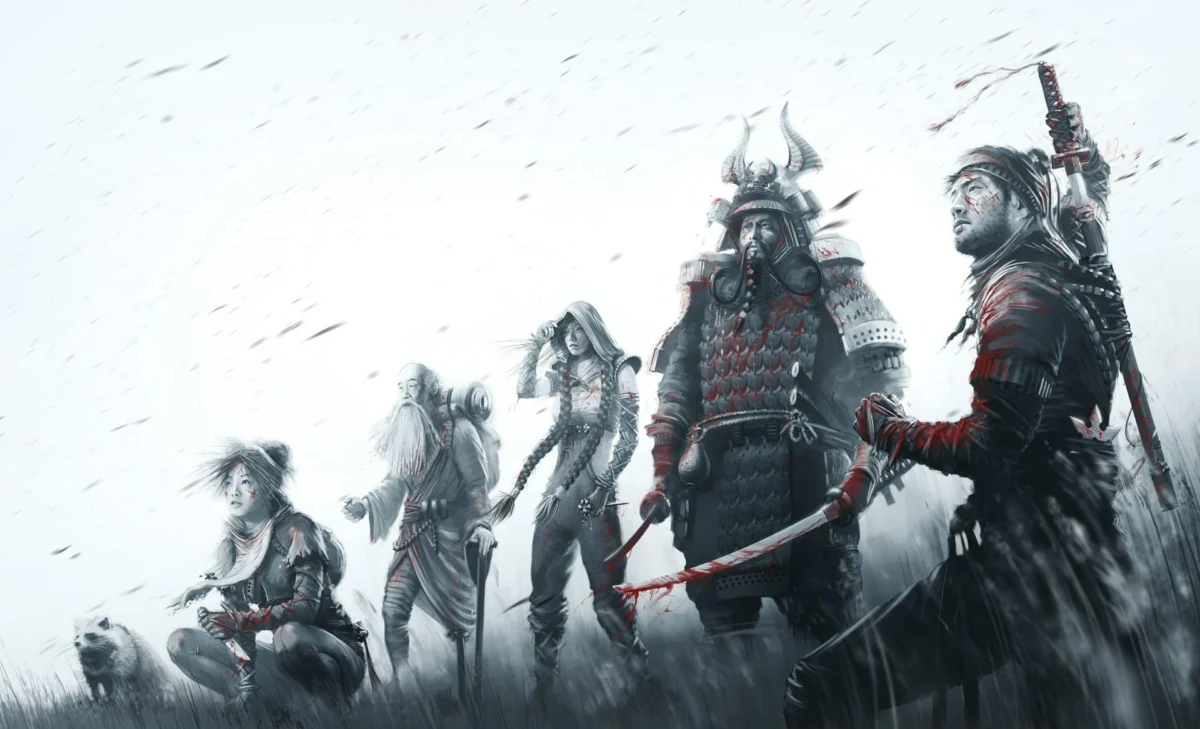
The game’s depth is derived from its five playable characters, each offering distinct mechanical advantages:
- Hayato: An agile ninja equipped with a shuriken for silent, ranged kills and a grappling hook for verticality.
- Mugen: A powerful samurai who can engage multiple enemies at once and carry two bodies at a time to clear areas quickly.
- Yuki: A young thief who uses traps and a whistle to lure enemies into specific kill zones.
- Aiko: A master of disguise who can walk among enemies undetected and use sneezing powder to reduce their vision range.
- Takuma: An elderly sniper with a wooden leg who provides long-range support and uses his pet tanuki, Kuma, to distract guards.
The mission design forces players to rotate through these characters, often splitting the team into smaller groups. This necessitates a constant re-evaluation of strategy. A mission that begins as a vertical infiltration with Hayato may transition into a social stealth puzzle requiring Aiko’s disguises.
Technical Performance on Nintendo Switch 2 Hardware
The transition to the Nintendo Switch 2 brings several notable technical improvements, though some design choices remain conservative. Most notably, the game runs at a locked 30 frames per second (FPS). While some enthusiasts might have expected 60 FPS given the increased power of the Switch 2, the decision appears to favor absolute stability and battery efficiency. In a real-time tactics game where the camera is often static and movement is deliberate, the 30 FPS cap does not detract from the gameplay experience.

The hardware’s NVMe-based storage significantly impacts the "Save/Reload" loop. RTT games are built on a philosophy of trial and error; players are encouraged to save frequently (Quick Save) and reload (Quick Load) when a plan fails. On previous generation consoles, these loading screens could last upwards of 30 to 45 seconds, breaking the flow of the game. On the Switch 2, load times have been reduced to approximately 3 to 5 seconds, making the iterative process of perfecting a stealth run far more engaging and less frustrating.
Visual fidelity has also seen a boost. The game utilizes a stylized, cel-shaded art style that scales beautifully to higher resolutions. On the Switch 2, the textures are sharper, and the draw distance—crucial for spotting distant snipers or patrol routes—is significantly improved. The lighting effects, particularly in night missions like the infiltration of Kanazawa City, show greater depth and shadow accuracy than previous portable iterations.
The Innovative "Mouse Mode" and Control Ergonomics
One of the most significant additions to the Switch 2 edition is the "Mouse Mode." This control scheme utilizes the advanced sensors in the Joycon 2 to simulate a mouse cursor. For decades, the RTT genre was considered a PC-exclusive experience because the precision required to click on specific pixels for movement or ability targeting was difficult to replicate on an analog stick.

The Mouse Mode on Switch 2 allows players to point the controller at the screen to move the cursor, offering a level of precision that nears the PC experience. However, the implementation has met with mixed reactions regarding ergonomics. While the software side of the mouse simulation is highly accurate, the small form factor of the Joycon 2 can lead to hand fatigue during extended play sessions. Reviewers have noted that while the feature is a technical triumph, it is best used in short bursts or for specific, high-precision moments within a mission. For general movement, the traditional analog stick "direct control" remains the most comfortable option.
Narrative and Setting: The Edo Period
The narrative of Shadow Tactics is more than mere window dressing for the mechanics. It explores themes of loyalty, sacrifice, and the moral ambiguity of black-ops warfare during the Edo period. The dialogue is sharp, and the voice acting—available in both English and the highly recommended original Japanese—adds significant gravitas to the proceedings.
The 13 main missions take players across diverse locales, from snow-covered mountain temples to bustling town squares and heavily fortified castles. Each environment is a puzzle in itself, with weather effects like snow or rain affecting gameplay (e.g., guards can follow footprints in the snow). The Switch 2 handles these environmental effects with ease, maintaining a consistent aesthetic that captures the beauty and brutality of the era.

Expansion Content: Aiko’s Choice
The Switch 2 package also highlights Aiko’s Choice, the standalone expansion released in 2021. This expansion adds three full-sized missions and three shorter "interlude" missions. It focuses on the character of Aiko as she confronts a ghost from her past, the cunning Lady Chiyo.
While shorter than the main campaign, Aiko’s Choice is designed for veteran players, featuring some of the most complex level designs in the series. The expansion’s inclusion on the Switch 2 provides a complete narrative arc for the characters, ensuring that players have access to the full Mimimi Games vision for the Shadow Tactics universe.
Economic Value and Market Positioning
At an MSRP of $40 for the base game and $20 for the expansion, the Nintendo Switch 2 version of Shadow Tactics is positioned as a premium "Legacy" title. While some may find the price point high for a ten-year-old game, the cost reflects the extensive work required to optimize the engine for new hardware and the inclusion of the new control schemes.

In the broader context of the strategy market, Shadow Tactics remains a benchmark. Even in 2026, few games have matched its level of polish and mechanical tightness. For players who missed the title during its original run or for those seeking a high-quality strategy experience on their new Nintendo hardware, the value proposition remains strong. It occupies a unique space on the platform, offering a more mature and challenging experience than the typical strategy fare found on handheld devices.
Conclusion and Genre Impact
The release of Shadow Tactics: Blades of the Shogun on the Nintendo Switch 2 is a testament to the enduring quality of Mimimi Games’ design. By leveraging the technical capabilities of the new hardware—specifically the faster load times and the precision of the Joycon 2—this port addresses the historical friction points of playing RTT games on a console.
As the gaming industry continues to move toward more powerful portable solutions, titles like Shadow Tactics serve as essential bridges between the precision of PC gaming and the accessibility of consoles. While the developer may no longer be active, their work continues to define the standards of the real-time tactics genre, providing a masterclass in stealth, strategy, and atmospheric storytelling that feels as relevant today as it did a decade ago.