


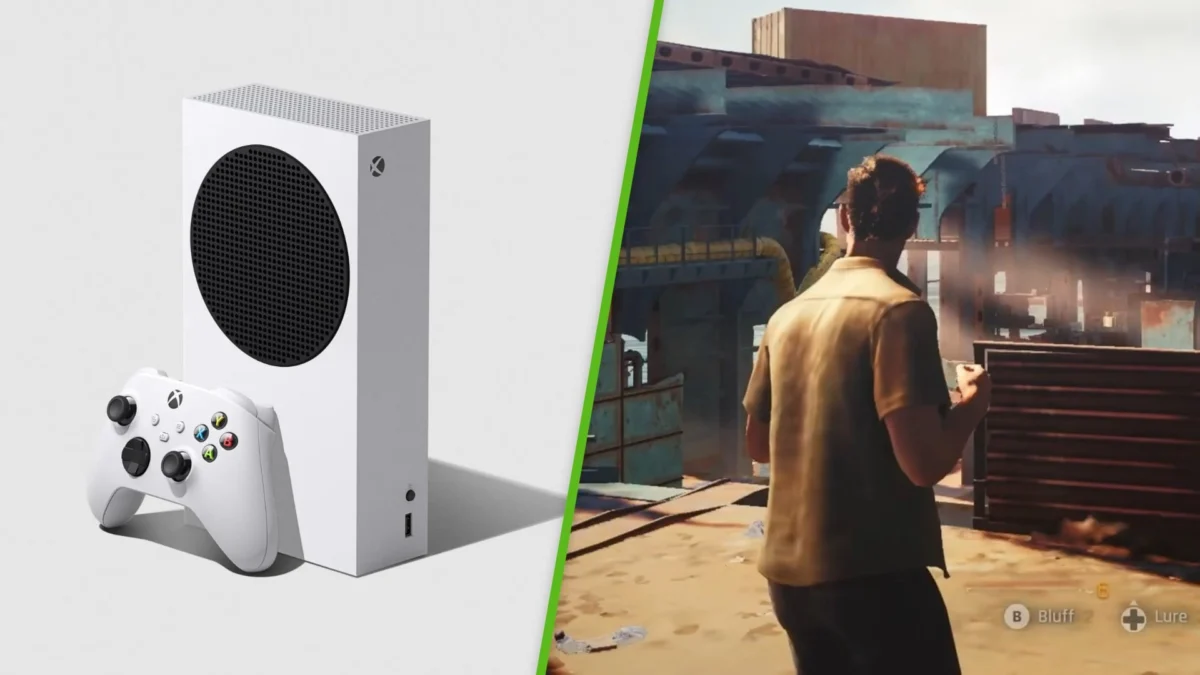
In a move that has largely gone unnoticed by the wider gaming community, the action-adventure title 007 First Light has received a discreetly implemented 60 frames-per-second (FPS) performance mode for the Xbox Series S console. This significant update, which promises a smoother gameplay experience, was rolled out without the customary fanfare typically associated with such enhancements, leading to its discovery primarily through vigilant community testing rather than official announcements. The quiet nature of its deployment has surprised many, especially given the substantial impact a higher frame rate can have on a game’s perceived quality and playability.
The Unannounced Enhancement: A Stealthy Rollout
Developers usually leverage every opportunity to publicize the addition of performance-enhancing features, particularly those offering a 60FPS option, as these are highly sought after by players. However, the introduction of a 60FPS mode for 007 First Light on the Xbox Series S starkly contrasts this industry norm. The update appears to have been pushed out in recent days, with its existence only vaguely alluded to in patch notes that, critically, contained an error. The patch notes for a substantial free DLC update released last week incorrectly stated that the 60FPS update was for the Xbox Series X version of the game. This miscommunication effectively masked the true recipient of the performance boost, causing it to be overlooked by most players and media outlets. The discrepancy highlights potential issues in internal communication or quality control regarding patch note accuracy, an element crucial for informing players about game improvements.
The discovery was ultimately brought to light by dedicated gaming enthusiasts and content creators, such as "Fuzion Xbox Testing," who meticulously analyze game performance on various platforms. Their raw footage and subsequent reports confirmed the presence and functionality of the new performance mode on the Series S, thereby rectifying the misleading information provided in the official documentation. This community-driven verification underscores the vital role independent testers play in the modern gaming ecosystem, often uncovering details that official channels fail to adequately convey.
Technical Deep Dive: Performance on Xbox Series S
Upon activating the newly available "Performance" mode on the Xbox Series S, players will immediately notice a distinct shift in the game’s visual presentation. While the frame rate is significantly improved, it comes at the cost of graphical fidelity. Reports indicate that the visual settings appear notably reduced when this mode is engaged, suggesting compromises in areas such as texture quality, draw distance, shadow detail, and potentially resolution scaling, to achieve the higher frame target. This trade-off is a common optimization strategy for developers aiming to squeeze more frames out of less powerful hardware.
In terms of frame rate stability, the "Performance" mode on the Xbox Series S generally hovers between 50 and 60 FPS for the majority of the gameplay experience. While not a perfectly locked 60 FPS, this range represents a substantial improvement over the standard 30 FPS often seen in "Quality" modes or default settings for graphically intensive games on the Series S. To mitigate the perceptible fluctuations within this 50-60 FPS range and ensure a smoother visual output, players are strongly advised to use a display that supports Variable Refresh Rate (VRR). VRR technology dynamically adjusts the display’s refresh rate to match the game’s output, effectively eliminating screen tearing and reducing stuttering, thus enhancing the overall fluidity of the experience even when the frame rate is not perfectly consistent. The Xbox platform, in particular, has been lauded by technical analysis outlets like Digital Foundry for offering a robust and effective VRR experience, making it an ideal companion for modes like this.
The alternative "Quality" mode, while likely maintaining a higher visual standard (possibly at a resolution like 1440p or 1080p with enhanced graphical effects), would predictably cap the frame rate at 30 FPS. The introduction of a dedicated "Performance" option now empowers Series S owners with a crucial choice: prioritize visual splendor or embrace a more responsive and fluid gameplay experience. This flexibility is a key differentiator for current-generation console gaming, addressing diverse player preferences.
Contextualizing the Series S Challenge
The Xbox Series S, designed as a more affordable entry point into the current generation of console gaming, presents unique optimization challenges for developers. With a less powerful GPU (around 4 teraflops compared to the Series X’s 12 teraflops) and a slightly different memory architecture, achieving parity with Series X or even last-generation Pro consoles can be demanding. Many developers initially struggled to deliver robust performance modes on the Series S, often opting for a 1080p or 1440p resolution at 30 FPS to maintain visual quality.
Therefore, the successful implementation of a functional 60FPS mode in 007 First Light, even with visual concessions, represents a notable technical achievement. It demonstrates the developer’s commitment to extracting more performance from the Series S hardware and catering to a player base that increasingly values higher frame rates for genres like action-adventure, where responsiveness is paramount. This effort is particularly significant as it signals a growing understanding and mastery of the Series S’s capabilities and limitations within the development community.
The Broader Landscape of Game Optimization
The trend of offering multiple performance modes (Quality vs. Performance) has become a standard expectation for current-generation titles. Players, especially those accustomed to PC gaming or those who experienced the benefits of 60FPS on older consoles, now demand higher frame rates. A consistent 60 FPS provides a more immersive, responsive, and comfortable gaming experience, reducing input lag and enhancing visual clarity during fast-paced action. For a game like 007 First Light, presumably an action-oriented title, the jump from 30 FPS to a consistent 50-60 FPS can dramatically alter the feel of combat, traversal, and overall player agency.
This update for 007 First Light is indicative of a broader industry push towards providing players with choices tailored to their preferences and hardware capabilities. While the Series X can often achieve 60FPS or even 120FPS with fewer compromises, the Series S often requires more aggressive optimization techniques, making each successful performance mode a testament to development ingenuity.
Developer Communication and Patch Note Discrepancies
The curious case of the stealthy 60FPS update and the erroneous patch notes for 007 First Light raises questions about developer communication strategies. While it’s plausible that the incorrect patch note entry was a simple oversight, the complete absence of a separate, clear announcement is less common for such a sought-after feature. In an era where game updates are closely scrutinized and widely discussed, transparent and accurate communication is paramount. Misleading patch notes can erode player trust and cause confusion, potentially leading players to miss out on valuable enhancements to their gaming experience.
Analysts suggest that such a quiet rollout might indicate a desire to test the waters, or perhaps the update was part of a larger technical patch where the 60FPS feature was a secondary, less emphasized component. However, given the high demand for performance modes, a more direct approach would typically be expected. This incident could serve as a reminder for developers to meticulously review and verify all public-facing information regarding game updates to ensure clarity and accuracy.
The "007 First Light" Backstory
While specific details about 007 First Light are not extensively provided, its inclusion in the context of a major performance update suggests it is a significant action-adventure title, likely either a recent release or a popular existing game receiving ongoing support. Given the "007" moniker, it can be inferred to be an officially licensed James Bond game, placing it within a long and storied franchise known for espionage, action, and high-stakes narratives. Such titles often involve fast-paced sequences, intense combat, and intricate environments, all of which benefit immensely from higher frame rates.
A game in the James Bond universe typically draws players with its blend of stealth, gadgetry, shooting mechanics, and compelling storytelling. For players on the Xbox Series S, having the option to experience these elements with enhanced fluidity can significantly elevate the immersive qualities and the responsiveness of the gameplay, which are crucial for titles within this genre. This update potentially breathes new life into the game for Series S owners, making it a more attractive option for those who might have previously hesitated due to a perceived lack of performance options.
Player Reception and Community Engagement
Despite the unceremonious delivery, the revelation of the 60FPS mode for 007 First Light on Xbox Series S is expected to be met with considerable enthusiasm from the Series S player base. Many Series S owners have consistently expressed a desire for more performance options in their games, and this update directly addresses that demand. The efforts of community testers like "Fuzion Xbox Testing" in uncovering and disseminating this information are invaluable, reinforcing the sense of community within gaming.
This type of discovery often sparks renewed interest in a game, potentially driving new purchases from players who prioritize frame rate over raw graphical fidelity, especially on the Series S. It also serves as positive reinforcement for current owners, demonstrating that developers are continuing to optimize and support the console’s capabilities, even if the communication surrounding these efforts is occasionally flawed.
Implications for the Xbox Ecosystem
The discreet implementation of a 60FPS mode for 007 First Light on the Xbox Series S carries broader implications for Microsoft’s console strategy. The Series S has been positioned as an accessible entry point into the current generation, and its success hinges on developers consistently providing a compelling gaming experience. Updates like this, even if quietly deployed, reinforce the idea that the Series S is a capable machine, able to deliver modern gaming experiences with performance enhancements.
It signals to both developers and consumers that investing in Series S optimization is worthwhile. As more games offer similar performance modes, the value proposition of the Series S strengthens, potentially broadening its appeal to a wider demographic. Furthermore, it highlights the importance of Microsoft’s robust ecosystem, including features like VRR support, which help to smooth out performance variations that are inherent to a lower-spec console.
The Future of Performance Updates
Looking ahead, the 007 First Light update, despite its quiet arrival, sets a positive precedent for the ongoing optimization of games on the Xbox Series S. As developers gain more experience with the console’s architecture and tools, it is reasonable to expect more titles to offer similar performance-focused modes. The demand for higher frame rates is unlikely to wane, and providing players with the choice between visual quality and performance will remain a critical factor in game development and console marketing.
This incident also serves as a subtle reminder to the industry about the importance of clear, accurate, and proactive communication regarding game updates. While the end result for 007 First Light players on Series S is a welcome improvement, the journey to its discovery underscores the need for streamlined information dissemination. Ultimately, the ability to choose between "Quality" and "Performance" modes significantly enhances the appeal and longevity of 007 First Light on the Xbox Series S, offering a more tailored and satisfying experience for a crucial segment of the current-gen console market.