


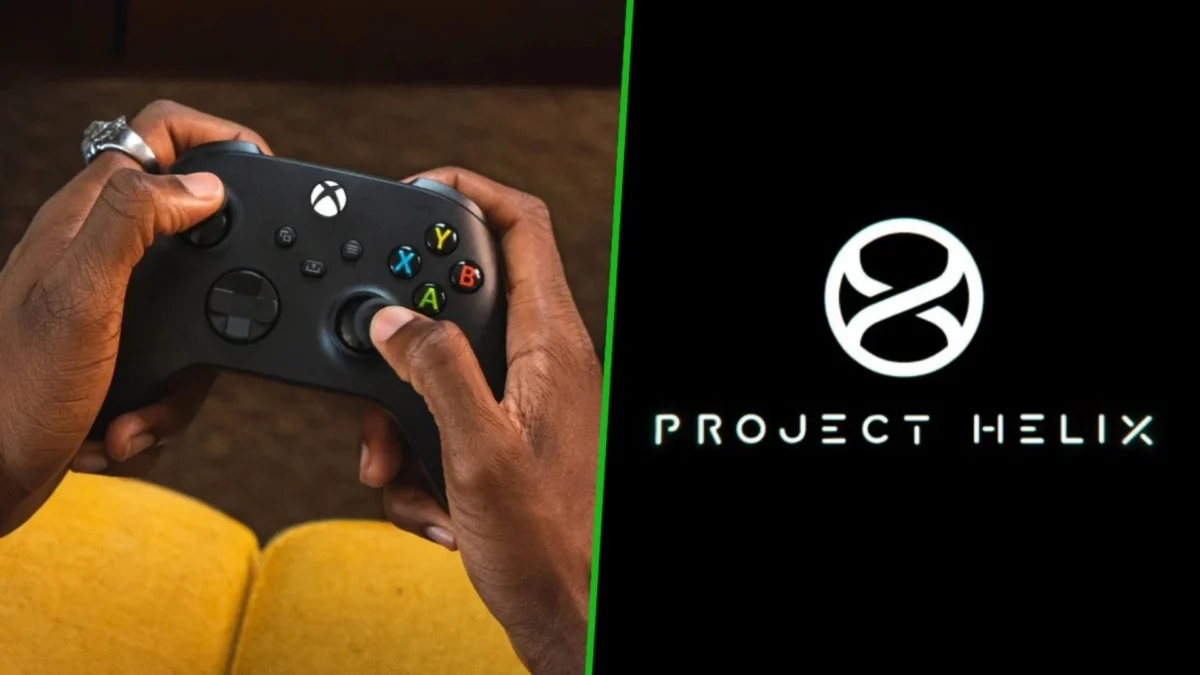
Microsoft is moving full-speed ahead with the development of Xbox Project Helix, its eagerly anticipated next-generation console, marking a significant strategic evolution in its hardware creation process. Chief Content Officer Matt Booty has publicly confirmed that the company’s extensive network of first-party game development teams is deeply embedded in the crafting of this new hardware, engaging in the process from its earliest conceptual stages. This approach signifies a departure from traditional console development cycles, emphasizing an unprecedented level of synergy between the hardware engineers and the creative minds responsible for the games that will ultimately define the console’s identity.
The revelation came during a recent episode of the Official Xbox Podcast, where Booty elaborated on the collaborative ecosystem fostered within Microsoft’s gaming division. He underscored the unique organizational structure that positions Xbox’s publishing and game development entities "side-by-side" with the dedicated hardware team. This direct integration ensures that developer insights are not merely considered retrospectively but are foundational to the console’s visioning, planning, and, critically, its technical specifications. Booty described the current period as an "exciting time," noting that the close collaboration has been ongoing and will continue as Project Helix progresses towards its eventual launch.
The Genesis of Project Helix: A New Development Paradigm
Project Helix represents a pivotal moment for Xbox, signaling Microsoft’s commitment to delivering a gaming experience that is both "powerful" and "premium," while simultaneously acting as a "real bridge between console and PC development." This ambition necessitates a tightly integrated development process where the hardware is not just a platform, but an extension of the creative vision of the game developers. Historically, console hardware development often proceeded along a separate track, with game studios receiving development kits at later stages, requiring them to adapt their creative aspirations to pre-defined technical parameters. While feedback loops existed, they were rarely as interwoven as what Booty describes for Project Helix.
The decision to involve development teams early on, specifically regarding the system’s specifications, is a direct response to the increasing complexity and ambition of modern video games. As games push the boundaries of graphical fidelity, artificial intelligence, and interactive environments, the underlying hardware must be meticulously designed to support these innovations without imposing undue constraints on developers. By allowing creators to influence the very architecture of the console, Microsoft aims to eliminate potential bottlenecks, optimize performance from the ground up, and empower studios to realize their most ambitious projects without compromise. This forward-thinking strategy seeks to ensure that Project Helix is not just a collection of impressive components, but a cohesive system engineered specifically for the games it will host.
Matt Booty on Collaborative Synergy: Insights from the Chief Content Officer
Matt Booty’s statements provide a clear window into the strategic thinking behind Project Helix. "One of the really cool things about us as a publishing and game development organisation — that makes us different from a lot of the other big publishers in the industry — is that we are side-by-side in the same org. with the hardware team," Booty explained on the podcast. This organizational alignment, he argued, grants Xbox a distinct advantage. Unlike many competitors where hardware and software divisions might operate with greater autonomy or even as separate corporate entities, Microsoft’s unified approach fosters a constant dialogue and shared objectives.
Booty further elaborated on the scope of this early involvement: "Our teams are involved early on with thinking about visioning, what’s the planning, what are the specs – and of course we’re there every step of the way as these things come along." This encompasses everything from high-level conceptualization of the console’s identity and target audience to the intricate details of processor architecture, memory configurations, input/output solutions, and cooling systems. The developers’ practical experience, their understanding of game engines, rendering pipelines, and player expectations, becomes an invaluable resource for the hardware engineers. They can provide real-world scenarios and performance targets that guide design decisions, ensuring the hardware is not just powerful on paper, but exceptionally capable in practice.
Booty concluded by reiterating the continuity of this collaborative model: "As the hardware comes online, our teams will be the first to get involved – there’s a lot of that already happening." This suggests a phased approach where early conceptual input evolves into hands-on testing and refinement as prototypes become available. This iterative process, informed by continuous developer feedback, is crucial for identifying and addressing potential issues long before the console reaches mass production, ultimately leading to a more robust and developer-friendly final product.
A Growing Ecosystem: The Expanded Influence of Xbox Game Studios
A critical differentiating factor for Project Helix, as highlighted in the original context, is the sheer scale and diversity of Microsoft’s first-party development ecosystem today compared to previous console generations. "Xbox had a lot less development teams when the likes of Xbox One and Xbox Series X|S were being developed," the original article noted. This observation underscores a transformative period for Xbox Game Studios (XGS).
Since the development cycles of the Xbox One (launched 2013) and Xbox Series X|S (launched 2020), Microsoft has embarked on an aggressive acquisition strategy, significantly expanding its internal development capabilities. In 2018, Xbox announced the acquisition of several studios, including Playground Games (Forza Horizon), Ninja Theory (Hellblade), Undead Labs (State of Decay), and Compulsion Games (We Happy Few). This was followed by the landmark acquisition of ZeniMax Media in 2021, bringing Bethesda Softworks and its myriad studios like id Software, Arkane Studios, MachineGames, and Tango Gameworks under the Xbox umbrella. Most recently, the colossal acquisition of Activision Blizzard King in 2023 further swelled the ranks, adding legendary franchises and a vast pool of development talent from studios such as Infinity Ward, Treyarch, Sledgehammer Games, Blizzard Entertainment, and King.
This dramatic expansion means that for Project Helix, Microsoft can leverage the collective expertise of dozens of studios, encompassing a wide array of genres, artistic styles, and technical specializations. Instead of a handful of internal teams providing input, there is now a vast and diverse internal network capable of offering nuanced perspectives on everything from ray tracing implementation for hyper-realistic graphics to efficient asset streaming for open-world games, and low-latency input for competitive multiplayer titles. This breadth of experience ensures that Project Helix is designed to cater to a much broader spectrum of gaming experiences, reflecting the diverse portfolio of Xbox Game Studios. The sheer volume of internal developers means more comprehensive testing, more varied use-case scenarios considered, and ultimately, a more versatile and capable piece of hardware.
The Technical and Creative Implications of Early Integration
The profound collaboration between hardware engineers and game developers has far-reaching implications, both technical and creative.
Optimized Performance and Efficiency: By involving developers from the outset, Project Helix can be engineered with specific performance targets and architectural efficiencies in mind. Developers can advocate for memory bandwidth that truly serves their high-fidelity textures, I/O solutions that minimize loading times for vast game worlds, and CPU/GPU architectures that align perfectly with their engine’s demands for complex simulations or advanced rendering techniques. This can lead to a console where every component is purpose-built to extract maximum performance for gaming, rather than being a general-purpose computing device. For instance, input on the capabilities of a custom solid-state drive (SSD) or specialized acceleration units could directly influence how game worlds are streamed and processed, leading to seamless experiences that blur the lines between console and PC performance.
Streamlined Development and Reduced Friction: A common challenge in console development is adapting game engines and workflows to new hardware specifications, often requiring significant re-engineering. With early involvement, developers can provide feedback on hardware design choices that might simplify their development processes, such as standardized APIs, robust SDKs, and developer-friendly debugging tools. This not only reduces the time and cost associated with porting and optimization but also allows developers to focus more on innovation and creative content rather than grappling with hardware eccentricities. The promise that Project Helix will be "easier than Series X|S to develop for" directly stems from this philosophy of co-creation.
Unlocking Innovative Features and Gameplay: When developers have a voice in hardware design, they can push for features that enable entirely new gameplay mechanics or enhance existing ones. This could range from advanced haptic feedback technologies that add new dimensions to immersion, to specialized AI processing units that allow for more complex and believable non-player characters, or even innovative display technologies that change how players perceive game worlds. Their insights can help prioritize specific hardware capabilities that align with emerging trends in game design, potentially leading to truly unique experiences that differentiate Project Helix from its predecessors and competitors.
Bridging Console and PC Development: The stated goal of making Project Helix a "bridge between console and PC development" is particularly significant. With Microsoft’s increasing focus on its PC gaming ecosystem and services like PC Game Pass, ensuring compatibility and ease of cross-platform development is paramount. Developer input can guide hardware design towards architectures and toolchains that are more congruent with PC development environments, potentially leveraging DirectX features more natively or simplifying shader compilation across different hardware profiles. This convergence can lead to more efficient asset creation, easier porting, and ultimately, a wider array of games available across both platforms, enriching the entire Xbox ecosystem.
Strategic Vision: Microsoft’s Long-Term Play
The deeply collaborative approach to Project Helix is not merely a technical refinement; it is a strategic imperative for Microsoft in the highly competitive gaming industry.
Competitive Edge: By integrating its vast network of first-party studios into the hardware development process, Microsoft aims to create a console that is uniquely optimized for its own exclusive content. This could provide a significant competitive advantage against rivals like Sony and Nintendo, who also boast strong first-party lineups but may not have the same level of integrated hardware-software co-development within a single organizational structure. A console perfectly tailored to the creative ambitions of studios like Bethesda, Blizzard, and 343 Industries could unlock unparalleled experiences, making Project Helix a compelling platform for consumers.

Ecosystem Strengthening: Project Helix is not just a console; it’s a critical component of Microsoft’s broader gaming ecosystem, which includes Xbox Game Pass, cloud gaming (Xbox Cloud Gaming), and its PC gaming initiatives. A console designed in close collaboration with game developers will undoubtedly yield titles that showcase the best of what the Xbox ecosystem has to offer, driving subscriptions to Game Pass and enhancing the overall value proposition for players. The seamless integration across console and PC further solidifies this ecosystem, offering flexibility and accessibility.
Talent Attraction and Retention: Empowering developers by giving them a direct voice in hardware design is a powerful tool for attracting and retaining top talent in the gaming industry. Developers are artists and engineers who thrive on pushing boundaries; providing them with a platform meticulously crafted to their needs fosters a creative environment where innovation can flourish. This can make Xbox Game Studios a more desirable place to work, ensuring a steady stream of cutting-edge content for Project Helix.
Future-Proofing and Adaptability: Early and deep developer involvement can also contribute to the future-proofing of the console. By understanding the long-term trends in game development, such as the increasing demand for generative AI in games, advanced physics simulations, or persistent online worlds, hardware designers can build in scalability and adaptability. This foresight can extend the console’s relevance and performance capabilities over its lifecycle, reducing the need for mid-generation refreshes or ensuring that such refreshes are more impactful.
Chronology and Development Milestones
While specific dates for Project Helix’s development remain largely under wraps, the mention of its announcement in March 2026 suggests that this article is being reported relatively close to that public unveiling. Console development cycles are notoriously long, often spanning five to seven years from initial concept to market launch. Given this timeline, the "early on" involvement of studios implies that the foundational work for Project Helix likely began several years prior to the 2026 announcement.
- Pre-202X (Early Concept & Visioning): This initial phase would have involved high-level discussions between Xbox leadership, hardware architects, and key studio heads to define the strategic goals for the next console. This is where the "visioning" Booty mentioned would have taken place, establishing the core tenets like "powerful, premium, and a bridge between console and PC."
- 202X-202Y (Architectural Design & Spec Definition): This is the crucial period where studio input on "planning" and "specs" would be most influential. Engineers would present various hardware architectures, and developers would provide feedback on how these designs would impact their game engines, tools, and creative aspirations. Custom silicon designs, memory solutions, and I/O subsystems would be decided upon.
- 202Y-202Z (Prototyping & Early Dev Kits): As hardware designs solidify, early prototypes would be fabricated. Development teams would be among the first to receive these nascent dev kits, beginning the process of porting existing game demos or developing new proof-of-concept experiences. This phase would generate critical feedback for hardware refinement. "There’s a lot of that already happening," as Booty stated, indicating this hands-on testing is well underway.
- March 2026 (Public Announcement): The official unveiling of Project Helix, likely detailing its name, core philosophy, and perhaps some initial specifications, but usually without a definitive launch date. This marks the transition from internal development to public anticipation.
- Post-2026 (Full Dev Kit Distribution, Optimization & Launch): Following the announcement, more refined development kits would be distributed widely to first- and third-party studios. The focus would shift to full game development, extensive optimization, and bug fixing, leading up to the console’s eventual market launch.
This inferred timeline highlights that the collaborative process is not a one-off event but a continuous dialogue that evolves through different stages of hardware and software maturity, culminating in a highly refined product designed from the ground up for gaming excellence.
Industry Reactions and Market Outlook
The news of such deep, early integration between Xbox’s hardware and software teams is likely to be met with strong approval across the game development community. Developers consistently advocate for hardware that is easy to program for, powerful, and specifically designed to meet the demands of modern game engines. This approach by Microsoft addresses those desires head-on, promising a platform that minimizes technical hurdles and maximizes creative freedom.
From a market perspective, Project Helix’s development strategy positions Microsoft to potentially set new benchmarks for console innovation. If the console truly delivers on its promise of being "powerful, premium, and a real bridge between console and PC," it could significantly strengthen Xbox’s position in the ongoing console wars and solidify its leadership in the broader gaming ecosystem. The focus on developer empowerment also hints at a future where Xbox’s exclusive titles could leverage the hardware in ways that are difficult for other platforms to replicate, leading to distinctive and compelling gaming experiences that drive adoption and loyalty.
Conclusion
The comprehensive involvement of Xbox’s first-party studios in the early stages of Project Helix’s hardware development represents a strategic evolution for Microsoft’s gaming division. By fostering an unprecedented level of synergy between its hardware engineers and its expansive network of game developers, Xbox aims to create a next-generation console that is not only technologically advanced but also perfectly attuned to the needs and creative ambitions of its creators. This collaborative paradigm promises optimized performance, streamlined development, and the potential for truly innovative gaming experiences, all while reinforcing Microsoft’s vision of a unified gaming ecosystem that bridges the gap between console and PC. As the industry looks towards the future, Project Helix stands poised to redefine the relationship between game design and hardware innovation, setting a new standard for console development.