


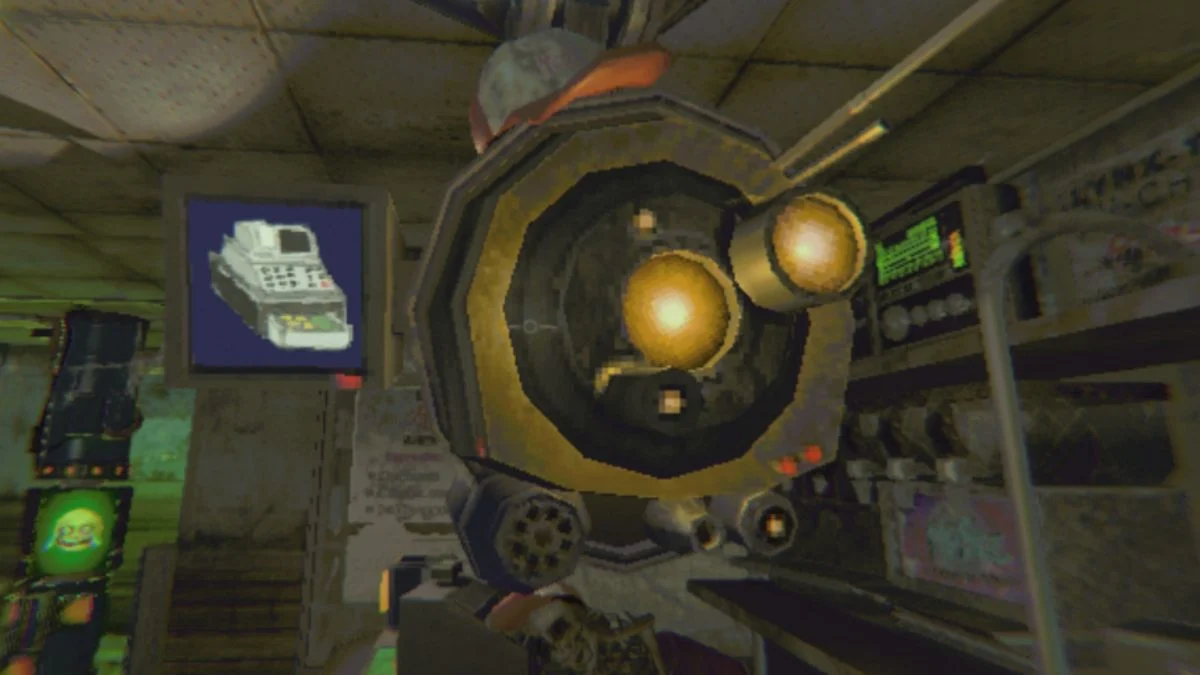
The bustling, often chaotic environment of Roy’s Service Station in the game R.E.P.O. has a new, formidable presence. The recently introduced Shopkeeper, an automaton designed for security, is now on duty, tasked with quelling the disruptive behavior of players, colloquially referred to as "semibots." This addition, part of the broader Cosmetics Update, signals a shift towards greater enforcement within the game’s interactive spaces, prompting a closer examination of its role, lore, and implications for player interaction.
The Enforcer of Order: Understanding the Shopkeeper’s Function
The Shopkeeper is not a typical NPC focused on customer service or trade. Instead, it functions as a dedicated security automaton within the confines of Roy’s, the in-game Service Station. Its primary directive is to maintain order and prevent disruptive actions. This includes, but is not limited to, players attacking their teammates with in-game items, engaging in destructive behavior that damages the environment, or attempting to assault the Shopkeeper itself. For players who have a penchant for causing mayhem, the Shopkeeper presents a significant deterrent.
The mechanics of encountering the Shopkeeper are straightforward. Players who engage in prohibited actions will face immediate and decisive retribution. The Shopkeeper is programmed to swiftly eliminate offending semibots, effectively removing them from the game instance. While defeated players, referred to as "Death Heads," can be revived at a designated "Truck" location, they will require healing items to recover from the Shopkeeper’s aggressive intervention.
Crucially, the Shopkeeper’s presence is not immutable. A notable feature is a button located on the side of the counter, often described as resembling an eye. Interacting with this button activates the Shopkeeper. This provides players with a degree of agency; those who prefer a less confrontational experience or who do not intend to disrupt the game environment can choose to leave the Shopkeeper dormant. This design choice allows for player preference to dictate the level of environmental enforcement they wish to experience. The implication here is a tiered approach to player behavior, where active participation in chaotic play can be toggled on or off by the players themselves.
Unpacking the Lore: A Mystery Within Roy’s
The lore surrounding the Shopkeeper is, at present, quite sparse. The automaton’s sole communicated purpose is to "keep the shop in check." It is presented as an employee of Roy’s, the proprietor of the Service Station. While it may don a Roy’s employee cap, further details regarding its origin or specific programming are not readily available.
This lack of explicit backstory has fueled speculation within the player base. Given that R.E.P.O. is set in a post-apocalyptic or dystopian future, where evidence of civilization is scarce and often limited to skeletal remains, the existence of a functional, sophisticated automaton raises questions about its creators and the entity that commands it. The Taxman, a recurring antagonist or overarching force in the game’s narrative, has been theorized as a potential employer or controller of the Shopkeeper. The reasoning behind this speculation often stems from the nature of the Shopkeeper’s role – enforcing order and potentially extracting a "price" for misbehavior, which aligns with themes of control and taxation often associated with such antagonists.
The narrative potential of this new addition is significant. The introduction of the Shopkeeper, alongside other recent updates that have expanded the game’s world with additional posters, secret shops, graffiti, and observable landscapes, suggests a developer intent on deepening the game’s lore. Future updates may shed light on the Shopkeeper’s origins, its relationship with Roy’s establishment, and whether it harbors any ulterior motives beyond its immediate security function. The act of the Shopkeeper taking photos of misbehaving semibots, as mentioned in the original context, could be interpreted as evidence collection, further hinting at a more complex agenda.
Background and Chronology of the Cosmetics Update
The introduction of the Shopkeeper was part of a broader update, the "Cosmetics Update," which was rolled out on [Insert Date of Update if Available, otherwise use a general timeframe like "recently"]. This update aimed to enhance the player experience through visual and interactive improvements. While the specifics of the entire update are extensive, the Shopkeeper’s inclusion marked a notable shift in how player-versus-environment (PvE) interactions would function within designated safe zones.
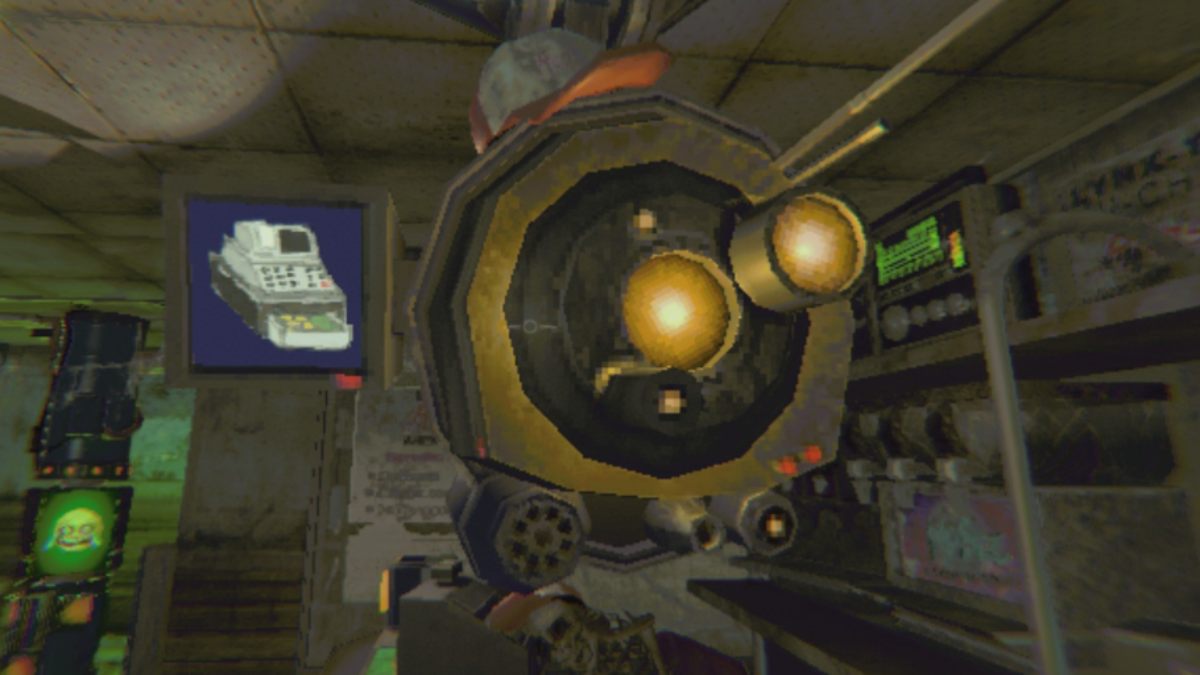
Prior to this update, Roy’s Service Station, while a hub for resupply and potential player interaction, was largely devoid of active security measures against player-initiated chaos. Players could freely engage in disruptive activities without immediate consequences from an NPC. This often led to emergent gameplay scenarios that could be either humorous or frustrating, depending on individual player preferences. The timeline of player feedback regarding such disruptions is difficult to pinpoint without access to developer forums or community discussions, but it is reasonable to infer that a segment of the player base expressed a desire for a more controlled environment, especially within what might be considered neutral or service-oriented zones.
The development cycle for such updates typically involves several stages: concept, design, implementation, testing, and deployment. The Shopkeeper, as a new AI-controlled entity with specific behavioral parameters and combat capabilities, would have required significant development resources. Its integration into the existing game engine and its interaction with other game systems would have been meticulously tested to ensure stability and balance. The decision to include a button to activate or deactivate the Shopkeeper suggests that developer feedback or internal playtesting identified the potential for the NPC to be overly aggressive or to detract from player freedom if always active.
Supporting Data and Player Impact
While specific quantitative data on the Shopkeeper’s impact, such as the percentage of players activating it or the average number of eliminations per session, is not publicly available, the qualitative impact is observable through player experiences and discussions. The Shopkeeper serves as a tangible representation of the game’s implicit rules and consequences.
For players who prioritize cooperative gameplay and adherence to objectives, the Shopkeeper acts as a guardian, ensuring that their time at the Service Station is not derailed by the actions of a minority. This can lead to a more consistent and predictable experience, fostering a sense of security and order. For players who enjoy a more anarchic or emergent playstyle, the Shopkeeper introduces a new challenge. They must now navigate the Service Station with an awareness of its security protocols, potentially leading to new strategies for evading detection or even engaging in calculated risks.
The existence of the Shopkeeper also has implications for the game’s overall pacing and atmosphere. By enforcing a degree of order, it can prevent the Service Station from devolving into a constant state of low-level conflict, allowing players to focus on other aspects of the game, such as resource management, exploration, or preparation for more dangerous encounters. Conversely, the immediate and severe penalty for misbehavior can create moments of high tension and learning, reinforcing the game’s mechanics and the importance of respecting its rules.
Analysis of Broader Implications
The introduction of the Shopkeeper in R.E.P.O. is more than just a new character; it represents a design philosophy that balances player freedom with necessary enforcement. In many online multiplayer games, the management of player behavior within social hubs or safe zones is a persistent challenge. Developers often grapple with how to foster positive interactions while simultaneously deterring griefing and disruptive conduct.
The Shopkeeper’s design, with its activatable nature, offers a nuanced solution. It acknowledges that different players seek different experiences. Some may want the thrill of causing a little chaos and facing the consequences, while others prefer a more serene environment. By providing a toggle, the game caters to both preferences without forcing one upon the other. This approach can contribute to a healthier community by reducing friction between player groups with differing playstyles.
Furthermore, the Shopkeeper’s integration into the game’s lore, however minimal it may currently be, adds a layer of depth and narrative potential. It transforms a simple gameplay mechanic into a narrative element, encouraging players to engage with the game world on a deeper level. The unanswered questions about its origin and purpose invite speculation and discussion, fostering community engagement and anticipation for future content.
The broader implication is that R.E.P.O. is evolving beyond a purely survival or combat-focused experience. The inclusion of elements that govern player interaction within specific zones suggests a move towards a more robust and multifaceted game world. This can be seen as a strategy to increase player retention and engagement by offering a richer, more dynamic experience that caters to a wider range of player motivations. As the game continues to develop, the role and impact of the Shopkeeper will undoubtedly be a point of interest for both players and observers of game design trends. The potential for further development of its lore, perhaps revealing connections to the overarching narrative or even introducing new gameplay mechanics related to its security functions, remains a compelling prospect for the future of R.E.P.O.