

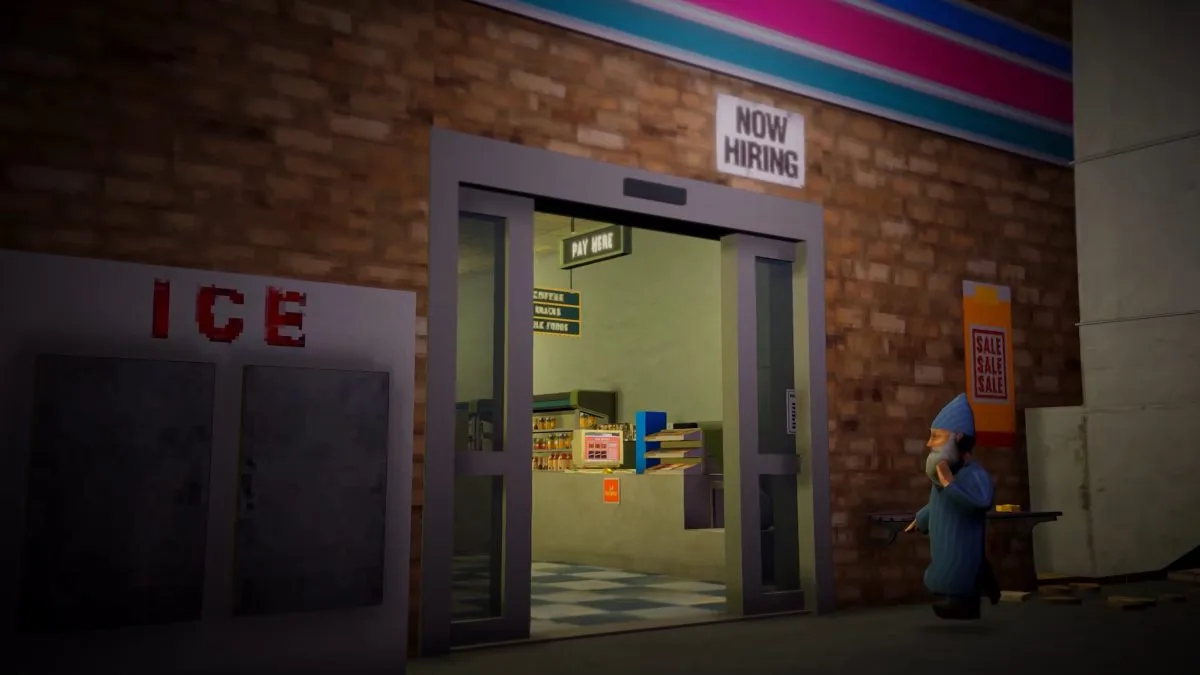
The simulation game Shift at Midnight, known for its increasingly surreal gameplay that devolves from mundane to outright madness, features a central antagonist whose presence irrevocably alters the player’s experience. This character, identified as Norbert, emerges as the primary instigator of chaos, a force seemingly dedicated to derailing the player’s attempts at a successful shift. While the game’s core mechanic involves identifying and managing doppelgangers, Norbert presents a unique challenge, defying conventional doppelganger identification and triggering a cascade of unpredictable events. This article delves into the multifaceted nature of Norbert, examining his behavior, the unique mechanics associated with him, and his critical role in both the narrative progression and the game’s overall challenge.
Norbert’s Debut and Unconventional Behavior
Norbert’s introduction into Shift at Midnight is marked by a peculiar deviation from the game’s established norms. Unlike other entities that may present subtle or overt signs of being a doppelganger, Norbert’s peculiarities are immediately apparent, yet paradoxically, his actions do not align with the standard doppelganger detection protocols. He is a recurring figure, appearing in both the game’s "Story Mode" and the more demanding "Endless Mode," consistently serving as a catalyst for disruption.
Initial encounters with Norbert reveal a character who acts with an unsettling familiarity within the game’s retail environment. He is observed behind the counter, adopting a posture that suggests he is an employee, even as the player is attempting to purchase goods. This behavior is a significant departure from typical customer interactions and serves as an early, albeit misleading, indicator of his anomalous status. Further complicating his identification, Norbert exhibits a refusal to engage in direct conversation, offering no answers to player inquiries. This reticence, coupled with his unusual presence, sets him apart from the standard doppelganger encounters where information gathering is often key.
Adding to the mystery, Norbert’s identity and presence are not recorded in the game’s "NET Database," a crucial in-game tool for verifying customer identities. Despite possessing what appears to be a valid identification, he remains an enigma to the game’s internal systems, further highlighting his unique status within the game’s artificial intelligence framework. This inability to be cataloged or cross-referenced by the game’s established security measures suggests a deeper, more fundamental disruption to the game’s simulated reality.
The Doppelganger Paradox: Norbert’s Unique Threat
The game Shift at Midnight is predicated on the player’s ability to identify and neutralize doppelgangers, parasitic entities that assume human form to sow discord and replicate themselves. The standard protocol for dealing with a confirmed doppelganger involves apprehending them, which typically results in the appearance of one of the game’s five distinct entity types at the end of the shift. These entities represent the true forms of the doppelgangers, and their successful apprehension is crucial for maintaining the integrity of the simulated environment.
However, Norbert subverts this fundamental game mechanic entirely. The act of shooting or directly harming Norbert does not trigger the expected doppelganger response. Instead of revealing a recognizable entity, such actions initiate a "chain reaction of unpredictable chaos." This signifies that Norbert is not a standard doppelganger in the traditional sense, but rather a meta-character, an agent of chaos whose very existence is designed to break the established rules.
The ramifications of this deviation are significant. Players who have learned to rely on the predictable outcomes of doppelganger encounters are thrown into disarray when dealing with Norbert. His actions are not confined to a single interaction; he possesses the capacity to reappear across multiple shifts, actively working to undermine the player’s progress. His methods of disruption are varied and increasingly inventive, designed to exploit the game’s simulation mechanics. These include:
- Reputational Damage: Norbert can actively work to decrease the store’s reputation, a critical metric for player progression and success.
- Financial Sabotage: He aims to reduce the bonuses the player can earn, directly impacting their in-game economy and potential for advancement.
- Disruptive Displays: Norbert has been observed riding through the store on a motorcycle, a visually striking and disruptive act that can draw attention and potentially cause panic among simulated customers.
- Unlicensed Operations: In a particularly absurd manifestation of his disruptive nature, Norbert has been seen operating a lemonade stand without the necessary permits, a subtle yet potent form of regulatory subversion that can lead to in-game penalties.
- Customer Disguises: He can disguise himself as a regular customer, rendering him invisible to standard visual detection methods. Only the use of the in-game "Scanner" can reveal his true, disguised form, forcing players to remain vigilant and utilize all available tools.
The Consequences of Aggression Against Norbert
The game mechanics surrounding Norbert are designed to create a high-stakes dilemma for the player. Directly confronting or harming Norbert, beyond the initial, misguided attempt to neutralize him as a doppelganger, escalates the situation dramatically. His response to perceived aggression is not one of self-preservation in the conventional sense, but rather a calculated effort to manipulate the player into causing further disruption.
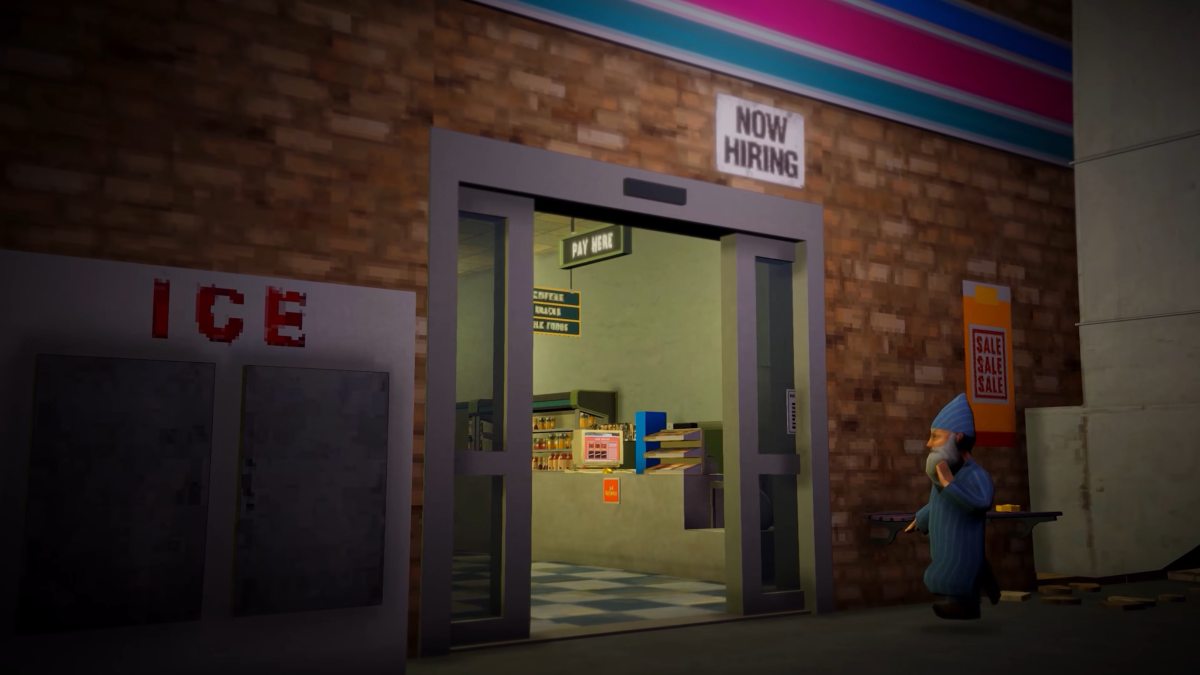
When provoked, Norbert actively attempts to coerce the player into harming innocent customers or directly targets the player with his chaotic interventions. This creates a moral and strategic quandary: does the player risk becoming a perpetrator of chaos themselves by retaliating against Norbert, or do they attempt to endure his disruptive presence? This dynamic transforms Norbert from a mere antagonist into a complex obstacle that tests the player’s decision-making under duress. The character is depicted as a relentless and seemingly unkillable force, driven by a manic energy that fuels his destructive endeavors.
Strategic Implications for Game Progression and Endings
Norbert’s unique role in Shift at Midnight carries significant implications for players aiming to achieve different outcomes within the game. For content creators and players who thrive on emergent gameplay and unpredictable scenarios, the decision to confront and "kill" Norbert is often the most straightforward path to generating chaotic and entertaining gameplay. His actions provide a consistent source of unexpected events, ensuring that no two playthroughs are identical.
However, for players seeking to achieve the game’s most coveted outcome, the "True Ending," Norbert’s presence requires a more nuanced and strategic approach. The path to the True Ending necessitates serving Norbert when he first appears and, crucially, sparing his life. This seemingly counterintuitive act of compliance with the agent of chaos is presented as a long-term strategic advantage. By allowing Norbert to complete his transaction and depart peacefully, players avoid the immediate cascade of negative consequences and, more importantly, unlock pathways that are essential for reaching the game’s ultimate resolution. This suggests that understanding and managing Norbert’s disruptive potential, rather than simply eliminating him, is key to mastering the game’s deeper narrative and gameplay systems.
The implication is that Norbert, despite his chaotic nature, may serve a purpose within the game’s underlying logic, a purpose that is revealed only to those who engage with him in a non-combative manner. His presence and the player’s reaction to him are integral to the unfolding of the game’s narrative and the unlocking of its most profound secrets. The strategic decision to serve or confront Norbert thus becomes a pivotal moment, shaping the player’s journey and their ultimate success or failure in navigating the surreal landscape of Shift at Midnight.
Broader Context and Analysis of Shift at Midnight‘s Design Philosophy
Shift at Midnight distinguishes itself within the simulation genre by its deliberate embrace of escalating absurdity. The game begins with a semblance of mundane reality, a seemingly straightforward retail simulation. However, as players progress, the introduction of doppelgangers and, subsequently, Norbert, signals a deliberate departure from strict realism into the realm of the surreal and the psychologically unsettling.
Norbert’s character can be interpreted as a meta-commentary on the nature of simulation and control. In a game designed to simulate a controlled environment, Norbert represents an uncontrolled variable, an anomaly that defies the very parameters of the simulation. His existence challenges the player’s assumptions about the rules of the game, forcing them to adapt and think outside the established boundaries. This design choice not only enhances the game’s replayability but also engages players on a deeper intellectual and emotional level, as they grapple with unpredictability and the consequences of their actions within a system that is designed to break down.
The game’s progression, from a relatively predictable simulation to a chaotic free-for-all influenced by Norbert, mirrors common anxieties surrounding technological advancement and the potential for systems to become uncontrollable. Norbert’s ability to disrupt reputation, finances, and even the physical space of the store can be seen as allegorical representations of real-world vulnerabilities in interconnected systems.
The distinction between achieving a "good" ending by serving Norbert and a more chaotic, content-rich experience by confronting him, highlights a deliberate design choice by the developers. This bifurcation of player experience allows for diverse playstyles and caters to different player motivations. It suggests a mature understanding of player agency, offering both the satisfaction of meticulous progression and the thrill of embracing anarchy.
In conclusion, Norbert is far more than a mere antagonist in Shift at Midnight. He is a meticulously crafted enigma, a lynchpin of the game’s escalating chaos, and a critical element for players seeking to understand the game’s deeper mechanics and narrative. His unconventional behavior, his unique interaction with the doppelganger system, and his pivotal role in achieving the game’s True Ending underscore his significance. Norbert represents the game’s willingness to push boundaries, challenging players to not only survive but to strategically navigate and even leverage the unpredictable forces that threaten to unravel their simulated reality. His presence ensures that Shift at Midnight remains a uniquely compelling and increasingly bewildering experience, solidifying his status as the game’s most memorable and chaotic character.