


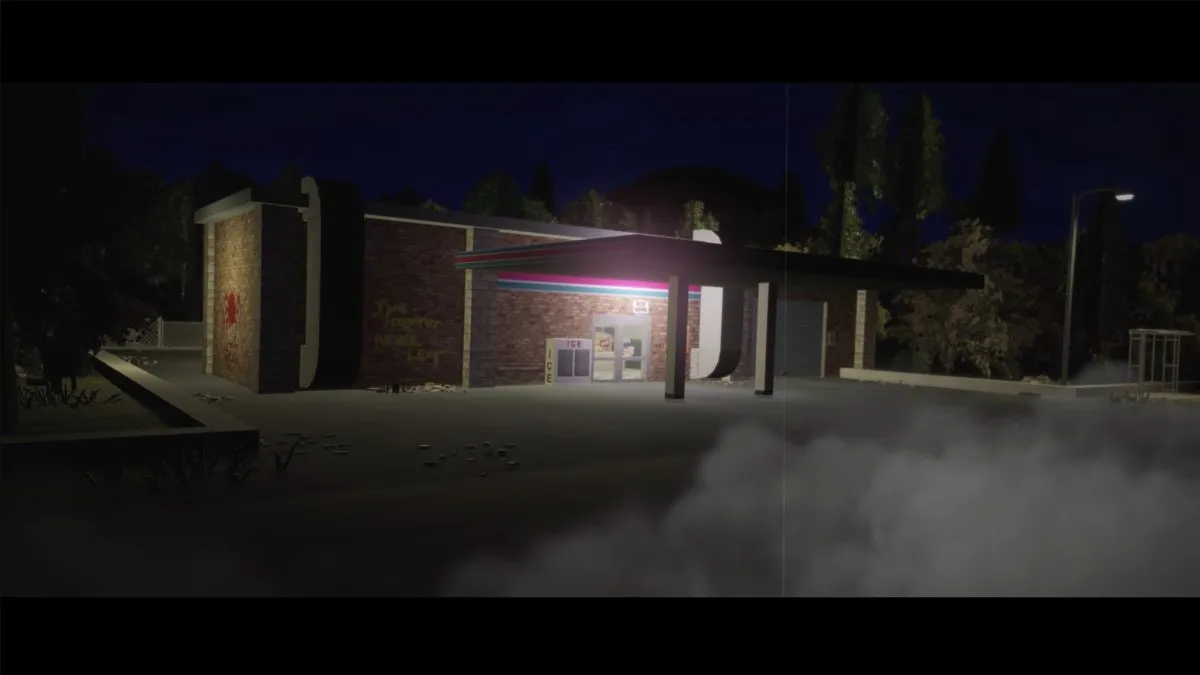
The chilling reality of working the graveyard shift at a mysterious establishment in Shift at Midnight extends beyond the immediate financial burdens of pet care, now underscored by the perplexing disappearance of a dog named Guillermo. This development, presented through a seemingly innocuous lost dog poster, introduces a new layer of intrigue and narrative depth to the game’s already unsettling atmosphere. Players are confronted with a mystery that, upon closer examination, appears to be an elaborately constructed piece of environmental storytelling rather than a solvable in-game quest, prompting a deeper dive into the game’s mechanics, narrative design, and community engagement.
The Emergence of a Mystery: Guillermo’s Poster Appears on Night 10
The central element of this developing narrative is a missing dog poster featuring Guillermo, a brown Labrador adorned with a yellow collar. This poster first becomes visible to players on Night 10 of their tenure within the game. Its appearance on the in-game notice board marks a significant moment, as this board serves as a primary conduit for new information and directives within Shift at Midnight. Alongside instructions communicated directly by the Store Manager via calls or notes, the notice board plays a crucial role in guiding the player’s actions and understanding of the unfolding events.
However, the presentation of Guillermo’s disappearance diverges sharply from the typical side quests encountered in the game’s Story Mode. While other quests demand immediate action and direct player intervention, the missing dog poster is treated with a distinct lack of interactivity. Despite the presence of a $50 reward, a figure that initially seems relevant to the in-game economy and the Store Manager’s requests for gathering bonuses, there is no discernible mechanism within the game to actually locate Guillermo. This absence of a tangible objective suggests that the poster, and by extension Guillermo’s plight, may be a carefully crafted narrative device rather than a conventional gameplay element.
Distinguishing Guillermo from Tofu: A Crucial Clarification
A common point of confusion for players, and a testament to the game’s narrative misdirection, is the distinction between Guillermo and Tofu. Tofu is a service dog that players are tasked with serving when he visits the store. The game intentionally attempts to mislead players into believing they should harm this innocent animal, creating a moral dilemma and highlighting the stakes involved in their responsibilities. Guillermo, on the other hand, is presented as a separate entity, a pet who has gone missing. The implication is that he is not a character the player directly interacts with or serves in the store.
The speculation surrounding Guillermo’s owner is tied to the broader thematic elements of Shift at Midnight. The game often hints at the presence of doppelgangers and sinister replacements for its customers. It is theorized that Guillermo’s owner might be one such individual, perhaps "The Dentist," or another customer who has been replaced, leaving Guillermo effectively ownerless and lost. This interpretation elevates the missing dog poster from a simple lost pet notice to a potential breadcrumb in the game’s overarching mystery, hinting at the unsettling transformations occurring within the establishment’s clientele.
The Illusion of a Quest: Lore and Narrative Enhancement
The initial instinct for many players upon seeing the missing dog poster would be to search the surrounding environment, particularly the nearby forest, for a stray dog. However, the game’s design actively frustrates this impulse. Viewing the poster does not unlock any dialogue options that would allow players to inquire about Guillermo with customers or staff that night. This lack of interactive follow-up strongly suggests that the poster’s purpose is not to initiate a solvable quest.
Instead, the inclusion of Guillermo’s poster is widely interpreted as a narrative and lore-building element. Its primary function appears to be reinforcing the player’s emotional investment in the game’s world and its inhabitants, particularly concerning the protection of their own pets. The very act of seeing a lost pet notice, coupled with the player’s own responsibility for a pet in Shift at Midnight, serves to heighten the stakes and the player’s drive to survive the dangerous shifts. It amplifies the sense of vulnerability and the inherent dangers that both the player and the animals in their care face within the confines of the game.
Community Efforts and Definitive Evidence: The Unsolvable Nature of the Search
The dedicated community surrounding Shift at Midnight has undertaken extensive efforts to verify the existence of a searchable Guillermo. Through discussions on platforms like the official Shift at Midnight Discord Server, players have collectively investigated every possible avenue for finding the missing Labrador. These community-driven searches have consistently yielded no results, leading to a general consensus among seasoned players that Guillermo is not an in-game entity that can be located or rescued. Newcomers to the game are often informed by these veterans that the search for Guillermo is futile.
The most compelling evidence supporting the unsolvable nature of this mystery lies within the poster itself. Upon closer inspection of the in-game poster, players will notice that there is no clickable option to call the owner’s listed number. In typical game design, such information would be an interactive element if it were intended to lead to a quest objective. The absence of this functionality is a clear indicator that the developers did not intend for players to be able to contact Guillermo’s owner or initiate a rescue mission. This deliberate omission solidifies the poster’s role as a narrative tool rather than a gameplay mechanic.
The Broader Implications of Guillermo’s Story
The narrative choice to include an unsolvable lost dog poster in Shift at Midnight carries significant implications for the game’s overall design philosophy and player experience.
Enhancing Atmosphere and Emotional Resonance
By introducing elements that evoke empathy and concern, such as a lost pet, developers can significantly deepen the emotional connection players have with the game world. Guillermo’s story, though not a direct quest, taps into universal feelings of loss and the desire to help, thereby enriching the game’s unsettling atmosphere. This emotional resonance makes the player’s own struggles and the dangers they face feel more impactful.
Reinforcing Themes of Loss and Vulnerability
The game frequently explores themes of replacement, doppelgangers, and the erosion of identity. Guillermo’s disappearance, potentially linked to these themes, further underscores the fragility of existence within the game’s universe. It highlights how even seemingly innocent elements of life, like a beloved pet, can be disrupted or vanish without a trace, mirroring the unsettling transformations occurring among the human characters.
A Masterclass in Environmental Storytelling
The Guillermo poster exemplifies effective environmental storytelling. Without explicit exposition, the developers have woven a narrative thread into the game’s environment that sparks curiosity and encourages player interpretation. This approach respects the player’s intelligence and invites them to engage with the game’s lore on a deeper level, fostering a more immersive and memorable experience.
The Power of Unanswered Questions
In a game that thrives on mystery and suspense, unanswered questions are often more potent than definitive solutions. The enigma of Guillermo’s fate leaves a lingering sense of unease and speculation, contributing to the game’s overall unsettling tone. It serves as a reminder that not all problems in Shift at Midnight are meant to be solved, and some mysteries are designed to remain just that – mysteries.
Conclusion: A Narrative Enigma in the Midnight Shift
The case of Guillermo, the missing brown Labrador from Shift at Midnight, transcends a simple in-game event. It represents a sophisticated narrative device designed to enhance atmosphere, deepen emotional engagement, and reinforce the game’s core themes. While the initial instinct might be to search for a solvable quest, the evidence, both within the game’s mechanics and the collective experience of its community, points towards the poster serving a purely narrative purpose. It is a testament to the developers’ skill in environmental storytelling, effectively using a lost dog poster to remind players of the preciousness of what they protect, even as they navigate the perilous realities of the midnight shift. The mystery of Guillermo’s disappearance, therefore, remains an integral, albeit enigmatic, part of the Shift at Midnight experience, contributing to its unique brand of psychological horror and narrative depth.