


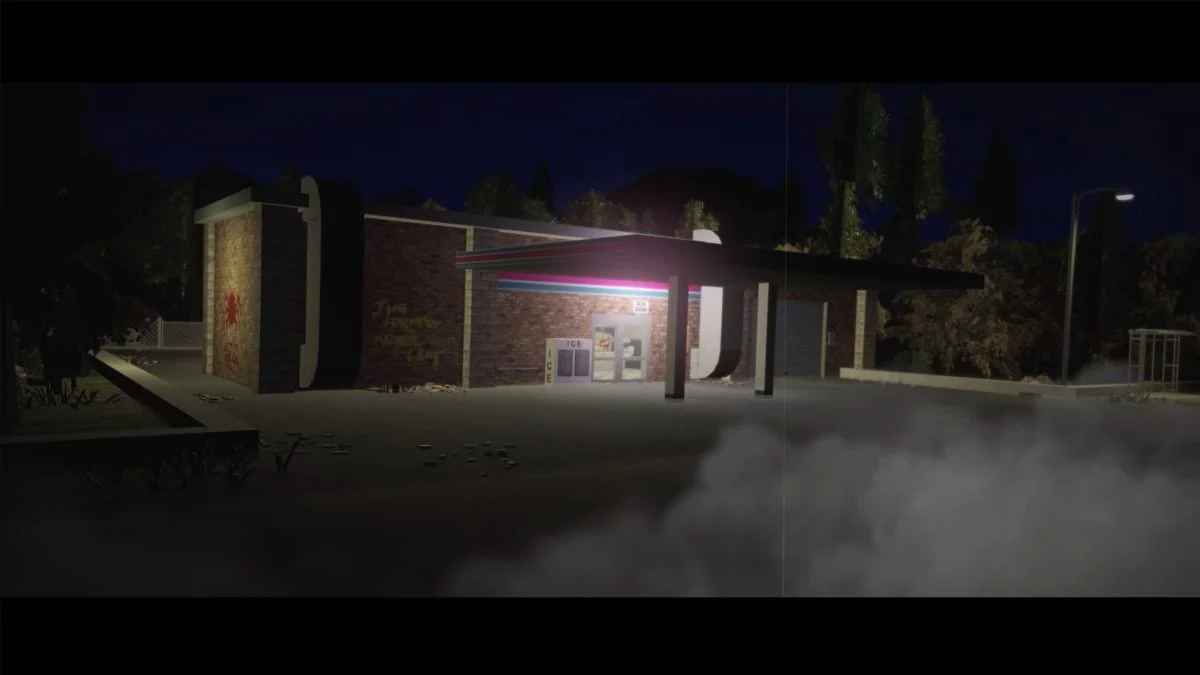
The precarious existence of employees in the unsettling world of Shift at Midnight extends beyond the immediate financial pressures of veterinary bills and surgical costs for their animal companions. A new layer of concern has emerged with the disappearance of a character named Guillermo, a brown Labrador, whose absence is marked by a prominent missing dog poster. This development, appearing on Night 10 of the game, has prompted widespread speculation and investigation within the player community, raising questions about its in-game significance and its implications for the game’s narrative and mechanics.
The Disappearance of Guillermo: A Mystery Unfolds
Guillermo, described as a brown Labrador sporting a distinctive yellow collar, vanishes during the tenth night shift. His absence is immediately communicated to players through a missing dog poster affixed to the in-game notice board. This notice board serves as a critical hub for information dissemination within Shift at Midnight, acting as a primary conduit for new objectives and narrative updates, alongside direct communications from the Store Manager via calls or written notes.
Unlike traditional side quests in the game’s Story Mode, which often demand immediate player intervention, the missing dog scenario appears to be treated with a different operational paradigm. While a reward of $50 is mentioned on the poster, a sum that might seem relevant for accumulating bonuses through the Store Manager’s requests, the ability to actually locate Guillermo seems conspicuously absent. This has led many players to question whether the poster is a deliberate misdirection, a "red herring," or if there is an unseen in-game model of Guillermo waiting to be discovered.
Differentiating Guillermo from Tofu
It is crucial to distinguish Guillermo from Tofu, the service dog that players are tasked with serving in the game. Shift at Midnight is known for its dark and often deceptive gameplay, and players have reported instances where the game attempts to mislead them into harming the innocent pup Tofu. Guillermo, however, is presented as a separate entity – a pet that has gone missing, potentially linked to the enigmatic character known as The Dentist, or perhaps to another customer who has been replaced by a doppelganger, leaving their pet ownerless. The implication is that Guillermo’s owner might be among those affected by the doppelganger phenomenon, rendering them incapable of searching for their lost companion.
The immediate instinct for many players upon encountering the missing dog poster would be to search the surrounding game environment, particularly the adjacent forest, for a stray animal. However, a thorough examination of the game’s mechanics reveals that viewing the missing poster does not unlock any specific dialogue options or gameplay prompts that would allow for an active investigation of customers or locations in pursuit of Guillermo. This lack of direct interaction has fueled the theory that the poster’s primary purpose is not to initiate a fetch quest, but rather to serve a deeper narrative function.
Lore and Player Empathy: The Deeper Significance of the Poster
The inclusion of Guillermo’s missing poster is widely interpreted as an element designed to enrich the game’s lore and to foster a stronger sense of empathy within the player. By highlighting the plight of a lost pet, the game subtly reinforces the player’s own vulnerability and the importance of protecting their own animal companions. Given that the entire premise of Shift at Midnight involves players risking their lives to work the night shift, ostensibly for financial gain that might benefit their pets, the poster serves as a poignant reminder of what is at stake. It amplifies the emotional investment players have in their own virtual pets and the broader theme of care and responsibility that underpins the game’s narrative.
Community Investigation and Confirmation
The player community, particularly on dedicated platforms like the Shift at Midnight Discord Server, has undertaken extensive efforts to locate Guillermo. Despite thorough searches and discussions, these investigations have yielded no concrete evidence of Guillermo’s in-game presence. Community members have reportedly confirmed to new players that there is no discoverable missing dog to be found within the game world.
The most compelling evidence supporting the absence of an in-game Guillermo lies within the missing dog poster itself. A critical observation is the absence of any interactive element on the poster that would allow players to contact the owner, such as a phone number or an in-game prompt to initiate a call. This deliberate omission strongly suggests that the lost dog is not a tangible entity within the game that players can actively retrieve.
The Nature of In-Game Mysteries
Shift at Midnight has established a reputation for weaving intricate mysteries and subtle narrative threads into its gameplay. The Guillermo poster fits this pattern, operating as a piece of environmental storytelling rather than a traditional gameplay objective. Its presence prompts players to consider the wider world of the game, the potential consequences of the doppelganger phenomenon on ordinary citizens, and the emotional toll of loss, even in a world fraught with supernatural danger.
The $50 reward mentioned on the poster, while seemingly practical, further contributes to the misdirection. It taps into the player’s ingrained desire to complete objectives and earn in-game currency, thereby encouraging a search that ultimately proves fruitless. This technique is characteristic of games that aim to create a sense of realism and depth by incorporating elements that mimic real-world scenarios, including lost pet posters, without necessarily making them interactive quests.
Broader Implications for Game Design and Narrative
The deliberate inclusion of non-interactive narrative elements like Guillermo’s missing poster has significant implications for game design and player engagement. It challenges the conventional understanding of what constitutes a "quest" or an "objective" within a video game. Instead of a direct task with a clear resolution, the poster functions as a catalyst for speculation, discussion, and a deeper immersion into the game’s lore.
This approach can foster a more organic and player-driven sense of discovery. Players are encouraged to interpret the game’s world and its events, rather than simply following a predefined path. The mystery surrounding Guillermo, even if he cannot be found, contributes to the unsettling atmosphere of Shift at Midnight. It adds a layer of mundane tragedy to a world already saturated with existential threats, reminding players that ordinary lives and ordinary concerns continue to exist, even amidst extraordinary circumstances.
The success of this narrative device hinges on the game’s ability to present such elements in a way that feels meaningful and contributes to the overall thematic coherence. In the case of Shift at Midnight, the poster’s placement on a notice board, a common feature in many real-world establishments, lends it an air of authenticity. Its visual presence, coupled with the implied emotional distress of the owner, creates a palpable sense of absence that resonates with players.
The Role of the Store Manager and Unseen Threats
The Store Manager, a central figure in Shift at Midnight, plays a dual role as both an employer and a potential source of information and instruction. While the Manager’s directives are typically concrete and actionable, the Guillermo situation suggests a broader narrative scope that may extend beyond the Manager’s immediate control or awareness. The Manager’s focus is primarily on ensuring the smooth operation of the store and the completion of assigned tasks, which often involve dealing with the supernatural or the bizarre. The disappearance of a pet, while a significant event for the owner, might be viewed as a personal tragedy rather than a direct operational concern for the business.
This also raises questions about the nature of the doppelganger threat. If The Dentist, or other doppelgangers, are responsible for the unsettling events in the game, their actions could extend to causing distress to ordinary citizens, such as pet owners. The missing dog poster could be a subtle nod to the widespread impact of these unseen forces, demonstrating that their influence is not confined to the immediate threats faced by the player.
Conclusion: A Masterclass in Environmental Storytelling
The missing dog poster for Guillermo in Shift at Midnight serves as a compelling example of sophisticated environmental storytelling. It transcends the typical gameplay loop to offer a glimpse into the lives and potential suffering of the game’s inhabitants, even those who are not directly involved in the central conflict. While players may not be able to physically locate Guillermo, his absence, communicated through the poster, leaves a lasting impression. It underscores the game’s commitment to building a rich and unsettling world, where even the smallest details can contribute to the overall narrative and thematic depth. The community’s extensive efforts to find him, ultimately confirming his in-game non-existence, only serve to highlight the effectiveness of this narrative choice, demonstrating that not all mysteries are meant to be solved through direct gameplay interaction, but rather through reflection and interpretation. The poster, therefore, is not a missed opportunity for a quest, but a masterfully crafted piece of lore that enriches the player’s understanding and emotional connection to the world of Shift at Midnight.