


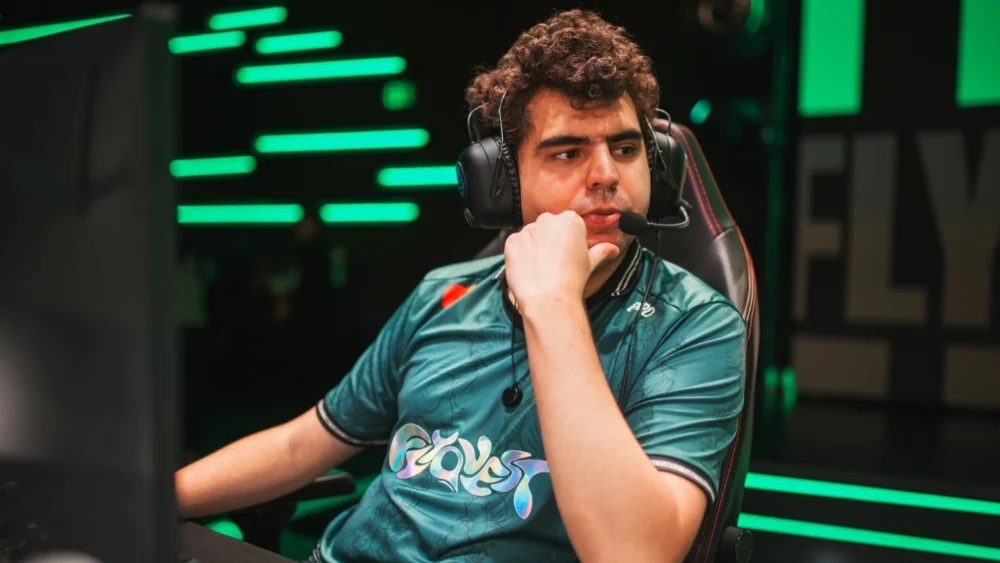
League of Legends professional Gabriël "Bwipo" Rau has broken his silence on the fallout from his widely condemned remarks suggesting women should not compete in esports during their menstrual cycles. In a recent interview, the FlyQuest top laner admitted to experiencing significant fear for his professional future and revealed that he did not genuinely believe the sentiments he expressed. The controversy, which erupted in early September, led to a suspension, public backlash from prominent figures in the esports community, and even edits to official Riot Games content.
The incident originated from statements made by Bwipo, where he posited that "there is a time of the month where you should not be playing competitive games as a woman," specifically referencing menstruation. He further elaborated, suggesting a lack of adequate support for female professional players during their "monthly cycles." These comments, made on a platform that reached a broad audience, were met with immediate and widespread criticism.
Chronology of Controversy and Consequences
The timeline of events surrounding Bwipo’s comments and their repercussions highlights the swift and severe impact of his statements:
- Early September: Bwipo makes the controversial remarks suggesting women should avoid competitive gaming during their periods, citing a lack of support for female players’ "monthly cycles."
- Immediate Backlash: The comments quickly ignite a firestorm of criticism across social media and within the esports community. Prominent figures, including fellow Belgian and esports caster Eefje "Sjokz" Depoortere, publicly denounce his statements as "ignorant."
- September 10th: Bwipo issues an apology for his remarks.
- Suspension: FlyQuest, Bwipo’s team, suspends him for their League of Legends Pro League (LPL) playoffs series against Vivo Keyd Stars, signaling the seriousness with which the organization viewed the incident.
- Riot Games’ Response: In a notable move, Riot Games decides to delay the release of their World Championship music video to edit out Bwipo’s appearance, underscoring the global impact and the developer’s stance on such divisive commentary.
- Worlds Amidst Fallout: Bwipo is present with FlyQuest at the League of Legends World Championship in China, now speaking about the personal toll the controversy has taken.
Bwipo’s New Statement: Regret and Disbelief
Speaking with Armand Luque of Sheep Esports during FlyQuest’s participation in the League of Legends World Championship, Bwipo offered a candid reflection on the mental and professional anguish he endured. "At one point, I wasn’t sure what was going to happen," he admitted. "I feared for my career and didn’t know if I’d even be able to play at Worlds."
The most striking aspect of his recent comments is his assertion that he did not genuinely believe his own words. "It was really rough, especially because I didn’t believe what I said," Bwipo confessed. "I listened back and thought, ‘what I said was ridiculous.’ It didn’t make sense." This admission suggests a disconnect between his public pronouncements and his internal convictions, a phenomenon that can be particularly challenging when facing severe public scrutiny.
He further elaborated on the difficulty of being condemned for statements that do not align with his personal beliefs. "Being scrutinized for something you don’t stand by is hard, but you still have to acknowledge and take responsibility for it," he stated. This sentiment reflects a complex emotional state, grappling with the consequences of an utterance he now dismisses as absurd.
Acknowledging the "Blunder" and Misrepresentation
Bwipo characterized his initial comments as a "huge blunder" and acknowledged that he had "misrepresented" the League of Legends esports scene (LTA) with his statements. He explained the process that led to the ill-fated remarks, suggesting an impromptu and poorly considered thought process.

"Sometimes you’re running thoughts through your head, trying to reach a conclusion, and you say something before realizing it’s wrong," he explained. "Obviously, that was a huge blunder on my part, and I feel really bad about it because I don’t believe it." This explanation, while offering insight into his mindset, does little to assuage the damage caused by the initial commentary.
The difficulty, he noted, lay in the inability to immediately disavow his own words. "That’s been the hardest part – not being able to defend myself and say, I don’t believe this," Bwipo stated. "I know I said it, and even if there were no consequences, I would still agree it was a terrible take." This indicates a deep-seated awareness of the problematic nature of his remarks, irrespective of external repercussions.
Broader Context and Implications for Esports
Bwipo’s controversial remarks and the subsequent fallout serve as a potent reminder of the ongoing challenges surrounding inclusivity and gender equality in the esports industry. The gaming world, despite its progressive image, continues to grapple with deeply ingrained biases and a lack of adequate understanding regarding the experiences of women in competitive environments.
The comments themselves touched upon a sensitive and often overlooked aspect of women’s lives – their menstrual cycles – and the potential physiological and psychological effects they can have. While Bwipo’s attempt to address this, however misguided, was framed within a context of "support," his delivery and the underlying assumptions were widely perceived as patronizing and discriminatory. The assertion that women should be excluded from competition during their periods, without any basis in scientific consensus or individual experience, was seen as a regressive step.
The reactions from prominent figures like Sjokz underscored the frustration felt by many within the industry. Her labeling of Bwipo as "ignorant" reflects a sentiment that such outdated and uninformed opinions should have no place in professional esports discourse. The swift action taken by FlyQuest and Riot Games indicates a clear message: discriminatory language and harmful stereotypes will not be tolerated, even from established figures within the scene.
The Role of Support and Understanding
Bwipo’s initial justification for his comments alluded to a perceived lack of support for female players. While this point might hold some merit in a broader discussion about the challenges faced by women in esports – including issues of harassment, unequal opportunities, and underrepresentation – his specific framing of the issue was fundamentally flawed. The solution to perceived support gaps cannot be the exclusion of women from competitive play.
Instead, the focus for fostering a truly inclusive environment should be on creating robust support systems, promoting education, and actively challenging existing biases. This includes:
- Mental Health Resources: Providing accessible and tailored mental health support for all athletes, acknowledging the unique pressures and challenges they may face.
- Education and Awareness: Implementing programs that educate players, staff, and the wider community about gender equality, diversity, and the importance of respectful communication.
- Inclusive Policies: Developing and enforcing policies that protect against discrimination and harassment, ensuring a safe and equitable environment for everyone.
- Open Dialogue: Encouraging open and constructive conversations about the challenges faced by underrepresented groups in esports, allowing for genuine understanding and progress.
Bwipo’s current admission of regret and his acknowledgment of the "terrible take" represent a step toward accountability. However, the incident also highlights the broader need for continuous effort and vigilance within the esports community to ensure that it evolves into a truly welcoming and equitable space for all participants, regardless of gender or any other personal characteristic. The path forward requires not just apologies but also a sustained commitment to learning, understanding, and actively dismantling the barriers that prevent full inclusivity. The scrutiny faced by Bwipo, while painful, can serve as a catalyst for deeper reflection and change within the professional League of Legends ecosystem and the wider esports landscape.