



The fishing simulator genre, often associated with tranquil waters and leisurely pursuits, is irrevocably altered by the arrival of UMIGARI, a title from developer Chilla’s Art that plunges players into a world steeped in a profound and unsettling curse. This game challenges conventional notions of the genre, presenting a narrative and gameplay experience that is anything but cozy, instead exploring themes of suffering, societal transformation, and the very nature of humanity. UMIGARI offers a unique, albeit disturbing, interpretation of what a fishing simulator can be, prompting introspection on ecological ethics and the consequences of exploitation.
The Enigmatic Narrative of UMIGARI
At its core, UMIGARI‘s objective is to break a pervasive curse that has fundamentally reshaped the world. Players are tasked with locating three ancient tablets, the keys to unlocking a shrine that will guide them across the vast ocean to an island inhabited by an omnipotent whale. This mythical creature is believed to hold the power to finally end the curse. The journey, however, is fraught with peril, as the flooded landscape teems with an array of bizarre and increasingly unsettling sea creatures. The visual design of these entities is a significant element of the game’s horror, featuring nightmarish amalgamations such as fins resembling human limbs, fish adorned in schoolgirl uniforms, hammerhead sharks with human-like lips and enormous eyes, and stingrays bearing disembodied human faces. The surreal nature extends to the in-game encounters, where caught fish may speak to the player, adding a layer of psychological unease to the experience.

The human element within UMIGARI is equally unsettling. The few human survivors encountered exhibit profoundly erratic and often violent behavior, with instances of cannibalism being reported. The game elevates the concept of non-player character (NPC) requests to a disturbing new level, making titles like DREDGE and Subnautica, which also feature survival and resource management elements, appear remarkably serene by comparison. UMIGARI‘s cursed atmosphere is undeniable, pushing the boundaries of what players might expect from a game centered around fishing.
Deconstructing the Curse: A World Inverted
The central enigma of UMIGARI lies in the nature of its curse. It is revealed that fish have been transformed into humans, and conversely, humans have been transmuted into fish. This inversion of roles has resulted in a world where the newly humanized fish struggle to comprehend or adapt to their existence. They awaken with an overwhelming hunger and a deep-seated resentment towards humanity, a consequence of centuries of being hunted. This narrative arc can be interpreted as a potent social commentary, potentially reflecting on the historical and ongoing exploitation of marine life in Japan and globally. The game’s surreal gameplay and narrative effectively highlight the continuous and, in its portrayal, unnecessary suffering inflicted upon aquatic creatures.
The primary motivation for engaging in fishing within UMIGARI is the acquisition of resources to upgrade the player’s boat. The most critical upgrade is speed, essential for evading the omnipresent sea spirit that relentlessly pursues the player between locations. However, the game’s addictive gameplay loop, coupled with the increasing value of fish as the player ventures further, inadvertently pushes the player towards a cycle of greed and potentially extinction-level harvesting. This creates a moral quandary, as the player is compelled to hunt and sell what are, in essence, sentient beings.
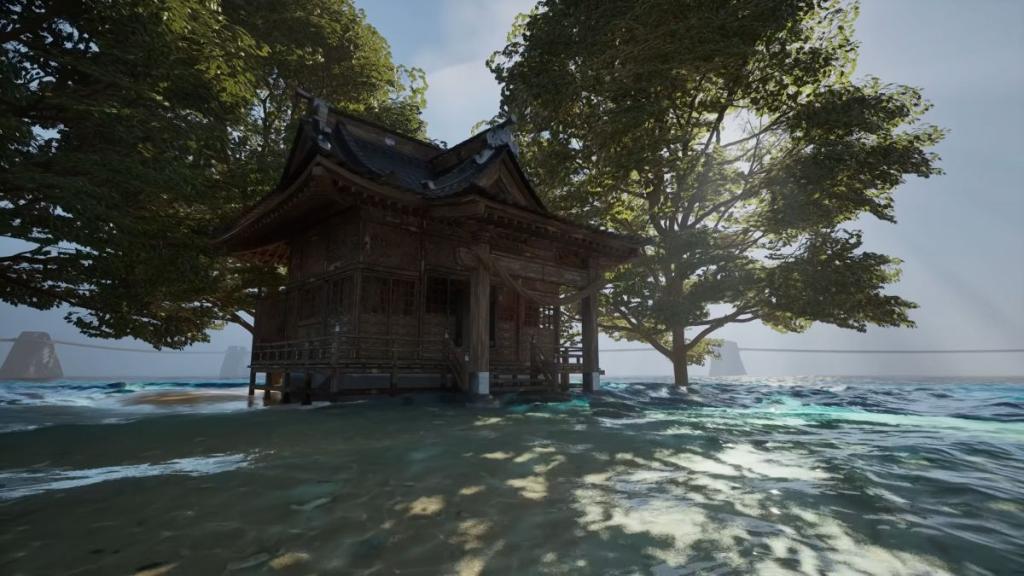
The narrative posits that the curse was inflicted by an omnipotent whale, driven to its breaking point by the relentless hunting it endured. In retaliation, it enacted this transformative curse upon the world. The fish, now experiencing human consciousness, developed a profound hatred and resentment towards their former hunters. This leads to violent behavior and cannibalism as they attempt to navigate their new, unsettling reality. UMIGARI‘s underlying message appears to be a stark examination of the destruction and suffering caused by the pursuit of monetary gain, particularly through the exploitation of animals. The game suggests that if humanity could truly communicate with, hear, or understand the suffering of animals, their perspective on fishing and exploitation would be drastically different.
The fish-turned-humans are depicted as irrational, maddened, and incoherent. However, the game provocatively suggests that their behavior is not entirely dissimilar to that of humanity. By amplifying the suffering of its own kind, the whale chose to curse the land, forcing a role reversal between fish and humans. The disturbing aspect is that the fish, in their newfound humanity, seem to have adopted the worst traits of humankind, prompting a profound question: are humans inherently evil? This philosophical inquiry forms the crux of UMIGARI‘s thematic exploration.
The Terrifying Denizens of UMIGARI
The titular monster of UMIGARI is the Umiga, a colossal female ocean spirit that lurks in the open waters. Her presence is a constant threat, and her weakness lies in the sound of bells. Players must locate and strategically place bells on buoys to ward her off, creating safe passages to new areas. While the in-game explanation for the curse and the Umiga’s role is somewhat vague, she bears a striking resemblance to Japanese folklore creatures such as the Umi-nyōbō, known for hunting humans, or potentially a colossal rendition of the Nure-onna. Her appearance is characterized by a massive female head that, when pursuing a boat, transforms into a gaping maw. Within this terrifying mouth, human-like arms emerge, attempting to drag the vessel down into the abyss.

Adding to the spectral menagerie is the Umibōzu, a sea giant. This yōkai, a gargantuan shadowy figure, is known for capsizing boats. It makes its appearance in the latter half of the game, particularly within the "Suspicious Dome," which the game’s presentation suggests is reminiscent of the fantastical setting in Spirited Away. Here, the Umibōzu attempts to engulf the player as they navigate a train-like structure within the dome.
Beyond these prominent threats, UMIGARI incorporates other monsters that draw heavily from Japanese folklore. The Nure-onna, a yōkai with the head of a woman and the body of a serpent, must be hunted for an NPC known as Local Granny, located near the Umino Maternity Hospital. The Ningyo, depicted as mermaid-like creatures, are traditionally seen as omens of misfortune but are also rumored to grant immortality. Yuria, residing in Ominous City, tasks the player with hunting Ningyo, ostensibly to aid her failing eyesight. These mythological inclusions add a rich cultural layer to the game’s horror.
The Profound Endings of UMIGARI
UMIGARI offers players two distinct endings, each contingent on their responses to questions posed by the omnipotent whale. These questions revolve around the player’s experiences as a "human hunting fish." The whale’s dialogue is framed by the context of the Girl in School Uniform, whose father is a significant character and whose plight is the initial impetus for the player’s journey to the island. The whale’s central question is direct: "Were the humans you met evil itself?" The player’s answer determines the fate of the world, reflecting whether they perceive their actions as inherently evil or if the behavior of the fish-turned-humans mirrors that of mankind.
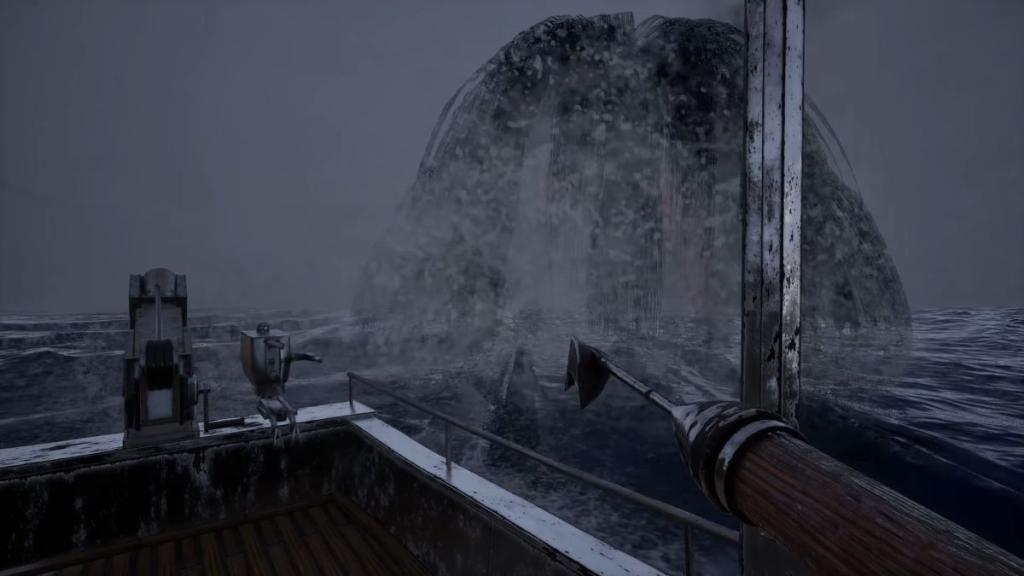
The narrative further explores the complexity of the fish-turned-humans. The Merchant, for instance, expresses a desire to remain in his new existence, believing he has unfinished business. Conversely, the Girl wishes for a return to the past, acknowledging that the protagonist’s actions, despite their intentions, still caused suffering. Crucially, the narrative suggests that the initial hatred and resentment harbored by the fish towards humanity have subsided, as it yielded no positive outcomes.
Ending A: The Eradication of Humanity
Choosing to answer "yes" to the omnipotent whale’s questions, acknowledging the inherent evil of humanity, including oneself, leads to the lifting of the curse. The concluding cinematic depicts the ocean awash with the drowned corpses of humanity, symbolizing their swift and complete eradication. This ending suggests a deeply cynical view: even if another species were to replace humans, they too would inevitably succumb to their base desires, greed, and violent tendencies. If humanity is inherently flawed and incapable of change, then its removal is the only logical solution to prevent further suffering. This conclusion is bleak, prompting players to question the purpose of their journey and the underlying meaning of the game. However, this existential contemplation is precisely the intended effect.
Ending B: A Harmonious, Yet Surreal, Coexistence
The alternative ending is achieved by answering "no" to the whale’s inquiries. In this scenario, the player advocates for the possibility of coexistence between fish and humans, suggesting that all aquatic creatures should be granted the "power to think." While the curse technically remains, with fish still inhabiting human forms and vice-versa, the world is transformed into something remarkably different. The cinematic showcases a world devoid of suffering, where fish-humans have established societies, hold jobs, attend school, and engage in trade and family life. Humanity, meanwhile, continues its existence in the water, experiencing a form of ultimate freedom. This ending offers humanity a chance to "be good," embracing a new and profound meaning of existence. The resulting peace and harmony in this wildly imaginative conclusion are fitting for what is arguably Chilla’s Art most surreal and thought-provoking title to date.