


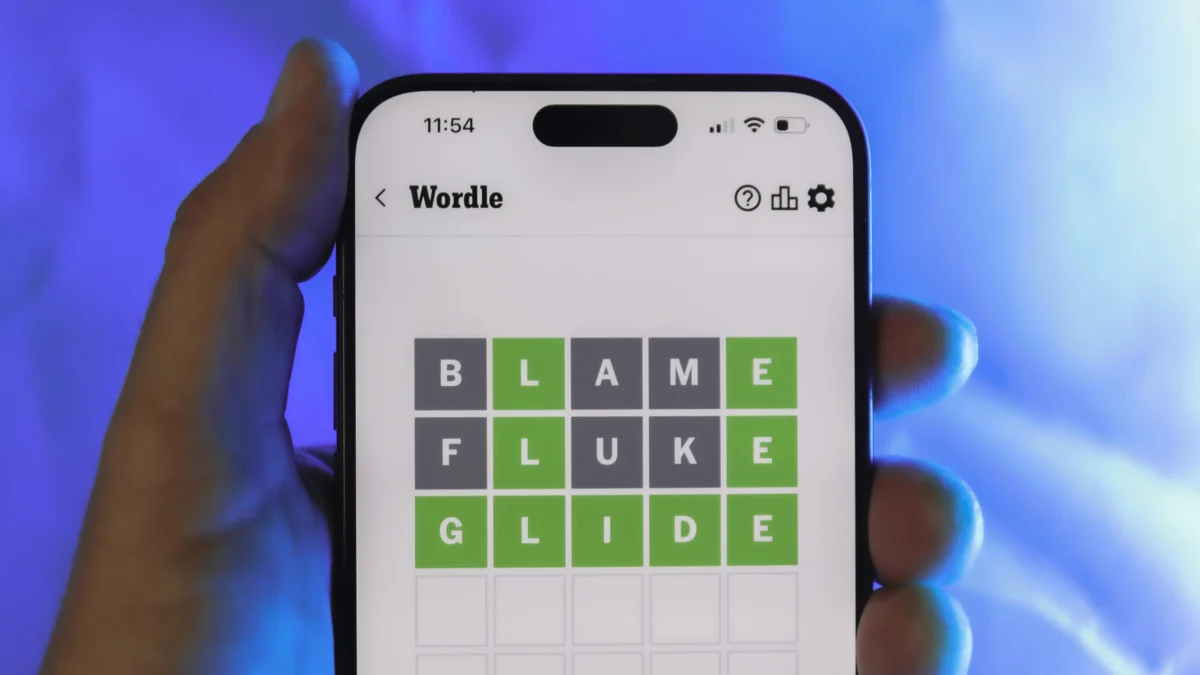
The latest installment of the global linguistic phenomenon, Wordle, presented players with a moderately challenging puzzle today, culminating in the answer PROVE. This five-letter verb, signifying the act of demonstrating something to be true, aligns with the game’s characteristic blend of common vocabulary and subtle strategic demands. Unlike many puzzles that rely on repeated letters, today’s solution featured no duplicates, incorporated two distinct vowels, and was neatly framed by starting with ‘P’ and concluding with ‘E’, providing astute players with crucial early clues. The daily unveiling of Wordle answers has become a routine for millions worldwide, a testament to the game’s enduring appeal since its public debut.
The Daily Puzzle Phenomenon: A Deeper Dive into Wordle’s Appeal
Wordle, a simple yet profoundly engaging word-guessing game, has cemented its place in daily routines across the globe. Its meteoric rise from a personal project to an international sensation can be attributed to several key factors. At its core, Wordle’s brilliance lies in its elegant simplicity: players have six attempts to guess a five-letter word, receiving feedback after each guess indicating which letters are correct and in the right position (green), correct but in the wrong position (yellow), or not in the word at all (grey). This intuitive feedback loop, combined with the singular daily puzzle, fosters a sense of collective experience and anticipation.
The game’s accessibility is another cornerstone of its success. Available directly through a web browser, it requires no downloads or complex interfaces, making it immediately playable for anyone with an internet connection. This low barrier to entry significantly contributed to its viral spread, as players could easily share their results – a grid of colored squares – on social media platforms without revealing the answer, thus encouraging others to participate. This social sharing aspect transformed a solitary game into a communal event, sparking friendly competition and discussions about optimal strategies. The pursuit of maintaining a "winning streak" further intensifies engagement, compelling players to return daily, honing their linguistic and deductive skills. For many, Wordle has transcended mere entertainment, evolving into a daily mental exercise that offers a brief, satisfying intellectual challenge.
Strategic Mastery: Optimizing Your Wordle Performance
For those aiming to consistently crack the daily Wordle, strategic word selection is paramount. While luck can play a minor role, a methodical approach significantly enhances success rates. One of the most widely adopted strategies revolves around the initial "starter word." The goal of the first guess is not necessarily to stumble upon the correct answer, but rather to maximize the information gained about the hidden word. This means choosing a word that incorporates a high number of frequently used letters in the English language, alongside a good mix of vowels.
Linguistic analysis, often referencing resources like the Oxford English Dictionary, reveals that certain letters appear with far greater frequency than others. The top-tier letters typically include E, A, R, I, O, T, N, S, L, and C. Therefore, an effective starter word will often include several of these high-frequency letters. Popular choices among seasoned players include "ADIEU," "CRANE," "SLATE," and "TRAIN." "ADIEU," for instance, boasts four vowels (A, E, I, U), providing an excellent initial survey of potential vowel placements. "CRANE" and "SLATE" offer a balanced mix of common consonants and vowels, allowing players to quickly identify both letter presence and position. The choice between a vowel-heavy or consonant-heavy starter often depends on individual preference and a player’s perceived risk tolerance. Some prefer to pin down vowels early, while others prioritize identifying common consonants. Regardless of the specific choice, the underlying principle remains the same: gather as much diverse information as possible with the first one or two guesses to narrow down the vast possibilities.
Subsequent guesses then become a process of deductive reasoning. If the first word reveals a green ‘E’ in the second position, subsequent guesses should strategically incorporate ‘E’ in that position while testing other high-frequency letters that have not yet been used or eliminated. This iterative process of eliminating possibilities and confirming letter placements is central to Wordle’s strategic depth, transforming each puzzle into a miniature linguistic investigation.
Beyond the Daily Guess: The Science and Psychology of Wordle

The allure of Wordle extends beyond its immediate entertainment value, touching upon cognitive science and psychology. Engaging with the daily puzzle offers a myriad of mental benefits. Firstly, it sharpens vocabulary and enhances pattern recognition skills. Players are constantly sifting through their mental lexicon, recalling words that fit specific letter patterns and constraints. This active recall and application of linguistic knowledge serve as a gentle, yet effective, form of cognitive exercise.
Furthermore, Wordle is an excellent tool for developing deductive reasoning. Each guess generates new data, and players must logically process this information to formulate their next hypothesis. The process of eliminating incorrect letters, confirming correct ones, and deducing their positions mirrors problem-solving strategies employed in various real-world scenarios. This constraint satisfaction task provides a rewarding mental workout.
From a psychological perspective, the "aha!" moment of solving a Wordle puzzle triggers a release of dopamine, the brain’s "reward" chemical. This neurochemical response contributes to the game’s addictive quality and the feeling of satisfaction players experience upon successful completion. The short, finite nature of the daily puzzle also plays a crucial role. It offers a sense of accomplishment without demanding a significant time commitment, making it an ideal mental break that fits seamlessly into busy schedules. The social aspect, where players share their success (or humorous failures) with others, reinforces this positive feedback loop, fostering a sense of community and shared experience that further enhances its psychological appeal.
A Brief History of Wordle: From Personal Project to Global Sensation
Wordle’s origin story is a quintessential tale of modern digital success. It was created by Josh Wardle, a software engineer based in New York, initially as a private game for his partner, Palak Shah, who enjoyed word puzzles. The game was designed to be simple, ad-free, and devoid of the common monetization tactics often found in mobile games. Wardle released Wordle to the public in October 2021, and its growth was initially modest, primarily shared among friends and family.
However, by January 2022, Wordle had exploded into a global phenomenon. Its popularity surged organically, driven largely by word-of-mouth and the distinct grid-sharing feature on social media. The simplicity, combined with the fact that there was only one puzzle per day, created a sense of scarcity and anticipation that fueled its viral spread. Within a few months, millions of people were playing Wordle daily. This rapid ascent caught the attention of major media organizations, leading to one of the most significant acquisitions in the casual gaming space.
In February 2022, The New York Times Company announced its acquisition of Wordle from Josh Wardle for an undisclosed sum, reportedly in the "low seven figures." This move was a strategic play by the NYT to bolster its rapidly expanding Games division, recognizing Wordle’s immense power to attract and engage a broad audience. Wardle, who had created the game out of love and not for profit, expressed his delight at the acquisition, noting that the NYT’s commitment to quality journalism and puzzles aligned with his vision for the game’s future.
The New York Times’ Puzzle Empire: Wordle’s Place in a Growing Portfolio
The acquisition of Wordle marked a significant expansion for The New York Times’ already robust Games division. Long celebrated for its iconic daily crossword puzzle, the NYT has been strategically investing in its digital puzzle offerings to diversify its content and enhance subscriber engagement. Wordle perfectly complemented this strategy, bringing a new, highly accessible, and globally popular puzzle into its fold.
Beyond the classic crossword, the NYT Games platform now features a diverse array of challenges, including the concise and often witty Mini Crossword, the intricate logic puzzle Connections, and the newer, more abstract word association game Strands. There’s even a specialized "Connections: Sports Edition" for sports enthusiasts. Wordle’s integration has significantly broadened the appeal of the NYT Games, attracting a demographic that might not typically engage with traditional crosswords.
For The New York Times, Wordle serves as a powerful funnel for reader engagement and potential subscriptions. While the company initially committed to keeping Wordle free to play, it strategically places the game within its broader digital ecosystem, exposing players to its other premium content. The Games section is a key component of the NYT’s digital subscription strategy, encouraging users to convert from free players to paying subscribers who gain access to an expanded suite of puzzles and journalistic content. By maintaining a high standard for its puzzles and continuously innovating, the NYT aims to solidify its position as a premier destination for intellectual entertainment and news.
Chronology of Key Wordle Moments
- June 2021: Josh Wardle creates Wordle for his partner, Palak Shah, and close friends.
- October 2021: Wordle is released to the public, gaining a small, dedicated following.
- January 2022: Wordle’s popularity explodes, becoming a viral sensation globally, largely due to its social media sharing feature. Player count rises from tens of thousands to millions daily.
- February 2022: The New York Times Company acquires Wordle for a reported seven-figure sum, integrating it into its Games portfolio.
- Ongoing: Wordle continues to release a new puzzle daily, maintaining its position as one of the most played online word games, consistently drawing millions of active users and sparking daily conversations across social platforms.
Challenges and Evolution: Adapting to Success
While Wordle’s success has been undeniable, its journey has not been without its challenges. One ongoing task for the game’s curators at The New York Times is maintaining a consistent level of difficulty and ensuring word choices are fair and broadly recognizable. Occasionally, words are deemed too obscure or too simple, leading to minor fluctuations in player satisfaction. The NYT has taken steps to curate the word list, removing some exceptionally rare or potentially offensive terms that were part of Wardle’s original database.
Another aspect of managing a viral game is addressing "spoiler" concerns. Given the single daily puzzle, early solvers can inadvertently reveal the answer, impacting the experience for others. While the game’s design encourages sharing results rather than answers, social media etiquette surrounding Wordle has become a nuanced discussion point among its community. Furthermore, the immense popularity has naturally spawned numerous clones and variations, from those that offer multiple puzzles a day to those that introduce new rules or word lengths. While none have matched the original’s cultural penetration, they underscore Wordle’s profound influence on the digital puzzle landscape. The New York Times’ commitment to keeping the core Wordle experience pure and accessible has been key to preserving its unique charm amidst this proliferation.
The Broader Impact: Wordle’s Influence on Digital Gaming and Language
Wordle’s impact extends beyond its individual success, influencing both the digital gaming sphere and broader conversations about language. Its minimalist design and single-daily-puzzle model have inspired a new wave of casual online games that prioritize simplicity, shareability, and a gentle intellectual challenge over complex graphics or aggressive monetization. It demonstrated that a well-designed, free-to-play browser game could capture massive audiences without relying on traditional gaming industry tropes.
On a linguistic level, Wordle has reignited public interest in vocabulary, etymology, and the intricacies of the English language. Daily discussions about letter frequency, optimal starting words, and the nuances of five-letter words have become commonplace. It has brought word puzzles to a new generation of players, many of whom might not have engaged with traditional crosswords or other word games. This widespread engagement serves as a testament to the inherent human fascination with language and the satisfaction derived from mastering its patterns.
The collective experience of tackling the same word daily has fostered a unique global community. Players from diverse backgrounds, speaking different languages, all converge on the shared challenge of English vocabulary. This shared cultural touchstone exemplifies how simple digital creations can bridge divides and create moments of universal engagement.
In conclusion, the daily revelation of Wordle answers, such as today’s "PROVE," is more than just a momentary solution to a puzzle. It is a recurring event that underscores the profound success of a game born from personal affection, cultivated through elegant design, and magnified by communal engagement. From its strategic depth to its cognitive benefits and its significant role within The New York Times’ growing puzzle empire, Wordle continues to captivate and challenge millions, solidifying its legacy as a modern cultural phenomenon and a testament to the enduring appeal of linguistic play.