



The landscape of business simulation games has long been a territory explored by enthusiasts, with titles like Transport Tycoon, Rollercoaster Tycoon, and the Sim series carving out dedicated fan bases. While the genre has seen evolution, the core mechanics of resource management, strategic planning, and market manipulation have remained relatively consistent. However, the recently launched Big Ambitions, which has transitioned from early access to its full 1.0 release, is proving to be a remarkable outlier, challenging expectations and captivating players with an unexpectedly deep and addictive gameplay loop. Initially appearing to present a mundane premise, the game has garnered significant attention for its ability to transform the often-dry mechanics of entrepreneurship into a compelling and time-consuming experience.
The Genesis of a Business Empire: From Humble Beginnings to Grand Aspirations
Big Ambitions places players in the shoes of an aspiring entrepreneur in a sprawling, dynamic city. The core objective, at its surface, involves establishing and growing various businesses, from small retail outlets to larger commercial enterprises. This necessitates meticulous attention to detail, including setting competitive pricing, optimizing employee schedules, sourcing products efficiently, and continuously refining operational strategies to maximize profitability. This foundational layer of business management is familiar to veterans of the genre, drawing parallels to the intricate systems found in titles like The Guild 2, which, while engaging, often appealed to a niche audience.
What sets Big Ambitions apart, however, is its innovative integration of personal character management within the business simulation framework. Players are not just abstract managers; they are active participants in the game world, responsible for their in-game avatar’s well-being. This includes the seemingly mundane, yet crucial, tasks of maintaining their character’s physical and mental state. The game mandates players to ensure their avatar is adequately fueled, rested, and even entertained. This translates to activities such as managing hunger and thirst, ensuring proper hygiene through showering, dedicating time to exercise at the gym, and finding moments of relaxation through activities like watching television or playing other computer games within the game itself.
This dual focus on macro-level business strategy and micro-level personal upkeep was initially perceived as a potential detractor, raising questions about whether such granular detail would lead to a tedious or unengaging experience. Early player impressions, and indeed the sentiment of many who have delved into the game, reflect a similar initial skepticism. The prospect of managing a business empire while simultaneously ensuring one’s digital persona doesn’t suffer from malnutrition or lack of sleep might, on paper, sound akin to a chore. Yet, the execution of these mechanics within Big Ambitions has proven to be a masterstroke, weaving these personal needs into the overarching strategic tapestry.

The Mechanics of Success: Supply Chains, Logistics, and the Art of the Deal
To achieve true business prosperity in Big Ambitions, players must delve deep into the complexities of supply chain management. This involves not only acquiring goods but also establishing robust networks for their distribution. Renting warehouse space becomes a strategic necessity, and hiring specialized personnel such as purchasing officers and logistics managers is paramount to ensuring a seamless flow of inventory. Maintaining optimal import inventory levels, balancing stock to meet demand without incurring excessive carrying costs, is a constant challenge that rewards foresight and careful planning.
The game’s progression is marked by an incremental yet immensely satisfying journey. The initial grind, often characteristic of early-stage business simulations, quickly gives way to a sense of accomplishment as players begin to see their carefully laid plans bear fruit. The realization of a functional and profitable business model, one that can be replicated across different districts and expanded into multiple franchises, provides a powerful sense of achievement. This iterative process of building, optimizing, and expanding is at the heart of Big Ambitions‘ appeal, encouraging players to continuously set new goals and push the boundaries of their entrepreneurial endeavors.
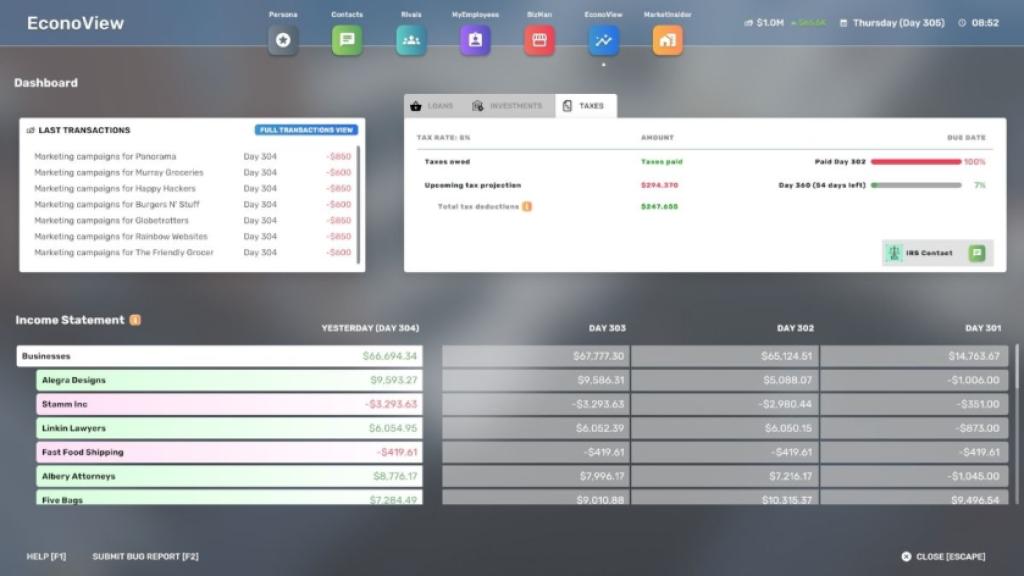
The visual representation of the game’s business management, while detailed, often evokes comparisons to complex spreadsheets. The initial screenshot provided, showing a detailed business overview, might deter those seeking immediate visual gratification. However, the underlying gameplay mechanics are designed to imbue these data-driven systems with a compelling sense of progress and reward, transforming what could be perceived as dry interfaces into dynamic tools for growth.
The Unforeseen Allure: Why Big Ambitions Captivates
The enduring question surrounding Big Ambitions is precisely why it works so effectively, transforming a potentially dull premise into an obsession for many players. While the inherent satisfaction derived from incremental progress in any simulation game is a significant factor, Big Ambitions distinguishes itself through its player-centric approach to problem-solving. The game does not overly dictate the player’s path; instead, it provides a rich sandbox where players are encouraged to discover solutions and strategies independently. This autonomy fosters a profound sense of accomplishment, making each breakthrough feel like a personal triumph of intellect and strategic acumen.
The constant pursuit of new objectives fuels the game’s longevity. Whether it’s the ambition to open a new retail outlet, establish a thriving chain of burger joints, or simply acquire the most luxurious apartment adorned with high-end furnishings and a coveted Ferrari, there is always a tangible goal to strive for. This variety in aspirational targets ensures that players remain engaged, constantly looking towards the next milestone.
A particularly compelling feature is the in-game leaderboard, which serves as a constant reminder of one’s progress relative to AI-controlled rivals. As income streams grow and businesses expand, players ascend this competitive ladder, providing a clear visual representation of their success. This competitive element is further amplified by the occasional "business attacks" from rivals. These aren’t overtly aggressive actions but rather strategic maneuvers designed to disrupt the market. Rivals might engage in aggressive price wars to undercut your offerings, or strategically flood local markets with competing products to diminish demand for your own goods. While these actions can be challenging, the game is designed such that a well-established cash reserve and a resilient business infrastructure allow players to weather these storms effectively. As a player’s empire solidifies, these competitive skirmishes become less impactful, underscoring the player’s dominance.
The developer’s approach to player agency is a key differentiator. While the game includes elements of competition and strategic defense, there is a palpable desire among some players for more direct offensive capabilities against rivals. Speculation exists within the community regarding whether such features are already present and yet to be discovered, or if they might be implemented in future updates. The fact that many players, even after investing over 50 hours, are still navigating the tutorial, speaks volumes about the depth and hidden intricacies of Big Ambitions. This suggests a game designed for exploration and long-term engagement, rather than a linear, easily mastered experience.
The Broader Implications for the Business Simulation Genre
The successful launch and subsequent player reception of Big Ambitions could signal a broader shift in the business simulation genre. The game demonstrates that integrating personal character needs and a dynamic, responsive game world can elevate the traditional management simulation. This approach moves beyond the purely abstract management of resources and introduces a layer of relatable, human elements that resonate with a wider audience. The game’s success suggests a market eager for more nuanced and immersive simulation experiences that blend strategic depth with engaging personal narratives.
The fact that Big Ambitions has recently transitioned to its 1.0 release indicates a commitment from the developers to a polished and complete experience, while also hinting at a future roadmap of potential expansions and updates. The game’s ability to deliver such a captivating experience from its initial stages, and its continued evolution, positions it as a significant title in the modern gaming landscape.
For players who may have grown disillusioned with the perceived stagnation of the business sim genre, Big Ambitions offers a compelling reason to reinvest. Its premise, which might initially seem unremarkable, belies a sophisticated and deeply engaging simulation that rewards strategic thinking, patience, and a willingness to delve into the intricate details of building a business from the ground up. The game stands as a testament to innovative game design, proving that even the most seemingly mundane concepts can be transformed into captivating and enduring entertainment when approached with creativity and a deep understanding of player psychology. The continued growth and development of Big Ambitions will undoubtedly be watched closely by both players and industry observers, as it sets a new benchmark for what a business simulation game can achieve.