


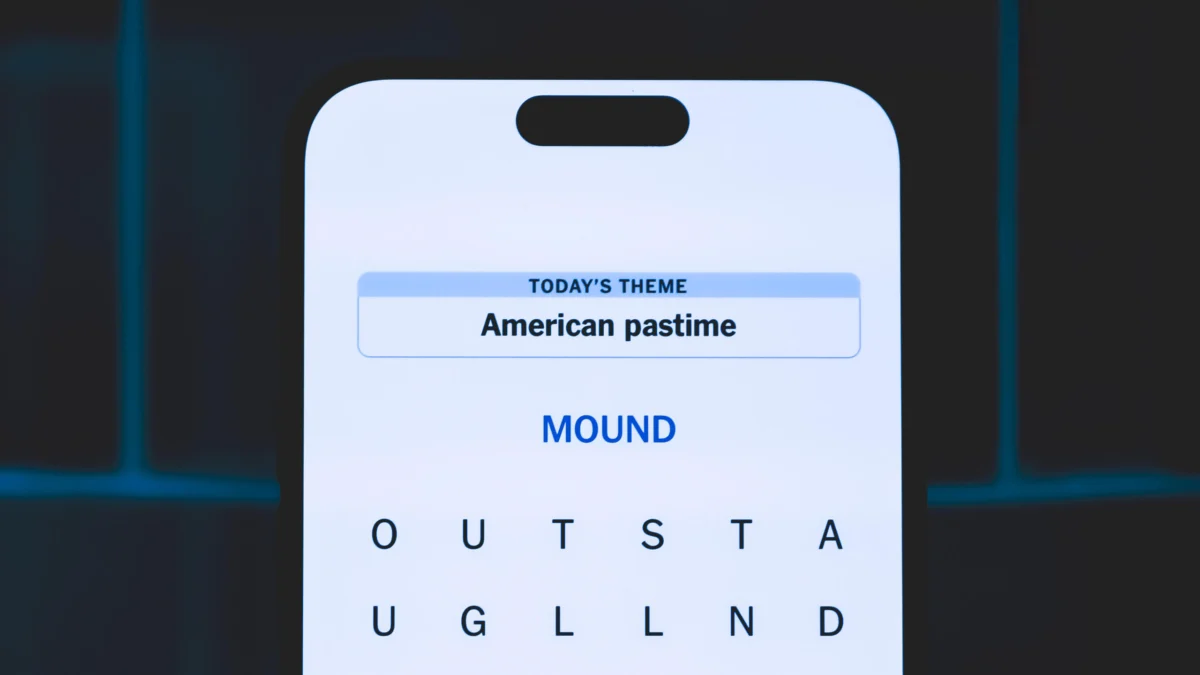
For millions worldwide, the daily unveiling of a new Strands puzzle from The New York Times has become a cherished ritual, a mental workout that challenges vocabulary, pattern recognition, and lateral thinking. This innovative word-find game, a recent addition to the esteemed NYT Games suite, distinguishes itself by offering a unique blend of familiar mechanics and novel twists, captivating a diverse audience from casual solvers to dedicated logophiles. CNET, among other prominent platforms, routinely provides daily insights, hints, and answers for Strands, alongside other popular NYT puzzles like the Mini Crossword and Connections, underscoring the widespread engagement with these digital diversions.
Strands operates on a deceptively simple premise: players must identify hidden words within a grid of letters that all relate to a central, often enigmatic, theme. Unlike traditional word-find games that provide a list of target words, Strands presents only the theme, leaving players to deduce the words themselves. This absence of an explicit word list elevates the challenge considerably, transforming a straightforward search into a nuanced exercise in thematic association and linguistic deduction. A central feature of each puzzle is the "spangram," a theme-related word or phrase that spans across the grid, often diagonally or with complex turns, and serves as a key to unlocking the broader theme. Once found, the spangram illuminates the overarching concept, making the remaining themed words more accessible.
The gameplay mechanics of Strands are designed to be both challenging and accommodating. Players are tasked with tracing paths through adjacent letters to form words of four or more letters. The primary objective is to uncover all the theme-related words and the spangram, ensuring that every letter on the board is utilized in a solution. For moments of particular difficulty, Strands incorporates a clever hint system: players can submit any three non-theme words of four or more letters, and in exchange, the puzzle will highlight one of the remaining theme words. This "loophole," as some players affectionately call it, provides a strategic avenue for progress without directly revealing the solution, maintaining a delicate balance between assistance and self-discovery. However, even with a highlighted theme word, the intricate task of unscrambling its exact location and path within the grid often remains a formidable challenge.
The Evolution of The New York Times Games Ecosystem
The integration of Strands into The New York Times’ digital offerings is part of a broader, highly successful strategy to expand its casual games division, attracting and retaining subscribers through engaging, intellectually stimulating content. The journey began decades ago with the iconic New York Times Crossword puzzle, which, for generations, has been a staple of intellectual recreation. The digital transition of the crossword, coupled with the introduction of the daily Mini Crossword, laid the groundwork for a burgeoning online puzzle empire.

A pivotal moment in this expansion came with the acquisition of Wordle in January 2022. Wordle, a simple yet addictive word-guessing game, exploded in popularity during the pandemic, captivating millions with its shareable daily challenge. Its success demonstrated the immense potential of accessible, daily digital puzzles to foster community and engagement. Building on this momentum, The New York Times introduced Connections in August 2023, a game that challenges players to group words into categories based on subtle associations. Connections quickly garnered a dedicated following, further solidifying the NYT Games platform as a leader in the casual puzzle space. Strands, launched in beta in 2024 and officially released shortly thereafter, represents the latest innovation in this expanding portfolio, designed to offer a fresh, distinct challenge while leveraging the established user base.
The development of Strands and its predecessors reflects a calculated approach by The New York Times to diversify its digital content beyond traditional news, recognizing the power of games to enhance brand loyalty and drive subscriptions. The games are often presented as a premium feature for subscribers, encouraging conversion and retention. This strategy has proven highly effective, with NYT Games contributing significantly to the company’s digital growth metrics and overall subscriber numbers.
Anatomy of a Daily Challenge: The "Changing Course" Puzzle
A recent example illustrating the typical daily challenge presented by Strands is the puzzle dated October 6, 2026. The theme for this particular day was "Changing course," a phrase that immediately suggests movement, alteration, or a shift in direction. Such themes are characteristic of Strands, often requiring players to think metaphorically or identify synonyms and related concepts rather than literal interpretations.
For many players, the initial clue, "Not this, but that," might offer a slight nudge, hinting at alternatives or divergences. However, the true test lies in uncovering the hidden words. The spangram for this specific puzzle, "THEOLDSWITCHEROO," is a prime example of Strands’ playful yet challenging design. It’s a colloquial phrase perfectly encapsulating the theme of "changing course" through a sudden, often surprising, alteration or reversal. The instruction to find it by starting "with the T that’s three letters to the right on the bottom row, and wind up and then down" highlights the non-linear, often serpentine paths words can take, a signature element of Strands’ difficulty. The visual confirmation of a completed grid, with all letters integrated into theme words, provides a satisfying culmination to the daily mental endeavor.
The absence of an explicit list of theme words prior to solving means that players must rely on intuition and experimentation. This design choice fosters a deeper engagement with the puzzle, as solvers actively construct the solution space rather than merely matching given words. The variability in the number of theme words, a detail noted by experienced players, adds another layer of unpredictability, ensuring that each day’s puzzle feels unique.
The Cognitive and Psychological Appeal of Word Puzzles
The widespread appeal of games like Strands extends beyond mere entertainment; it taps into fundamental human desires for challenge, accomplishment, and cognitive stimulation. From a psychological perspective, engaging with word puzzles offers numerous benefits:
- Enhanced Vocabulary: Regularly encountering new words and phrases, or re-evaluating familiar ones in novel contexts, naturally expands a player’s lexicon.
- Improved Pattern Recognition: The core mechanic of identifying hidden words and thematic connections sharpens the brain’s ability to discern patterns and relationships within seemingly random data.
- Boosted Problem-Solving Skills: Each puzzle presents a complex problem that requires strategic thinking, hypothesis testing, and iterative refinement of solutions.
- Increased Mental Agility: The rapid processing of information, switching between different potential word formations, and holding multiple possibilities in mind exercises mental flexibility.
- Stress Reduction and Mindfulness: For many, the focused concentration required to solve a puzzle provides a welcome distraction from daily stressors, promoting a state akin to mindfulness. The satisfaction of completion releases dopamine, reinforcing the positive experience.
- Cognitive Reserve: Studies suggest that engaging in mentally stimulating activities throughout life can contribute to cognitive reserve, potentially delaying the onset of age-related cognitive decline. While direct causality is complex, the correlation between active minds and brain health is widely recognized.
The "aha!" moment when a theme clicks, or a difficult spangram is finally traced, is a powerful motivator, driving players to return day after day. This intrinsic reward mechanism is central to the success of all NYT Games, including Strands.
The Social and Community Dimension
Beyond individual cognitive benefits, daily puzzles like Strands foster a vibrant online community. Social media platforms buzz with discussions, strategy sharing, and gentle boasts about solving the puzzle without hints. Players compare their solve times, debate the nuances of themes, and sometimes even express shared frustration over particularly tricky challenges. This communal aspect transforms a solitary activity into a shared cultural experience, reinforcing the daily habit.
The shareable nature of results, often presented in a spoiler-free grid, allows players to participate in this collective ritual without revealing solutions to others. This balance between individual achievement and communal participation is a cornerstone of modern digital puzzle design, building loyalty and a sense of belonging among solvers. For The New York Times, this organic social engagement serves as a powerful marketing tool, amplifying the reach and appeal of its games.

Implications and Future Outlook for Digital Puzzles
The success of Strands, Connections, Wordle, and the enduring popularity of the Mini Crossword signals a robust and growing market for digital puzzles. This trend has several significant implications:
- Diversification of Content: News organizations are increasingly recognizing the value of non-traditional content, like games, in attracting and retaining audiences, particularly younger demographics who may not primarily seek news through traditional channels.
- Subscription Model Reinforcement: High-quality, engaging digital games act as a powerful incentive for consumers to subscribe to premium content, demonstrating the value proposition beyond core journalism.
- Innovation in Game Design: The demand for fresh, challenging experiences drives innovation in puzzle design. Strands, with its unique "no word list" approach and spangram mechanic, exemplifies this creativity. We can anticipate further evolution in puzzle formats, potentially incorporating elements of artificial intelligence for personalized challenges or more adaptive difficulty levels.
- Cognitive Health Awareness: The popularity of these games contributes to a broader public awareness of cognitive health and the benefits of mental exercise, potentially influencing educational tools and wellness programs.
As digital consumption habits continue to evolve, the integration of intellectually stimulating games into daily routines is likely to grow. The New York Times, through its strategic expansion of NYT Games, has positioned itself at the forefront of this movement, offering a compelling blend of challenge, satisfaction, and community. Strands, with its ingenious design and daily dose of wordplay, stands as a testament to the enduring appeal of puzzles and their increasingly significant role in our digital lives. It’s more than just a game; it’s a daily mental pilgrimage, an opportunity to "change course" from the mundane and embark on a journey of linguistic discovery.