



The unassuming world of a social recluse and his pet pig is irrevocably altered when a celestial event brings an otherworldly substance crashing to Earth. Hermit, a solitary forager by day and a creature of habit by night, finds his meticulously ordered existence disrupted by the arrival of a mysterious blue mushroom. This singular event propels Hermit and his porcine companion, Pig, into a whirlwind adventure that transcends their quiet woodland existence and plunges them into the heart of a town grappling with an escalating conspiracy. The game, Hermit and Pig, presents a turn-based role-playing experience that prioritizes a narrative-driven, compact storyline, aiming to deliver a heartwarming and smile-inducing journey for its players. While the overarching plot may tread familiar ground, its true strength lies not in groundbreaking narrative complexity, but in its meticulously crafted dialogue and endearing characters, which collectively form the game’s undeniable appeal.
The Genesis of an Unlikely Alliance
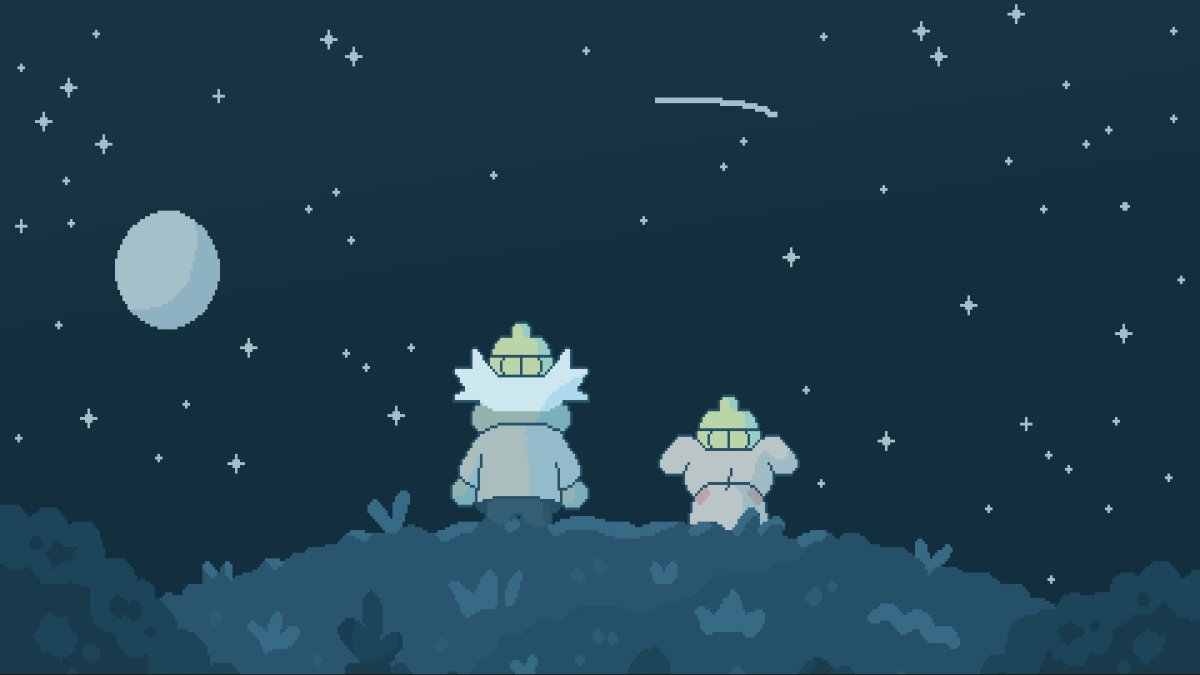
The narrative of Hermit and Pig begins with a scene of idyllic tranquility. Hermit, a character defined by his preference for solitude and his deep bond with his pig, Pig, engages in their daily ritual of foraging for mushrooms and truffles in the serene wilderness. This peaceful routine is shattered by the unexpected arrival of Mary, a character whose introduction serves as the catalyst for the unfolding events. In a moment of uncharacteristic impulsivity, Hermit consumes a blue mushroom, an act that triggers a series of extraordinary occurrences. This consumption, seemingly innocuous, initiates a journey for Hermit and Pig that leads them from their secluded haven into the bustling, and soon to be chaotic, town. Here, they become entangled in a conspiracy that rapidly escalates, transforming ordinary townsfolk into adversaries and blurring the lines between the mundane and the extraordinary. The game posits a world where almost every entity Hermit encounters possesses the capacity for both combat and conversation, presenting a unique challenge for the introverted protagonist.
A Narrative Unfolding Through Quirk and Humor
Hermit and Pig distinguishes itself through a palpable sense of identity and an abundance of character, drawing parallels to beloved indie titles such as Frog Detective, Thank Goodness You’re Here!, and Night in the Woods. The game masterfully blends quirkiness, humor, and exceptionally witty dialogue to maintain a lighthearted atmosphere throughout the adventure. Even as the stakes progressively rise and the narrative ventures into more complex territory, the pervasive comedic relief ensures that players are consistently reminded not to take the unfolding events too seriously. This deliberate approach serves as a comforting affirmation, particularly for individuals who, like the game’s protagonist, may struggle with social anxiety, offering a gentle reminder that life’s challenges, while present, are not inherently insurmountable.
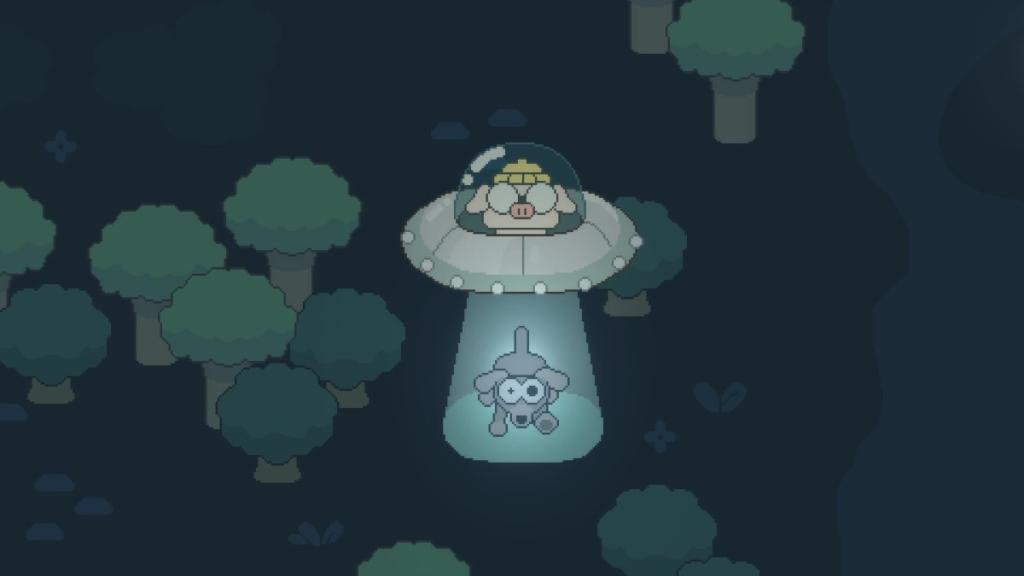
The game’s visual presentation complements its narrative style, with a vibrant and charming art direction that actively invites players to relax and immerse themselves. Despite the absence of voice acting, each character possesses a distinct and memorable voice, conveyed through their dialogue and expressive animations. These characterizations are both whimsical and remarkably believable, significantly enhancing the impact of the overarching story. The eccentric personalities of the townsfolk and their interactions breathe life into an otherwise static environment. This consistent quirkiness extends to Hermit and Pig’s dream sequences, which evoke a nostalgic resonance reminiscent of the dreamscapes found in Night in the Woods.
Gameplay Mechanics: Accessible Exploration and Engaging Quests
The design and core gameplay mechanics of Hermit and Pig are remarkably easy to grasp, making it an accessible experience for a broad audience. The pacing and level design are straightforward yet effective, complemented by an intuitive map system that clearly indicates objectives without resorting to excessive hand-holding. While the reviewer expresses a personal preference for avoiding side quests due to their potential to disrupt immersion, Hermit and Pig excels at seamlessly integrating these optional tasks into the main narrative. This integration fosters a sense of natural progression, ensuring that quests remain engaging, enjoyable, and decidedly non-tedious. Consequently, side content enhances the overall flow of the story and even makes backtracking an engaging endeavor rather than a chore.

The game is replete with meticulously placed details that contribute to its charm. Hermit’s animations are particularly noteworthy: he visibly holds quest items, employs a balancing act when traversing narrow beams, offers a comforting head pat to Pig for a small health recovery (1HP), and exhibits signs of nervousness, such as profuse sweating, when approaching conversations. The soundtrack further enhances the nostalgic appeal, drawing strong comparisons to the iconic scores of the original Crash Bandicoot series. This deliberate inclusion of nostalgic elements creates a powerful sense of familiarity, transporting players back to their childhood and fostering a deep connection with the game.
Combat and Accessibility: A Thoughtful Approach
Hermit and Pig offers a unique approach to combat, integrating accessible options that cater to a wide range of player preferences. Beyond the standard difficulty settings, the game provides options to simplify controls, a feature that the reviewer commends as a desirable addition to more titles. As enemy health bars increase, the combat system evolves, introducing new strategies and attack patterns. This dynamic approach ensures that combat remains engaging without becoming overly complex. The user interface is clean and intuitive, presenting all necessary information within easy reach and providing a clear navigation system for players who may need a refresher on game mechanics.
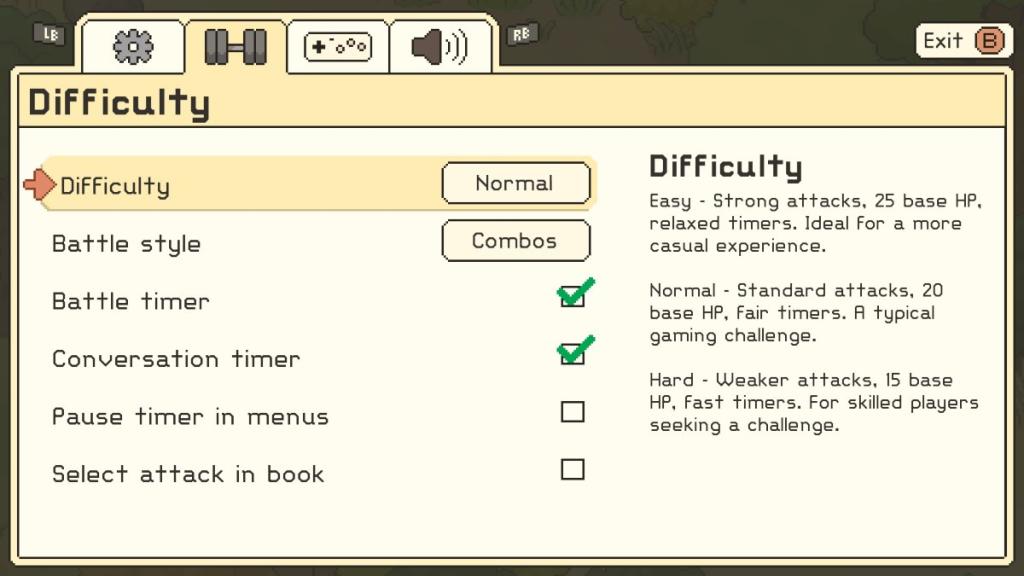
The game features a variety of collectible and craftable items, including Trinkets, Mushrooms, and Truffles, which play crucial roles in both exploration and combat. Trinkets offer combat buffs, Mushrooms serve as healing or status-altering items, and Truffles are essential for reviving fallen allies. While the combat system involves elements of random chance (RNG) and strategic decision-making to identify effective attack patterns, the overall difficulty is designed to be approachable. The reviewer notes that despite playing on Normal difficulty and deliberately handicapping themselves by not utilizing special moves (due to a controller mapping issue), they only felt the need to employ special moves during the final boss encounter, indicating a generally moderate challenge curve. The game’s design suggests it is not intended to be an arduous experience, prioritizing enjoyment and accessibility over punishing difficulty.
Navigating Social Encounters and the Anxiety Mechanic
A particularly innovative aspect of Hermit and Pig is its "socializing mechanic," which mirrors combat encounters in its presentation. This system serves to break up the intensity of battles by introducing dialogue-based challenges. Players must select the most socially acceptable dialogue options, with Hermit’s anxiety manifesting as a loss of 1HP for each cringe-worthy response. While this mechanic is entertaining and adds a unique layer to the game’s thematic exploration of anxiety, it is also remarkably easy to navigate without incurring any health penalties. Furthermore, these social encounters are consistently positioned near save points, mitigating any significant risk. The reviewer expresses a desire for higher stakes within this mechanic, suggesting that increased HP loss or more severe consequences could have amplified its impact and raised the overall challenge.

The game’s design philosophy emphasizes player enjoyment and forgiveness. Save stations are plentiful, minimizing the frustration of losing progress, and resources like Mushrooms are readily available through Pig’s foraging abilities, vendor trades, or exploration. However, the reviewer points out a minor design inconsistency where the "Run" option is available even in scripted fights, leading to a humorous situation where the player was praised for defeating a bear after opting to flee the encounter.
Replayability and Overall Impression
Despite its charming narrative and engaging mechanics, Hermit and Pig may be perceived as lacking in replayability, particularly for players who disable certain mechanics like the combo system, which can significantly reduce the game’s challenge. The experience is generally considered to be on the easier side of the RPG spectrum. However, for players seeking a cozy, turn-based RPG that delivers a consistently enjoyable experience, Hermit and Pig stands out as an authentically entertaining journey from beginning to end. The game’s ability to evoke nostalgia, its lighthearted humor, and its well-developed characters contribute to a memorable and heartwarming adventure that offers a welcome respite from more demanding gaming experiences. The meticulously crafted details, from character animations to the soundtrack, all coalesce to create a cohesive and charming world that players will find themselves eager to explore alongside Hermit and his faithful pig.