


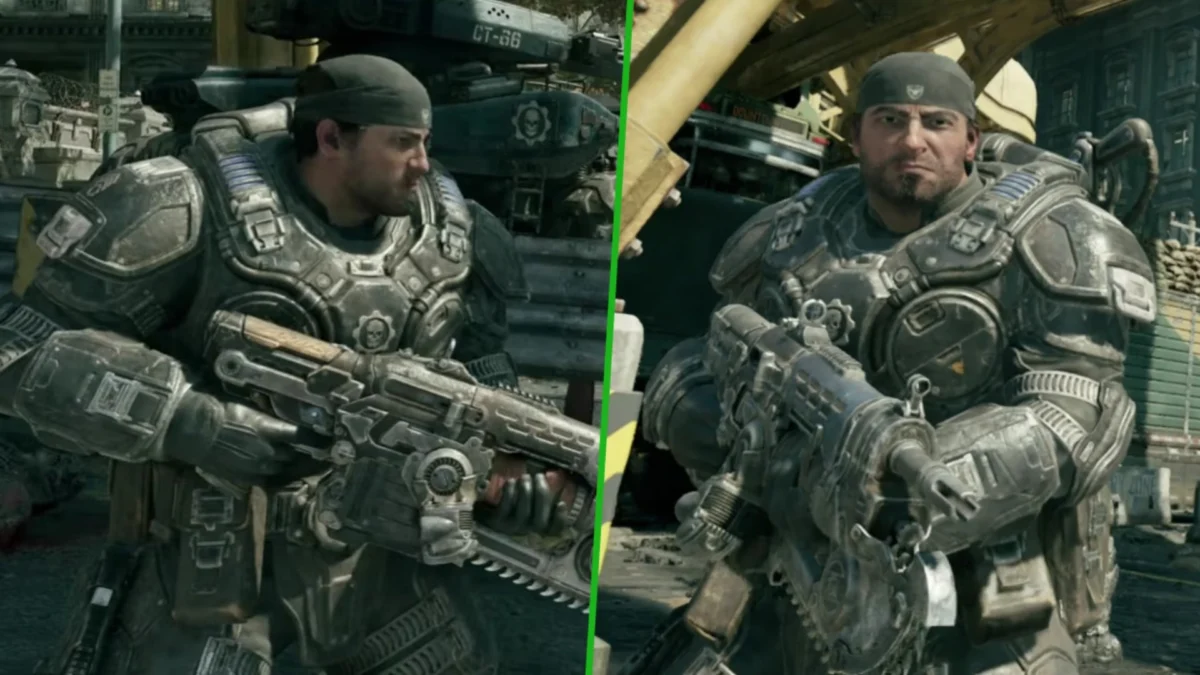
Following the highly anticipated lifting of the review embargo for Gears of War: E-Day, the gaming world has been granted its first comprehensive look at the game’s technical prowess across both Xbox Series X and Xbox Series S consoles. Esteemed technical analysis outlet Digital Foundry has spearheaded this initial assessment, releasing an extensive "big tech deep dive" that positions Gears of War: E-Day as a monumental achievement in real-time rendering, particularly for its innovative application of Unreal Engine 5 technologies. Their findings underscore the title’s status as one of the most visually stunning Unreal Engine games to date, even while noting some fluctuating performance metrics in specific scenarios.
Digital Foundry’s Verdict: A Technical Deep Dive into a New Benchmark
Digital Foundry’s analysis, a cornerstone of hardware and software performance evaluation in the gaming industry, unequivocally states that Gears of War: E-Day "serves as a landmark showcase for Unreal Engine 5’s expanding capabilities." This commendation is not merely hyperbole; it reflects a deep understanding of game development, particularly given The Coalition’s history of close collaboration with Epic Games on the Unreal Engine. The report highlights that the game’s development was intricately intertwined with the evolution of the engine itself, allowing experimental features to mature into core functionalities. This symbiotic relationship has enabled the integration of complex ray-traced lighting, advanced Nanite character skinning, and sophisticated geometry management, bringing these cutting-edge graphical features to mainstream consoles in an unprecedented manner.
The technical experts at Digital Foundry lauded E-Day as "one of the best-looking Unreal titles ever," a significant declaration considering the growing roster of games leveraging Epic’s powerful engine. This visual fidelity, they contend, surpasses even the impressive demonstrations seen in early previews and trailers, indicating a substantial leap in graphical fidelity during the development cycle. However, the rigorous testing also revealed that performance remains "rocky in more open segments, especially on Series S." This observation, while critical, is framed within the context of a game pushing visual boundaries, with the expectation that such issues might be refined through subsequent optimizations and patches. The underlying sentiment remains overwhelmingly positive, suggesting that this "technical bedrock should leave the company in good stead as the next generation approaches," signaling The Coalition’s continued leadership in graphical innovation.
Unreal Engine 5’s Cutting Edge: Nanite, Lumen, and Temporal Super Resolution
To fully appreciate Gears of War: E-Day‘s technical achievements, it is crucial to understand the foundational Unreal Engine 5 technologies it employs. The Coalition has leveraged several key components that collectively contribute to the game’s extraordinary visual fidelity.
Nanite, Unreal Engine 5’s virtualized micropolygon geometry system, is at the forefront of this revolution. Nanite allows developers to import film-quality art assets composed of millions or even billions of polygons directly into the engine without noticeable performance degradation. For Gears of War: E-Day, this translates to incredibly detailed environments, intricate character models with unprecedented geometric complexity, and highly realistic objects, all rendered with a level of detail previously unimaginable in real-time console games. Digital Foundry specifically noted the application of "Nanite character skinning," which suggests a meticulous approach to character fidelity, allowing for minute wrinkles, scars, and material textures to be rendered with astounding clarity.
Lumen, UE5’s fully dynamic global illumination and reflections system, is another critical component. Lumen eliminates the need for artists to manually bake lighting, enabling dynamic changes in lighting conditions and indirect illumination in real-time. This ensures that light interacts realistically with the environment, bouncing off surfaces and illuminating dark areas naturally, whether from environmental sources or character flashlights. Coupled with advanced ray-traced lighting, Gears of War: E-Day achieves a level of realism in illumination, shadows, and reflections that significantly elevates the immersive quality of its brutal, post-apocalyptic world. Ray tracing, while computationally intensive, provides pixel-perfect reflections and accurate global illumination that traditional rasterization techniques struggle to replicate.
Finally, Temporal Super Resolution (TSR) plays a vital role in achieving high visual quality at acceptable frame rates across both Xbox consoles. TSR is Epic Games’ proprietary upscaling technology, designed to reconstruct a high-resolution image from a lower-resolution render using temporal data from previous frames. This technique allows the game to render at a lower native resolution, thereby reducing the computational load on the GPU, and then intelligently upscale the image to the target display resolution (e.g., 4K for Series X) without the typical visual artifacts associated with simpler upscaling methods. TSR is crucial in bridging the gap between performance targets and demanding visual fidelity, ensuring that players experience sharp, detailed visuals even when the internal render resolution is sub-native.
Xbox Series X Performance: Navigating Fidelity and Frame Rate
On the flagship Xbox Series X console, Gears of War: E-Day offers players a choice of three distinct performance modes, each balancing native resolution, target frame rate, and overall visual quality. These modes are designed to cater to different player preferences, whether prioritizing crispness, responsiveness, or a cinematic feel.
The most visually rich mode operates at a native resolution of 1152p with a target frame rate of 30 frames per second (FPS). This mode likely maximizes graphical settings, leveraging the Series X’s robust GPU (12 TFLOPS RDNA 2) to deliver the highest possible detail, complex lighting, and environmental effects, all while maintaining a stable cinematic frame rate. The image is then upscaled using TSR to the display’s native resolution, typically 4K, resulting in a very sharp and detailed presentation.
A second mode aims for a higher refresh rate, targeting 1000p at 40 FPS. This option provides a noticeable boost in fluidity over the 30 FPS mode, offering a smoother gameplay experience without a drastic reduction in visual quality. The 40 FPS target is often preferred by players with 120Hz displays, as it allows for consistent frame pacing (every third refresh cycle), leading to a very consistent and pleasing motion presentation. Again, TSR is employed to upscale the image to the output resolution.
For players prioritizing maximum responsiveness, especially in a fast-paced action game like Gears, a third mode delivers 936p at 60 FPS. This mode sacrifices some native resolution to achieve the gold standard of modern gaming frame rates. While the native pixel count is lower, the benefit of 60 FPS in terms of input lag and visual smoothness is substantial. Digital Foundry’s analysis indicates that performance in the Series X’s 60 FPS mode is generally consistent in linear, more controlled environments, which comprise a significant portion of Gears gameplay. However, occasional frame rate dips were noted in larger, more open-ended environments, suggesting that even the Series X is pushed to its limits when rendering the most expansive and graphically intensive scenes.
The Xbox Series X, with its custom 8-core AMD Zen 2 CPU clocked at 3.8 GHz (3.66 GHz with SMT) and 16 GB of GDDR6 RAM, alongside its powerful GPU, is designed to deliver premium 4K gaming experiences. Gears of War: E-Day‘s demanding graphical features, even with upscaling, demonstrate that The Coalition is truly pushing the boundaries of what this hardware can achieve, often placing it among the most graphically advanced titles on the platform.
Xbox Series S Performance: Optimizing for the Digital-First Console
The Xbox Series S, Microsoft’s more affordable, digital-only console, presents a unique set of challenges for developers aiming for visual parity with its more powerful sibling. With a GPU boasting 4 TFLOPS RDNA 2 and 10 GB of GDDR6 RAM (with less usable for games), the Series S is designed for 1440p gaming, often targeting 1080p or lower native resolutions to achieve stable frame rates. Gears of War: E-Day admirably provides three distinct performance modes for the Series S, demonstrating The Coalition’s commitment to delivering a robust experience across both consoles.
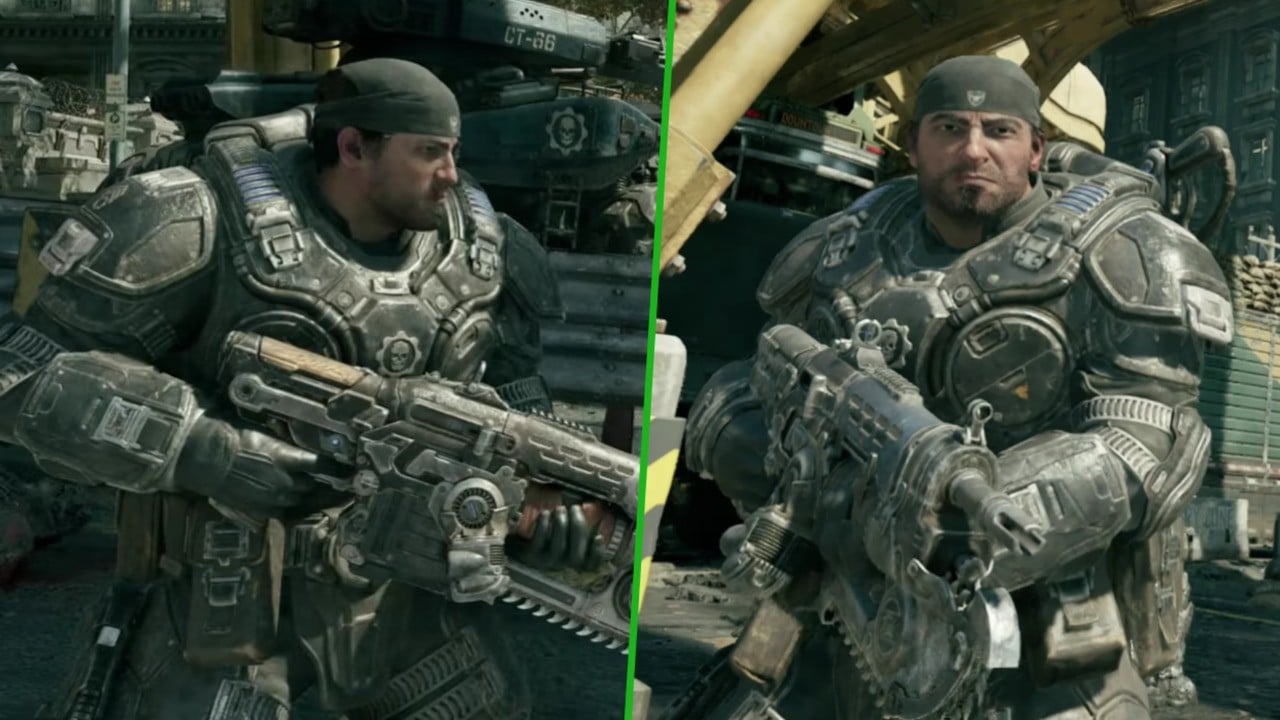
The Series S’s highest fidelity mode runs at a native resolution of 729p with a target frame rate of 30 FPS. Similar to the Series X’s corresponding mode, this likely maximizes visual settings within the Series S’s hardware constraints, delivering a visually rich experience at a cinematic frame rate. The image is then upscaled via TSR to the console’s typical 1080p or 1440p output.
A middle ground is offered with a 648p native resolution targeting 40 FPS. This mode aims to provide a smoother gameplay experience than 30 FPS, particularly beneficial for players with 120Hz displays, where the 40 FPS target can maintain consistent frame pacing.
For those prioritizing responsiveness, the Series S also includes a 576p native resolution mode targeting 60 FPS. While the native resolution here is significantly lower, the benefit of a higher frame rate in terms of player input and visual fluidity can be substantial. Digital Foundry noted that overall performance on the Series S remains "remarkably good for the most part," a testament to The Coalition’s optimization efforts. However, the 60 FPS mode on Series S was observed to suffer from "frequent frame-rate drops" in more demanding scenarios. Crucially, the analysis suggested that these performance inconsistencies in the 60 FPS mode could be largely "ironed out by 120Hz VRR displays." Variable Refresh Rate (VRR) technology, supported by modern TVs and monitors, allows the display to synchronize its refresh rate with the console’s frame output, effectively eliminating screen tearing and smoothing out minor frame rate fluctuations, thus providing a much more consistent visual experience.
The fact that The Coalition has managed to implement all three modes, with largely commendable performance, on the Series S highlights their expertise in optimizing demanding Unreal Engine 5 titles for less powerful hardware. This achievement is significant, as the Series S has often been cited as a challenging console to develop for, requiring careful compromises to deliver a next-generation experience.
The Coalition’s Legacy: A History of Technical Prowess with Unreal Engine
The technical achievements seen in Gears of War: E-Day are not an anomaly but rather a continuation of The Coalition’s long-standing legacy as a studio at the forefront of Unreal Engine development. Since taking over the Gears of War franchise from Epic Games, The Coalition has consistently pushed the boundaries of graphical fidelity with each iteration.
Their work on Gears of War 4 (2016) and particularly Gears 5 (2019) served as early benchmarks for what was possible on the Xbox One and, later, the Xbox One X. Gears 5, released late in the Xbox One generation, was widely praised for its stunning visuals, intricate environmental detail, and robust performance, showcasing The Coalition’s mastery of Unreal Engine 4. It effectively demonstrated the graphical potential of mid-generation console refreshes and set a high bar for future titles.
This historical context is vital: The Coalition has not just adopted Unreal Engine; they have actively contributed to its evolution, often working hand-in-hand with Epic Games to develop and refine features. This deep integration allows them to extract maximum performance and visual quality from the engine, making them ideal candidates to showcase the full capabilities of Unreal Engine 5. Their commitment to meticulous optimization and their reputation for pushing graphical envelopes position Gears of War: E-Day as a definitive statement on the studio’s technical prowess and its vision for the future of the franchise. The studio’s inherent understanding of the engine allows them to implement features like Nanite character skinning and complex ray tracing in ways that are both visually impactful and, crucially, performant across varied hardware.
Broader Implications: Unreal Engine 5 on Console and the Future of Gaming
The performance and visual fidelity demonstrated by Gears of War: E-Day carry significant implications for the broader gaming industry, particularly concerning Unreal Engine 5 development on current-generation consoles and Microsoft’s long-term strategy for the Xbox ecosystem.
Firstly, E-Day sets a new benchmark for Unreal Engine 5 titles on consoles. By showcasing such advanced features as Nanite and ray tracing with generally strong performance, it provides a blueprint and a proof-of-concept for other developers. This achievement will likely encourage more studios to fully embrace UE5’s capabilities, confident that stunning visuals can be delivered even on the less powerful Xbox Series S, albeit with careful optimization. This could accelerate the adoption of next-generation rendering techniques across the industry, raising the overall bar for graphical fidelity in console gaming.
Secondly, E-Day‘s performance on both Series X and S reinforces Microsoft’s strategy of having a two-tiered console approach. The Series S, often perceived as a bottleneck for true next-gen experiences, is shown to be capable of running a highly demanding UE5 title with commendable results, especially when paired with VRR. This validation is crucial for Microsoft, as it demonstrates that their more affordable console can still deliver a compelling "next-gen" experience, albeit with resolution compromises. It continues the ongoing discourse about the "Series S challenge," where developers must meticulously optimize to ensure parity, but E-Day offers a positive example of how this can be achieved.
Thirdly, for Microsoft’s first-party lineup, Gears of War: E-Day becomes a flagship title, showcasing the potential of Xbox Game Studios to deliver visually groundbreaking exclusives. This can bolster consumer confidence in the Xbox platform and its ability to compete at the highest echelons of graphical innovation. The game’s success in pushing boundaries could also influence future hardware considerations, providing valuable data on the performance ceiling of current-gen consoles and informing the design of future Xbox iterations.
Player Experience and Expectations
Ultimately, the technical details translate into a tangible experience for the player. The ability to choose between fidelity and frame rate allows players to tailor Gears of War: E-Day to their personal preferences and display capabilities. Those with high-end 4K 120Hz displays can enjoy the smooth 40 FPS or 60 FPS modes with VRR, experiencing both visual grandeur and fluid gameplay. Players with standard 60Hz displays might opt for the more stable 30 FPS mode for the highest fidelity, or the 60 FPS mode, accepting minor fluctuations.
The underlying message is clear: The Coalition has meticulously engineered Gears of War: E-Day to deliver a premium experience across the entire Xbox Series X|S ecosystem. While technical compromises are inherent in cross-platform development, particularly between consoles with differing power profiles, the studio’s efforts ensure that the core visual spectacle and gameplay remain largely intact, offering a compelling reason for Gears fans and newcomers alike to dive into this prequel.
Conclusion: Setting a New Standard for Console Graphics
In conclusion, Gears of War: E-Day has emerged from its review embargo not just as another entry in a beloved franchise, but as a significant technical milestone for Unreal Engine 5 on console platforms. Digital Foundry’s comprehensive analysis confirms that The Coalition has delivered a "landmark showcase," successfully integrating cutting-edge technologies like Nanite, Lumen, and ray tracing to create one of the most visually impressive games to date. While the journey to achieving stable performance across all modes, particularly on the Xbox Series S, presents ongoing challenges, the sheer ambition and execution of E-Day‘s graphical package are undeniable. It sets a formidable new standard for console graphics, validating the potential of Unreal Engine 5 and reinforcing The Coalition’s reputation as a vanguard of visual innovation in the gaming industry. As the next generation of gaming approaches, Gears of War: E-Day serves as a powerful testament to the artistic and engineering prowess required to push the boundaries of interactive entertainment.