


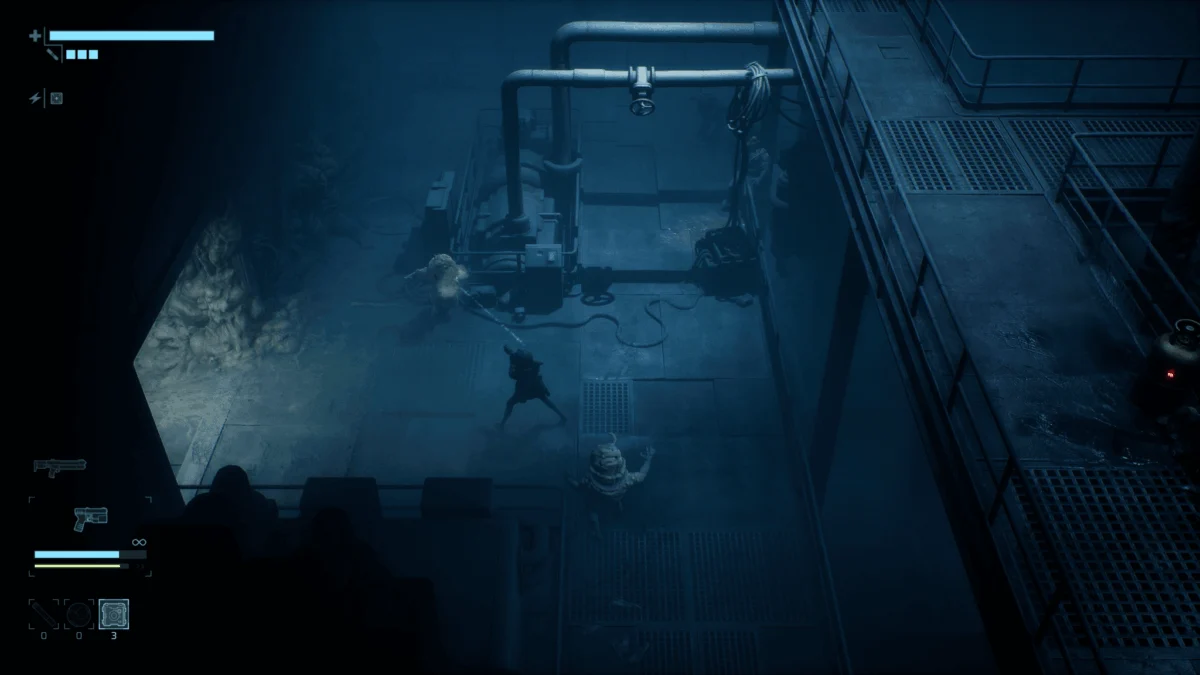
End of Abyss represents the ambitious debut of development studio Section 9, a title that strategically positions itself at the intersection of several high-profile genres. By synthesizing the exploratory progression of a Metroidvania with the claustrophobic dread of survival horror and the precision of a twin-stick shooter, the game attempts to carve out a unique niche in the increasingly crowded indie gaming landscape. Drawing clear aesthetic and thematic inspiration from cinematic and interactive touchstones such as Aliens, Dead Space, and Little Nightmares, End of Abyss offers a bleak, industrial odyssey that prioritizes atmosphere and environmental storytelling over traditional exposition.

Narrative Framework and Atmospheric World-Building
In End of Abyss, players assume the role of Cel, a specialized "Combat Technician" deployed to a subterranean industrial complex that has fallen silent. Accompanied by a squad of heavily armed soldiers and a commanding Captain, Cel’s mission is ostensibly routine: investigate reports of "disturbances" and restore the facility’s critical systems. However, upon arrival, the squad finds a site transformed by an unknown catastrophe. The narrative relies heavily on environmental cues—flickering overhead lights, the oppressive hum of failing machinery, and the presence of a pervasive, bioluminescent fungus that has begun to colonize both the architecture and the remains of the facility’s workforce.
While the core plot remains lean, it is driven by a series of escalating objectives that force Cel deeper into the facility. This descent serves as both a literal journey into the earth and a figurative dive into the mystery of the "Abyss." The storytelling is largely decentralized, delivered through discarded logs and terminal entries that hint at labor disputes, security breaches, and the rapid onset of the fungal infection. This methodology encourages players to engage with the environment as a forensic puzzle, piecing together the timeline of the collapse while managing the immediate threat of the facility’s mutated inhabitants.

Tactical Gameplay and the Combat Technician’s Kit
The gameplay loop of End of Abyss is defined by Cel’s role as a technician rather than a frontline soldier. While her squad provides the initial muscle, the environmental obstacles require Cel’s specific toolkit to navigate. The most prominent of these tools is the high-fidelity scanner. Reminiscent of the motion trackers and scanning devices seen in 20th-century science fiction cinema, the scanner emits piercing lasers that reveal hidden infrastructure, internal piping, and interactive terminals.
This scanning mechanic is central to the game’s progression. Every object of interest, from heavy-duty levers and security switches to the grotesque biological entities roaming the halls, can be scanned for data. This data serves two purposes: it provides necessary lore and world-building context, and it identifies tactical weaknesses or mechanical requirements for progression. However, the use of the scanner creates a deliberate vulnerability. When Cel is scanning, she cannot effectively wield her primary weapons, creating a constant tension between the need for information and the need for self-defense.

Combat is executed through a 360-degree twin-stick shooting system. Cel begins with an energy pistol—a reliable sidearm with infinite ammunition but limited stopping power. As the player explores the brutalist concrete maze, they can discover and craft more specialized armaments, including a Riot Shotgun for crowd control and a high-caliber Rifle equipped with armor-piercing rounds. These advanced weapons require resource management, as ammunition must be crafted at designated workbenches using materials scavenged from the environment or harvested from defeated enemies.
Metroidvania Structure and Resource Management
The structural backbone of End of Abyss is a traditional Metroidvania framework, characterized by a vast, interconnected map that reveals its secrets as the player acquires new abilities and equipment. Early-game obstacles, such as reinforced walls and inaccessible vertical shafts, eventually become traversable through the acquisition of C4 explosives and a grappling hook. This "lock-and-key" design philosophy ensures that backtracking feels purposeful, as players return to previously explored sectors with the means to unlock rare upgrades and shortcuts.

The game incorporates survival horror elements through its "saferoom" mechanics. Scattered throughout the facility are secure zones featuring workbenches for crafting and pods for health restoration and saving progress. However, these rooms come with a tactical trade-off: utilizing a save pod triggers a global respawn of most enemies within the facility. This creates a persistent risk-reward dynamic. While respawned enemies provide a renewable source of crafting materials, they also ensure that no area is ever truly "cleared," maintaining a level of tension that is often lost in more combat-oriented Metroidvanias.
Technical Performance and Handheld Compatibility
From a technical standpoint, End of Abyss showcases high-quality art direction and sound design that punch above its indie weight class. The industrial soundscape—composed of grinding metal, distant screams, and the wet squelch of fungal growth—is essential to the game’s immersion. Visually, the game utilizes a sophisticated lighting engine to create deep shadows and stark, high-contrast environments that heighten the sense of isolation.

The title has been optimized for a variety of platforms, with particular attention paid to the emerging handheld PC market. Testing on high-end handheld devices, such as the ASUS ROG Ally (referred to in some regions as the Xbox Ally X), indicates that the game maintains a stable frame rate and responsive controls in a portable format. This portability complements the Metroidvania structure, allowing players to engage in short bursts of exploration or resource farming while on the go.
However, the debut release is not without its technical hurdles. Current iterations of the game have been noted for several significant bugs that can impact the user experience. These include:

- Collision Irregularities: Players have reported instances of becoming trapped within the environmental geometry or falling through the map into an unrendered void.
- Map Inconsistencies: The in-game mapping system occasionally fails to update correctly, showing doors as locked when they have been opened, or vice versa, which can lead to confusion during backtracking.
- Economy Balancing: Specific bugs involving the infinite respawning of rare resources have been identified, which can inadvertently allow players to bypass the intended upgrade curve.
Section 9 has acknowledged these issues, and post-launch patches are expected to address the collision and UI glitches to bring the game up to a more polished standard.
Broader Impact and Industry Analysis
The release of End of Abyss comes at a time when the "Indie-Horror-Metroidvania" subgenre is experiencing a significant renaissance. Following the success of titles like Signalis and Hollow Knight, there is a clear market appetite for games that combine rigorous mechanical challenge with deep, atmospheric storytelling. Section 9’s entry into this space is notable for its focus on a "technician" protagonist, which shifts the player’s perspective from that of a traditional "warrior" to that of a problem-solver in a hostile environment.

The game’s reliance on environmental storytelling and its refusal to engage in excessive hand-holding align it with the "Souls-like" philosophy of player agency. By forcing players to use their scanner and read the environment to progress, End of Abyss fosters a sense of genuine discovery. The "disturbances" in the facility serve as a microcosm for larger themes of industrial overreach and biological unpredictability, themes that resonate within the broader science fiction genre.
Conclusion and Future Outlook
End of Abyss is a commendable first outing for Section 9, demonstrating a clear mastery of atmosphere and a solid understanding of the core tenets that make Metroidvanias engaging. While the technical issues regarding collision and map accuracy currently hinder the experience, the underlying gameplay loop—the tension of exploration, the satisfaction of the twin-stick combat, and the rewarding nature of the upgrade system—remains robust.

For enthusiasts of atmospheric exploration and survival horror, the game offers a compelling reason to venture into its dark, fungal-infested corridors. As the developer continues to refine the experience through updates, End of Abyss is poised to become a staple recommendation for fans of the genre. Its successful blending of disparate mechanical influences suggests a bright future for the studio, marking them as a developer to watch in the indie space. The journey of Cel through the industrial "Abyss" is a haunting, challenging, and ultimately rewarding experience that proves Section 9 is capable of delivering high-concept horror with mechanical depth.