


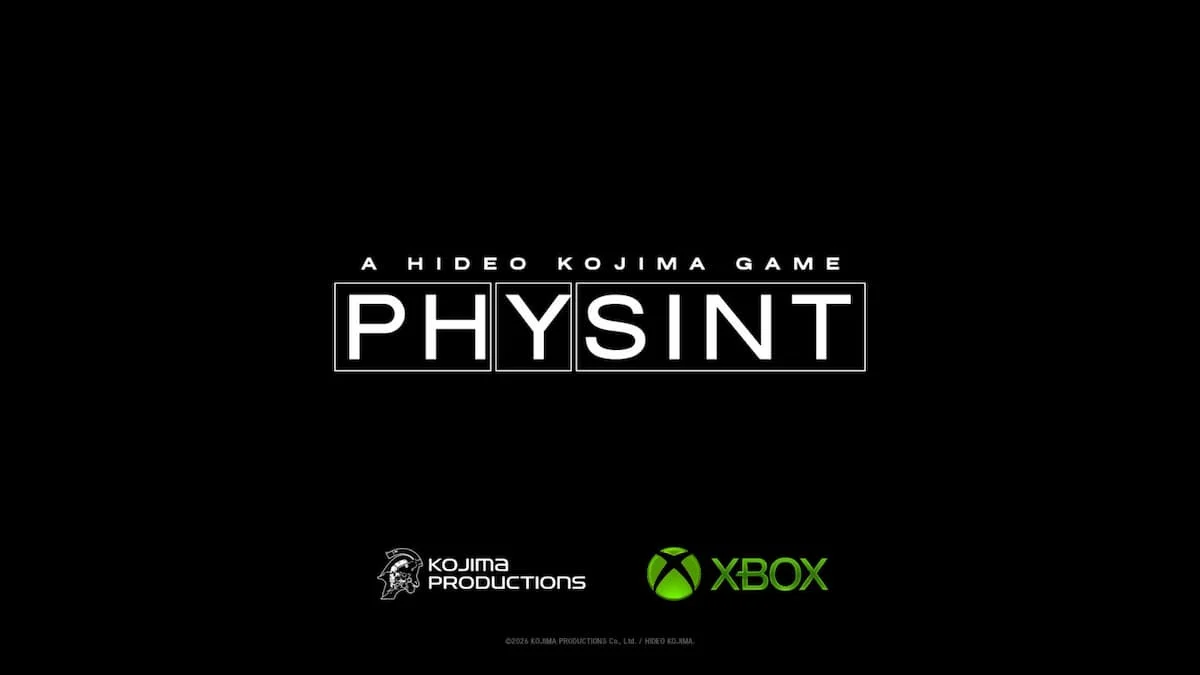
The gaming world is abuzz with the perplexing and somewhat opaque transition of Hideo Kojima’s highly anticipated action espionage title, PHYSINT, from PlayStation to Xbox. What began as a whisper on September 9th, 2026, has evolved into a public discourse marked by official statements, journalistic reports, and fan speculation, painting a picture of a complex development and business negotiation. The messaging surrounding this seismic shift has been intentionally ambiguous, a tactic that likely serves a deliberate purpose in navigating the sensitive landscape of major publisher-developer relationships.
The Initial Report and Subsequent Clarifications
The initial news broke on the evening of September 9th, 2026, indicating that PHYSINT, a project previously associated with Sony Interactive Entertainment (SIE), would no longer be moving forward under PlayStation’s banner. Instead, it was revealed that the game would continue its development as part of an expanded partnership with Microsoft’s Xbox division. This announcement alone sent ripples through the industry, given Kojima Productions’ established relationship with PlayStation, particularly following the success of Death Stranding.
Just two days later, on September 11th, 2026, Bloomberg’s esteemed games journalist Jason Schreier published a detailed report that shed more light on the circumstances. Schreier’s investigation suggested that PHYSINT‘s departure from PlayStation was precipitated by "budget concerns" and "missed deadlines." According to his sources, these factors led Kojima Productions to seek a new publishing partner, ultimately finding a home with Xbox. This report provided a concrete, albeit potentially sensitive, explanation for the sudden change in direction.
Kojima Productions Responds: A Defense of Integrity
The report, however, did not sit well with Kojima Productions. On September 20th, 2026, the acclaimed studio issued a strong, formal statement that appeared to directly address the allegations made by Schreier and his unnamed sources. The statement, released via their official English-language X (formerly Twitter) account, expressed a desire to clarify the situation, acknowledging that the "unsubstantiated speculation" had begun to affect their "fans, creative partners, and colleagues."
The studio emphasized that the claims regarding their relationship with PlayStation, the commercial performance of the Death Stranding franchise, and the "broader production planning and investment for PHYSINT" were not derived from any official or on-the-record sources. They urged the public to approach such reports with "a dose of skepticism." This direct rebuttal indicated a clear disagreement with the narrative presented in Schreier’s report, particularly concerning the reasons for the project’s shift.
The Ongoing Dialogue: Schreier’s Rebuttal and the "Muddy" Messaging
The exchange did not conclude with Kojima Productions’ statement. Over the weekend following the studio’s public response, Jason Schreier engaged in the discussion through a ResetEra thread dedicated to the news. In his participation, Schreier reiterated his position, stating that he felt no particular need to issue a formal response as his reporting had not been directly refuted in its entirety.
Crucially, Schreier added a significant point of clarification: "Sony and Kojima Productions were in negotiations over the future of the game for a while before it was canceled." He further suggested that while Kojima Productions might be dissatisfied with how SIE handled the situation, the news of the project’s shift "didn’t come out of nowhere." This implies that while the specifics of the "budget concerns" and "missed deadlines" might be disputed or framed differently by Kojima Productions, the underlying discussions and eventual decision to part ways with PlayStation were indeed a process that had been underway.
This back-and-forth between a prominent journalist and a highly respected development studio has undoubtedly contributed to the "muddy" messaging surrounding PHYSINT. The ambiguity allows both parties to maintain their respective positions while avoiding a complete breakdown in communication or a public airing of potentially damaging details.
Background Context: A History of Partnership and Shifting Dynamics
To fully appreciate the implications of this development, it’s essential to consider the history between Kojima Productions and PlayStation. The studio was founded by Hideo Kojima in August 2015, shortly after his high-profile departure from Konami. His first independent project, Death Stranding, was released in November 2019 as a console exclusive for PlayStation 4, with a subsequent PC release in July 2020. The game garnered significant critical attention and commercial success, selling over 10 million units across PS4 and PC by March 2024. This success solidified the perception of a strong, mutually beneficial relationship between Kojima Productions and SIE.
In December 2020, it was officially announced that Kojima Productions was developing Death Stranding 2 (later officially titled Death Stranding 2: On the Beach) as a PlayStation 5 exclusive. This further cemented the expectation that future Kojima titles would be aligned with the PlayStation ecosystem.
The subsequent announcement of PHYSINT as a project under PlayStation’s purview, followed by its unexpected move to Xbox, therefore represents a significant departure from this established pattern. Such shifts in publishing partnerships, especially for high-profile projects from renowned creators, are rarely simple or amicable. They often involve intricate negotiations, differing strategic priorities between publishers, and the inherent risks associated with large-scale game development.
Supporting Data and Industry Trends
The reported "budget concerns" and "missed deadlines" are not isolated incidents within the gaming industry. The development of AAA titles has become increasingly expensive and time-consuming. The average development budget for a major AAA game can now exceed $200 million, with marketing costs often doubling that figure. This escalating financial pressure can lead publishers to re-evaluate their investment strategies, especially for projects that may be experiencing developmental delays or whose projected return on investment is deemed uncertain.
Furthermore, the competitive landscape between console manufacturers plays a significant role. Microsoft’s acquisition of Activision Blizzard for $68.7 billion in October 2023 marked a monumental shift in the industry, signaling a strong intent to bolster its gaming division and secure exclusive content. Securing a high-profile title from a visionary creator like Hideo Kojima would represent a significant strategic coup for Xbox, potentially attracting new players to its ecosystem and strengthening its Game Pass subscription service.
The "missed deadlines" aspect also points to the inherent challenges of game development. Creative visions, particularly those as ambitious as Kojima’s, can be difficult to realize within strict timelines. Delays can strain publisher relationships, leading to difficult conversations about continued funding and project viability.
Analysis of Implications: A Win for Xbox, A Question Mark for PlayStation
The move of PHYSINT to Xbox, if the reports of PlayStation’s withdrawal are accurate, represents a significant win for Microsoft’s gaming division. It demonstrates Xbox’s ability to attract and secure major third-party talent and projects, which is crucial in the ongoing console war. The association with Hideo Kojima, a name synonymous with innovation and unique gameplay experiences, could provide a substantial boost to Xbox’s exclusive offerings and its overall market perception.
For PlayStation, this represents a potential setback. Losing a project from a creator of Kojima’s caliber, especially after years of partnership, raises questions about their internal decision-making processes and their ability to retain key creative talent. While PlayStation still boasts a robust lineup of exclusive titles and strong developer relationships, the departure of a flagship project like PHYSINT is noteworthy.
The "muddy" messaging itself could be a strategic choice by all parties involved. For Kojima Productions, it allows them to control the narrative to some extent and protect their reputation. For Xbox, it generates buzz and anticipation without revealing too many details prematurely. For PlayStation, it allows them to move on from a project without dwelling on the specifics of its cancellation, potentially preserving future collaboration opportunities.
The Road Ahead for PHYSINT and Kojima Productions
Despite the transition, the future of PHYSINT remains a distant prospect. Kojima Productions’ recent statement also reassured fans that the studio is in a "healthy, profitable state" and that development for PHYSINT continues with Xbox. However, the studio is currently dedicating significant resources to its first-person horror title, OD: Knock, in collaboration with Xbox Game Studios and others. Reports suggest that PHYSINT is still in its "early experimental phases" and has not yet been attached to a specific game engine.
This indicates that PHYSINT is likely many years away from release, even with its new publishing partner. The current focus on OD: Knock suggests that the studio is prioritizing its immediate pipeline, and the shift in PHYSINT‘s development and publishing arrangements may have necessitated a re-evaluation of its production timeline.
The saga of PHYSINT‘s journey from PlayStation to Xbox serves as a compelling case study in the complex realities of the modern video game industry. It highlights the delicate balance between creative ambition, financial realities, and strategic partnerships that define the development of blockbuster titles. As the industry continues to evolve, such transitions, even with their accompanying ambiguity, will likely become more common as developers and publishers navigate an ever-changing landscape. The ultimate success of PHYSINT under Xbox’s banner, and the long-term implications for both Kojima Productions and PlayStation, will undoubtedly be a story closely watched by the gaming community.