


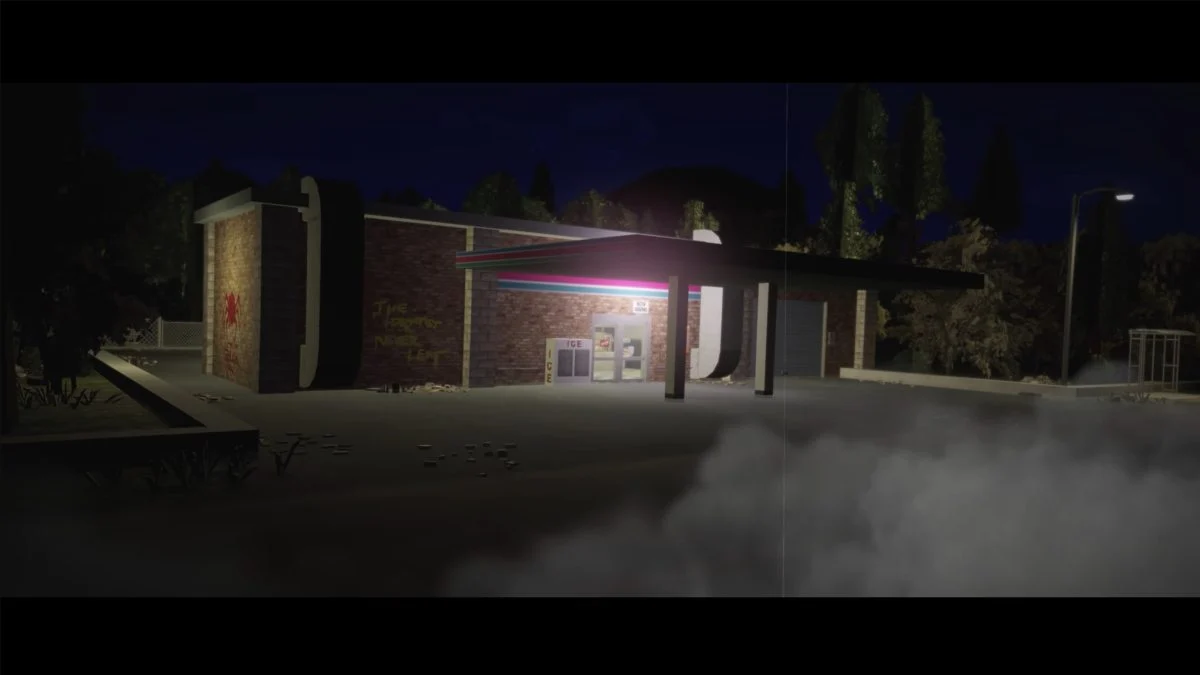
The unsettling reality of working the precarious night shift at a convenience store in Shift at Midnight extends far beyond the immediate financial strain of veterinary bills for a beloved pet. Players now face the added anxiety of a missing canine companion, Guillermo, whose disappearance is cryptically announced via a lost dog poster. This development introduces a new layer of intrigue and narrative depth to the already tense gameplay, prompting a deeper examination of its significance within the game’s unfolding mysteries.
The Appearance of Guillermo’s Poster: A New Narrative Thread
The saga of Guillermo, a brown Labrador distinguished by his yellow collar, begins on night 10 of the game. It is during this particular shift that players encounter a missing dog poster prominently displayed on the in-game notice board. This notice board serves as a crucial hub for players to acquire new information and objectives, often supplemented by instructions from the Store Manager via calls or notes. However, unlike the urgent, action-oriented side quests that typically demand immediate player intervention, Guillermo’s disappearance is treated with a deliberate ambiguity that sets it apart.
While the poster offers a seemingly tangible reward of $50, a sum that aligns with the game’s mechanics for gathering bonuses through customer requests, the path to actually finding Guillermo remains elusive. Players are left to question whether this reward is a genuine incentive or a carefully crafted misdirection. The absence of any discernible in-game model of Guillermo, or any interactive element that allows for his retrieval, strongly suggests that his presence is purely narrative, designed to serve a purpose beyond a simple fetch quest.
Distinguishing Guillermo from Tofu: A Crucial Clarification
It is imperative to distinguish Guillermo from Tofu, the service dog that players are tasked with serving during specific in-game scenarios. Shift at Midnight intentionally attempts to mislead players into believing Tofu is in danger or requires assistance, a psychological tactic that underscores the game’s darker themes. Guillermo, however, is not this service dog. He is presented as a separate entity, a pet whose owner is potentially one of the game’s enigmatic customers, or perhaps a victim of the doppelganger phenomenon that plagues the store. The implication is that the original owner may have been replaced, leaving Guillermo ownerless and lost.
The Lore Implications: Fostering Empathy and Deepening the Mystery
The immediate, instinctual reaction for many players upon seeing Guillermo’s poster would be to search the surrounding environment, specifically the adjacent forest, for any sign of a stray dog. However, the game mechanics do not facilitate this. Viewing the missing poster does not unlock any dialogue options that allow for the investigation of customers regarding Guillermo’s whereabouts. This absence of direct gameplay interaction strongly suggests that the poster’s inclusion is primarily for lore purposes.
Its true function appears to be an emotional anchor, designed to amplify the player’s inherent drive to protect their own digital companion. Given that the entire premise of Shift at Midnight revolves around the player character risking their life to work the late-night shift, ostensibly to afford care for their own pet, Guillermo’s plight serves as a poignant reminder of what is at stake. It reinforces the emotional investment players have in their pets and the high stakes of the game’s narrative, even as it introduces a seemingly unresolvable mystery.
Community Investigations and Definitive Evidence
The player community, a vital component of modern gaming culture, has actively engaged with this mystery. On platforms like the official Shift at Midnight Discord server, players have pooled their efforts in a concerted search for Guillermo. These extensive investigations have yielded no concrete results, leading to a consensus among veteran players that there is no interactive element or in-game model of Guillermo to be found.
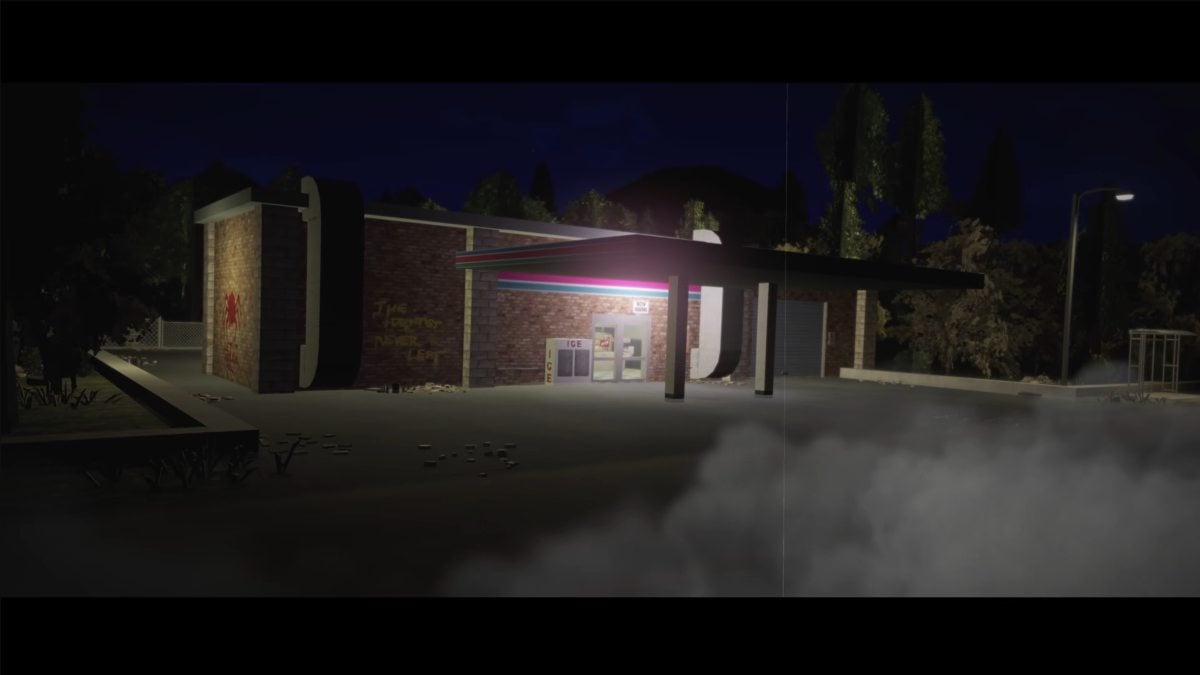
The most compelling evidence supporting this conclusion lies within the poster itself. Crucially, there is no in-game option to call the owner’s contact number, a standard feature on any real-world lost pet poster. This omission is not an oversight; it is a deliberate design choice that underscores the fact that there is no lost dog to be found within the game’s playable environment. Guillermo’s disappearance is a narrative device, not a gameplay objective.
The Broader Context of Shift at Midnight‘s Narrative
Shift at Midnight has consistently woven intricate lore and thematic depth into its gameplay. The game draws heavily on themes of psychological horror, existential dread, and the dark underbelly of everyday life. The convenience store setting, a seemingly mundane environment, becomes a stage for supernatural occurrences and unsettling transformations. The Store Manager, a constant presence, acts as both a benevolent provider and a shadowy manipulator, guiding the player through increasingly bizarre and dangerous situations.
The introduction of Guillermo’s missing poster can be viewed as a strategic expansion of this established narrative framework. It taps into universal human emotions—empathy, concern, and the instinct to help a vulnerable creature—and leverages them to deepen player engagement with the game’s overarching mysteries. By presenting a seemingly solvable problem with no actual solution, the developers create a sense of unease and unanswered questions, mirroring the larger, unresolved enigmas of the game.
Potential Narrative Functions and Player Reactions
The inclusion of the lost dog poster, despite its lack of direct gameplay impact, serves several potential narrative functions:
- Enhancing Atmosphere: It contributes to the pervasive sense of unease and vulnerability that characterizes Shift at Midnight. The world feels more lived-in, more susceptible to misfortune, even outside the immediate threats posed by doppelgangers and supernatural entities.
- Reinforcing Player Motivation: As previously mentioned, it reinforces the player character’s core motivation: protecting their own pet. Guillermo’s plight serves as a tangible, albeit indirect, representation of the potential dangers that any pet owner might face.
- Fostering Speculation and Discussion: The ambiguity surrounding Guillermo encourages players to theorize and discuss. This engagement is a hallmark of games with strong narrative elements and helps to build a dedicated community. Players might speculate about:
- The identity of Guillermo’s owner: Is it a specific customer whose doppelganger has replaced them? Is it someone who has been "taken" or transformed?
- The significance of the $50 reward: Is it a genuine, albeit unobtainable, reward, or is it a clue pointing to something else? Perhaps it relates to a specific transaction or a debt owed.
- The possibility of future updates: Could Guillermo be introduced as a discoverable element in a future game update or DLC? While unlikely given the current evidence, the lack of a definitive "no" fuels speculation.
- Subverting Player Expectations: The game intentionally sets up an expectation of a quest, only to subvert it. This can be a disorienting but effective storytelling technique, forcing players to re-evaluate their assumptions about how the game world operates.
A Deeper Dive into the Doppelganger Phenomenon
The mention of customers being replaced by doppelgangers is a critical element of Shift at Midnight‘s lore. This phenomenon suggests a pervasive, insidious threat that is not always immediately obvious. If Guillermo’s owner was one such victim, his disappearance would be a direct consequence of this ongoing invasion. This raises questions about the nature of the doppelgangers: are they hostile, indifferent, or something else entirely? Do they have any awareness of their predecessors’ lives, including their pets? The absence of Guillermo might be a tragic byproduct of a doppelganger’s inability or unwillingness to care for a pet, or perhaps a deliberate act of severing ties with the past.
The possibility that Guillermo is "ownerless" due to his owner being replaced is particularly chilling. It implies that the doppelgangers are not merely imitations but are actively usurping the lives of their human counterparts, leaving behind a trail of disrupted relationships and lost loved ones, even if those loved ones are animals.
The Psychological Impact on the Player
The emotional resonance of a missing pet cannot be overstated. For many players, their own pets are cherished members of their families. The visual representation of Guillermo’s distress, even if simulated, can trigger a strong emotional response. This is a testament to the game’s ability to evoke genuine feelings in its players. The unanswered question of Guillermo’s fate can linger, adding a subtle but persistent layer of melancholy to the player’s experience. It serves as a reminder that even within the heightened reality of the game, there are echoes of real-world anxieties and sorrows.
Conclusion: A Masterclass in Narrative Design
The enigma of Guillermo’s disappearance in Shift at Midnight is not a flaw in the game’s design but rather a sophisticated narrative device. By presenting a lost pet poster that leads to no tangible in-game quest, the developers masterfully employ misdirection and emotional resonance. This approach serves to deepen the game’s lore, enhance its atmosphere of unease, and reinforce the player’s motivations. It encourages community engagement and speculation, proving that sometimes, the most impactful storytelling comes not from what is explicitly shown, but from what is left to the imagination, and the unanswered questions that linger long after the shift has ended. The poster, therefore, is not just a detail; it is a carefully crafted piece of narrative architecture, designed to evoke a powerful emotional response and further immerse players in the unsettling world of Shift at Midnight.