


In a monumental shift reverberating across the gaming industry, Microsoft’s Xbox division has announced a sweeping reorganization that places the development of its flagship Halo franchise directly under Activision, while also bringing esteemed studios Rare and World’s Edge under Activision’s operational oversight. This strategic realignment, disclosed amidst significant job cuts and internal reconfigurations at Xbox, signals a profound evolution in Microsoft’s approach to its most valuable intellectual properties and its first-party studio strategy following the colossal acquisition of Activision Blizzard. The move aims to leverage Activision’s formidable development and publishing infrastructure, particularly for the ailing Halo series, which has struggled to maintain its former glory in recent years.
Strategic Realignment: Halo’s Future and Studio Oversight
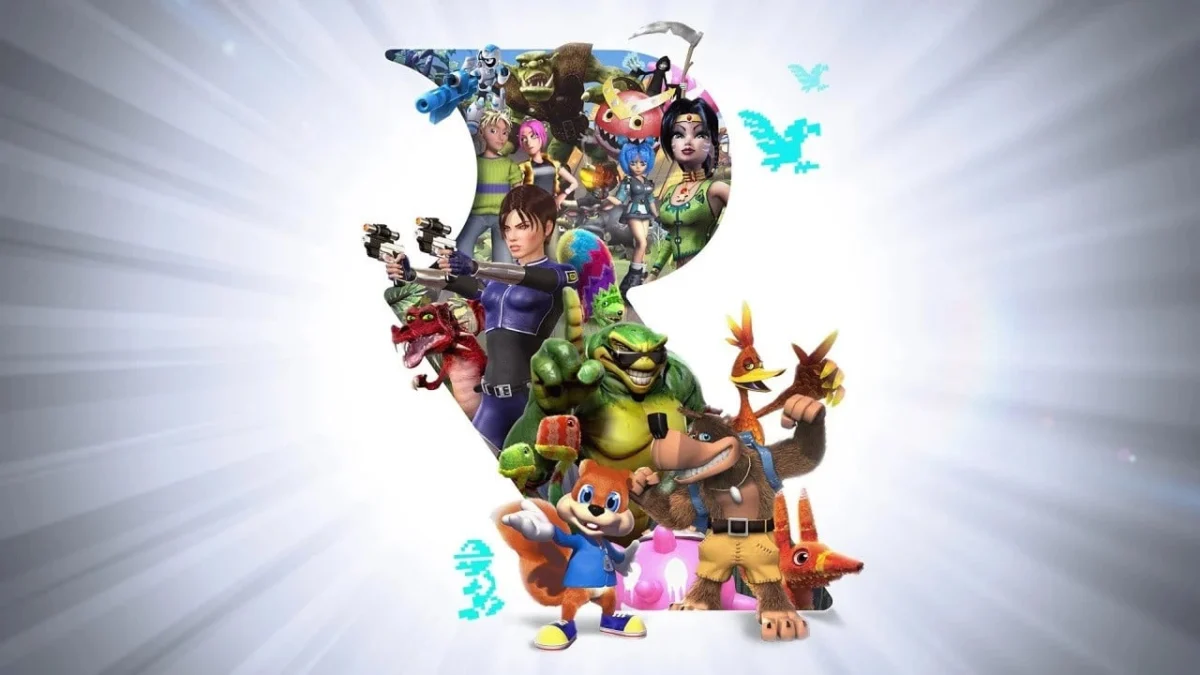
The core of the announcement confirms that Activision will now be responsible for the development of the next main Halo title, a decision that extracts the iconic sci-fi shooter from its longtime steward, 343 Industries. Simultaneously, legendary British developer Rare, known for critically acclaimed titles such as Sea of Thieves, Banjo-Kazooie, and a rich history spanning decades, and World’s Edge, the dedicated studio behind the enduring Age of Empires and Age of Mythology real-time strategy franchises, will now report directly to Activision. This marks a significant operational shift, suggesting that the publishing responsibilities for these studios’ future projects might also transition from "Xbox Game Studios" to "Activision."
Rob Kostich, President of Activision, issued a statement acknowledging the gravity of this new responsibility. "We’re thrilled to welcome Halo, Rare, and World’s Edge to Activision. It’s an honor and a responsibility that we do not take lightly. These teams and their games have inspired fans around the world for decades," Kostich stated. He articulated a clear and ambitious vision for Halo: "For Halo, our goal is clear: make the greatest Halo game ever, worthy of its universe and legacy, while staying true to what made players love it in the first place. It is a bold ambition, one that this franchise deserves. We have already begun assembling a purpose-built team, unique in capability and talent, ready and excited to deliver this next chapter with the community." The statement concluded with an eager welcome to the World’s Edge and Rare teams, signaling an immediate collaborative intent.
Xbox’s Broader Restructuring and Industry Context
This seismic change does not occur in a vacuum. It is part of a larger organizational overhaul at Xbox, which has included significant job reductions affecting approximately 286 employees across various divisions. These cuts align with a broader trend of consolidation and efficiency drives seen throughout the tech and gaming sectors in recent years. Companies, including Microsoft, have been reassessing their operational structures and investment priorities in a post-pandemic landscape characterized by economic uncertainty, rising development costs, and intense competition for player engagement.
The context of this decision is rooted in Microsoft’s overarching strategy for its gaming division, particularly since its ambitious $69 billion acquisition of Activision Blizzard in 2023. This acquisition was touted as a transformative move, aimed at bolstering Microsoft’s position in the gaming market, expanding its Game Pass subscription service, and competing more effectively with industry giants like Sony and Nintendo. Integrating such a vast entity, however, inevitably brings challenges related to operational synergy, cultural alignment, and strategic optimization of a sprawling portfolio of studios and intellectual properties. The current restructuring can be seen as a direct consequence of this integration, as Microsoft seeks to streamline its first-party development efforts and maximize the return on its massive investment.
A Timeline of Microsoft’s Gaming Ambitions and Challenges
The path to this current realignment has been years in the making, characterized by both aggressive expansion and internal struggles.
- 2014-2017: Xbox One Era Challenges: Following a challenging launch for the Xbox One, Microsoft began to recalibrate its gaming strategy, emphasizing Game Pass and acquiring smaller studios to bolster its first-party lineup.
- 2018: Studio Acquisitions Ramp Up: Microsoft initiated a significant acquisition spree, bringing in studios like Ninja Theory, Playground Games, Compulsion Games, and Undead Labs, aiming to diversify its game offerings.
- 2020: ZeniMax Media Acquisition: The monumental $7.5 billion acquisition of ZeniMax Media (parent company of Bethesda Softworks) added powerhouse franchises like The Elder Scrolls, Fallout, Doom, and Starfield to the Xbox portfolio. This signaled Microsoft’s intent to become a dominant content creator.
- 2021: Halo Infinite’s Launch and Post-Launch Struggles: Halo Infinite launched to critical acclaim for its campaign but faced significant criticism for its live-service multiplayer content rollout, technical issues, and slow updates. This marked a period of public frustration for the flagship franchise and its developer, 343 Industries. Internal reports often cited difficulties with the Slipspace Engine and high staff turnover at 343 Industries as contributing factors.
- 2022: Activision Blizzard Acquisition Announced: Microsoft announced its intent to acquire Activision Blizzard for nearly $69 billion, a move that would take over iconic franchises like Call of Duty, Warcraft, Candy Crush, and Diablo. This immediately raised questions about how Microsoft would integrate such a massive and historically independent publisher into its existing Xbox Game Studios structure.
- 2023: Acquisition Closure and Initial Integration: After a protracted regulatory battle, the Activision Blizzard acquisition officially closed. Initial steps focused on integrating the acquired studios and IPs, with Microsoft leadership emphasizing a "hands-off" approach to preserving creative autonomy where appropriate.
- Late 2023 – Early 2024: Industry-Wide Layoffs and Reorganization: A wave of layoffs swept through the gaming industry, including at Microsoft, reflecting a market correction after years of pandemic-driven growth.
- Current Announcement (2026/09, as per source): The current decision to transfer Halo development and oversight of Rare and World’s Edge to Activision is the latest and arguably most significant manifestation of Microsoft’s post-acquisition strategy, focusing on leveraging Activision’s operational strengths to revitalize key franchises and optimize studio performance.
Implications for Rare and World’s Edge: Creative Autonomy vs. Efficiency
The exact nature of Activision’s "responsibility" for Rare and World’s Edge remains a critical point of speculation. While Rob Kostich’s statement expressed eagerness to collaborate, the shift in reporting structure could have multifaceted implications for these historically distinct studios.
Rare, with its storied past and unique creative culture, has seen various phases under Microsoft’s ownership. After a period of perceived creative drift post-acquisition, the studio experienced a significant resurgence with Sea of Thieves, which has cultivated a robust and dedicated player base as a successful live-service game. World’s Edge, on the other hand, has carved out a niche as the steward of the beloved Age of Empires series, meticulously remastering old titles and overseeing the development of new entries like Age of Empires IV and Age of Mythology: Retold. Their focus has been on preserving and evolving a classic PC strategy genre.
The question arises whether Activision’s oversight will lean towards enhancing existing strategies or imposing new ones. Activision is renowned for its efficient, often iterative, development cycles for its tentpole franchises like Call of Duty. While this model has proven incredibly successful commercially, it has also sometimes been associated with a more risk-averse approach to new IP and a focus on established monetization strategies. For studios like Rare, celebrated for their distinctiveness and willingness to experiment (as seen with Sea of Thieves‘ unique multiplayer design), and World’s Edge, dedicated to a genre that thrives on deep simulation and long-term support, the impact of Activision’s operational philosophy will be closely watched. Concerns may arise regarding potential pressure to adopt more mainstream monetization models or to align their creative pipelines with Activision’s broader strategic goals, potentially affecting their unique identities and development methodologies.
The Future of Halo: A New Chapter Under Activision’s Guidance
The decision to entrust the Halo franchise to Activision marks a drastic pivot for Xbox’s most iconic IP. For over a decade, 343 Industries was the primary developer for Halo, inheriting the mantle from Bungie. While they delivered successful entries like Halo 4 and Halo 5: Guardians, and initially garnered praise for Halo Infinite‘s campaign, the studio consistently battled challenges related to development cycles, technical debt, and a perceived disconnect with the veteran community regarding multiplayer content and design philosophy.

Activision’s track record, particularly with the Call of Duty franchise, showcases an unparalleled ability to manage large-scale, multi-studio development efforts, delivering high-fidelity, polished titles on a consistent, often annual, basis. The company possesses deep expertise in engine technology, global marketing, and live-service monetization. This could be precisely what Microsoft believes Halo needs: a highly disciplined, robust production pipeline to deliver on its promise as a premium, engaging, and regularly updated experience.
Kostich’s declaration to "make the greatest Halo game ever" is a bold statement, acknowledging the immense pressure and the franchise’s significant legacy. The mention of a "purpose-built team, unique in capability and talent" suggests that Activision may either be assembling a new internal studio entirely dedicated to Halo, drawing talent from its existing vast network of developers (e.g., Infinity Ward, Treyarch, Sledgehammer Games), or perhaps integrating key personnel from 343 Industries into this new structure while bringing in external expertise. The challenge for this new team will be immense: not only to deliver a game that lives up to the series’ high standards but also to address the underlying issues that have plagued recent Halo entries, such as engine stability, content cadence, and community engagement. The success of this endeavor will be a critical litmus test for Microsoft’s post-acquisition strategy.
Industry and Community Reactions
The announcement has elicited a wide range of reactions from industry analysts, developers, and the passionate gaming community.
- Analysts are likely to view this as a pragmatic business decision by Microsoft. By leveraging Activision’s proven operational capabilities, Microsoft aims to optimize its content delivery pipeline, reduce overheads, and potentially improve the financial performance of its key IPs. The move could be seen as a way to ensure Halo remains a strong pillar of the Xbox ecosystem, especially for Game Pass, by placing it in the hands of a company known for execution.
- Developers within Xbox and the wider industry might view this with mixed feelings. Some may see it as a necessary step to bring renewed focus and resources to struggling franchises. Others might express concern about potential homogenization of creative vision or the loss of studio autonomy, particularly for unique entities like Rare.
- The gaming community, especially Halo fans, will likely be divided. Many will express skepticism, citing Activision’s reputation for aggressive monetization and concerns that Halo might lose its distinct identity or become too similar to Call of Duty. Conversely, a significant portion of the fanbase, weary of Halo‘s recent struggles, may welcome the change with cautious optimism, hoping that a fresh perspective and robust development structure can finally restore the franchise to its former glory. The fate of 343 Industries and its personnel, though not explicitly detailed in the initial announcement, will also be a major point of discussion and concern.
Concluding Outlook
The decision to place Halo development and the oversight of Rare and World’s Edge under Activision marks a watershed moment for Xbox and Microsoft’s gaming ambitions. It underscores a strategic pivot towards leveraging the vast infrastructure and expertise acquired through the Activision Blizzard deal, aiming for greater efficiency, consistency, and impact for its flagship titles. While the move carries inherent risks related to creative integrity and studio culture, it also presents a significant opportunity for revitalization, particularly for the Halo franchise.
The coming months and years will reveal the true implications of this organizational restructuring. The gaming world will be watching closely to see how Activision approaches these iconic IPs, whether it can deliver on the ambitious promise of the "greatest Halo game ever," and how the unique identities of Rare and World’s Edge evolve under their new operational stewardship. This bold realignment is a clear signal that Microsoft is not afraid to make dramatic changes in its quest for dominance in the fiercely competitive global gaming market.