


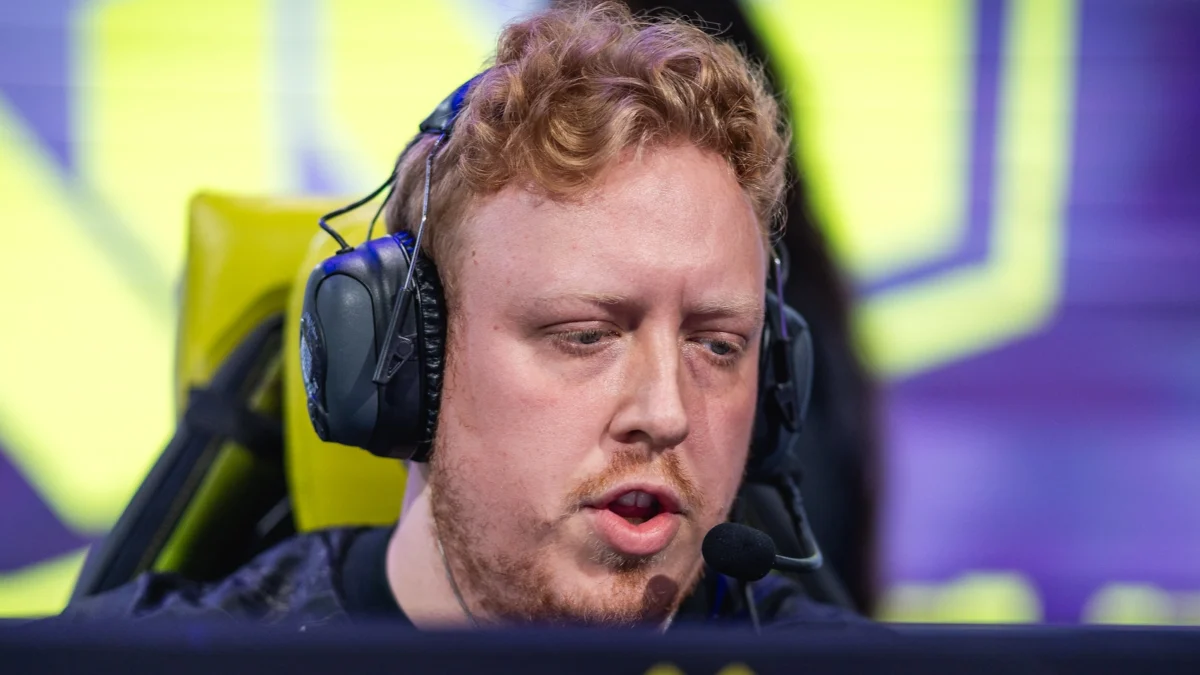
NAVI streamer and former professional Valorant player Ardis “ardiis” Svarenieks has issued a public apology after facing significant backlash for comments deemed transphobic during a co-stream of the Valorant Champions Tour (VCT) Game Changers event. The controversy erupted when clips of the stream circulated widely on social media, drawing sharp criticism from the Valorant community and prompting calls for action from both Riot Games, the game’s developer, and NAVI, Svarenieks’ organization.
The incident occurred during a co-stream of a VCT Game Changers match, where Svarenieks, alongside former Fnatic player Leo “Leo” Jannesson, reportedly used the term “Bumblebees” to refer to certain players. This terminology was widely interpreted by viewers as a derogatory and transphobic reference to transgender competitors, particularly in the context of the Game Changers circuit, which is specifically designed to foster opportunities for women and gender-diverse individuals in esports.
Further fueling the controversy, Svarenieks was quoted as saying, “I don’t want to get banned, but we need a nickname for them, bro.” He then reportedly made a remark suggesting he could change his own gender to compete in the league, a comment that many found to be dismissive and offensive towards transgender identities. These statements were swiftly condemned by a significant portion of the Valorant community, with many accusing the pair of employing transphobic language and advocating for their removal from future Game Changers broadcasts. The incident immediately cast a shadow over the inclusivity initiatives championed by the VCT Game Changers program.
Timeline of Events and Community Reaction
The controversy began to gain traction on social media platforms, primarily X (formerly Twitter), on or around July 22, 2026. Viewers who witnessed the offensive remarks during the live co-stream began sharing clips and expressing their outrage. These clips quickly went viral, triggering a wave of criticism directed at both Svarenieks and Jannesson.
ardiis and #ValorantGameChangers began trending as users debated the implications of the comments. Many pointed to Riot Games’ commitment to diversity and inclusion, highlighting the VCT Game Changers rulebook which explicitly aims to create a safe and equitable environment for all participants. The disparity between the stated goals of the Game Changers program and the reported language used by the streamers became a central point of discussion.
By July 23, 2026, the volume of criticism had reached a critical point, leading to widespread calls for official responses from NAVI and Riot Games. Fan-led initiatives began to emerge, with petitions circulating and community figures voicing their disappointment and demanding accountability. The pressure mounted as the clips continued to be shared, ensuring that the incident could not be easily dismissed.
Svarenieks’ Apology and Initial Defense
In response to the escalating backlash, Ardis Svarenieks posted a public apology on X on July 22, 2026. The statement read: "Hey everyone, The comments I made on stream about the transgender community were unacceptable. Even for me it was too much. I’m so sorry to everyone I offended; it won’t happen again. Peace and love to everyone."
However, the sincerity of this apology was immediately questioned by some observers due to prior statements made by Svarenieks during the same stream. In separate clips that also circulated online, Svarenieks appeared to defend his remarks, claiming that women had privately thanked him for "speaking out" and that he was inadvertently drawing more attention to the Game Changers scene. He stated, "Do you know how many women have messaged me saying ‘I can’t go public, but thank you’? Minimum five. I’m the only one putting eyes on the Game Changers scene."
Furthermore, Svarenieks elaborated on his views regarding gender identity, suggesting that individuals with a "normal upbringing" could not be transgender. He posited, "I think if [you have] a normal upbringing, with a good family tree, and you’re a loving mother and daughter with no family trauma, trans is not an option. I think trans in this community happens if you have like some trauma in your childhood, or maybe you have like an abusive father or abusive mother, or some sh*t like this. Then you feel alone as a child, you go into a community online that is this trans, whatever community. They accept you, they mold you, they say ‘oh we love you, we do this, you’re not really a boy who’s 10 years old, you’re really called Amelia.’” These statements were widely interpreted as pathologizing transgender identities and linking them to adverse childhood experiences, a narrative that is often used to invalidate transgender individuals.
Compounding the doubts about his apology, additional stream footage emerged showing Svarenieks appearing to compose his apology message. In these clips, he was seen smiling and asking, "what do I say sorry for, genuinely?" This behavior led many to believe that his subsequent apology was insincere and potentially coerced by the public pressure rather than stemming from genuine remorse or understanding of the harm caused.
Background of VCT Game Changers and Riot Games’ Stance
The VCT Game Changers program was launched by Riot Games with the stated objective of creating new opportunities and increasing the visibility of women and other marginalized genders within the competitive Valorant scene. The program aims to address historical underrepresentation and provide a platform for talent that might otherwise be overlooked in the traditional esports landscape.
Riot Games’ official rulebook for the 2026 VCT season, specifically Section X.Y.Z concerning player eligibility for Game Changers events, stipulates that participants must identify as women or gender diverse. This inclusive policy is central to the program’s mission. The rulebook further outlines provisions for ensuring a safe and respectful competitive environment, with strict codes of conduct expected of all players, participants, and content creators associated with the VCT. Violations of these codes can result in disciplinary actions, including bans from future events and partnerships.
The controversy surrounding Svarenieks’ comments brings into sharp focus the challenges of maintaining inclusivity in competitive esports. While the VCT Game Changers program strives to be a beacon of progress, incidents like this highlight the ongoing need for education, awareness, and robust enforcement of anti-discrimination policies within the gaming community.
Potential Implications and Broader Impact
The incident involving Ardis Svarenieks has several potential implications for the Valorant esports ecosystem and beyond. Firstly, it raises questions about the responsibility of esports organizations like NAVI to vet and educate their content creators and professional players on issues of diversity and inclusion. An organization’s brand and reputation are intrinsically linked to the conduct of its representatives, and failure to address such issues promptly and effectively can lead to significant reputational damage.
Secondly, the controversy puts pressure on Riot Games to demonstrate a consistent and decisive response to violations of its codes of conduct, particularly concerning discriminatory language. The perceived leniency or delayed response can undermine the credibility of their inclusivity initiatives and alienate segments of their player base. The VCT Game Changers program, in particular, relies on trust and a commitment to a safe environment for its participants.
Furthermore, the incident may impact the perception of the Valorant Game Changers scene by potential sponsors and partners. Companies increasingly prioritize associating with brands that exhibit strong values of diversity and inclusion. Incidents of transphobia or other forms of discrimination can deter such partnerships, thereby affecting the financial sustainability and growth of these initiatives.
The discussion also highlights a broader societal challenge: the prevalence of transphobic rhetoric and the need for greater understanding and acceptance of transgender individuals. In the digital age, online platforms and esports streams can become arenas where such discourse unfolds, making it crucial for influencers and organizations to take a proactive stance against hate speech and misinformation. The long-term impact will depend on how effectively the Valorant community, Riot Games, and organizations like NAVI address this incident and reinforce their commitment to a more inclusive future. The debate over Svarenieks’ comments serves as a stark reminder that the fight for inclusivity in esports is an ongoing effort, requiring continuous vigilance and a commitment to fostering a welcoming environment for all.