



In the shadowy depths of the digital underworld, a race against time and formidable adversaries defines the core experience of Welcome to the Game 3 (WTTG3). Developed by Reflect Studios, this latest iteration plunges players into a high-stakes environment where survival hinges on mastering the intricacies of the Dark Net. The primary objective: to secure crucial "Key Hashes" before the digital clock runs out, a task that demands a comprehensive understanding of the game’s intricate mechanics, from resource management and reputation building to evading lethal threats and outmaneuvering rival players. This guide aims to demystify the path to becoming a Dark Net master within WTTG3, detailing the essential strategies for currency acquisition, reputation enhancement, and the critical pursuit of Key Hashes.
Mastering the Dark Net Economy: DOS Coin Farming and Protection
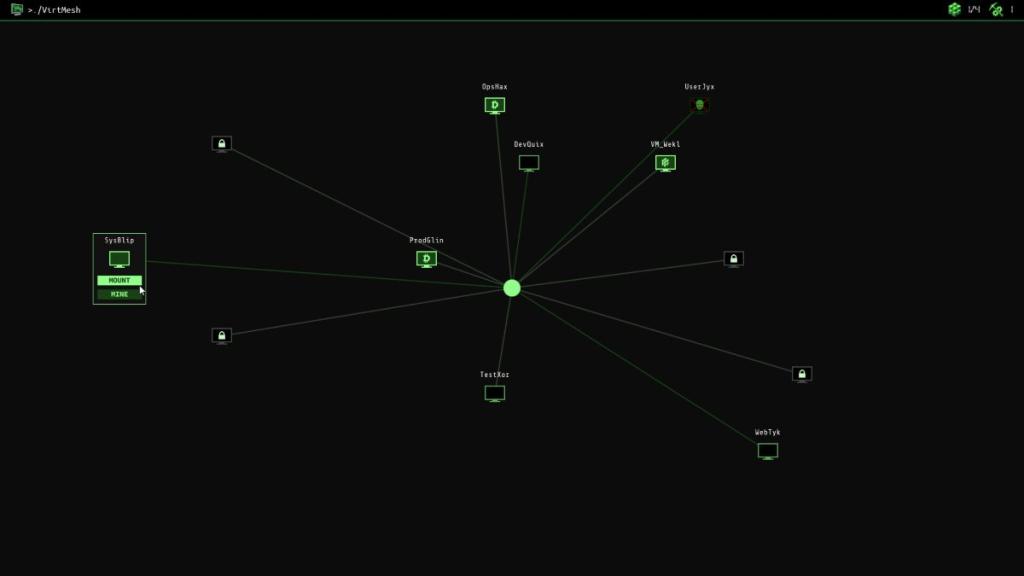
At the heart of player progression in Welcome to the Game 3 lies the acquisition and strategic deployment of DOS Coins, the game’s primary in-game currency. These coins are not merely for purchasing digital goods; they serve as a vital tool for both advancing one’s own objectives and actively disrupting the progress of competitors. The most fundamental method for accumulating DOS Coins is through the "VirtMesh" application, an early-game software that unlocks access to a network of exploitable computers.

VirtMesh allows players to engage in two primary activities: "mounting" and "mining." Mounting involves hacking into remote computers, granting access to their resources. Mining, on the other hand, directly extracts DOS Coins from these compromised systems. However, the digital landscape is dynamic, and prolonged engagement with a single system is fraught with peril. Reflect Studios has implemented a system that prevents indefinite exploitation of any given computer. Players must judiciously rotate between different machines, whether for mining or mounting, to avoid triggering lockout protocols and alerts that could expose their presence. This mechanic mirrors the real-world challenges of maintaining anonymity in clandestine online operations.
The process of hacking into computers via VirtMesh involves a minigame known as "INJ3KT-R." This grid-based puzzle requires players to navigate a path from a starting point to an endpoint, alternating between light and dark tiles. Successful completion grants access, while failure results in the immediate closure of that particular system, necessitating a move to another. Within the base network of VirtMesh, specific nodes offer more lucrative returns. Players are advised to prioritize mining from "NetVorn" (yielding 1.45 DOS), "UserJyx" (1.80 DOS), and "WebTyk" (1.84 DOS), as these represent the most efficient early-game sources of income. Beyond direct mining, DOS Coins can also be earned by successfully completing various in-game requests, a mechanism that will be explored further.
The volatile nature of the Dark Net means that the DOS Coins players diligently accumulate are constantly under threat. Two primary adversaries pose a significant risk: Lucas, an in-game antagonist, and rival players seeking to sabotage progress. Lucas is known to attempt coin theft whenever he appears at the player’s motel location. To circumvent these attempts, players can employ a strategy of quickly shutting down their computer by interacting with the power button located in the bottom-left corner of the screen. The implementation of motion sensors can provide crucial early warnings, granting players sufficient time to enact this defensive maneuver before Lucas arrives.
Competitors, meanwhile, engage in more sophisticated forms of disruption. They will deploy hackers to infiltrate the player’s system and steal accumulated DOS Coins. The "NOP Sled" tool offers a potential bypass for certain minigames associated with these hacks, allowing players to avoid direct confrontation. Conversely, WTTG3 introduces an offensive capability for players to retaliate. By utilizing the "A.C.R.S." platform, players can contract hackers to target specific rival players, effectively turning the tables and disrupting their economic flow.
A critical consideration when attempting hacks is the presence of a "Backdoor" installed by a competitor. If a hack is initiated against a system with an active Backdoor and fails, the player will incur a small DOS Coin penalty. However, successful exploitation of a system without a Backdoor, or one that is inadequately defended, can result in the player siphoning a portion of the target’s DOS supply. This strategic theft can significantly impede an opponent’s ability to acquire essential items or hire the services of in-game assassins, creating a crucial advantage.
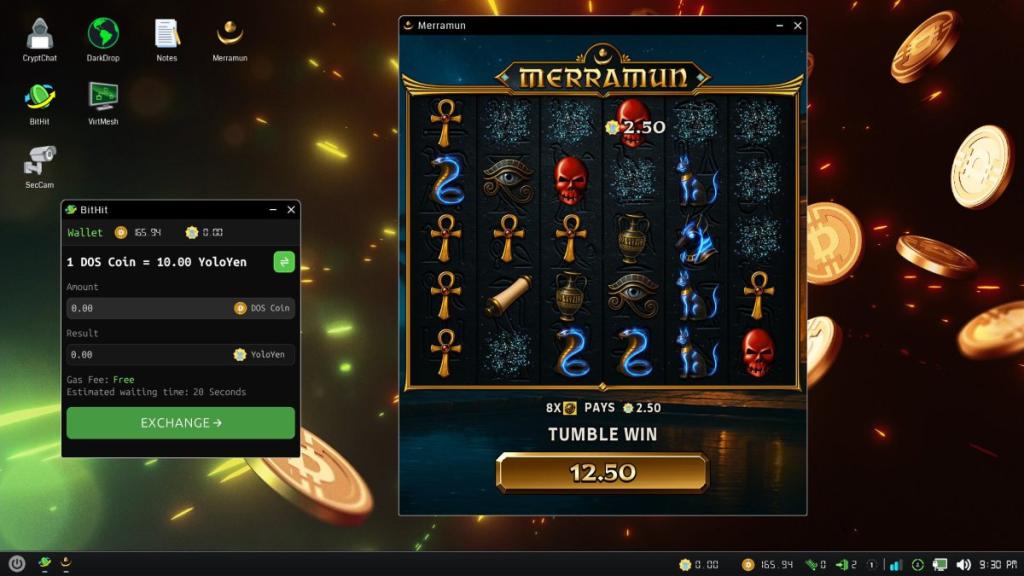
For players seeking to maximize their DOS Coin gains, an extreme but potentially rewarding strategy involves converting DOS Coins into "YoloYen" via the "BitHit" platform. This digital currency can then be leveraged in the "Merramun" gambling application. While inherently risky, successful gambling can lead to substantial YoloYen profits, which can then be reconverted back into DOS Coins on BitHit, offering a high-risk, high-reward avenue for economic expansion.
Cultivating Influence: Building Reputation (Rep) in the Dark Net
Beyond financial accumulation, establishing a strong "Reputation" (Rep) is paramount for navigating the complex social and economic strata of WTTG3’s Dark Net. Two essential applications, "ShadowFetch" and "A.C.R.S.", are introduced early in the game and are integral to this process. ShadowFetch serves a dual purpose: it can convert Universal Resource Locators (URLs) into MP4 video files, which can then be disseminated to other users. The conversion process incurs a DOS Coin cost, necessitating careful consideration of which files to process, prioritizing those with a clear demand.
The most effective method for elevating one’s Rep level is by fulfilling "NPC requests" sourced through A.C.R.S. This platform functions as a global chat room, a bustling hub for competitors, hackers, dealers, and various Dark Web denizens. Within this environment, NPC requests can be analogized to side quests in role-playing games. The A.C.R.S. chat room undergoes a reset every thirty minutes, emphasizing the importance of "pinging" users whose requests pique interest. This action ensures that their offerings remain active and visible. Furthermore, successfully evading incoming hacks also contributes to the player’s Rep experience points (XP).
While A.C.R.S. is a valuable tool for general interactions, including dealing with specific in-game characters like "Cletus," the primary focus for Rep building lies in identifying and fulfilling video file requests. This involves sourcing Fetch URLs from the Dark Net, converting them into MP4 format using ShadowFetch, and then selling these completed files for both DOS Coin and Rep.
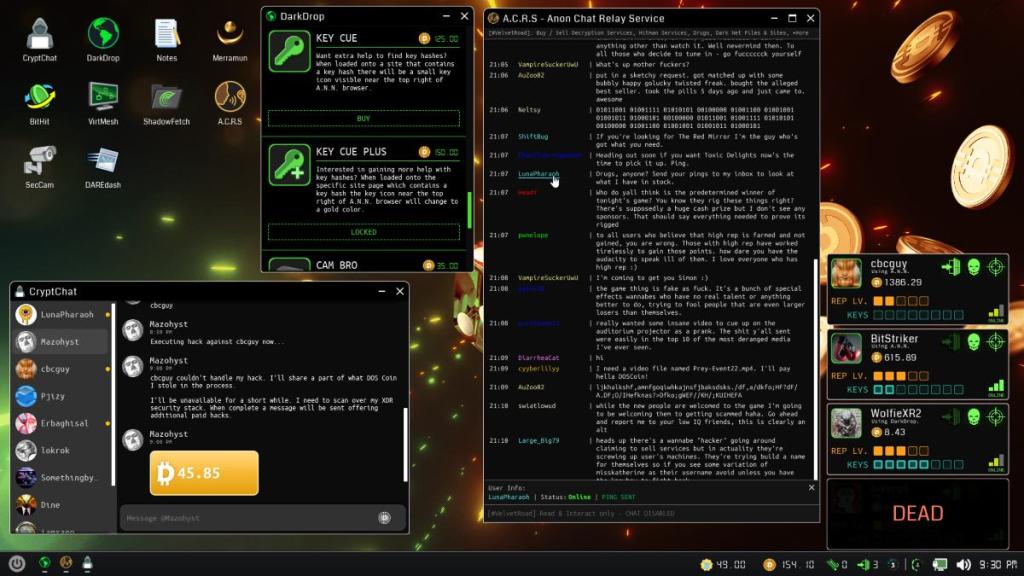
NPCs will frequently request specific website URLs and video content. The "Dark Wiki" serves as a critical resource for locating these items, even if direct access to a particular site is blocked by network restrictions. Players can still copy and paste URLs from the Dark Wiki into the A.N.N. browser to discover new lists of websites. The A.C.R.S. chat room itself is a fertile ground for finding and completing these requests. Players can identify dealers matching their current Rep level or users seeking URLs, videos, or offering jobs. Selecting a user by their username and pinging them will initiate a private messaging session via "CryptChat," facilitating the transaction.
The Crucial Hunt: Locating and Decrypting Key Hashes
The ultimate objective in Welcome to the Game 3 revolves around the acquisition of eight distinct "Keys." This endeavor necessitates the exploration of numerous Dark Wikis, which act as gateways to further websites containing potential "Key Hashes." These Wiki pages typically manifest as ".ann" URLs, which can be directly input into the A.N.N. browser, unlocking access to a curated list of sites. Unlike previous installments where the objective was to simply locate all Keys, WTTG3 introduces a crucial decryption step. The discovered Keys must be submitted to an agent within A.C.R.S. for decryption, a process that incurs a DOS Coin fee.
The spawn locations of these Keys are randomized at the commencement of each new game. Websites can be categorized as perpetually open, time-limited, or outright inaccessible. Therefore, a degree of foresight regarding potential Key Hash locations can significantly streamline the search process. Key Hashes can appear overtly on a webpage, typically presented as a numeral from one to eight, followed by a random alphanumeric string.
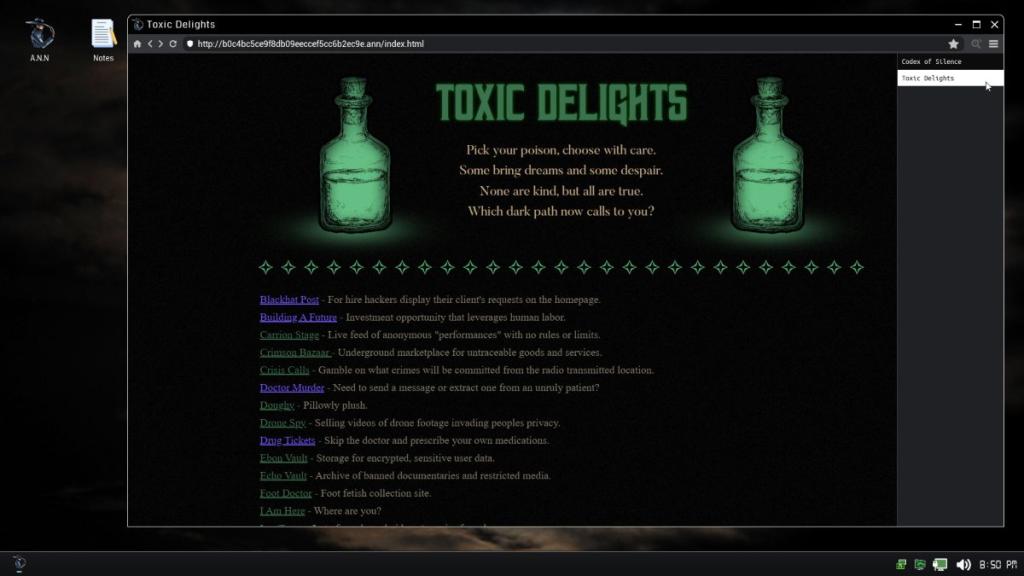
When a Key Hash is concealed behind a page element, players must carefully hover over letters and images. The "Source Code Viewer," accessible by clicking a magnifying glass icon in the top-right corner of the A.N.N. browser, is an invaluable tool for uncovering hidden elements. On a webpage, a Key Hash becomes visible and interactive when the player’s cursor hovers directly over it, changing the cursor’s appearance. Within the Source Code Viewer, Key Hashes are displayed in their complete, unadulterated form.
Defensive Maneuvers and Offensive Strikes: Blocking and Sending Hacks
As the in-game clock progresses towards 9:30 PM, players must brace themselves for an escalating onslaught of hacks. These intrusions will increase in complexity and threat level as the game advances, reflecting the increasing desperation and resources of opposing players who are willing to invest more heavily to impede progress and even orchestrate assassination attempts. Understanding the nature of these incoming threats is crucial for survival.
Players can implement various defensive strategies to mitigate the impact of these hacks. These often involve quick-time events, pattern recognition minigames, and resource management under pressure. Successfully defending against these attacks not only preserves the player’s digital assets but also contributes to their overall Rep.
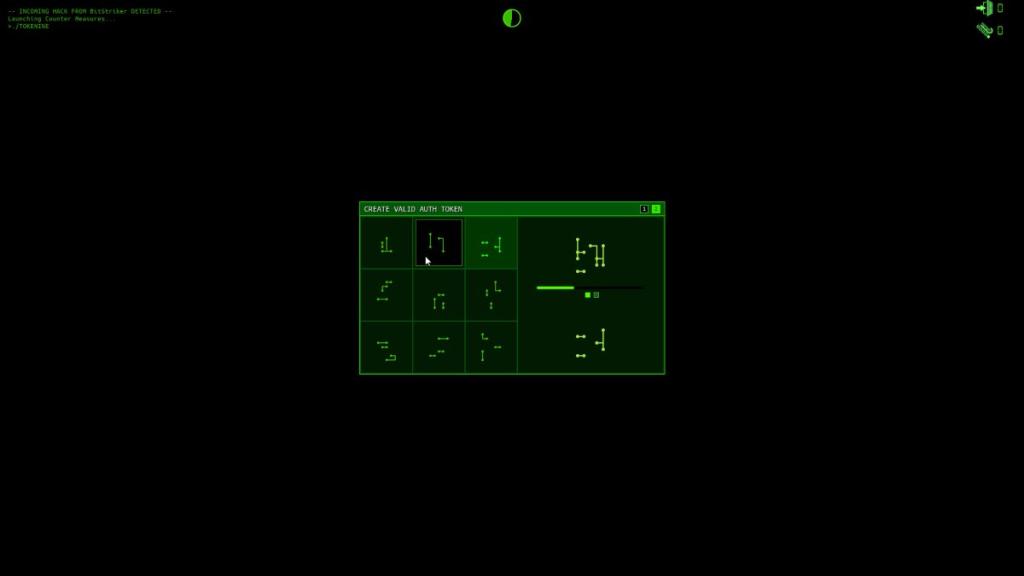
Conversely, the game allows players to proactively engage in offensive hacking. This can involve targeting rival players directly through A.C.R.S. by hiring doxxing services to uncover their personal information. This intelligence can then be leveraged by another contracted contact to initiate a "hit," effectively removing the competitor from the game. While this strategy is one of the most resource-intensive within WTTG3, its efficacy in the late stages of the game, when the competition for Key Hashes becomes most fierce, can be decisive.
Strategic Elimination: Taking Out the Competition
In the unforgiving environment of Welcome to the Game 3, direct elimination of rivals can become a necessary, albeit costly, strategic option. The A.C.R.S. platform serves as the nexus for orchestrating such actions. Players can engage with specific users on this platform who specialize in "doxxing" – the process of revealing a competitor’s personal information. This intelligence gathering is the first step in a multi-stage operation.
Following the doxxing process, a second contact is required. This individual is responsible for initiating a "hit" on the targeted competitor, utilizing the compromised information. This clandestine operation is among the most expensive endeavors within WTTG3, demanding significant DOS Coin expenditure. However, its impact on the competitive landscape can be profound. Removing a rival player not only eliminates a direct threat to the acquisition of Key Hashes but also frees up valuable digital real estate and resources that were previously contested. For players approaching the challenging endgame of this unforgiving simulation, such decisive actions can often prove to be the difference between success and failure. The strategic deployment of these high-cost, high-impact actions underscores the multifaceted nature of WTTG3, where economic prowess, social maneuvering, and outright aggression are all critical components of survival and ultimate victory in the perilous digital frontier.