


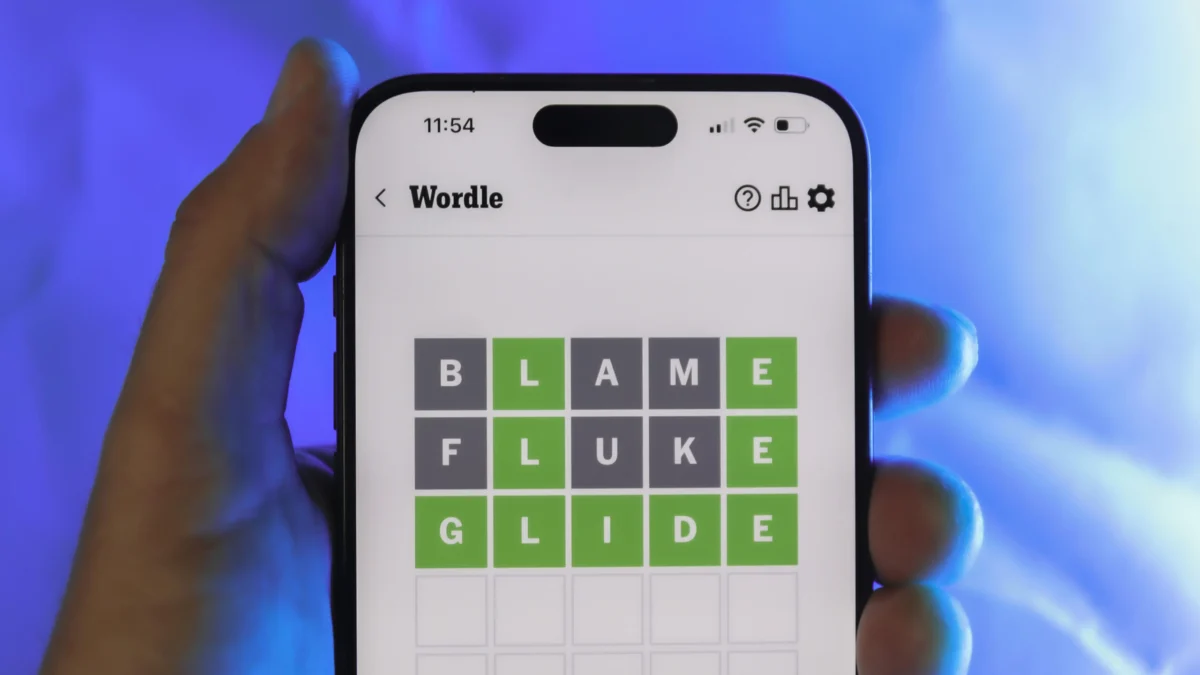
Today’s Wordle challenge, puzzle number 1,918, presents the answer WAKEN. This five-letter word, meaning to stop sleeping or to rouse from sleep, might have proved a distinct challenge for some players, particularly given its less common initial letter. Enthusiasts of the globally popular word puzzle often seek out daily hints and solutions to maintain their winning streaks or simply to satisfy their curiosity. For those who navigated today’s grid successfully, the satisfaction is palpable; for others, the revelation provides another learning opportunity in the ever-evolving lexicon of Wordle. The New York Times, which now hosts Wordle alongside its suite of daily brain teasers including the Mini Crossword, Connections, and Strands, continues to provide a daily dose of linguistic engagement to millions worldwide.
The pursuit of optimal strategies for Wordle has become an academic exercise for many, ranging from casual players to data scientists. The foundational principle often revolves around selecting a starter word that maximizes the chances of revealing common letters. Analysis of the English language, often referencing resources like the Oxford English Dictionary, reveals that certain letters appear with significantly higher frequency than others. Vowels such as E, A, I, O, U, and common consonants like R, T, N, S, L, C are statistically more likely to be present in any given five-letter word. Expert players and computational analyses frequently suggest words like "CRANE," "SLATE," "ADIEU," or "ROAST" as strong starting points due to their strategic inclusion of these high-frequency letters. These words are designed not necessarily to guess the word outright, but to eliminate as many incorrect letters and identify as many correct ones (and their positions) as quickly as possible. CNET, a prominent technology and services publication, regularly offers advice on these strategies, including specific recommendations like "TRAIN" and "CLOSE," which align with the principle of leveraging high-frequency letters.
Today’s puzzle offered several specific clues to guide players towards "WAKEN." Firstly, it featured no repeated letters, a common characteristic that players often note to narrow down possibilities. Secondly, it contained two vowels, which, given the five-letter structure, meant a balanced distribution of consonants. The more specific hints then focused on positional information: the word begins with ‘W’ and ends with ‘N’. Finally, a semantic hint was provided, stating that the word can mean "to stop sleeping." Combining these clues – a five-letter word, no repeated letters, two vowels, starting with ‘W’, ending with ‘N’, and related to awakening – strongly points to "WAKEN." The letter ‘W’ is notably less common as an initial letter compared to, for instance, ‘S’ or ‘A’, making the first letter hint particularly valuable for many players who might typically start with more conventional consonant choices.
The Genesis and Global Phenomenon of Wordle
Wordle’s journey from a personal project to a global sensation is a testament to the power of simplicity and thoughtful design. The game was created by Josh Wardle, a software engineer based in Brooklyn, New York, as a private game for his partner, Palak Shah, who enjoys word puzzles. The initial version was developed in 2020 during the COVID-19 pandemic, providing a diversion for the couple. Wardle meticulously curated a list of approximately 2,315 possible five-letter words from a much larger dictionary, focusing on common and recognizable words to ensure playability. The game’s mechanics are straightforward: players have six attempts to guess a five-letter word. After each guess, the game provides feedback in the form of colored tiles: green indicates a correct letter in the correct position, yellow signifies a correct letter in the wrong position, and grey means the letter is not in the word at all.
What began as a private pastime quickly grew. Wardle launched the game publicly in October 2021, and its popularity exploded towards the end of 2021 and into early 2022. A key factor in its viral spread was the simple, elegant sharing feature: after completing a puzzle, players could share their results as a grid of colored emoji squares, without revealing the actual word, thus creating a social buzz and friendly competition. This innovative sharing mechanism, coupled with the daily nature of the puzzle (one puzzle per day for everyone), fostered a unique sense of community and collective experience. There were no distracting ads, no microtransactions, and a refreshingly uncluttered interface, all contributing to its appeal in a digital landscape often dominated by intrusive monetization strategies.
The New York Times Acquisition and Strategic Integration

The rapid ascent of Wordle did not go unnoticed by major media organizations. In January 2022, The New York Times Company announced its acquisition of Wordle from Josh Wardle for an undisclosed sum reported to be in the low seven figures. The acquisition was a strategic move for The New York Times, aiming to bolster its growing portfolio of digital games and attract new subscribers. Wordle seamlessly integrated into the NYT Games platform, joining other popular puzzles like the iconic Crossword, the daily Mini Crossword, and newer additions like "Connections" and "Strands."
The New York Times articulated that Wordle would remain free to play initially, a promise it has largely kept, though it is strategically positioned to encourage subscriptions to its broader digital offerings. The acquisition underscored the increasing value of engaging, high-quality digital content in an era of digital subscriptions. Wordle, with its daily engagement and broad appeal, became a powerful tool for driving traffic and converting casual players into loyal subscribers across the NYT’s digital ecosystem. The success of Wordle also highlighted a broader trend in casual gaming, where simple, accessible, and intellectually stimulating puzzles can capture a vast audience without the need for complex graphics or storylines.
Data-Driven Strategies and Linguistic Analysis
Beyond intuitive guesses, the game of Wordle has spawned a significant interest in data-driven strategies. Computational linguists and data scientists have analyzed vast corpora of English words to identify the most statistically advantageous starting words. The goal is to maximize the information gained from the first guess. This often involves selecting words that contain a high number of unique, high-frequency letters, especially vowels and common consonants, while avoiding repeated letters.
For example, words like "ADIEU" (A, D, I, E, U) are favored for their high vowel count, which helps to quickly identify or eliminate several key letters. Others, like "CRANE" (C, R, A, N, E), balance vowels with strong consonants. Advanced algorithms even consider positional frequency, meaning how often a letter appears in the first, second, third, fourth, or fifth position of a five-letter word. This sophisticated analysis goes beyond simple letter frequency, aiming to optimize the information yield of each guess. The community has seen various "best" starting words proposed, each with slightly different algorithmic backing, but all converge on the principle of information theory: reducing uncertainty as much as possible with each successive guess.
The "Wordle Effect" and Broader Cultural Impact
Wordle’s success has had a ripple effect across the digital puzzle landscape. It demonstrated the immense appeal of a simple, daily, and shareable puzzle, inspiring numerous clones and variations. Many publications and app developers launched their own versions, some with different word lengths, others with thematic twists, further solidifying the genre’s popularity.
Beyond direct imitations, Wordle also brought renewed attention to traditional word games and puzzles. The New York Times’ other offerings, such as Connections, a game focused on finding common threads between seemingly disparate words, and Strands, a word search variant where players find themed words within a grid, have undoubtedly benefited from the increased engagement driven by Wordle players. The game fostered a sense of community, with millions globally engaging in the same daily mental exercise, discussing strategies, and sharing their results. It became a daily ritual for many, a small, satisfying challenge to start or end the day.
From a cognitive perspective, Wordle offers more than just entertainment. It encourages vocabulary expansion, logical deduction, and pattern recognition. Players subconsciously analyze letter frequencies, common word structures, and letter combinations, honing their linguistic and analytical skills. The limited number of guesses adds a layer of strategic thinking and pressure, making each decision impactful. The psychological reward of solving a puzzle, particularly one that feels challenging but fair, contributes to its addictive quality. It’s a brief escape, a moment of focused concentration that provides a sense of accomplishment in a fragmented digital world.
Looking Ahead: The Enduring Appeal
As Wordle continues its daily cadence under the stewardship of The New York Times, its enduring appeal seems secure. The game maintains its original charm: a simple, daily, non-intrusive challenge that connects millions. While today’s answer, "WAKEN," may have caught some off guard, it serves as another reminder of the vast and sometimes surprising richness of the English language. For CNET and other platforms, providing daily hints and strategies remains a valuable service, helping players navigate the linguistic maze and celebrate their successes. The global community of Wordle players eagerly anticipates each new puzzle, ready to test their vocabulary, their logic, and their luck against the day’s hidden word.
Recent Wordle Answers
To provide context and a look back at recent challenges, here are the Wordle answers from the past few days:
- September 18, No. 1,917: SNOWY
- September 17, No. 1,916: THETA
- September 16, No. 1,915: WISPY
- September 15, No. 1,914: DEALT
- September 14, No. 1,913: RINSE

CNET editor Gael Fashingbauer Cooper, a journalist and pop-culture junkie, is co-author of “Whatever Happened to Pudding Pops? The Lost Toys, Tastes and Trends of the ’70s and ’80s,” as well as “The Totally Sweet ’90s.” She’s been a journalist since 1989, working at Mpls.St.Paul Magazine, Twin Cities Sidewalk, the Minneapolis Star Tribune, and NBC News Digital. She’s Gen X in birthdate, word and deed. If Marathon candy bars ever come back, she’ll be first in line.
See full bio