


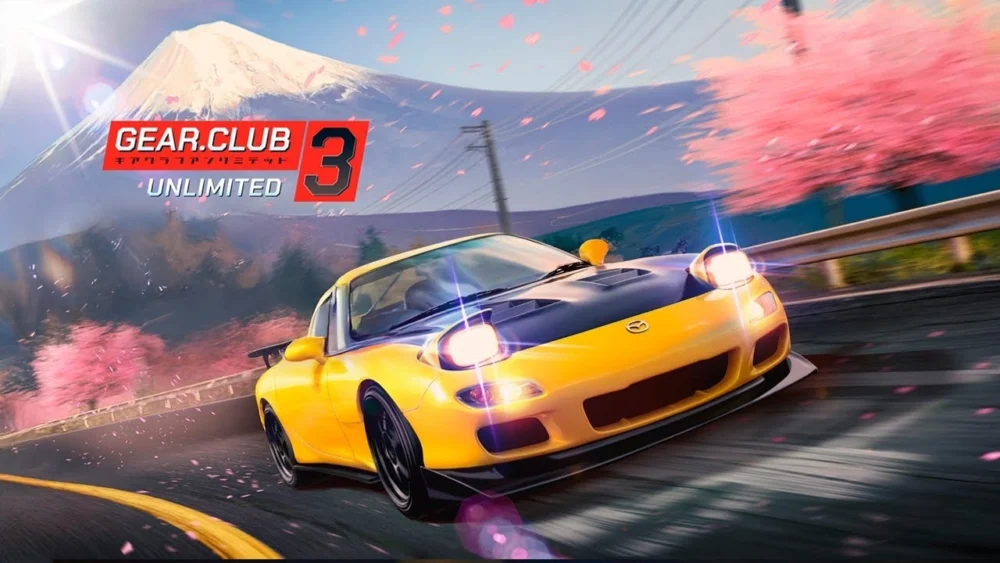
French developer Eden Games has officially launched Gear.Club Unlimited 3, marking the first entry of the long-standing arcade racing series on the Nintendo Switch 2 hardware. Following the studio’s recent work on licensed titles such as Garfield Kart 2, the team has returned to its most successful proprietary IP, which initially gained traction as a mobile title before finding a dedicated niche on the original Nintendo Switch console. This latest installment aims to capitalize on the expanded technical capabilities of Nintendo’s new hardware while navigating an increasingly competitive landscape for racing simulations and arcade titles.
The Evolution of Eden Games and the Gear.Club Franchise
Eden Games, based in Lyon, France, holds a storied history in the racing genre, having previously developed the V-Rally series and the critically acclaimed Test Drive Unlimited. The Gear.Club franchise was born from a desire to provide a high-quality racing experience on mobile platforms, which was later ported and expanded for the Nintendo Switch under the "Unlimited" subtitle.

The first two Gear.Club Unlimited titles occupied a unique position in the gaming market. On platforms like the PlayStation 5, Xbox Series X, and PC, the series faced stiff competition from high-budget franchises such as Forza Horizon, Need for Speed, and The Crew. However, on the original Nintendo Switch, the lack of hardware-intensive racing titles allowed Gear.Club to flourish as a primary alternative for fans of licensed vehicles and realistic aesthetics. Over the years, Gear.Club Unlimited 2 grew through numerous updates, eventually offering a robust career mode, over 250 races, and a suite of car customization options that allowed it to transcend its mobile origins.
Gear.Club Unlimited 3 arrives approximately eight years after the initial release of the second game. While the previous entries were eventually ported to other consoles, the third installment debuts as a timed exclusive for the Nintendo Switch 2, with releases for other platforms slated for late 2026.
Setting the Stage: A Shift to Japanese Car Culture
In a move that mirrors recent trends in the gaming industry, Gear.Club Unlimited 3 shifts its primary focus to Japan. This thematic choice aligns the title with other major releases, such as Ubisoft’s Assassin’s Creed Shadows and the anticipated Forza Horizon 6, both of which utilize Japanese landscapes as their backdrop.

The inclusion of Japan allows the developers to lean into the aesthetics of "Touge" racing, characterized by drifting down narrow mountain passes and navigating urban environments lined with cherry blossoms. The game features two primary environments at launch: the scenic routes of Japan and the traditional tracks of France. While this represents a geographical consolidation compared to the four biomes found in the previous title, the developers have focused on higher fidelity and environmental detail to leverage the Switch 2’s improved processing power.
Gameplay Mechanics and the Unlimited System
The core gameplay of Gear.Club Unlimited 3 remains rooted in accessible arcade physics. The driving model is designed for ease of entry, prioritizing speed and fluid movement over the complex tire deformation and weight transfer found in "sim-racers" like Gran Turismo.
One of the defining features of this iteration is the "Unlimited" mechanic. Players earn points for "clean" driving maneuvers, such as high-speed overtakes, drafting, and avoiding collisions. These points fill an "Unlimited Bar" which directly impacts the rate at which players earn upgrade materials. Conversely, off-road excursions or collisions with barriers and opponents deplete the bar. This system creates a risk-reward dynamic, encouraging players to master the racing line rather than relying on aggressive "wall-riding" or "dive-bombing" tactics.

The game also introduces a "Duel" mode, which functions similarly to a fighting game. In these one-on-one encounters, both drivers possess health bars. The trailing driver loses health over time, and both participants take damage upon impact. This mode requires players to secure the lead early and maintain it, preventing the "rubber-banding" strategies often used in traditional racing formats.
Technical Specifications and Performance Metrics
The transition to the Nintendo Switch 2 hardware has allowed Eden Games to implement technical features previously unavailable to the franchise on handheld consoles. Gear.Club Unlimited 3 offers two distinct performance profiles:
- Graphics Mode: This setting targets a 30 frames per second (FPS) output with an emphasis on 4K resolution (when docked) and enhanced lighting effects, including dynamic shadows and high-quality reflections in the player’s customizable garage.
- Performance Mode: This mode targets a consistent 60 FPS, a first for the series on a Nintendo platform. On the Switch 2, this mode utilizes the system’s Variable Refresh Rate (VRR) support in handheld mode to mitigate minor frame pacing issues.
To achieve these performance targets, the title relies heavily on Deep Learning Super Sampling (DLSS). While this allows for a higher perceived resolution and stable frame rates, technical analysis indicates some visual trade-offs. In handheld mode, the use of aggressive upscaling results in noticeable artifacts, such as ghosting on the speedometer and a lack of clarity in distant foliage.

When compared to recent benchmarks on the platform, such as the Switch 2 port of GRID Legends, Gear.Club Unlimited 3 appears to occupy a middle ground. While it offers a significant upgrade over the original Switch hardware, some critics and industry observers note that the environmental assets and texture filtering suggest an "enhanced" previous-generation architecture rather than a ground-up utilization of the Switch 2’s full capabilities.
Content Overview and Customization
At launch, Gear.Club Unlimited 3 features a curated selection of approximately 50 tracks. This is a notable reduction from the 250+ tracks available in the definitive version of Gear.Club Unlimited 2. However, the developers have indicated that the career mode remains "meaty," offering dozens of hours of gameplay through standard races, time attacks, and the aforementioned duels.
The garage system remains a centerpiece of the experience. Players can fully customize their workshop, arranging various "performance workshops" for engines, tires, and bodywork. The game features a roster of licensed street cars from global manufacturers, though the acquisition process is described as "grindy." The economy encourages players to invest deeply in a small fleet of vehicles rather than amassing a massive collection quickly, emphasizing the mechanical progression and tuning aspects of the game.

Market Analysis and Competitive Landscape
The release of Gear.Club Unlimited 3 comes at a pivotal moment for the Nintendo Switch 2. During the lifecycle of the original Switch, the Gear.Club series was often the only choice for players seeking a "realistic-looking" racer with licensed cars. In 2026, the landscape is different. The Switch 2 has already seen the release of high-fidelity ports like GRID Legends, which offers more advanced AI and a broader range of motorsport disciplines.
Furthermore, the lack of online multiplayer at the launch of Gear.Club Unlimited 3 has been identified as a significant drawback. While the second game eventually added 8-player online modes, the third installment is currently limited to 2-player local split-screen. This regression in social features may impact the title’s long-term retention rates, especially as competitors offer full cross-play and online league systems.
Official Responses and Future Roadmap
While Eden Games has not issued a formal statement regarding the reduced track count, sources close to the development suggest that the team prioritized the overhaul of the physics engine and the implementation of the 60 FPS mode. The studio has a history of supporting its titles post-launch with both free and paid content updates, suggesting that the current track list and the absence of online multiplayer may be addressed in future patches.

Industry analysts suggest that the "budget-friendly" pricing strategy of the series will likely continue. The previous games were known for frequent and deep discounts, often appearing on the Nintendo eShop for under five dollars during seasonal sales. This strategy helped the franchise build a massive install base, and it is expected that Gear.Club Unlimited 3 will follow a similar lifecycle to maintain visibility against higher-budget AAA competitors.
Conclusion and Broader Impact
Gear.Club Unlimited 3 represents a significant step forward for Eden Games in terms of technical performance, finally bringing 60 FPS racing to the Nintendo handheld ecosystem. By focusing on the popular aesthetic of Japanese car culture and introducing innovative modes like the health-based Duel system, the game carves out a specific identity in the arcade racing market.
However, the title also highlights the challenges of transitioning a franchise to more powerful hardware. The reliance on DLSS and the reduction in total content compared to its predecessor suggest a development process focused on quality over quantity. For the Nintendo Switch 2 audience, Gear.Club Unlimited 3 serves as a competent, if somewhat traditional, arcade racer that fills the gap for players seeking a structured single-player career. As the platform matures and more racing titles arrive, the long-term success of the game will likely depend on how quickly Eden Games can restore the feature parity—specifically in multiplayer and track variety—that made the previous installment a staple of the Nintendo library.