


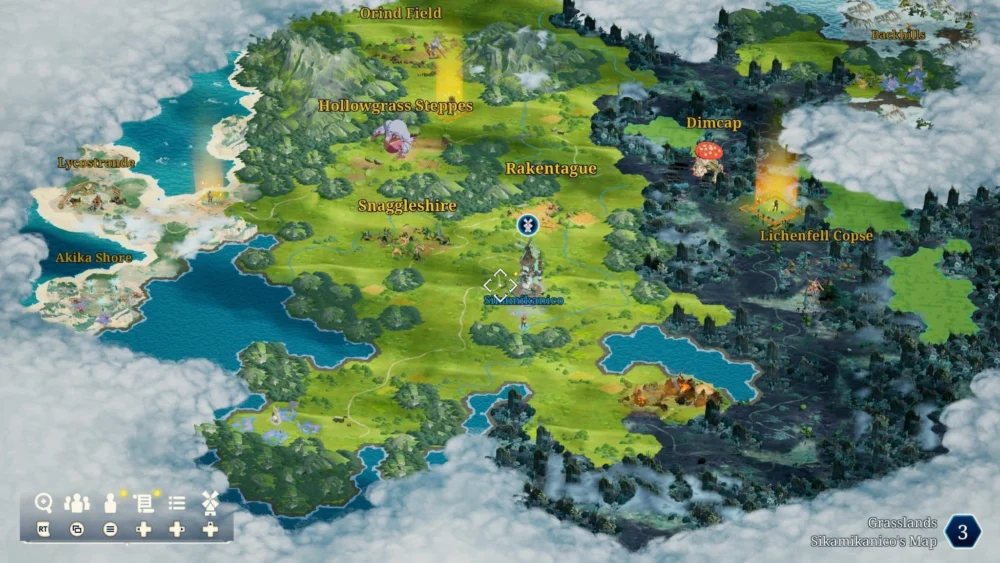
Towerborne, the latest project from Stoic—the independent developer renowned for the critically acclaimed Banner Saga trilogy—has officially transitioned from its Early Access phase to a full 1.0 release. Available on PC, Xbox Series X|S, and for the first time, PlayStation 5, the game represents a significant departure from its original conceptualization. Initially announced in 2023 as a free-to-play live-service title, the final version arrives as a premium, "buy-to-play" product. This shift highlights a broader industry trend where developers and publishers are reassessing the sustainability of the live-service model in an increasingly crowded marketplace.

The journey to the 1.0 version has been marked by substantial mechanical and structural overhauls. After entering Early Access on Steam in September 2024 and expanding to Xbox consoles in April 2025, Stoic utilized over a year of player feedback to refine the experience. The resulting product is a side-scrolling action RPG that prioritizes cooperative play, visceral combat, and a traditional progression system devoid of the microtransactions that typically define free-to-play architectures.
Historical Development and Chronology
The development of Towerborne began with the ambition to create a "world that grows with the players." When Microsoft and Stoic first unveiled the game at the 2023 Xbox Games Showcase, it was positioned as a cornerstone of Xbox’s free-to-play portfolio. The initial design focused on a "drip-feed" content model, where players would engage in daily missions and seasonal events to unlock cosmetic items and endgame gear.

The timeline of the game’s public lifecycle is as follows:
- June 2023: Official announcement at the Xbox Games Showcase as a free-to-play title.
- September 2024: Launch into Steam Early Access, introducing players to the "Belfry" hub and the initial biomes.
- April 2025: Release on Xbox consoles via the Game Preview program.
- Late 2025: Stoic announces a fundamental shift in the business model, moving from free-to-play to a premium release.
- February 2026: Official 1.0 launch on PC, Xbox, and PlayStation 5.
This transition necessitated a "re-stitching" of the game’s core loops. Systems originally intended to monetize player time or vanity—such as premium cosmetic shops and battle passes—were dismantled. In their place, Stoic implemented a gameplay-driven reward structure where all items are earned through mission completion and the "Forge" system.

The Pivot from Live-Service to Premium
The decision to abandon the free-to-play model is perhaps the most significant aspect of Towerborne’s release. According to Shana Markham, Design Director at Stoic, the move was a response to both community feedback and the shifting economic realities of the gaming industry. Players in Early Access expressed a preference for a more cohesive, self-contained narrative and progression system rather than a perpetual grind designed around long-term monetization.
By adopting a premium model, Stoic was able to remove online-only requirements for solo play and adjust the "drop rates" of high-tier loot to feel more rewarding for the average player. The "Bounty Board," which once housed daily "chores" typical of mobile-adjacent live services, has been repurposed to offer optional side quests with fixed rewards. This change ensures that player progress is dictated by skill and exploration rather than time-gating or financial investment.

Narrative Framework and World-Building
In Towerborne, players take on the role of an "Ace," a resurrected warrior tasked with protecting the remnants of humanity. The setting is centered around the Belfry, a massive, windmill-like sanctuary that towers above a world reclaimed by monstrous forces. The 1.0 release introduces a complete narrative arc that was absent during the Early Access period, culminating in a final confrontation with a primary antagonist.
The story begins with the fall of the City of Numbers, a catastrophe that serves as the game’s tutorial. This narrative beat establishes the stakes and introduces the player to the various factions and NPCs that inhabit the Belfry. Unlike Stoic’s previous work in The Banner Saga, which utilized a somber, hand-drawn aesthetic inspired by Norse mythology, Towerborne opts for a vibrant, animated style. However, the world-building remains dense, with environmental storytelling found across new biomes, including the recently added coastal regions and mushroom forests.

Gameplay Mechanics and Class Synergy
At its core, Towerborne is a brawler that emphasizes "juggling" enemies and maintaining combat flow. The game features several distinct classes, each offering a unique playstyle:
- The Shadowstriker: A high-agility class focused on rapid daggers and critical hits.
- The Pyroclast: A heavy-hitting class that utilizes fire-based area-of-effect attacks.
- The Sentinel: A defensive-oriented class equipped with a sword and shield, capable of protecting allies.
The combat system is designed for maximum synergy in four-player cooperative sessions. A typical engagement might involve a Sentinel launching a group of enemies into the air, followed by a Shadowstriker maintaining the "air combo" while a Pyroclast prepares a ground-based explosion to catch the enemies as they fall. This "delirious dance of death" is supported by a robust frame rate, which remains stable even during chaotic encounters on hardware ranging from high-end PCs to portable devices like the ROG Ally X.

The Progression System: The Forge and Danger Levels
Progression in Towerborne 1.0 is governed by "Danger Levels," which act as world tiers that increase both the difficulty of enemies and the quality of loot dropped. As players increase their Ace’s power, they unlock advanced features within the Belfry’s Forge:
- Fuse (Unlocked at Danger Level 4): Allows players to combine unwanted gear to create new, potentially higher-tier items.
- Reforge (Unlocked at Danger Level 5): Enables players to re-roll the specific stats on a piece of gear to better suit their build.
- Refine (Unlocked at Danger Level 5): Provides a way to increase the base power of a favored weapon or armor piece, ensuring that "legacy" items remain viable in the endgame.
While the progression loop is significantly more streamlined than in previous versions, some remnants of the game’s original design persist. The process of dismantling large quantities of low-level gear remains somewhat cumbersome, a vestige of the high-volume loot drops typical of free-to-play RPGs.

Technical Performance and Accessibility
Towerborne’s 1.0 release is optimized for a wide array of hardware. On Xbox Series X and PlayStation 5, the game targets 4K resolution at 60 frames per second. On PC, the game features extensive settings for ultra-wide monitors and various upscaling technologies.
The inclusion of couch co-op—a feature often neglected in modern RPGs—is a significant draw for the console version. Stoic has also implemented quality-of-life features such as a revamped revive system. When a player is downed, they can now crawl toward their teammates, and the revival process can be completed in stages, allowing for more tactical flexibility during difficult boss encounters.

Broader Industry Implications
The transformation of Towerborne from a free-to-play live-service title into a premium release serves as a case study for the current state of the AA and AAA gaming markets. The "live-service fatigue" often cited by industry analysts has led to the premature closure of several high-profile titles in recent years. By pivoting before the 1.0 launch, Stoic and its publishing partners have arguably saved the title from the volatility of the free-to-play market.
This move also reflects a growing demand among players for "complete" experiences that do not require ongoing financial commitments. The ability to import legacy characters from the Early Access period into the 1.0 version further demonstrates a commitment to the existing player base, ensuring that the transition did not alienate those who supported the game’s development.

Conclusion and Final Assessment
Towerborne 1.0 arrives as a polished, mechanically sound action RPG that successfully navigates the difficult transition between business models. While the "scars" of its original design—such as the redundant emote systems and a slightly repetitive early-game grind—are occasionally visible, the core combat and cooperative elements remain highly engaging.
The game’s arrival on PlayStation 5 expands its reach to a new audience, while its presence on Xbox and PC continues to solidify Stoic’s reputation for high-quality, aesthetically distinct titles. As the industry continues to grapple with the complexities of game monetization, Towerborne stands as a testament to the value of developer flexibility and the importance of listening to community feedback. With over 50 missions available at launch and a deep gear-customization system, it offers a substantial package for fans of the genre. Should the title eventually migrate to future platforms, such as the rumored successor to the Nintendo Switch, its scalable performance and cooperative focus make it an ideal candidate for further expansion.