


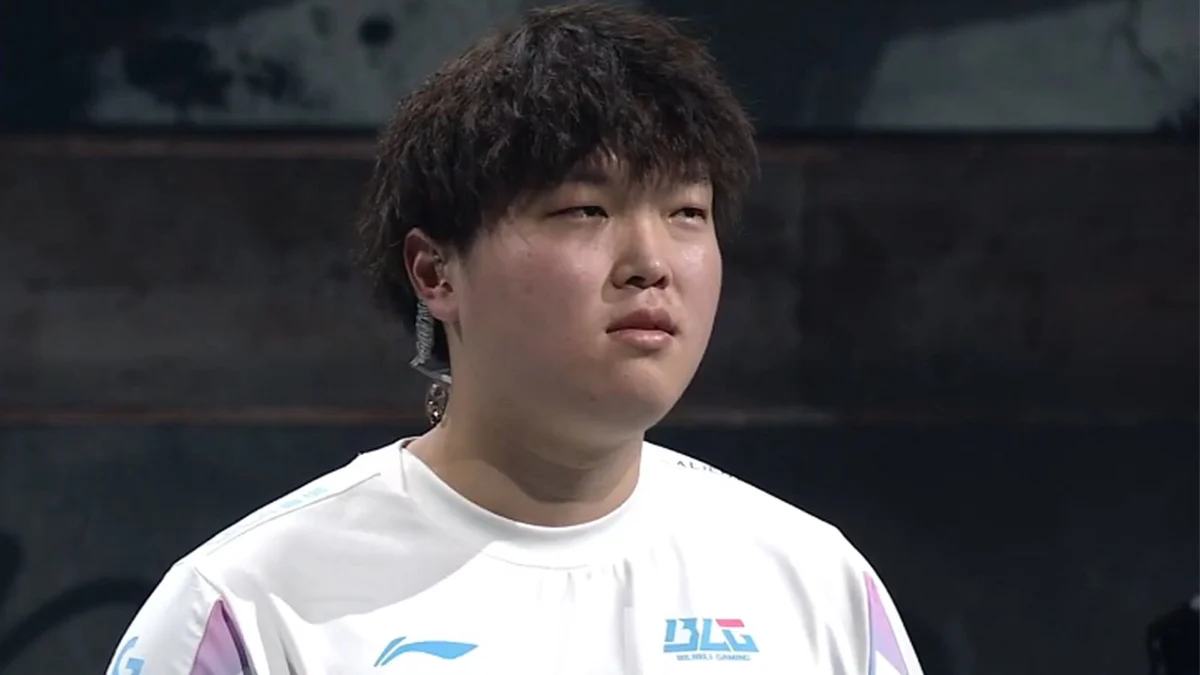
The League of Legends Pro League (LPL) has levied significant financial penalties and a public reprimand against Billibilli Gaming’s top laner, Chen "Bin" Zebin, and the team itself, following an incident on Wednesday, June 3, where Bin failed to fulfill his contractual obligations regarding fan interaction after a decisive victory against EDWard Gaming (EDG). The disciplinary action, stemming from a perceived disruption to the fan experience, underscores the LPL’s commitment to maintaining professional standards and the perceived value of fan engagement within the burgeoning esports ecosystem.
The controversy unfolded in the immediate aftermath of a dominant 3-0 sweep by Billibilli Gaming (BLG) over EDG. While the on-stage performance was a resounding success for BLG, the post-match proceedings were marred by Bin’s alleged refusal to engage in the customary high-five exchanges with the audience. According to an official statement released by the LPL, Bin’s actions were found to have contravened his contractual obligations, which mandate specific on-stage interactions designed to enhance the spectator experience. The league’s statement explicitly cited that Bin’s omission "disrupted the match and negatively impacted the viewing experience and enthusiasm of the audience." This incident, seemingly minor to some, has ignited a broader conversation about player conduct, contractual obligations in professional esports, and the league’s regulatory framework.
A Closer Look at the Incident and LPL’s Response
The LPL’s investigation into the matter was thorough, examining the events leading up to and following the match. Their findings indicated not only an individual lapse in player conduct but also a systemic issue within BLG’s management. The league determined that the team’s "management of their players and their behavior before the day’s matches were inadequate and failed to effectively fulfill its supervisory and management responsibilities." This dual accountability highlights the LPL’s perspective that team organizations bear a significant responsibility in ensuring their players adhere to league regulations and professional conduct.
The disciplinary measures imposed reflect the seriousness with which the LPL views such infractions. Billibilli Gaming as an organization was fined a substantial 50,000 Chinese Yuan (approximately $7,300 USD) and received a public reprimand. The individual penalty for Bin was even more severe, with reports indicating a fine of 150,000 Chinese Yuan (approximately $22,000 USD). Beyond the financial repercussions, Bin was also subjected to public criticism and mandated to undergo "relevant training and education." This educational component suggests a focus on reinforcing the importance of professional conduct, fan engagement, and the broader responsibilities that come with being a high-profile esports athlete.
The LPL’s official statement articulated the league’s rationale and expectations clearly: "Players should strictly adhere to professional conduct and maintain a positive attitude both on and off the field, respecting the competition and the audience." Furthermore, the league issued a directive to all participating clubs, stating, "Clubs need to comprehensively improve their management mechanisms to prevent similar incidents from recurring. We hope that all league personnel will learn from this incident, adhere to professional standards, and cherish every viewer." This statement underscores a proactive approach by the LPL to foster a more professional and fan-centric environment across the league.
Contextualizing Fan Interaction in Esports
The practice of players interacting with fans, particularly through high-fives, handshake lines, or post-match acknowledgments, has become an integral part of the professional esports landscape, mirroring traditions in traditional sports. These interactions serve multiple purposes. For fans, especially those who have invested time and money in attending matches or purchasing premium packages, these moments offer a tangible connection to their idols and a deeper sense of involvement in the competitive event. This direct engagement can significantly enhance the overall fan experience, fostering loyalty and passion for teams and the league.
In the context of the LPL, a league known for its passionate fanbase and high production value, such interactions are not merely optional pleasantries but are often woven into the fabric of the event experience. The contractual obligation cited by the LPL suggests that these interactions are formally recognized as part of the professional agreement between players, teams, and the league. This implies that failure to comply is not just a minor oversight but a breach of agreed-upon terms, impacting the league’s ability to deliver a consistently positive and engaging product to its audience.
The specific match in question, BLG versus EDG, was a highly anticipated fixture within the LPL’s competitive calendar. EDG is a storied franchise with a significant following, and any match between them and a strong contender like BLG draws considerable attention. The fact that BLG secured a commanding 3-0 victory would typically amplify the celebratory atmosphere, making the post-match fan engagement particularly impactful. Bin’s role as a top laner in a winning team would have placed him in a prime position to be a focal point of fan appreciation.

Fan Reactions and Broader Implications
The LPL’s decision has elicited a spectrum of reactions from the esports community. While some fans have expressed strong support for the LPL’s stance, emphasizing the importance of player professionalism and contractual adherence, others have voiced concerns about the severity of the penalties. This division in opinion highlights the ongoing debate about how to balance the rigorous demands of professional competition with the expectations of fan engagement and the potential for overreach in disciplinary actions.
Social media platforms became a focal point for these discussions. Comments ranged from disbelief at the cause of the fine to impassioned defenses of player rights and fan expectations. One widely shared sentiment on X (formerly Twitter) expressed a degree of incredulity: "This is a prank, right?" This reaction suggests that for some, the idea of a professional player facing significant fines for something as seemingly minor as not giving high-fives is difficult to comprehend.
Conversely, other fan perspectives emphasized the financial aspect of the fan experience. One user claimed, "He didn’t high-five the VIP ticket section where you’re supposed to give high-fives. VIP is probably hella expensive, and fans paid extra for that interaction." This comment points to the possibility that the failure to interact was not a general oversight but a specific omission directed at a segment of the audience that may have paid a premium for an enhanced experience, including direct player engagement. This adds another layer to the situation, suggesting that the high-five obligation might have been tied to specific fan tiers or areas.
The lack of immediate public response from either Bin or Billibilli Gaming to the LPL’s sanctions leaves the broader context of their internal reaction and acknowledgment of the situation open to interpretation. Typically, teams and players will issue statements addressing such disciplinary actions, either to explain their position, accept the penalty, or outline steps for improvement. Their silence thus far could indicate ongoing internal discussions, a strategic decision to let the situation unfold, or a tacit acceptance of the league’s ruling.
Analyzing the Long-Term Impact
The LPL’s robust response to the Bin incident carries significant implications for the future of professional esports in China and potentially beyond. Firstly, it sets a clear precedent for player conduct and contractual enforcement within the league. By imposing substantial fines and mandating educational programs, the LPL is signaling that adherence to league rules, especially those concerning fan interaction, is non-negotiable. This could lead to greater diligence from players and teams in ensuring that all contractual obligations are met, thereby fostering a more professional and fan-friendly environment.
Secondly, the incident draws attention to the evolving nature of player-fan relationships in esports. As the industry matures, the lines between athlete and entertainer become increasingly blurred. The LPL’s actions suggest an institutional recognition of the fan experience as a critical component of the sport’s overall appeal and economic viability. This could lead to more formalized structures for fan engagement, potentially including more detailed contractual clauses for players regarding their interactions with the audience.
Furthermore, the league’s acknowledgment of BLG’s inadequate management practices is a crucial element. It shifts some of the responsibility from the individual player to the organizational structure. This emphasis on team management could prompt other LPL organizations to review and enhance their player support systems, training protocols, and oversight mechanisms. The goal, as stated by the LPL, is to "prevent similar incidents from recurring," which requires a systemic approach rather than solely focusing on individual infractions.
The financial penalties, while substantial, also serve as a form of deterrence. For a league as competitive and financially significant as the LPL, fines of this magnitude serve as a stark warning against future violations. The inclusion of educational components also suggests a rehabilitative approach, aiming to not only punish but also to guide players towards better professional conduct.
In conclusion, the fine levied against Bin and Billibilli Gaming for failing to high-five fans is more than just a disciplinary action for a minor infraction. It represents a significant statement from the LPL regarding professional conduct, contractual obligations, and the paramount importance of the fan experience in the rapidly growing world of esports. The incident serves as a crucial case study, highlighting the evolving expectations placed upon professional players and the league’s commitment to shaping a more mature and fan-centric professional gaming environment. The long-term impact will likely be seen in stricter adherence to league rules, enhanced team management, and a deeper integration of fan engagement as a core element of professional esports.