


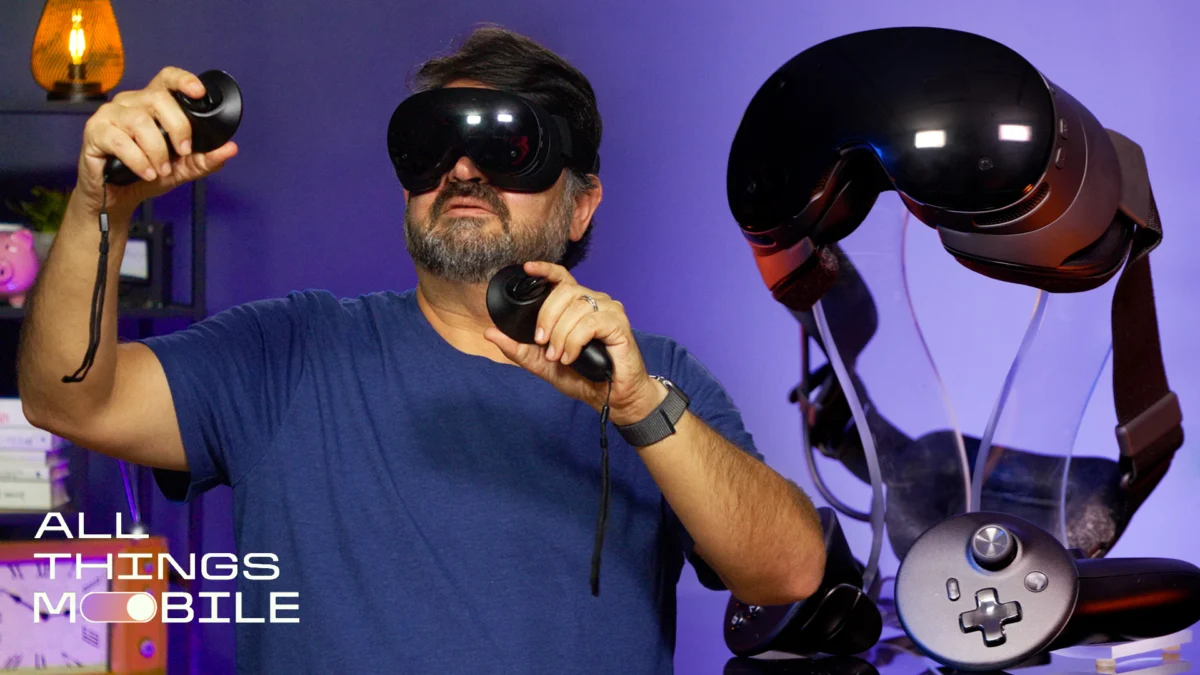
Valve Corporation, a company renowned for its digital distribution platform Steam and its groundbreaking hardware innovations, has ventured further into the immersive technology landscape with the Valve Steam Frame. Positioned as a revolutionary hybrid device, the Steam Frame aims to merge the portable gaming prowess of the Steam Deck with the immersive capabilities of a high-fidelity virtual reality headset. Early impressions from reviewers, including CNET’s Scott Stein, characterize the device as an ambitious experiment, a "portable Steam Deck for your face" that pushes the boundaries of integrated gaming and virtual reality, notably demonstrating its ability to run demanding titles like Half-Life: Alyx. However, its journey to market has encountered significant hurdles, most notably recent delays in pricing and release, attributed to escalating memory costs, reflecting broader challenges in the global electronics supply chain.
The Steam Frame represents Valve’s continued exploration into hardware that enhances the PC gaming ecosystem, following in the footsteps of the Steam Machines, Steam Link, and the highly successful Steam Deck. This latest iteration seeks to bridge the gap between traditional handheld gaming and the rapidly evolving virtual reality market. The core proposition is compelling: users can experience their extensive Steam library, either in a conventional portable format or through a fully immersive VR experience, all within a single device. This dual functionality is a defining characteristic that sets the Steam Frame apart from dedicated VR headsets or pure handheld consoles.
Valve’s Hardware Trajectory: A Legacy of Innovation and Experimentation
Valve’s history with hardware development is marked by a blend of bold innovation and strategic experimentation. From the ill-fated Steam Machines, which attempted to bring PC gaming to the living room with a console-like experience, to the successful Steam Deck, which redefined handheld PC gaming, Valve has consistently demonstrated a willingness to invest in hardware that complements its software ecosystem. The Valve Index, a premium PC VR headset released in 2019, solidified Valve’s commitment to virtual reality, setting a high bar for visual fidelity and tracking. The Steam Frame appears to be the logical next step, attempting to democratize high-end VR by integrating it with a portable, Linux-based gaming platform. This strategy aligns with Valve’s broader philosophy of fostering open platforms and empowering users with greater control and customizability over their gaming experiences, a stark contrast to the more closed ecosystems often found in the console and mobile VR spaces.
Design and Ergonomics: Navigating the Challenges of Integrated Hardware
The physical design of the Steam Frame is central to its hybrid identity. As described by early reviewers, it features a headset component combined with an "ergonomic pack," likely containing the primary processing unit, battery, and other core components, designed to distribute weight and heat effectively. This approach aims to make the headset itself lighter and more comfortable for extended VR sessions, a critical factor for immersion and user satisfaction. The aesthetic design is anticipated to reflect Valve’s utilitarian yet premium approach seen in the Steam Deck and Index, focusing on functionality and user experience.
However, integrating two distinct functionalities into one device presents significant ergonomic challenges. One notable concern highlighted is the difficulty for glasses wearers, a common issue across many VR headsets. Solutions typically involve custom inserts, adjustable lens spacing (IPD), or sufficient room within the headset, all of which add complexity to the design. The Steam Frame’s modular design, mentioned as a key feature, suggests that Valve might be planning for future upgrades or customizable components, potentially allowing users to swap out elements like the ergonomic pack or even the display module. This modularity could extend the device’s lifespan and allow for personalization, echoing the PC building philosophy that underpins much of Steam’s user base. The success of this design will hinge on balancing weight distribution, heat management, comfort, and accessibility for a broad range of users.
The Immersive Experience: Visuals, Foveation, and Advanced Input
The viewing experience in VR is paramount, and the Steam Frame aims to deliver a high-fidelity experience. While specific display resolutions and field of view details remain largely under wraps, the device’s ability to run Half-Life: Alyx suggests a robust visual pipeline. A key technological feature highlighted is "foveated streaming." This advanced rendering technique leverages eye-tracking technology to reduce the rendering workload by only fully rendering the area where the user’s gaze is focused (the fovea), while rendering the peripheral vision at a lower resolution. This significantly boosts performance and image quality in the central vision without requiring an exponentially more powerful processor, making high-fidelity VR more accessible on portable hardware.
Interaction with the virtual world is facilitated by controllers "covered in sensors." This indicates advanced tracking capabilities, potentially similar to the Valve Index’s Knuckles controllers, which offer individual finger tracking and precise spatial awareness. Such detailed input allows for more natural and immersive interactions within VR environments, crucial for titles like Half-Life: Alyx where object manipulation and nuanced gestures are integral to gameplay. Furthermore, the inclusion of "pass-through cameras" suggests capabilities for mixed reality (MR) experiences, allowing users to see and interact with their real-world surroundings while wearing the headset. This feature is vital for safety, boundary awareness, and the potential development of augmented reality applications, blending digital content with the physical world.
Performance and Processing: Powering a Dual-Purpose Device
At the heart of the Steam Frame’s ambition is its processing unit, tasked with driving both demanding VR experiences and traditional portable gaming. While exact specifications are not fully disclosed, the requirement to run a game of Half-Life: Alyx‘s caliber implies a powerful System-on-a-Chip (SoC) with robust CPU and GPU capabilities. For VR, consistent frame rates are crucial to prevent motion sickness and ensure immersion. The integration of foveated streaming would be instrumental in achieving this balance between visual quality and performance on a portable platform.
When functioning as a "portable Steam Deck for your face," the device leverages its internal hardware to run games directly, similar to its handheld predecessor. This requires efficient thermal management and battery life, two areas where portable gaming devices often face trade-offs. The synergy between its VR and standalone capabilities suggests a unified architecture optimized for both scenarios, potentially allowing for seamless transitions between immersive and traditional gaming modes. The underlying operating system, likely a custom Linux distribution similar to SteamOS on the Steam Deck, offers flexibility, customizability, and a robust foundation for running a vast library of PC games.
Gaming Ecosystem and Compatibility: The Steam Library in a New Dimension

The allure of the Steam Frame lies in its promise to tap into the vast and diverse Steam library. Half-Life: Alyx, Valve’s critically acclaimed VR masterpiece, serves as a powerful demonstration of the device’s capabilities, acting as a "killer app" that showcases what high-end VR can achieve. However, the article notes that "not all games will work," a crucial point for managing consumer expectations. The transition of traditional PC games to a VR or even a head-mounted portable format is not always straightforward. Many titles require significant optimization, interface redesigns, and potentially motion control adaptations to function well in VR. Similarly, games designed for a flat screen may not translate perfectly to a head-mounted display, even in a non-VR mode, due to input methods, screen resolution, and ergonomic considerations.
The open nature of Linux and the customizability inherent in Valve’s approach could foster a vibrant community of modders and developers. This community might be able to create compatibility layers or optimize games themselves, extending the device’s functional library beyond Valve’s official support. However, the initial burden of ensuring a smooth and enjoyable experience for a wide range of titles will fall on Valve and game developers. The success of the Steam Frame as a "Steam Deck" will depend on how effectively it can deliver a familiar and comfortable gaming experience for existing Steam titles, even if not all are fully optimized for the head-mounted format.
Market Context and Competitive Landscape: A Niche in a Crowded Space
The Valve Steam Frame enters a dynamic and increasingly competitive immersive technology market. On one end, it faces established standalone VR headsets like Meta’s Quest series, which dominate the consumer VR market with accessible pricing and a growing content library. On the other, it will contend with premium, high-fidelity devices such as the Apple Vision Pro, which targets a high-end market with advanced mixed reality capabilities and a focus on productivity and entertainment. The PlayStation VR2 also carves out a niche within the console gaming ecosystem.
Valve’s strategy appears to be carving out a unique position by offering a device that directly leverages the existing Steam ecosystem and its millions of users. By integrating the Steam Deck’s portability with high-end VR, Valve is targeting users who desire both versatile gaming and immersive experiences without necessarily investing in a separate high-end gaming PC for VR. This niche positioning could appeal to enthusiasts and existing Steam users who value open platforms and hardware flexibility. However, the VR market, while growing, remains a relatively niche segment compared to traditional gaming, and widespread adoption of new, potentially expensive hardware presents a significant challenge.
Chronology of Development and Market Hurdles: The Impact of Rising Memory Costs
The development timeline for the Steam Frame, while not fully detailed publicly, has clearly encountered obstacles. Initial reports and reviewer access indicate that prototype or early production units have been in circulation, allowing for initial assessments of its capabilities and potential. However, a critical development emerged with the announcement that Valve is delaying both the Steam Frame and "Steam Machine pricing" due to a rise in memory costs. This points to a broader industry trend where the cost of components, particularly DRAM and NAND flash memory, has experienced volatility and upward pressure.
Such cost increases can significantly impact the final retail price of electronic devices, potentially pushing them beyond targeted consumer price points or eroding profit margins for manufacturers. For a device as ambitious and technologically advanced as the Steam Frame, which likely requires substantial amounts of high-speed memory for its VR and gaming functionalities, these cost fluctuations are a major concern. Valve’s decision to delay pricing and potentially the release indicates a strategic pause to re-evaluate bill of materials, supply chain logistics, and market positioning. This mirrors similar challenges faced by other hardware manufacturers in recent years, highlighting the economic realities of bringing cutting-edge technology to market amidst global supply chain complexities and component shortages.
Implications for Valve, Developers, and Consumers: An Experimental Future
The Valve Steam Frame holds significant implications across the gaming and immersive technology sectors. For Valve, it reinforces its commitment to hardware innovation and its belief in the future of VR and portable gaming. Success with the Frame could solidify Valve’s position as a leading innovator, further diversifying its revenue streams beyond software distribution. However, failure or limited adoption would add to the list of Valve’s more experimental hardware endeavors that did not achieve mainstream success, highlighting the risks involved in pushing technological boundaries.
For game developers, the Steam Frame presents a new target platform. Its Linux-based SteamOS environment, familiar from the Steam Deck, could simplify development for some, especially those already familiar with the Steam ecosystem. However, the unique head-mounted form factor and VR capabilities will require dedicated optimization and design considerations, potentially fragmenting development efforts for smaller studios. The appeal of a large existing Steam user base could incentivize developers, but the initial install base of the Steam Frame will be critical.
For consumers, the Steam Frame offers a tantalizing prospect: a versatile device that could redefine how they interact with their gaming library. It promises the freedom of portable gaming combined with the deep immersion of VR, all from a single ecosystem. However, the "experimental" nature of the device, coupled with potential high pricing due to component costs, suggests it will initially appeal primarily to early adopters and dedicated enthusiasts. The device’s long-term success will depend on its ability to deliver on its promises of seamless performance, comfort, a robust content library, and a competitive price point that justifies its hybrid functionality.
The Future of VR and the Steam Frame’s Role: A Glimpse into Tomorrow
The Valve Steam Frame is more than just a new gadget; it is a statement about the potential future convergence of portable gaming and virtual reality. By attempting to combine these two distinct experiences, Valve is exploring a new paradigm for interactive entertainment. The "expect more later" sentiment conveyed by Valve suggests a long-term vision for the Steam Frame, implying continuous development, software updates, and perhaps future hardware iterations. The challenges it faces, particularly economic ones like rising memory costs, are indicative of the broader hurdles inherent in bringing advanced, complex hardware to a mass market.
Ultimately, the Steam Frame represents a bold, perhaps even audacious, step by Valve into an evolving technological landscape. Its success or failure will offer valuable lessons about market readiness for hybrid devices, the viability of integrated VR on portable platforms, and the delicate balance between innovation, cost, and consumer adoption. As the immersive technology space continues to mature, devices like the Steam Frame will undoubtedly play a crucial role in shaping the discussions and setting the benchmarks for the next generation of gaming and virtual reality experiences.