



Welcome to the Game 3, the latest installment in Reflect Studios’ notoriously challenging series, plunges players back into the perilous depths of the Dark Net, demanding strategic prowess and a keen understanding of its intricate mechanics to survive and ultimately triumph. The core objective remains a race against time and ruthless competitors to acquire crucial "Key Hashes," digital artifacts of immense value within the game’s narrative. This comprehensive guide delves into the multifaceted gameplay loops, from resource acquisition and reputation building to the high-stakes hunt for Keys and the ever-present threat of cyber warfare, providing players with the essential knowledge to navigate this unforgiving digital underworld.
The game introduces a wealth of new mechanics designed to elevate the tension and complexity, forcing players to adapt their strategies. Success hinges on mastering the art of DOS Coin farming, cultivating a respectable Rep (Reputation) score, meticulously locating the elusive Key Hashes, and strategically neutralizing the competition. Reflect Studios has clearly aimed to refine and expand upon the established formula, creating an experience that is both familiar to veterans and dauntingly new for those entering the fray. The urgency is palpable; time is of the essence, and any misstep can lead to dire consequences, from financial ruin to outright digital assassination.
Navigating the Shadows: A WTTG3 Gameplay Overview
At the heart of a player’s progression in Welcome to the Game 3 lies the mastery of its core systems. The developers have woven a tapestry of interconnected mechanics that players must skillfully manipulate to stay ahead of the curve. These include the acquisition and protection of in-game currency, the development of social standing within the game’s digital ecosystem, and the high-stakes pursuit of the titular "Keys" that form the game’s ultimate objective. Each of these pillars is crucial for survival and offers distinct avenues for both offense and defense against a hostile environment populated by both artificial intelligences and other human players.
The Lifeline of the Dark Net: Farming DOS Coins
DOS Coins are the primary currency of Welcome to the Game 3, serving as the bedrock for nearly every significant transaction and strategic maneuver. Their importance cannot be overstated; they are the fuel for accessing crucial services, acquiring vital tools, and, critically, hindering the progress of rival players. Without a steady influx of DOS Coins, a player’s journey through the Dark Net is destined to be a short and brutal one.

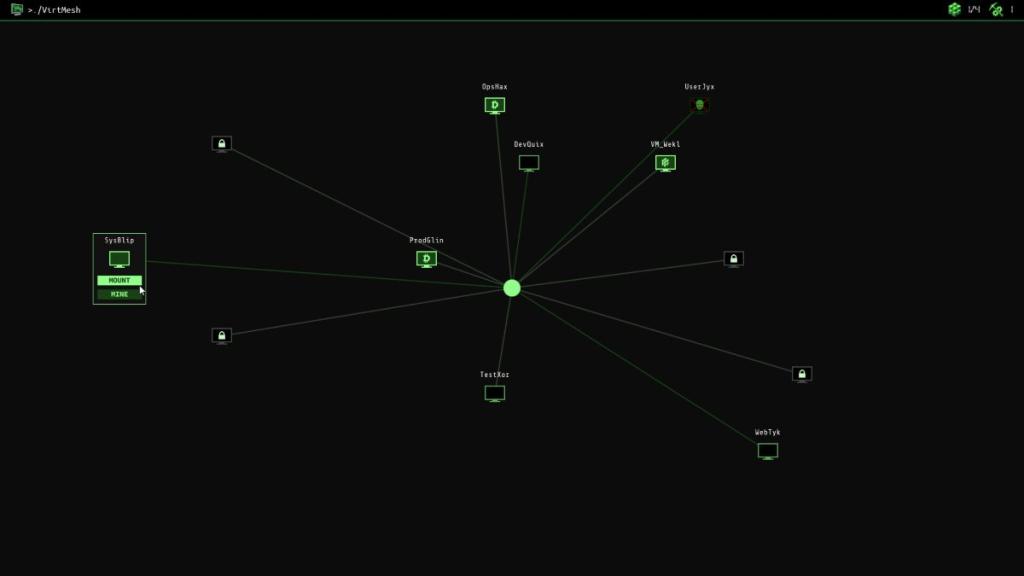
The most direct and consistent method of acquiring DOS Coins is through the VirtMesh software. Upon initiating the game, players are immediately presented with this essential tool, which allows them to interact with the digital landscape in two primary ways: mounting computers to gain access to their systems or mining them for their stored DOS Coin reserves. However, the developers have implemented a dynamic system to prevent players from exploiting a single resource indefinitely. Just as one cannot linger indefinitely in the dimly lit corners of the Dark Net or ignore the persistent threats posed by in-game antagonists like Tanner and Lucas, players cannot remain tethered to a single hijacked computer within VirtMesh. The system enforces a rotation; prolonged exploitation of a particular machine will result in a lockout, forcing players to seek out new targets. This mechanic encourages a proactive and adaptive approach, ensuring that players are constantly scanning the network for fresh opportunities.
The act of hijacking a computer involves engaging with the INJ3KT-R minigame. This puzzle requires players to plot a path from a starting point (A) to an endpoint (B) across a grid of alternating light and dark tiles. The key rule is that the path must strictly alternate between these tile types. Failure to adhere to this pattern results in the immediate closure of access to that specific computer, rendering it unusable for that session. Within the base network of VirtMesh, specific nodes offer particularly lucrative opportunities for coin extraction. Players are advised to prioritize mining from NetVorn (yielding 1.45 DOS Coins), UserJyx (offering 1.80 DOS Coins), and WebTyk (providing 1.84 DOS Coins). These early-game targets offer a foundational income stream, allowing players to invest in further upgrades and tools.
Beyond the direct mining and mounting capabilities of VirtMesh, DOS Coins can also be acquired through the successful completion of various requests and tasks presented within the game. These opportunities often tie into other gameplay systems and provide a more narrative-driven avenue for resource generation, further diversifying the player’s economic strategy.
Fortifying Your Digital Treasury: Protecting Your DOS Coins
The value of DOS Coins is recognized not only by the player but also by the game’s antagonists and competitors. Both the persistent threat of Lucas and the machinations of rival players actively seek to deplete a player’s hard-earned currency. Lucas, in particular, is a recurring menace, making attempts to pilfer DOS Coins during his regular visits to the player’s in-game motel. Similarly, competing players, driven by the same goal of acquiring Key Hashes, will deploy hackers to disrupt and steal from their rivals.
A crucial defensive tactic against Lucas involves situational awareness and swift action. When his presence is detected—often signaled by auditory cues indicating his arrival at the back door—players can preempt his intrusion by immediately powering down their computer. This is achieved by interacting with the power button located in the bottom-left corner of the screen. To provide ample warning, players can utilize motion sensors, which will trigger an alert, granting them sufficient time to shut down their system before Lucas can initiate his theft.
For players seeking a more automated or less reactive defense, the NOP Sled offers a means to bypass the direct threat of Lucas’s theft attempt altogether. This tool effectively negates his ability to steal coins during his visits.
The offensive capabilities of Welcome to the Game 3 also extend to the realm of economic warfare. Players can leverage the A.C.R.S. (Advanced Communication and Resource System) to hire hackers and target specific opponents. This retaliatory measure allows players to not only defend their own assets but also to actively undermine their rivals.
The consequences of failed hacking attempts are significant. If a player attempts to hack a competitor who has a Backdoor installed, a failed intrusion will result in a financial penalty, with a portion of DOS Coins being deducted from the player’s account. Conversely, a successful hack against an NPC who has not adequately secured their systems can result in the direct acquisition of some of their DOS Coin supply. This capability can significantly set back an opponent, particularly if they are in the process of saving for valuable DarkDrop items or the services of a hired killer.
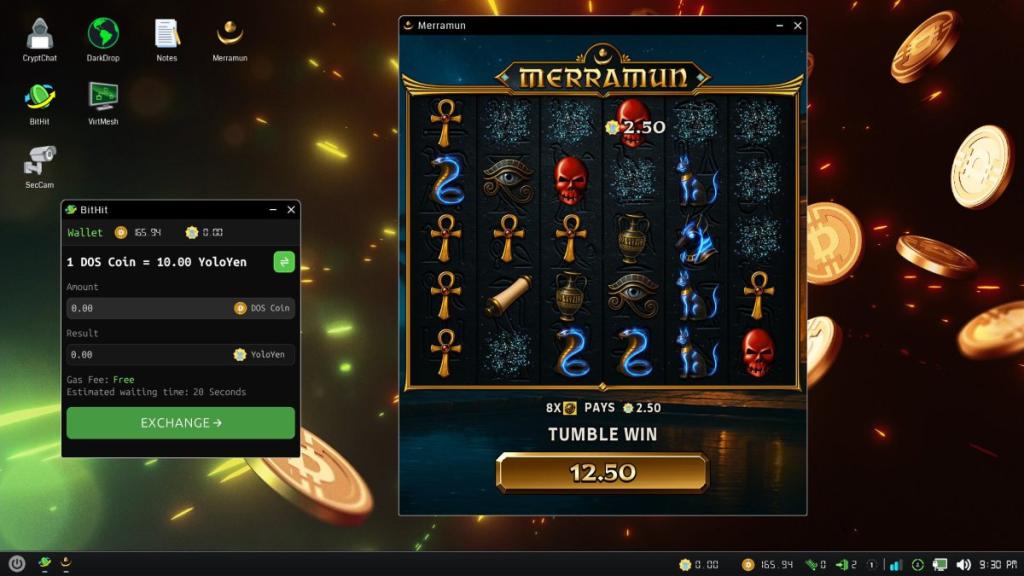
In more extreme circumstances, players can engage in high-risk, high-reward financial strategies. By converting DOS Coins into YoloYen via the BitHit exchange, players can then participate in the Merramun gambling application. Successful wagers can be converted back into DOS Coins on BitHit, potentially yielding substantial profits, albeit with a significant element of chance. This mechanic adds a layer of speculative finance to the game, appealing to players who are comfortable with risk.
Ascending the Digital Ladder: Building Reputation (Rep)
Beyond the acquisition of wealth, a player’s standing within the Dark Net community, quantified by their Reputation (Rep), is another critical factor for success. A higher Rep score unlocks access to more exclusive services, better dealers, and potentially more advantageous opportunities. Building Rep is a multifaceted process that involves engaging with various in-game applications and completing specific objectives.
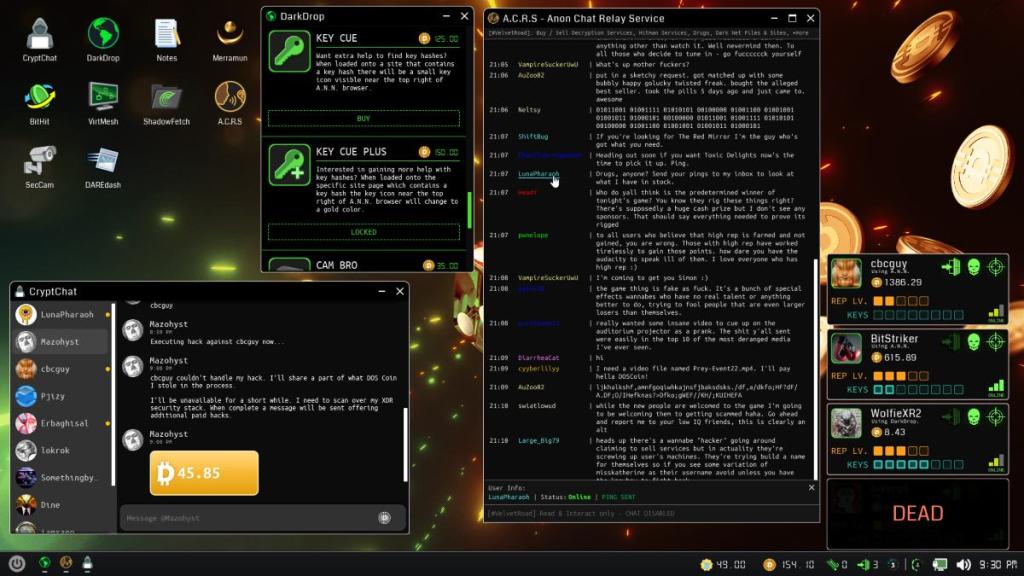
Two key applications, ShadowFetch and A.C.R.S., are instrumental in developing a player’s Rep. ShadowFetch serves the purpose of converting URLs into MP4 video files. These videos can then be disseminated to other users within the A.C.R.S. chat room, often as part of fulfilling requests or engaging in social interactions. The conversion process via ShadowFetch incurs a DOS Coin cost, emphasizing the need for players to be judicious and strategic in their file conversions, ensuring they are creating content that is genuinely in demand.
The most effective method for boosting Rep levels in Welcome to the Game 3 is by fulfilling NPC requests found on the A.C.R.S. This global chat room is a bustling hub where competitors, hackers, dealers, and various Dark Web denizens converge. These requests can be likened to side quests in a role-playing game, offering tangible rewards for completion. It is imperative for players to note that the A.C.R.S. chat room undergoes a reset every thirty minutes. To ensure that a user’s request remains active and visible, players should "PING" them, a feature that essentially bookmarks their inquiry. Furthermore, successfully evading incoming hacks also contributes to a player’s Rep experience points, rewarding defensive prowess.
While the A.C.R.S. is a valuable tool for general communication and managing interactions, such as dealing with characters like Cletus, the true goldmine for Rep building lies in identifying and completing video file requests. To fulfill these, players must first locate specific Fetch URLs on the Dark Net. These URLs are then converted into downloadable MP4 files using ShadowFetch. Once acquired, these videos can be sold for both DOS Coins and Rep.
NPCs and other users will often post requests for specific website URLs or video content. The Dark Wiki serves as a crucial resource for this information. Even if direct access to a particular site is blocked, players can still copy and paste the URLs into the A.N.N. browser, which is the game’s interface for navigating the Dark Net. The A.C.R.S. chat room is the primary venue for finding these requests. Players should actively scan the room for users posting requests for URLs, videos, or offering jobs. Dealers who match a player’s current Rep level are also prime targets for interaction. By selecting a user’s username, players can initiate private messaging through CryptChat, facilitating the exchange of information and the negotiation of services.
The Ultimate Prize: Locating the Keys
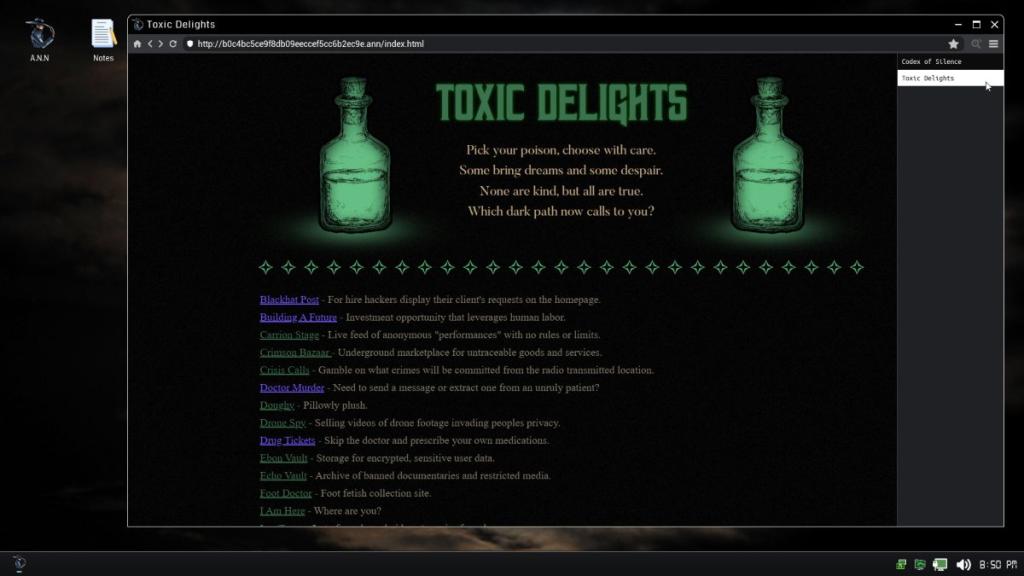
The overarching objective of Welcome to the Game 3 is to locate and secure a total of eight distinct Keys. This endeavor necessitates extensive exploration of the Dark Net, requiring players to uncover and navigate an increasing number of Dark Wikis. These wikis serve as gateways to further websites, many of which may contain the vital Key Hashes. Wiki pages are typically identified by their .ann URLs, which can be copied and pasted directly into the A.N.N. browser to reveal new lists of accessible websites.
The race to find these Keys is not a solitary pursuit. The game features four other competing players, transforming the hunt into a high-stakes competition against both the clock and other determined Dark Net operatives. This adversarial element significantly amplifies the pressure, as any discovery made by a rival can bring them one step closer to victory.
The spawning of Keys is randomized at the commencement of each new game. This unpredictability, coupled with the fact that websites can be either permanently accessible, time-limited, or entirely blocked, underscores the importance of having a strategic search methodology. Players must be aware of what they are looking for to avoid wasting valuable time on fruitless expeditions. Keys can manifest in various ways: they may be plainly visible on a webpage, presented as a numerical identifier (one through eight) followed by a random alphanumeric string.
When a Key is concealed behind page elements, players must employ a more thorough approach. This involves hovering over letters and images to reveal potential hidden clues. The Source Code Viewer, accessible via a magnifying glass icon in the top-right corner of the A.N.N. browser, is an invaluable tool for uncovering deeply embedded Keys. By examining the source code, players can often find the Key Hashes written in plain text. On a webpage itself, a hidden Key Hash is often revealed when the player’s cursor hovers directly over it, changing into a clickable icon.
A significant departure from previous titles in the series is the requirement for decryption. In Welcome to the Game 3, simply finding all the Keys is insufficient. Each discovered Key must then be submitted to an agent within the A.C.R.S. for decryption, a process that incurs a fee. This adds another layer of resource management and strategic planning, as players must balance the cost of decryption against the urgency of their progress.
The Art of Digital Warfare: Blocking and Sending Hacks
As the game progresses, and particularly after 9:30 PM in-game time, players will find themselves the target of increasingly sophisticated and persistent hacking attempts. These attacks escalate in difficulty as the game progresses, reflecting the growing desperation and resources of both the AI antagonists and rival players. Competitors are willing to invest more heavily in cyber warfare to impede progress and create opportunities for more direct threats, including potential assassination attempts.
Understanding the nature of these incoming hacks is crucial for effective defense. Each hack presents a unique challenge, often requiring specific responses or countermeasures. While the original article did not detail the specific types of hacks and their associated minigames, it is understood that these are designed to test the player’s reflexes, problem-solving skills, and ability to manage multiple threats simultaneously. Successfully defending against these digital assaults not only protects the player’s assets but also contributes to their Rep score, reinforcing the importance of proactive security measures.
The ability to not only defend against but also to initiate hacks is a cornerstone of aggressive gameplay in Welcome to the Game 3. Players can strategically deploy their own hackers to disrupt opponents, steal their DOS Coins, or even compromise their systems in ways that lead to more severe consequences. This offensive capability is often facilitated through connections made on the A.C.R.S., where players can arrange for targeted cyber attacks.
Eliminating the Opposition: Taking Out the Competition
In certain critical junctures of Welcome to the Game 3, direct intervention against a rival player may become necessary. The game provides mechanisms for players to actively eliminate their competition, albeit at a significant cost. This is typically achieved by contacting specific users on the A.C.R.S. who specialize in doxxing—the process of uncovering a target’s real-world or digital identity. Once this sensitive information is obtained, players can then engage a separate contact who specializes in orchestrating hit jobs, utilizing the doxxed information to send assassins after their rival.
This highly aggressive tactic represents one of the most expensive strategic options available in the game. However, its efficacy, particularly as players approach the latter stages of this unforgiving experience, can be substantial. By removing key competitors from the equation, players can significantly reduce the pressure and increase their own chances of securing the crucial Key Hashes and achieving victory. The implementation of such a feature underscores the grim and high-stakes nature of the game’s narrative, where ultimate success may require the elimination of all other contenders. The developers at Reflect Studios have meticulously crafted a system where every action, from the mundane act of mining DOS Coins to the drastic measure of hiring an assassin, carries significant weight and consequence, pushing players to the very edge of their strategic and psychological limits.