


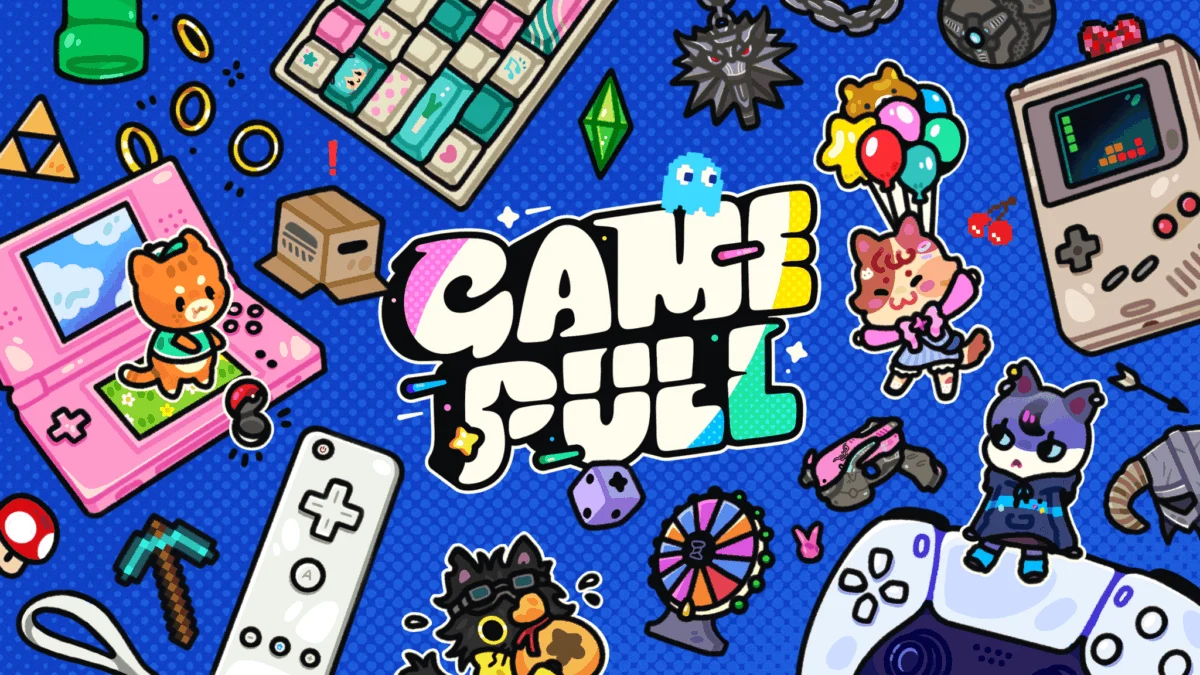
GamePull, a browser-based digital collectible platform, has emerged as a significant outlier in the contemporary gaming landscape by offering a gacha-style experience entirely devoid of microtransactions. Developed as a solo project by a programmer known as Dovah, the game has transitioned from a niche passion project into a structured social ecosystem centered on the collection of virtual cards representing thousands of existing video game titles. Since its official launch in March 2026, the platform has cultivated a dedicated user base through a combination of nostalgic collection mechanics, a robust trading economy, and a seasonal content structure that mirrors large-scale live-service titles.
The platform distinguishes itself by stripping away the financial barriers typical of the gacha genre, which is frequently criticized for predatory monetization and "pay-to-win" architectures. Instead, GamePull utilizes a purely time-and-engagement-based progression system. Players navigate a minimalist interface to open digital card packs, ranging from general releases to specialized sets categorized by genre, console manufacturer, and historical era. This design philosophy emphasizes the "dopamine rush" of card-opening—a psychological hallmark of the genre—while ensuring that progress is dictated by community interaction and strategic resource management rather than capital investment.

Development Context and Design Philosophy
The genesis of GamePull reflects a broader trend in the indie development scene where professional developers create "labor of love" projects to experiment with mechanics outside the constraints of corporate environments. The developer, Dovah, whose primary professional background involves the construction of government and corporate web infrastructure, designed GamePull to serve as an antidote to the high-stress, high-monetization models currently dominating the mobile and browser markets.
According to statements from the developer, the game was built to leverage the simplicity of web technologies to create a "chill" environment. The aesthetic is intentionally understated, featuring a dark-themed, corporate-style interface that prioritizes functionality and ease of navigation over flashy, resource-heavy animations. This approach allows the game to remain highly accessible across a wide range of hardware, from high-end desktop PCs to older mobile devices, facilitating a "play anywhere" experience that integrates easily into a user’s daily routine.
Core Mechanics and the Virtual Economy
At the center of the GamePull experience is a vast database of video game titles, spanning the history of the medium from the 1980s to the present day. The collection includes tens of thousands of unique cards, each featuring variations based on rarity, platform exclusivity, and special editions.

The Pack-Opening System
Players earn the primary in-game currency, known as "Rope," through various activities, which is then reinvested into purchasing packs. These packs are divided into several tiers:
- General Packs: Offering a broad range of cards from all eras and genres.
- Targeted Packs: Allowing players to focus on specific demographics, such as 1980s retro titles, Xbox-specific libraries, or specific genres like RPGs or shooters.
- Rarity-Tiered Packs: High-cost packs that guarantee cards of a certain prestige level.
The Bounty and Marketplace Ecosystem
The game’s economy is sustained by a sophisticated "Bounties" system, which serves as the primary engine for card circulation. Within the Bounties tab, players can post rewards for specific cards they need to complete their collections. These rewards range from the base value of the card to significantly inflated sums for rare items.
This system creates a self-sustaining market where veteran players can liquidate surplus cards to fund their own collection goals, while newer players can earn substantial amounts of "Rope" by fulfilling requests for common cards. Unlike many MMOs (Massively Multiplayer Online games) where inflation can render early-game currency useless, GamePull’s bounty system keeps the economy fluid by linking currency value directly to the desirability of specific sets.

Chronology of Seasonal Evolution
The development of GamePull has been characterized by a seasonal approach that introduces new mechanics and end-game goals to prevent gameplay stagnation. This structure allows the developer to iterate on game balance based on community feedback.
Season 1: The Foundation and Early Challenges
The inaugural season established the core collection loop. However, the end-game focused on a "shard" collection system where players raced to build one-of-a-kind cards. Post-season analysis and community feedback indicated that this model created a high-pressure environment that felt exclusionary to latecomers, leading to a shift in philosophy for subsequent updates.
Season 2: Masterworks and Blueprints
The currently active Season 2 introduced a more inclusive "Blueprint" and "Masterwork" system. In this iteration, players can obtain rare blueprints that can be crafted into unique Masterworks using materials and specific "Cores" (Fae, Mechanical, Neon, and Arcane). To prevent the toxicity seen in the first season, the developer implemented a "one-craft-per-player" rule for specific blueprints. With over a thousand blueprints available, the system encourages diversity in collection rather than a singular race for the most valuable item.

Future Outlook: Season 3 and Beyond
Looking toward the future, the developer has confirmed the upcoming implementation of a "Factions" system. This feature is intended to transition the game from a purely individual pursuit into a collaborative one. Players will join factions to complete group challenges and compete for rewards, further cementing the social aspect of the game. Additionally, a comprehensive Achievement system and improved onboarding processes for new users are currently in development.
Community Dynamics and Server Infrastructure
A unique aspect of GamePull is its intentional "small-scale" design. While many browser games aim for millions of users, Dovah has expressed a preference for maintaining manageable community sizes to preserve the helpful and "chill" nature of the interactions.
The game currently operates with a few hundred active users, a size that allows the developer to be highly responsive to bug reports and feature suggestions. Dovah has stated that if the user base grows exponentially, the platform will adopt an "MMO server" model, where players are distributed across separate instances. This ensures that competitive elements, such as the leaderboard for the top 40 bounty hunters, remains attainable and meaningful for the average player rather than being dominated by a global elite.

The community hub is centered on an official Discord server where trades are negotiated, and game strategy is discussed. This social layer is critical to the game’s success, as it transforms a simple collection tool into a collaborative social network.
Technical Analysis and Industry Implications
From a technical standpoint, GamePull represents a successful implementation of a "live-service lite" model. By utilizing an "Unpacking Station" mechanic—where players can assign virtual avatars to open packs over time—the game incorporates "idle" elements that maintain engagement without requiring constant active input.
The game also features a "Casino" and a "Scrap/Bin" mechanic for disposing of unwanted cards, ensuring that every "pull" has some form of utility, even if the card itself is a duplicate. This level of systemic depth is rarely seen in free-to-play browser titles that do not utilize microtransactions.

The implications for the broader gaming industry are noteworthy. GamePull serves as a proof-of-concept that the gacha mechanic—often viewed as inherently exploitative—can be repurposed as a benign and engaging social hobby. The project is funded not through in-game purchases, but through an optional Patreon model. This "support-only" monetization allows players to access cosmetic features, such as custom game art, without gaining a competitive advantage over non-paying users.
Conclusion
GamePull stands as a testament to the viability of community-driven, non-monetized game design in an era of increasing digital commercialization. By focusing on the intrinsic joy of collecting and the social benefits of trading, the platform has created a sustainable and "wholesome" alternative to the traditional gacha market. As the game moves toward Season 3 and introduces more complex social structures like Factions, it continues to evolve from a simple browser "timewaster" into a sophisticated digital ecosystem. For the indie development community, GamePull provides a blueprint for how to build and maintain a loyal player base through transparency, responsiveness, and a steadfast refusal to prioritize profit over player experience.