


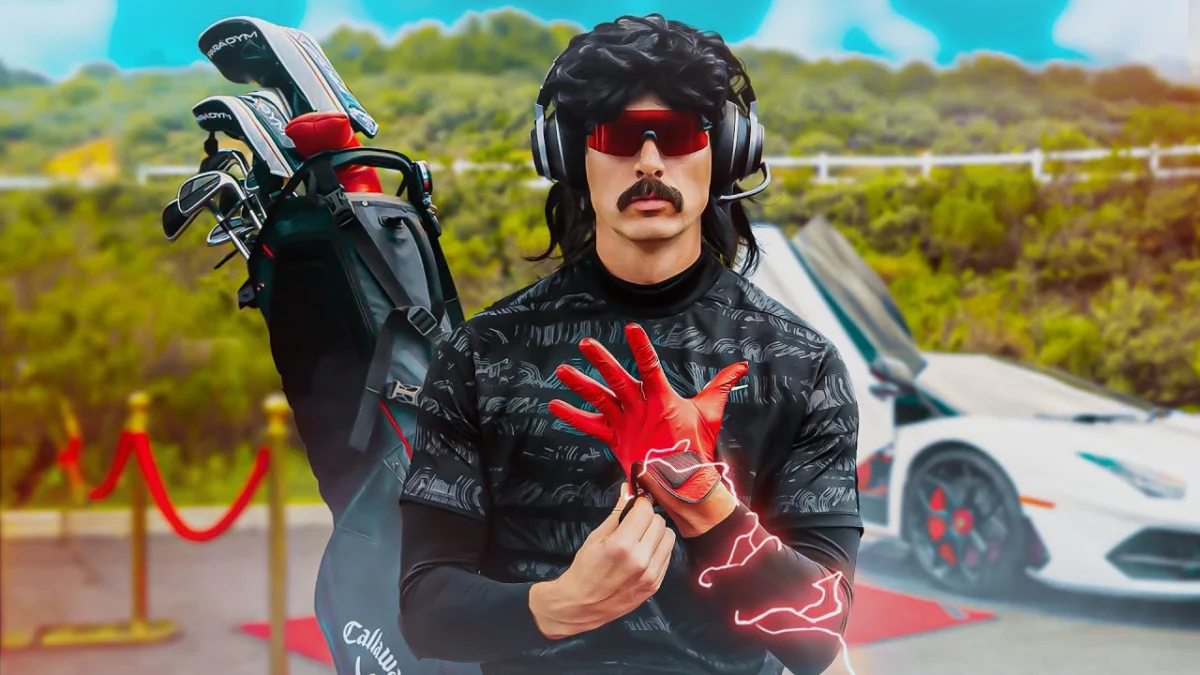
Video game streamer Guy "Dr. Disrespect" Beahm has issued a comprehensive official statement addressing the long-standing mystery surrounding his permanent ban from the streaming platform Twitch in 2020. The statement, released on his official X (formerly Twitter) account, confirms Beahm engaged in private messages with a minor in 2017, while vehemently asserting that no illegal activity transpired. This public admission comes in the wake of significant professional fallout, with two prominent companies, including the game development studio he co-founded, severing ties with the popular streamer in the days leading up to his statement.
The ban from Twitch, which occurred on June 26, 2020, was characterized by an unprecedented lack of transparency from the platform, leaving fans and observers speculating for years about the exact nature of the transgression. Beahm’s recent statement seeks to provide clarity and contextualize the events that led to his professional exile from Twitch.
A Lingering Mystery: The Unexplained Twitch Ban
For four years, the reasons behind Dr. Disrespect’s abrupt and permanent removal from Twitch remained a subject of intense speculation. Unlike many platform bans, which are often accompanied by at least a general indication of the violation, Twitch offered no specific explanation. This silence fueled a torrent of rumors, ranging from alleged community guideline violations to more serious accusations. The lack of concrete information allowed the narrative to be shaped by conjecture and unofficial accounts, leaving a void that Beahm’s statement now attempts to fill.
The renewed attention to Beahm’s ban began to surface more intensely in recent weeks. A pivotal moment appears to have been an allegation made by a former Twitch employee, which, though not detailed in the original source material, seemingly reignited scrutiny and prompted further investigation.
Escalating Fallout: Corporate Ties Severed
The immediate precursor to Beahm’s statement saw a swift and significant professional retraction from his business partners. On June 24, 2024, The Midnight Society, a video game development studio co-founded by Beahm, announced it was cutting ties with the streamer following an internal investigation. While the studio’s statement did not explicitly detail the findings, it was presented in the context of the ongoing discussions surrounding Beahm’s Twitch ban.
Adding to the pressure, on June 25, 2024, Turtle Beach, a prominent manufacturer of gaming headsets and audio equipment, confirmed it was ending its partnership with Dr. Disrespect. Beahm, who had transitioned to streaming on YouTube after his Twitch ban, had previously been a significant figure in Turtle Beach’s marketing efforts. These corporate decisions strongly suggest that the information circulating about the ban had reached a critical mass, compelling these entities to distance themselves from Beahm.
Concurrent with these corporate actions, reports began to emerge from various media outlets, including Bloomberg and The Verge, reinforcing the notion that Beahm’s ban was indeed related to communications with a minor.
Beahm’s Statement: Confirmation and Defense
On June 25, 2024, the day after The Midnight Society announced its separation and on the same day Turtle Beach confirmed its partnership termination, Guy Beahm released a lengthy statement on his X account. This statement, which Beahm has indicated has undergone revisions since its initial publication, directly addresses the core of the allegations.
In a consistent and unequivocal part of his statement, Beahm confirms that he did engage in "Twitch whisper messages with an individual minor back in 2017." However, he immediately follows this admission with a strong defense, asserting that "nothing illegal happened."
Beahm’s full statement, as provided, reads:
"Were there twitch whisper messages with an individual minor back in 2017? The answer is yes. Were there real intentions behind these messages, the answer is absolutely not. These were casual, mutual conversations that sometimes leaned too much in the direction of being inappropriate, but nothing more. Nothing illegal happened, no pictures were shared, no crimes were committed, I never even met the individual. I went through a lengthy arbitration regarding a civil dispute with twitch and that case was resolved by a settlement. Let me be clear, it was not a criminal case against me and no criminal charges have ever been brought against me."
He further elaborates on his personal responsibility from a moral standpoint, admitting he should have "never entertained" such conversations. Beahm stated, "that’s on me. That’s on me as an adult, a husband and a father. It should have never happened. I get it. I’m not perfect and I’ll fucking own my shit. This was stupid."
Addressing Accusations and Asserting Future
Beahm’s statement directly confronts the characterizations and labels he feels have been unfairly applied to him on social media. He emphatically declares, "I’m no fucking predator or pedophile." He extends an apology to his community and expresses a degree of indifference towards those who harbor negative sentiments towards him.
The statement concludes with a defiant assertion of his continued presence in the streaming world: "Finally, if you’re uncomfortable with this entire statement and think I’m a piece of shit, that’s fine. But I’m not fucking going anywhere. I’m not the same guy that made this mistake all those years ago. I’m taking an extended vacation with my family as mentioned on stream and I’m coming back with a heavy weight off my shoulders. They want me to disappear… yeah fucking right."
This declaration suggests that Beahm views his current break from streaming, which he alluded to at the end of a recent Elden Ring: Shadow of the Erdtree stream, as a temporary hiatus rather than an exit.
Professional Repercussions and Divergent Stances
The immediate aftermath of Beahm’s statement saw a swift and pointed response from Robert Bowling, the studio head of The Midnight Society. Bowling took to X to issue a personal statement that explicitly distanced him and his companies from Beahm’s actions and views.
Bowling stated:
"This is a statement from me personally. It does not reflect any of my companies and has not gone through any legal or PR approvals.
If you inappropriately message a minor. I can not work with you.
Period.
I promised to only act on facts, and I did."
This response underscores the severity of the situation and the irreconcilable differences that have emerged, particularly concerning the ethical implications of Beahm’s admitted actions, even if he maintains they were not illegal. Bowling’s statement emphasizes that his decision to sever ties was based on facts and a clear ethical boundary regarding interactions with minors.
As of the publication of this report, Twitch has not issued any official statement regarding Beahm’s confession or the ongoing discussions surrounding his ban. The platform’s continued silence on the matter is consistent with its established policy of not commenting on individual account actions.
Analysis of Implications and Broader Context
Guy Beahm’s statement marks a significant development in a four-year-old controversy. By confirming direct communication with a minor, he moves the discussion from speculation to acknowledged fact, albeit with his own framing of the intent and legality of those interactions. The assertion that "nothing illegal happened" and that the matter was resolved through a "civil dispute" and a "settlement" with Twitch aims to mitigate the severity of the allegations in the public eye. However, the ethical implications of an adult public figure engaging in "inappropriate" conversations with a minor, regardless of legality or the presence of explicit intent, remain a central point of contention for many.
The swift actions taken by The Midnight Society and Turtle Beach highlight the increasing pressure on public figures and corporations to uphold stringent ethical standards, particularly concerning the protection of minors. In the digital age, where online interactions are increasingly scrutinized, past actions can have long-lasting professional consequences, even if they do not result in criminal charges. The fact that Beahm’s ban was civil in nature and resolved via settlement, rather than criminal prosecution, is a crucial distinction he emphasizes. However, the platform’s decision to permanently ban him suggests that Twitch’s internal policies and community standards were deemed violated, irrespective of legal culpability.
The broader impact of this situation extends beyond Dr. Disrespect’s career. It underscores the complex ethical landscape of online content creation and the responsibilities that come with a significant public platform. For platforms like Twitch, it raises ongoing questions about transparency in their enforcement of community guidelines and the processes by which they handle sensitive allegations. For the audience, it presents a challenge in navigating the public personas of creators and understanding the boundaries between personal conduct and professional repercussions. Beahm’s determination to continue his career suggests a belief that his audience will accept his explanation and that his influence can endure these revelations, a narrative that will likely unfold in the coming months as he transitions back to full-time streaming.