


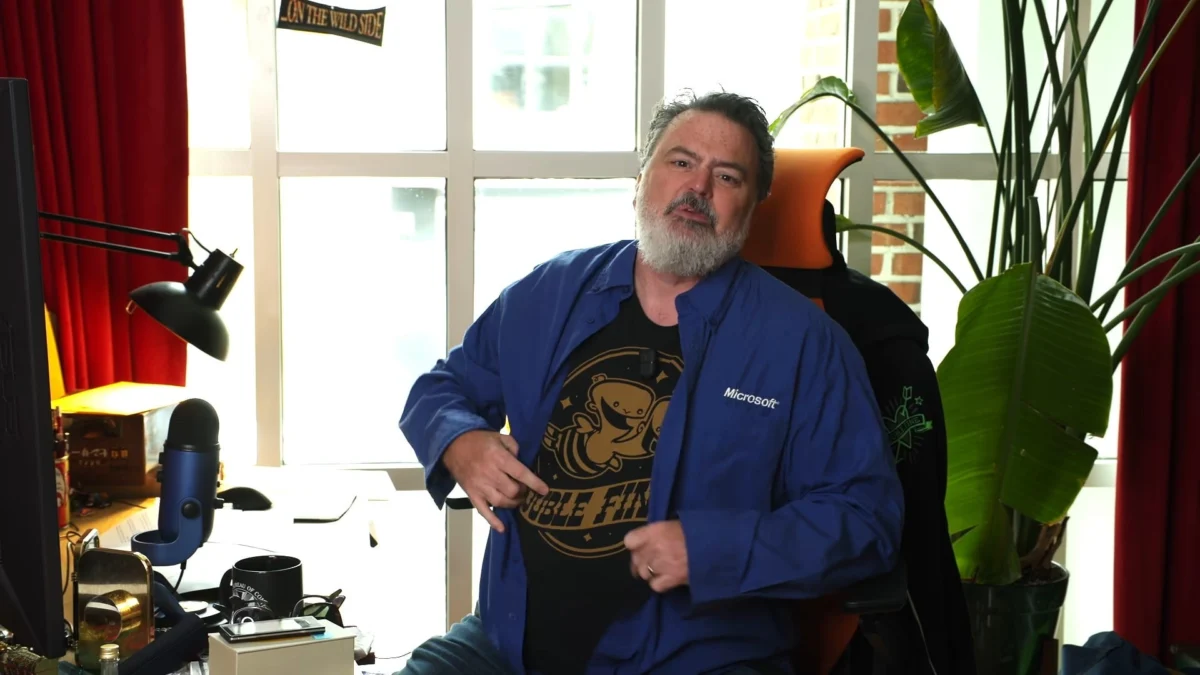
Renowned game developer Tim Schafer, head of the now-independent Double Fine Productions, has provided extensive insights into the studio’s recent departure from Xbox Game Studios, characterizing their tenure under Microsoft as a "really great experience overall" and a "great partnership" until a strategic divergence prompted their separation. While reflecting positively on the collaboration, Schafer expressed his profound desire for the continued success of Xbox Game Pass, yet admitted a fundamental perplexity regarding its inability to achieve a market penetration akin to streaming giants like Netflix. His comments come at a critical juncture for both Double Fine, charting a new course as an independent entity, and the broader video game industry, which Schafer described as navigating an unprecedentedly challenging period.
Double Fine Productions, celebrated for its unique and critically acclaimed titles such such as Psychonauts 2, Brutal Legend, and Grim Fandango, recently confirmed its transition back to an independent studio. This move marks a significant shift for a studio that had been part of Xbox Game Studios since its acquisition in 2019. Schafer, a veteran of the industry with a reputation for fostering creative freedom, has been vocal in recent interviews, outlining the studio’s future ambitions and reflecting on its time under the Xbox umbrella. Among their immediate plans, Double Fine is engaging with its community through a new Kickstarter project, "Amnesia Fortnight 2026: Indie Reboot," and has rolled out a substantial update for their title Kiln. The studio also announced development on a quirky new game, "Thank You Bus Driver," which has already garnered significant attention.
The Xbox Partnership: A Retrospective on Strategic Alignment and Divergence
Speaking to IGN about the specifics of Double Fine’s exit from Xbox Game Studios, Schafer underscored the largely positive nature of their association with Microsoft. "I learned a lot from it, and it was a really great experience overall," Schafer stated. He further elaborated on the initial alignment of objectives, noting, "They invested a lot in the company, and their mission was to support Game Pass and other projects. So for a while, we were very closely aligned, and it was great. It was a great partnership." This period saw Double Fine release Psychonauts 2 in 2021, a highly anticipated sequel that was met with widespread critical acclaim and became a flagship title for Game Pass. The game’s success under Microsoft’s publishing arm seemingly validated the acquisition strategy, demonstrating how Xbox could nurture creative talent and deliver high-quality, unique experiences to its burgeoning subscription service.
However, Schafer indicated that this synergy eventually waned. "Then their goals changed, and so we parted ways because of that," he explained, pointing to an evolving strategic landscape within Xbox. While specific details of these shifting priorities were not explicitly detailed by Schafer, industry observers have noted a broader "reset" within Xbox, characterized by an increased focus on profitability, a more diversified multiplatform release strategy, and potentially a re-evaluation of the investment required to sustain a large portfolio of first-party studios, especially those with niche creative output.
During their time with Xbox, Schafer highlighted the invaluable collaborative environment fostered by working alongside other first-party studios such as Compulsion Games, Ninja Theory, Obsidian Entertainment, and inXile Entertainment. This network facilitated a "really great learning experience," with developers "exchanging ideas and technology," a benefit that larger corporate structures can often provide to smaller creative teams. This cross-pollination of talent and ideas is often cited as a key advantage of studio acquisitions, allowing for shared expertise and technological advancements that might be out of reach for independent developers.
The Game Pass Enigma: A Vision Unfulfilled?
A significant portion of Schafer’s commentary revolved around Xbox Game Pass, a service he champions in principle but finds baffling in its market performance. When probed about the service’s continued "value and potential," Schafer candidly admitted, "I really want Game Pass to work." His enthusiasm stems from the theoretical advantages a subscription model offers to studios like Double Fine, which specialize in "weird and creative" games that might not immediately resonate with mainstream audiences based on key art or initial impressions.
Schafer articulated his belief that Game Pass, by lowering the barrier to entry, could be a boon for experimental titles. "I like the idea of subscription models for companies like us, who, you know, lower the barrier to entry for everyone. We want to make games that are weird and creative, that you might not understand at first," he elaborated. "If it’s on a subscription, you’ve already kind of paid for the game. You’d be more likely to try it, so that sounds good." This perspective aligns with the commonly held view that subscription services encourage discovery and risk-taking among players, who might otherwise hesitate to pay full price for an unknown or unconventional game.
Despite this optimistic outlook on the concept, Schafer expressed genuine bewilderment at Game Pass’s perceived struggle to achieve widespread success on par with other entertainment subscription services. "I don’t understand why Netflix worked and Game Pass didn’t, and I think that’s something I just don’t know enough about, but that’s the way it is," he confessed. This comparison to Netflix is particularly telling, as Netflix revolutionized media consumption and became a household name globally, demonstrating the immense potential of the subscription model.
Analyzing the Discrepancy: Game Pass vs. Netflix
The divergence between the success of Netflix and Game Pass, as highlighted by Schafer, is a point of frequent discussion among industry analysts and consumers alike. While both offer a library of content for a recurring fee, several fundamental differences might explain their varied trajectories:
- Content Consumption Habits: Netflix offers passive, linear content (movies, TV shows) that can be consumed easily and often in the background. Gaming, by contrast, is an active, time-intensive, and interactive medium requiring dedicated engagement. A user can watch multiple Netflix shows in the time it takes to complete one game.
- Library Depth and Exclusivity: While Game Pass boasts a substantial library, the perception of "must-play" exclusive titles has fluctuated. Netflix, particularly in its earlier years, invested heavily in original, high-quality content that was exclusive to its platform, driving subscriptions. While Xbox has its first-party titles, many major releases eventually come to other platforms, and the pace of new, large-scale exclusive releases can be slower than the constant stream of new shows on Netflix.
- Market Penetration and Hardware Barriers: Netflix is accessible on virtually any internet-connected device, from smartphones to smart TVs and gaming consoles. Game Pass, while expanding to PC and cloud streaming, still largely relies on the ownership of an Xbox console for the optimal experience, especially for demanding titles. This hardware barrier inherently limits its potential audience compared to Netflix’s ubiquitous accessibility.
- Value Perception: For many, the perceived value of Netflix’s vast, constantly updating library of films and series, often for a lower monthly cost than Game Pass, is clearer. The average consumer might subscribe to multiple streaming services, but perhaps only one or two gaming subscriptions.
- Pricing Models and Alternatives: Schafer himself hinted at an alternative: "lowering your prices, for example. You know, getting people to try your games like that." The premium price of many new games (often $70 USD) makes Game Pass an attractive alternative, but the direct purchase model remains dominant. Netflix largely eliminated the need to buy individual movies or shows, whereas Game Pass exists alongside a robust market for individual game purchases.
Despite these challenges, Game Pass has seen significant growth since its inception, reaching over 30 million subscribers as of early 2024. However, this growth has reportedly slowed in recent periods, leading Microsoft to explore new strategies, including bringing some of its first-party titles to rival consoles, a move that would have been unthinkable just a few years ago. This shift underscores the commercial pressures facing the subscription model in gaming and potentially explains Xbox’s changing priorities that led to Double Fine’s departure.

A "Shitty Time" for the Games Industry
Schafer’s interview concluded on a sobering note regarding the current state of the video game industry. He starkly characterized the climate as "a s***ty time out there right now" for developers and the industry as a whole, observing that "it’s been getting worse for longer than I’ve ever seen it get worse." This grim assessment echoes a sentiment widely shared across the gaming landscape. The past year and a half have witnessed an unprecedented wave of layoffs, studio closures, and project cancellations across companies of all sizes, from indie developers to industry giants like Microsoft, Sony, Epic Games, and Embracer Group.
Thousands of developers have lost their jobs, and numerous established studios have either shuttered or undergone significant restructuring. Factors contributing to this downturn include:
- Post-pandemic Correction: A boom in gaming during the COVID-19 lockdowns led to over-hiring and over-investment, which is now being corrected as growth normalizes.
- Rising Development Costs: The expense of creating AAA games has skyrocketed, making profitability harder to achieve and increasing the pressure for every release to be a blockbuster.
- Economic Headwinds: Global inflation, rising interest rates, and broader economic uncertainty have impacted consumer spending and investor confidence.
- Market Saturation: The sheer volume of games released annually makes it increasingly difficult for new titles, especially experimental ones, to stand out and find an audience.
- Publisher Consolidation and Restructuring: Large publishers are re-evaluating their portfolios, often leading to cuts in less profitable ventures or studios that don’t fit new strategic directives.
Schafer’s comments serve as a stark reminder that even successful and beloved studios are not immune to these systemic pressures. His observation that "a lot of the old avenues we used for funding are gone" highlights a fundamental shift in how game development is financed and sustained.
Double Fine’s Independent Path Forward: Innovation and Adaptability
Despite the challenging industry backdrop, Schafer expressed an "exhilarated" sentiment about Double Fine’s renewed independence. This return to an autonomous status allows the studio to pursue its creative vision without the constraints of a larger corporate parent, enabling them to explore new funding models and partnerships. "A lot of the old avenues we used for funding are gone, but there are a lot of new ones," Schafer noted optimistically. "So we’re just putting ourselves out there, meeting a lot of new people, and talking about who wants to make games with us."
This proactive approach includes:
- Community-Funded Projects: The "Amnesia Fortnight 2026: Indie Reboot" Kickstarter project is a direct engagement with their fanbase, allowing players to directly support the development of experimental prototypes, a model Double Fine has successfully utilized in the past. This not only provides funding but also fosters a strong community connection and early feedback loop.
- Diversified Portfolio: Releasing updates for existing titles like Kiln and developing new, distinct projects such as "Thank You Bus Driver" showcases their versatility and commitment to their unique brand of game design.
- Exploring New Partnerships: By actively seeking out new collaborators, Double Fine aims to secure funding and publishing agreements that align with their creative ethos, potentially with smaller, more artist-friendly publishers or through self-publishing initiatives.
This strategy of agility and direct community engagement is a hallmark of successful independent studios, allowing them to navigate the unpredictable currents of the games industry.
Broader Implications for Xbox and the Gaming Landscape
Double Fine’s departure and Tim Schafer’s candid remarks carry significant implications for both Microsoft’s gaming strategy and the wider industry. For Xbox, the exit of a beloved, creatively distinct studio like Double Fine, even if amicable, could be seen as a slight erosion of its first-party portfolio’s diversity. It reinforces the notion that Microsoft is meticulously re-evaluating its studio investments, potentially favoring studios that align more directly with scalable, high-engagement Game Pass titles or those with strong multiplatform appeal. The "reset" within Xbox appears to be a recalibration towards more sustainable and profitable growth, even if it means parting ways with valued creative partners whose output doesn’t perfectly fit the evolving model.
For the industry at large, Schafer’s observations underscore the ongoing tension between creative ambition and commercial viability. The challenge of sustaining "weird and creative" games in a market increasingly dominated by high-budget blockbusters and live-service models is profound. While subscription services theoretically offer a sanctuary for such titles, their commercial realities may not yet fully support this vision, leading developers like Double Fine to seek renewed independence and explore alternative funding and distribution strategies.
In conclusion, Tim Schafer’s reflections offer a nuanced perspective on the complex dynamics at play within the modern video game industry. While expressing gratitude for a largely positive experience under Xbox, his questions about Game Pass’s market performance and his concerns about the industry’s current climate highlight critical challenges that will continue to shape the future of game development and consumption. Double Fine’s journey back to independence exemplifies the resilience and adaptability required for studios to thrive in an ever-evolving digital landscape, driven by a steadfast commitment to unique creative expression.