


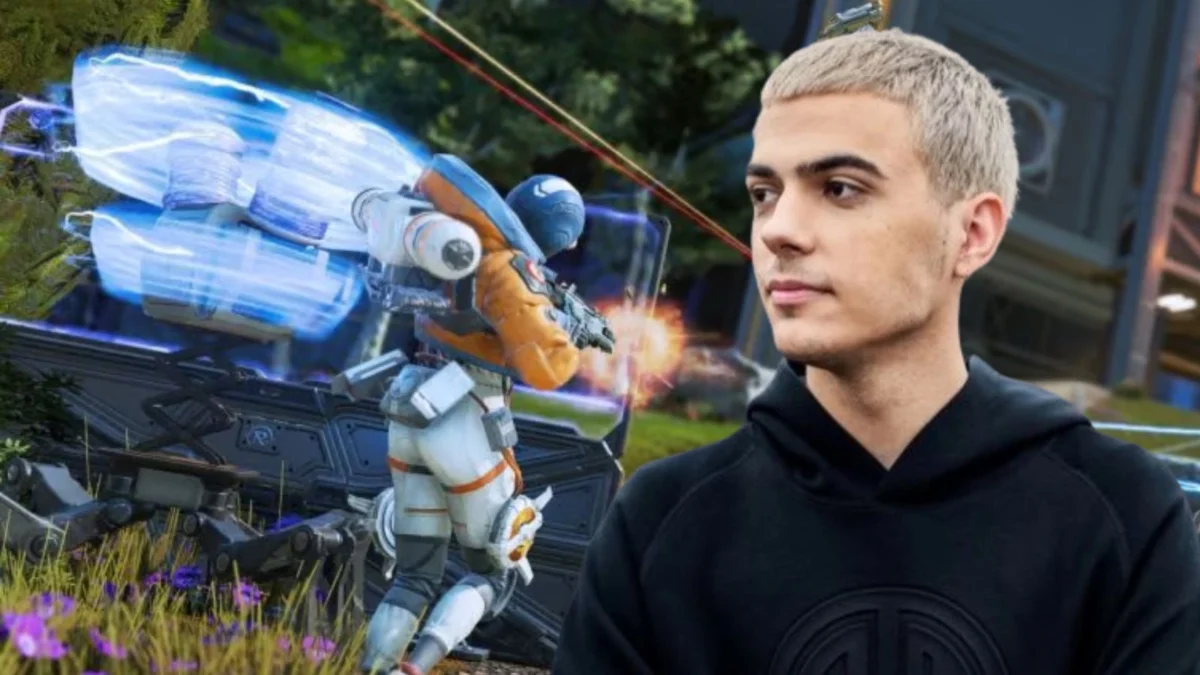
Apex Legends, the highly successful free-to-play battle royale developed by Respawn Entertainment, is facing criticism from one of its most prominent figures, professional player Phillip "ImperialHal" Dosen. The star player for Team Falcons, widely regarded as one of the best in the competitive scene, took to social media platform X (formerly Twitter) on August 15th to express his deep dissatisfaction, stating that the game has "lost its entire identity" over the course of the last year. This strong declaration has ignited a discussion within the Apex Legends community about the game’s current direction and its evolution since its launch in February 2019.
Launched as a surprise title, Apex Legends quickly captured the attention of millions, offering a fresh take on the battle royale formula with its unique Legend abilities and squad-based gameplay. While some players have since migrated to competing titles such as Call of Duty: Warzone and Fortnite, Apex Legends has maintained a substantial and dedicated player base. The comparison to Fortnite, in particular, has been a persistent theme since Apex’s inception, reflecting the intense competition within the genre, especially during their initial market overlap. Fortnite, however, has since grown into an unparalleled cultural and commercial phenomenon, setting a high bar for all subsequent battle royale titles.
Over its lifespan, Apex Legends has undergone numerous significant changes, a testament to Respawn Entertainment’s commitment to evolving the game. These updates have ranged from the introduction of new Legends and weapons to substantial overhauls of core game mechanics and the addition of experimental game modes. In the past year alone, the game has seen the implementation of features like the "Wildcard" mode, "Legend Amps" that offer unique buffs, "Elite Weapons" providing enhanced performance, and even ambitious crossovers, such as the integration with Cyberpunk 2077, which introduced novel gameplay elements tied to player actions. Furthermore, the game’s competitive ecosystem has been significantly impacted by ongoing tests and adjustments to the Ranked Play system, a crucial element for professional players and dedicated enthusiasts alike.
However, not all of these changes have been met with universal acclaim. A segment of the community, including prominent figures like ImperialHal, has voiced concerns that the game’s core identity might be eroding under the weight of these alterations. ImperialHal’s recent outburst is a clear indication of this sentiment among some of the game’s most invested players.
ImperialHal’s Direct Condemnation of Apex Legends’ Current State
The catalyst for ImperialHal’s public criticism was a series of tweets posted on August 15th. In a direct message to Respawn Entertainment’s official Apex Legends account, he articulated his frustration in stark terms: "Your game sucks and has lost its entire identity in a span of the last year of what it means to be Apex Legends." This statement, made without immediate further elaboration, left the community to speculate on the specific aspects of the game that prompted such a strong reaction. While the gaming community often engages in robust debate, a critique of this magnitude from a player of ImperialHal’s caliber carries significant weight, prompting introspection among both fans and developers.
Despite the community’s eagerness for a more detailed explanation, ImperialHal did not immediately provide further specifics regarding his grievances. This silence, while perhaps intended to allow for broader discussion, also left the exact nature of his concerns open to interpretation. Historically, Apex Legends’ identity has been characterized by its tactical gunplay, emphasis on team synergy, and the strategic use of Legend abilities. Many of the recent changes, particularly those that introduce more "random" or unconventional gameplay elements, may be perceived by veteran players as diluting these core tenets.
A History of Player Dissatisfaction and Speculation
This is not the first time ImperialHal has expressed sentiment bordering on disillusionment with Apex Legends. In late March of the same year, he had previously hinted at the possibility of retiring from the game. In a tweet that garnered considerable attention, he mused, "Might be time to retire, thoughts ????" and followed up by stating that Apex "is officially becoming like Fortnite after last update." This earlier comment suggests a pattern of concern regarding the game’s perceived shift towards elements that might be more associated with its more casual or sandbox-oriented competitor.
The comparison to Fortnite, a game known for its constant evolution, frequent content drops, and the integration of various pop culture elements, has been a recurring theme in discussions about Apex Legends’ development. While Apex has also embraced collaborations and new content, its core appeal has often been rooted in its more grounded approach to the battle royale genre, focusing on intricate movement mechanics and strategic team play. The idea that Apex might be straying too far from this foundation is a significant concern for players who value its unique blend of tactical depth and fast-paced action.
Further underscoring the gravity of his statements, ImperialHal even agreed with a fan’s assertion that Apex Legends could be "dead in two years max" if he were to step away from the game. This sentiment, while dramatic, highlights the significant influence and dedication that top-tier professional players can have on the perception and longevity of a competitive game. Their engagement often serves as a bellwether for the health of the player base and the overall trajectory of the title.
Analyzing the Potential Impact of Recent Updates
The specific changes that may have contributed to ImperialHal’s discontent are varied. The introduction of "Legend Amps," for instance, could alter the power dynamics of individual Legends, potentially disrupting established meta-strategies. Similarly, "Elite Weapons" might introduce an element of power creep, where highly skilled players are further amplified by superior gear, potentially widening the gap between casual and professional play. The "Wildcard" mode, as an experimental offering, might also have introduced mechanics that deviate significantly from the core Apex Legends experience, leading to a feeling of disorientation for players accustomed to the established gameplay loop.
The extensive adjustments to the Ranked Play system are also a significant factor. For competitive players, a well-tuned Ranked mode is crucial for maintaining engagement and providing a clear path for progression. If these changes are perceived as making the climb more frustrating, less rewarding, or fundamentally altering the competitive landscape in a negative way, it could lead to widespread dissatisfaction among the player base, including top professionals.
Respawn Entertainment’s Development Philosophy and Community Engagement
Respawn Entertainment has historically taken a proactive approach to game development, frequently iterating on existing features and introducing new content to keep the game fresh. This iterative process, however, can sometimes lead to unintended consequences or changes that alienate segments of the player base. The challenge for developers lies in balancing innovation with the preservation of a game’s core appeal.
While Respawn has not yet issued a formal response to ImperialHal’s latest criticisms, their past actions suggest a willingness to engage with community feedback. The developer has, on multiple occasions, made adjustments to game mechanics, Legend abilities, and weapon balance based on player input and data analysis. Whether these recent criticisms will prompt a similar response remains to be seen. The coming months, and the trajectory of Apex Legends’ future updates, will be a critical indicator of how Respawn intends to address the concerns raised by influential figures like ImperialHal and the broader community. The game’s ability to retain its identity while continuing to evolve will be paramount to its long-term success in the highly competitive battle royale market.