


Electronic Arts is preparing for the highly anticipated launch of NHL 27, the latest installment in its long-running ice hockey simulation franchise. As the release date approaches, early hands-on impressions suggest that the title represents a significant pivot for the series, focusing heavily on atmospheric immersion and the restoration of fan-favorite features that have been absent for over a decade. Developed by EA Vancouver, NHL 27 is scheduled for early access on September 4, with a worldwide general release following on September 11. The game aims to address long-standing criticisms regarding the iterative nature of the series by introducing an overhauled presentation suite and the return of the Connected Franchise mode, a feature that has not been seen since the Xbox 360 and PlayStation 3 era.
The Evolution of EA Sports NHL: From PC Big Boxes to Current-Gen Consoles
The NHL series has a storied history within the sports gaming genre, tracing its roots back to the 16-bit era and finding a significant foothold during the late 1990s with titles like NHL 98. Over the decades, the series has navigated multiple console transitions, from the physics-heavy "Skill Stick" era of the mid-2000s to the current Frostbite Engine era which began with NHL 22. However, the franchise has often been perceived as the "smaller sibling" within the EA Sports portfolio. While flagship titles like EA Sports FC (formerly FIFA) and Madden NFL command massive development budgets and marketing campaigns, the NHL development team operates with more modest resources.
This budgetary reality has historically led to a development cycle focused on incremental "one or two key feature" updates. Recent entries have struggled to maintain momentum, leading to a community desire for more substantial changes to the game’s core experience. NHL 27 appears to be a direct response to this feedback, prioritizing "Presentation" and "Community Connectivity" as its primary pillars for the 2027 cycle.
A Comprehensive Overhaul of Game Presentation and Atmosphere
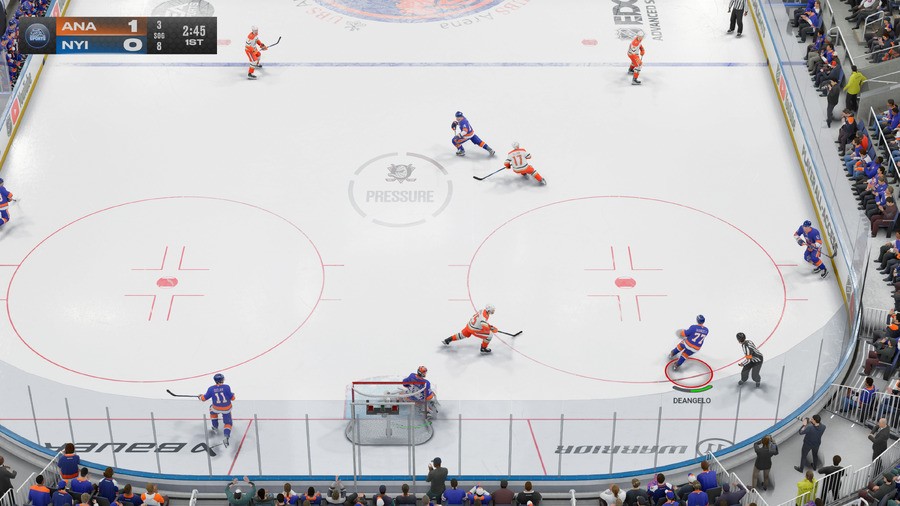
One of the most immediate changes in NHL 27 is the complete reconstruction of the game’s presentation package. For several years, players have noted a sense of stagnation in how games were broadcast, from repetitive commentary to generic arena atmospheres. NHL 27 addresses this with a suite of new features designed to make each match feel like a unique event.
Enhanced Visuals and Commentary
The game introduces a refreshing new commentary team, a move that analysts suggest was long overdue to break the monotony of previous cycles. This is supplemented by new pre-game intros, dynamic replays, and close-up crowd reactions that utilize the processing power of the Xbox Series X|S and PlayStation 5. The objective is to move away from a "one-size-fits-all" broadcast style and toward a more granular, team-specific experience.
Arena Authenticity and Licensed Audio
Perhaps the most significant addition to the presentation is the inclusion of official licensed goal songs and arena-specific elements. NHL 27 features a robust soundtrack of legendary hockey anthems, including:
- "Kernkraft 400" by Zombie Nation (a staple in modern sports arenas)
- "Rock And Roll All Nite" by Kiss
- "Chelsea Dagger" by The Fratellis (famously associated with the Chicago Blackhawks)
- "Song 2" by Blur
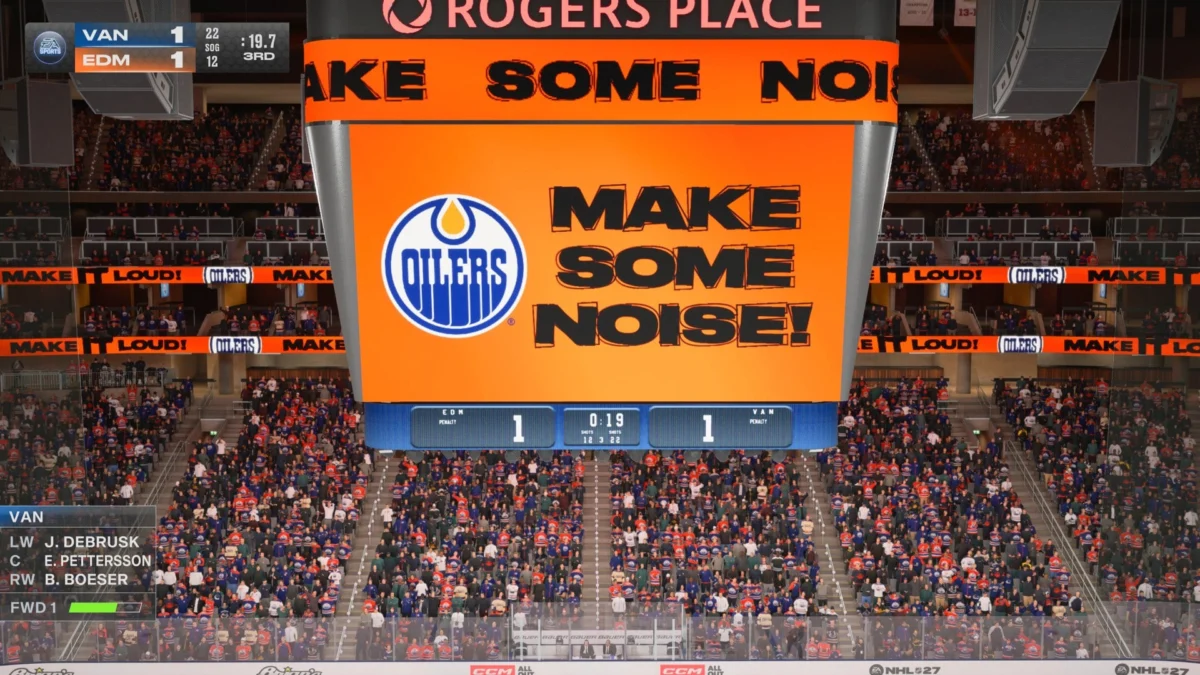
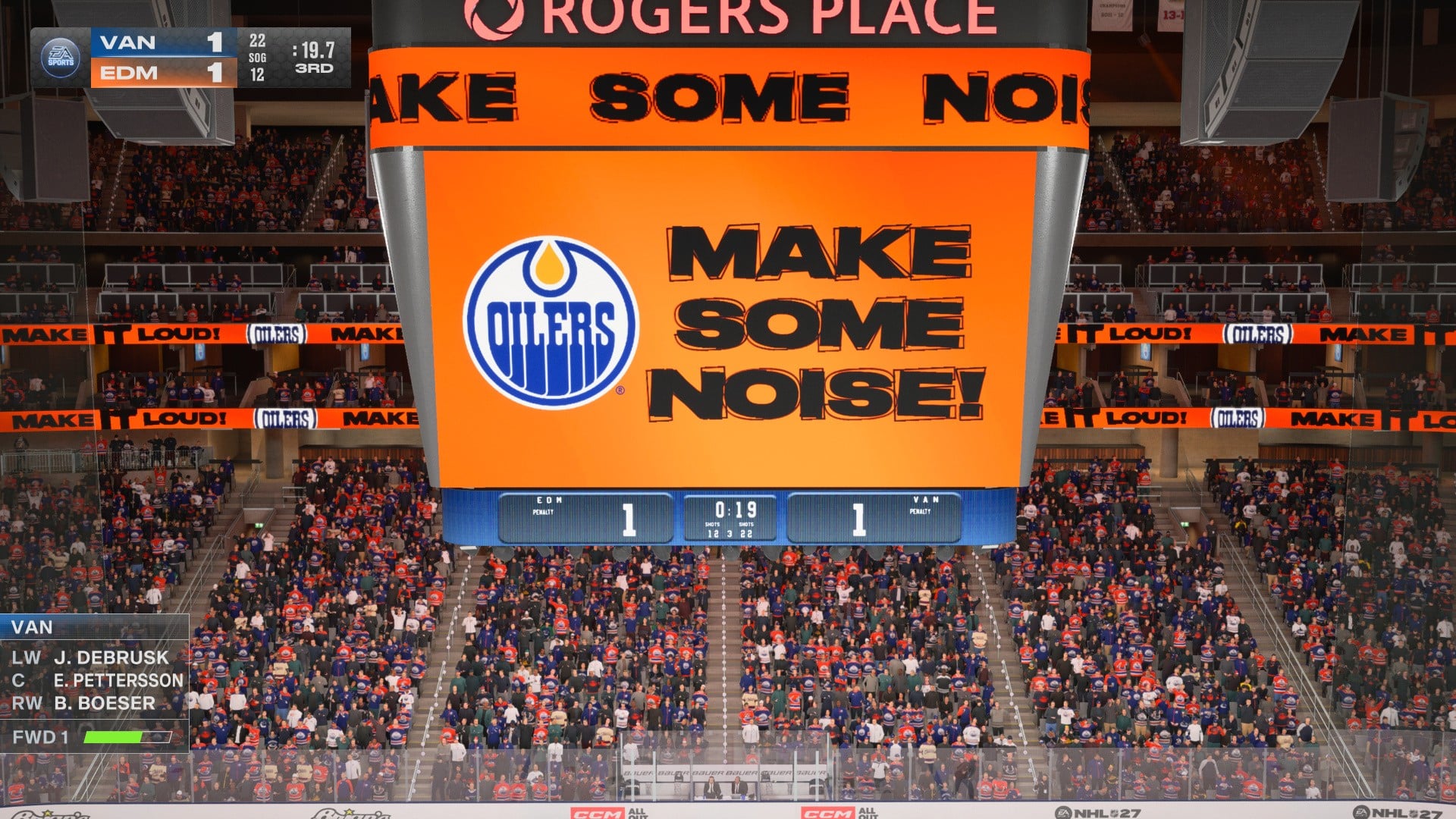
These tracks are integrated into the menus and, more importantly, into the gameplay itself. During goals and mid-game breaks, the audio triggers alongside "Make Some Noise" jumbotron prompts, significantly increasing the immersion factor. EA Vancouver has also committed to rolling out official jumbotron graphics for various NHL teams post-launch, further narrowing the gap between the digital simulation and a real-world NHL broadcast.
The Return of Connected Franchise: A Nostalgic Revival
For many veteran players, the headline feature of NHL 27 is the return of Connected Franchise. This mode allows multiple human players to participate in a shared league, managing their respective teams over multiple seasons. The feature was a cornerstone of the series during the Xbox 360 era, specifically in titles like NHL 14, but was removed during the transition to the Xbox One and PlayStation 4 generation due to technical complexities and a shift in focus toward the Ultimate Team (HUT) microtransaction model.
The 2027 iteration of Connected Franchise currently focuses exclusively on human-to-human interaction, with no AI-controlled teams supported at launch. This decision reflects a focus on competitive, social play, though it requires a dedicated group of players to maintain a functional league. The re-introduction of this mode is seen as a major win for the "hardcore" community, who have lobbied for its return for over ten years.
Gameplay Innovations: Strategy and Authenticity
While the visual and social aspects of NHL 27 are the primary focus, the title also introduces mechanical refinements to the on-ice action. While the core gameplay remains built on the Frostbite Engine, two new systems have been implemented to deepen the tactical experience.
Contextual Strategy Shifts
NHL 27 introduces "Contextual Strategy Shifts," a system where the game’s AI or the player’s "coach" suggests tactical changes in real-time. With a single button press, players can shift their team’s defensive or offensive posture based on the current game state. For example, if a team is trailing late in the third period, the AI will automatically suggest shortening lines and increasing aggression. Early tests indicate that these shifts are palpable, with the AI exhibiting noticeable changes in pressure and positioning when a strategy is toggled.
Team-Specific Playbooks
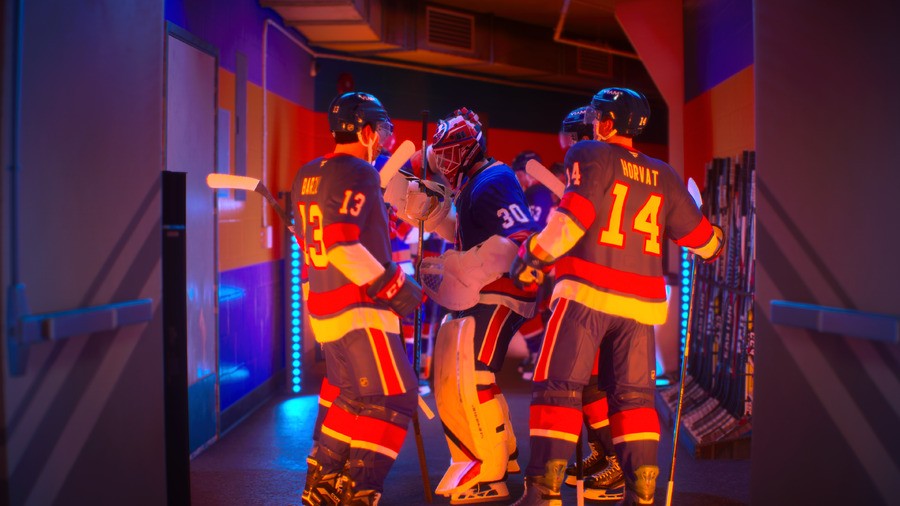
To differentiate the various teams in the league, EA has added unique Playbooks for each NHL franchise. These are designed to reflect real-world coaching philosophies. While the Frostbite Engine’s animation system has occasionally been criticized for being "clunky" compared to the smoother animations found in EA Sports FC, the new playbooks aim to provide a more authentic tactical flow, ensuring that a game against the defensive-minded New York Islanders feels distinctly different from a matchup against the high-octane Edmonton Oilers.
Technical Performance and the Frostbite Engine
The transition to the Frostbite Engine several years ago was intended to bring graphical parity across all EA Sports titles. However, the engine has faced challenges in replicating the high-speed, chaotic nature of ice hockey. In NHL 27, the engine continues to deliver high-fidelity player models and lighting, though some legacy issues with animation transitions and "unrealistic" offensive plays remain.
Despite these technical hurdles, the gameplay in NHL 27 is described as varied and balanced, particularly on higher difficulty settings like "Superstar." The AI’s ability to adapt to player tactics and the inclusion of more realistic puck physics contribute to a competitive environment that rewards strategic thinking over exploit-based scoring.
Comparative Analysis: The Xbox 360 Legacy
The emphasis on custom music and atmospheric detail in NHL 27 has drawn frequent comparisons to the "Golden Era" of hockey gaming on the Xbox 360. During that period, consoles allowed users to "rip" CDs to their hard drives and assign custom soundtracks to specific in-game events, such as power plays or home-team goals. While modern console architecture and licensing restrictions have largely ended that level of customization, NHL 27’s inclusion of authentic licensed anthems serves as a modern spiritual successor to those features. It represents a shift back toward "immersion-first" design, catering to a demographic of players who value the "vibe" of the arena as much as the mechanics of the sport.
Release Schedule and Market Implications
The release of NHL 27 comes at a time when sports gamers are increasingly critical of the "annual roster update" model. By bringing back a high-demand legacy feature like Connected Franchise and investing heavily in the audio-visual experience, EA is attempting to revitalize a franchise that has occupied a niche market.
Chronology of Launch:
- August 2026: Initial feature reveal focusing on the Frostbite Engine enhancements and presentation.
- September 4, 2026: Early Access period begins for pre-order customers and EA Play members.
- September 6, 2026: A free 10-hour trial becomes available for Xbox Game Pass Ultimate and EA Play subscribers.
- September 11, 2026: Worldwide general release on Xbox Series X|S, PlayStation 5, and previous-generation hardware (with some feature limitations).
Broader Impact on the Sports Gaming Landscape
The success or failure of NHL 27 may influence how EA Sports handles its other mid-tier franchises. If the focus on presentation and legacy features results in higher player retention and engagement, it could signal a shift away from the "Ultimate Team-centric" development philosophy that has dominated the last decade.
Furthermore, the inclusion of a 10-hour trial via Xbox Game Pass Ultimate remains a critical component of EA’s strategy to attract casual fans. By lowering the barrier to entry, the publisher hopes to convert curious hockey fans into long-term players. While the game still faces the inherent challenges of a smaller development budget and the limitations of its current engine, NHL 27 appears to be the most comprehensive attempt in years to honor the history of the sport and the expectations of its most loyal fans. For those who have missed the depth and atmosphere of the Xbox 360 era, NHL 27 stands as a significant step toward reclaiming that legacy.