


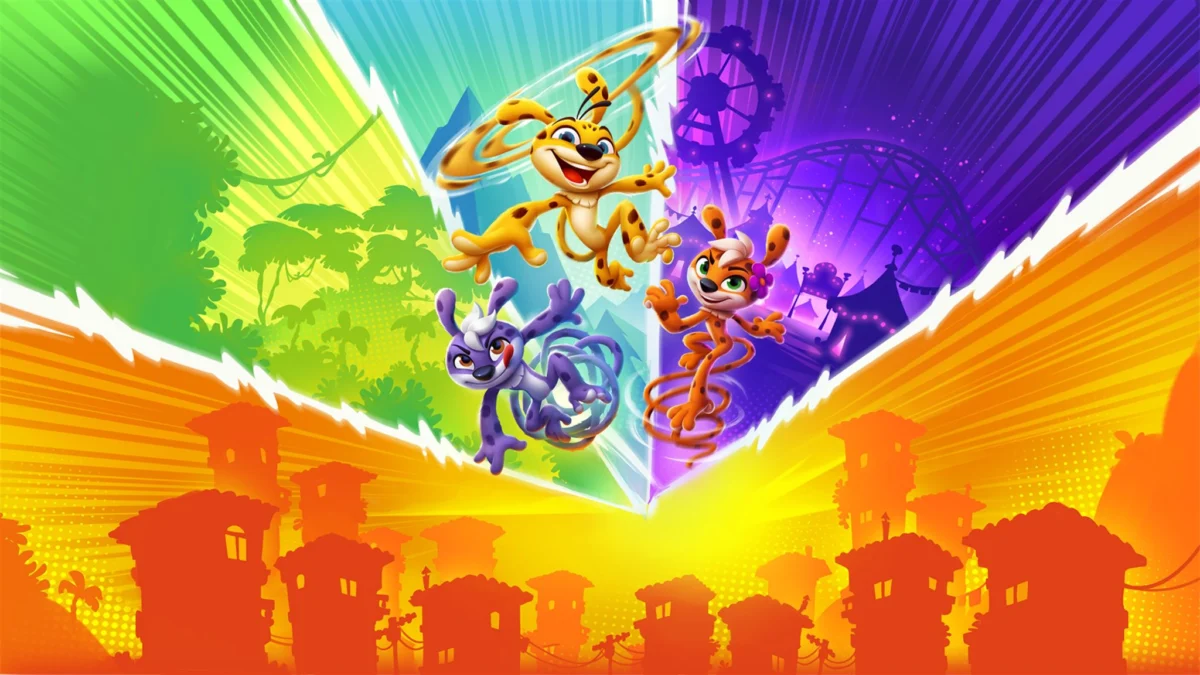
Following the conclusion of the Gamescom international trade fair, the interactive entertainment industry has seen the release of several highly anticipated titles, among which is the latest offering from Ocellus Studio and publisher Microids. The game, a 2D platformer titled Marsupilami 2 – Salsa Palombia, serves as the direct sequel to the 2021 title Marsupilami: Hoobadventure. This new installment seeks to build upon the established mechanics of its predecessor while introducing a rhythmic, music-centric narrative and expanded character dynamics. Developed with a focus on fluid animation and accessible gameplay, the title represents a significant addition to the library of licensed European intellectual properties currently being adapted for modern gaming consoles and PC platforms.

Core Gameplay Mechanics and Character Dynamics
At the center of Marsupilami 2 – Salsa Palombia is a refined character-swapping system featuring three distinct protagonists: Hope, Punch, and Twister. While the core movement and jumping physics remain consistent across the trio—ensuring a unified feel for the player—each character is distinguished by a unique special ability that dictates how they interact with the environment and specific hazards.
The level design is structured around the presence of two characters per stage, with the game pre-determining the duo for specific narrative or mechanical reasons. Players can transition between these characters instantaneously with the press of a button, a mechanic that Ocellus Studio has integrated into the platforming challenges. For example, Twister possesses a horizontal leap capability that allows him to bypass certain hazards in a straight line. Punch utilizes a "bouncy ball" mechanic, which is essential for navigating spiked terrain and engaging in boss encounters where verticality and impact are required. Hope provides a higher leap, functioning as a safety mechanism for players to recover from potential falls or to reach elevated secrets.

This "tag-team" approach encourages tactical switching. Certain secrets within the Palombian forest are positioned in such a way that they are inaccessible without the specific trait of one character, while others require mid-air swaps to maintain momentum. Notably, the game allows for a degree of player agency in how these mechanics are utilized; while the game encourages swapping, it rarely mandates it for basic progression, allowing experienced platforming enthusiasts to rely on core movement skills if they prefer a more traditional experience.
Narrative Framework and World Structure
The plot of Marsupilami 2 – Salsa Palombia introduces a supernatural element to the traditional jungle setting. The story begins in the Palombian forests, where the three marsupials find their rest interrupted by the arrival of music-obsessed mummies emerging from a mysterious portal. These antagonists utilize rhythmic energy to possess the local inhabitants, turning them into "zombies" driven by an insatiable urge to dance.

To combat this threat, players must navigate four distinct worlds, each themed around different musical and environmental aesthetics. Progression is gated by the collection of musical notes. In a departure from the "collectathon" style of many 3D platformers, each world features its own unique type of note. This design choice simplifies the collection process for casual players, though the game maintains a degree of challenge by requiring a specific total count of notes to unlock the final world. This structure balances the needs of younger audiences with the expectations of completionists who seek to uncover every hidden item in the game’s varied environments.
Historical Context: From Franco-Belgian Comics to Digital Screens
The Marsupilami character holds a prestigious position in European cultural history. Created by the renowned Belgian cartoonist André Franquin, the creature first appeared in the "Spirou et Fantasio" comic strip in 1952. Known for its incredibly long, versatile tail and its signature "Houba" cry, the Marsupilami eventually transitioned into its own dedicated comic series, television animations, and a live-action feature film.

The development of Marsupilami 2 – Salsa Palombia by Ocellus Studio is part of a broader trend led by the publisher Microids to revitalize classic Franco-Belgian "Bandes Dessinées" (BD) for the gaming market. This strategy includes other notable properties such as The Smurfs, Asterix & Obelix, and Tintin. Ocellus Studio, in particular, has gained a reputation for high-quality art direction and animation, previously contributing to titles like Marsupilami: Hoobadventure and Smurfs Kart. Their expertise in 2D-to-3D translation is evident in the expressive animations of the protagonists and the reactive nature of the enemies, who respond dynamically to the player’s proximity rather than following static, pre-determined loops.
Technical Performance and Accessibility Standards
Marsupilami 2 – Salsa Palombia has been optimized for a variety of hardware configurations. Reports indicate that the game maintains high performance standards on Windows 11 and Linux-based systems. Testing on handheld devices, such as the ASUS ROG Ally running the Bazzite operating system, demonstrates the title’s scalability. The visual fidelity is characterized by vibrant colors and smooth frame rates, which are critical for the precision required in later platforming stages.

In terms of accessibility, the developers have included several features to ensure the game remains inclusive for all skill levels. A "Infinite Life" mode is available, allowing players to bypass the penalty of death and focus on exploration and narrative progression. Checkpoints are frequently placed throughout the levels, minimizing the frustration of repeating long sections. While boss encounters require players to start from the beginning of the fight upon failure, these segments are designed to be concise, focusing more on visual spectacle and rhythmic patterns than on punishing difficulty. Furthermore, the game includes a local two-player cooperative mode, enabling a second player to assist in navigating tougher platforming sequences, a feature highly requested by the family gaming demographic.
Market Analysis and Genre Implications
The release of Marsupilami 2 – Salsa Palombia comes at a time when the 2D platformer genre is experiencing a resurgence, driven by both high-budget first-party titles and innovative indie projects. While the market is often dominated by established franchises such as Nintendo’s Mario series, there is a significant demand for "AA" titles that offer high production values without the overwhelming complexity of modern "metroidvanias" or "souls-like" platformers.

Industry analysts suggest that Marsupilami 2 – Salsa Palombia positions itself as a "feel-good" alternative that prioritizes flow and rhythm. By avoiding the punishing difficulty curves found in games like Crash Bandicoot 4: It’s About Time, Ocellus Studio has carved out a niche for players who value polish and charm over extreme mechanical challenge. The integration of music as a central theme—evidenced by a soundtrack that ranges from electric guitar riffs to complex percussion—further distinguishes the title from its peers, aligning it with the legacy of rhythm-platformers like Rayman Legends.
Broader Impact on Licensed Intellectual Properties
The success of the Marsupilami gaming franchise demonstrates the viability of licensed IPs when handled by studios with a clear artistic vision. Historically, licensed games were often viewed as "shovelware"—low-quality tie-ins produced to capitalize on a brand’s popularity. However, the work done by Ocellus Studio and Microids indicates a shift toward treating these properties with the same level of care as original creations.

By focusing on the unique physical attributes of the Marsupilami—specifically the use of the tail for movement and combat—the developers have ensured that the gameplay is intrinsically linked to the character’s identity. This authenticity is a key factor in the positive reception from both fans of the original comics and newcomers to the franchise. As the gaming industry continues to consolidate, the success of mid-sized projects like Marsupilami 2 – Salsa Palombia provides a blueprint for how smaller publishers can compete by leveraging culturally significant characters and focusing on high-quality, specialized gameplay experiences.
In summary, Marsupilami 2 – Salsa Palombia is a robust and polished 2D platformer that honors its source material while providing modern, accessible gameplay. Through its innovative character-swapping mechanics, rhythmic narrative, and technical excellence, it stands as a testament to the enduring appeal of the Marsupilami character and the creative capabilities of Ocellus Studio. The title is currently available on major PC platforms and consoles, offering a compelling experience for both solo players and families alike.