


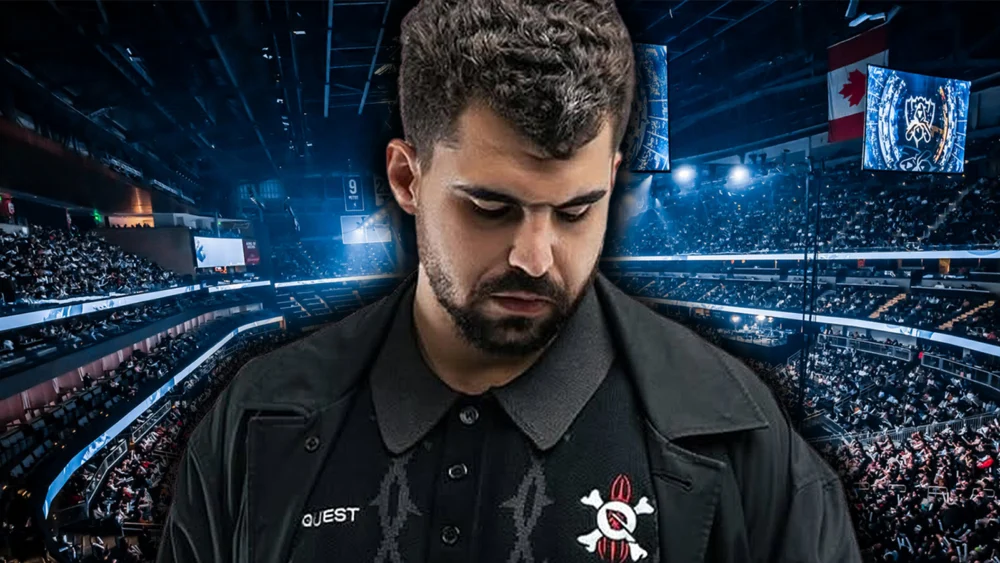
The highly anticipated music video for the League of Legends World Championship, a staple event that typically heralds the imminent start of the highest level of competitive play in the game, has experienced a significant delay. LoL Esports confirmed that production is currently mired in a complex editing process, with the primary cause being the necessity to remove player Gabriel "Bwipo" Guimaraes from the final cut. This decision stems directly from controversial remarks the professional player made in September 2025 regarding women in esports, specifically their participation during menstrual cycles. The revised release date for the music video is now set for October 13, just one day before the commencement of Worlds 2025, a departure from the usual pre-event fanfare.
Background: The Significance of the Worlds Music Video
The League of Legends World Championship, often referred to as Worlds, represents the pinnacle of competitive gaming within the League of Legends ecosystem. This year’s tournament, scheduled to run from October 14 to November 9, will span across three major Chinese cities: Beijing, Shanghai, and Chengdu. The event garners immense global attention, drawing millions of viewers and showcasing the dedication, skill, and strategic prowess of the world’s elite League of Legends teams.
Historically, LoL Esports has leveraged the Worlds music video as a powerful promotional tool and a celebratory tribute to the tournament and its participants. These productions typically feature a dynamic blend of professional players, iconic in-game characters, and thematic visuals designed to capture the excitement and narrative of the competition. The videos serve not only to hype the event but also to foster a sense of community and shared experience among fans worldwide. The delay and the reason behind it have therefore become a focal point of discussion within the game’s extensive player base.
The Bwipo Controversy and Its Ramifications
The decision to edit Bwipo out of the Worlds music video was officially communicated by the League of Legends Esports account via a tweet on October 8, 2025. The statement explicitly cited his "recent comments" as the impetus for the removal. Bwipo, a prominent player who was slated to represent the Americas region, had made remarks during a Twitch stream in September 2025 that insinuated women should avoid competitive gaming during their periods due to perceived emotional volatility.
"Bwipo was featured in the original cut, but given his recent comments, we decided it wouldn’t be right to showcase him in a piece that represents LoL Esports, pro players, and fans," the official statement read. The tweet further elaborated on the logistical challenges: "Editing him out required significant changes during the final stages of production, and because he was the player representing the Americas, that region will not appear in this year’s video as originally intended." The organization emphasized that this was not a disciplinary action in terms of competitive rulings but a strategic choice concerning brand representation. "This was not part of any sanction or competitive ruling, but a decision about how we represent our sport and community on a global stage."
Chronology of Events
The timeline leading to this unprecedented editing decision can be traced back to Bwipo’s comments in September 2025. During a livestream, the player stated, "When a woman is on the wrong part of the month, for playing competitively – you know what I mean? There is a time of the month where you should not be playing competitive games as a woman in my opinion." He attempted to contextualize his remarks by referencing personal experience, saying, "This is my experience. I lived with one for a while, and she played a lot of League ranked. It was really obvious when she was getting super irritated at every little thing. I’m not trying to be sexist or anything, that’s just the way it was."
These statements quickly circulated across social media platforms and gaming forums, igniting a firestorm of criticism. The backlash was swift and widespread, with many accusing Bwipo of sexism and perpetuating harmful stereotypes. The controversy escalated, prompting a formal response from Bwipo himself. On X (formerly Twitter), he issued an apology: "I’m sorry to those I hurt. I regret using my platform to fuel vitriol and sexism instead of support, and I’ll be taking steps to reflect, listen, and do better."
In the immediate aftermath of the public outcry, Bwipo’s team, FlyQuest, which had qualified for Worlds, took action by benching him for one match. This served as an internal disciplinary measure, acknowledging the gravity of his statements and their impact on the broader esports community. Despite this, FlyQuest’s qualification for Worlds meant Bwipo was still slated to participate in the tournament itself. The decision by LoL Esports to remove him from the promotional music video, however, signals a further layer of consequence, extending beyond team-level sanctions.
Supporting Data and Broader Context
The League of Legends esports scene is a multi-billion dollar industry with a dedicated global following. The World Championship consistently breaks viewership records, with the 2023 finals reportedly attracting over 6.4 million concurrent viewers at its peak, excluding Chinese viewership. This immense audience underscores the influence and reach of LoL Esports as a global entertainment entity.
The decision to edit Bwipo out of the music video highlights a growing trend within professional esports and the broader sports entertainment industry: the increasing scrutiny of player conduct and public statements. As esports professionalizes and gains mainstream recognition, organizations are becoming more attuned to the potential damage that controversial remarks can inflict on their brand image, community relationships, and sponsor partnerships. This is a departure from earlier years where such incidents might have been met with less public pressure or organizational intervention.
The implication of Bwipo’s removal also extends to the representation of the Americas region in the music video. By having to edit out the player representing this region, LoL Esports has effectively created a void in the visual narrative of the video for a significant portion of its audience. This decision, while aiming to uphold certain values, inadvertently impacts the inclusivity of the promotional material. The announcement acknowledges this by stating, "that region will not appear in this year’s video as originally intended."
Reactions and Implications
The news of Bwipo’s removal has generated a polarized reaction among the League of Legends community. Supporters of the decision commend LoL Esports for taking a firm stance against misogynistic comments and for prioritizing a positive and inclusive representation of the sport. They argue that featuring Bwipo in a celebratory video would undermine the efforts to create a welcoming environment for all players and fans, particularly women who are often underrepresented and face unique challenges in the gaming world.
Conversely, some segments of the community have voiced concerns that the decision is an overreach, arguing that Bwipo’s apology should have been sufficient. Critics suggest that editing him out, especially after his team’s disciplinary action, constitutes a form of "cancel culture" and that the focus should remain on his performance on the Rift. This debate reflects a broader societal conversation about accountability, the power of public platforms, and the appropriate responses to offensive speech.
The situation also raises questions about the vetting process for promotional materials and the criteria used to determine player inclusion. LoL Esports’ statement that this was "a decision about how we represent our sport and community on a global stage" indicates a commitment to managing the narrative and projecting an image aligned with inclusivity and respect. However, the logistical challenges and the resultant alteration to the regional representation in the video demonstrate the complex balancing act involved in such decisions.
The implication for Bwipo himself is multifaceted. While he is still permitted to compete in Worlds, the public removal from a prominent promotional asset serves as a stark reminder of the professional consequences of his actions. It signals that his role extends beyond just in-game performance; his public persona and statements carry significant weight within the esports ecosystem. For the Americas region’s representation, the absence in the music video, while regrettable, might also serve as a talking point, drawing attention to the circumstances and potentially fostering dialogue around the issues raised.
As Worlds 2025 approaches, the focus will undoubtedly return to the competitive clashes on Summoner’s Rift. However, the controversy surrounding the music video and Bwipo’s exclusion will likely linger, serving as a case study in how professional esports leagues navigate player conduct, brand integrity, and the evolving expectations of their global audience. The delay in the music video, while an inconvenience, has inadvertently amplified the conversation about these critical issues, making the eventual release all the more significant.