


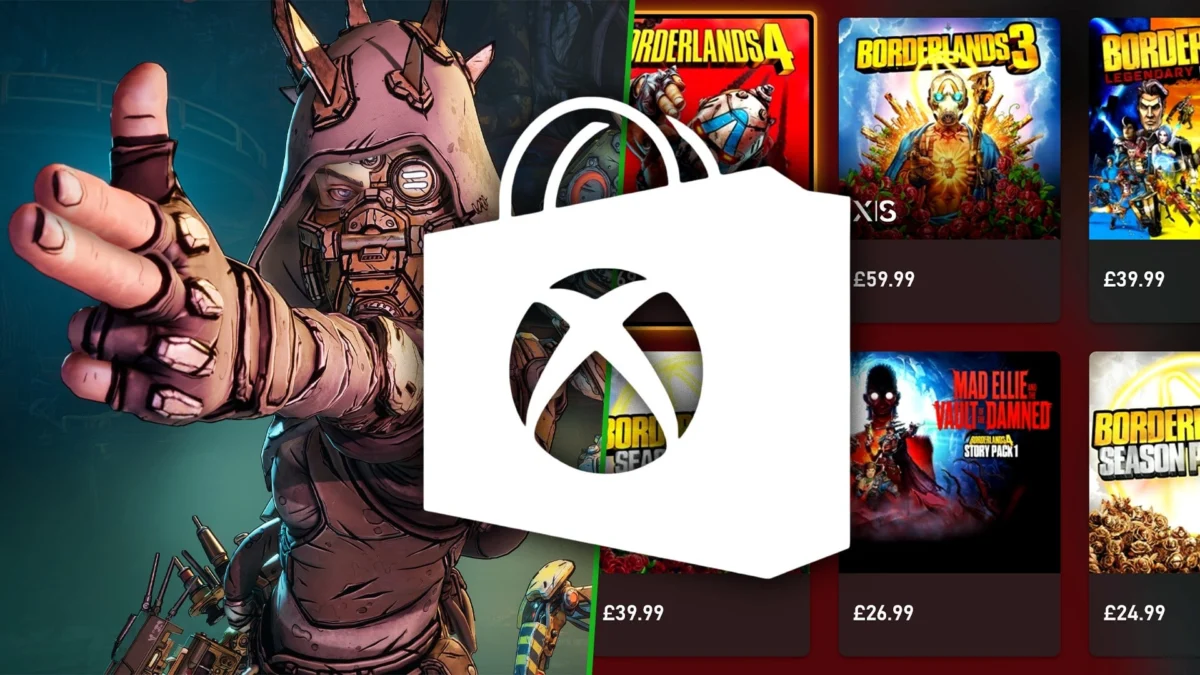
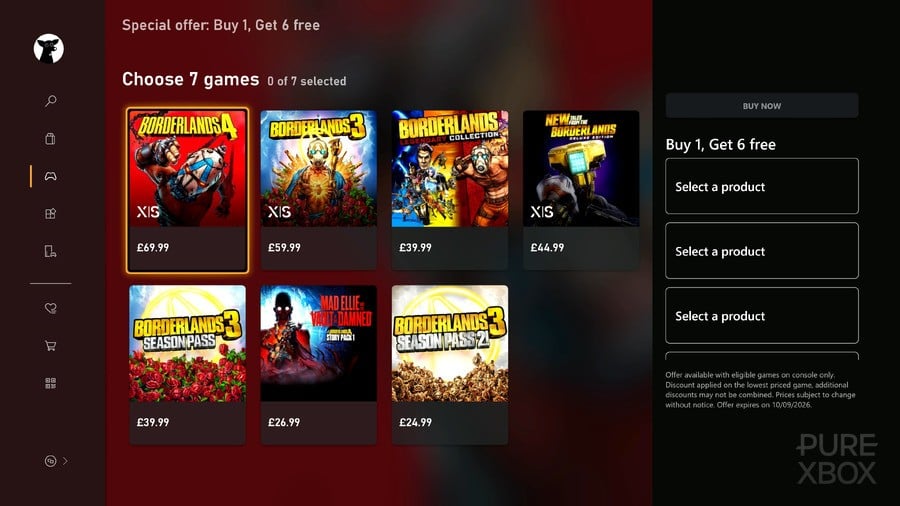
The Xbox digital storefront has recently become the subject of considerable discussion following the introduction of a unique "Buy One, Get Six Free" promotion, specifically centered around the popular Borderlands franchise. While ostensibly offering a substantial collection of titles, the deal has drawn scrutiny from consumers and industry observers alike due to its pricing structure, which mandates a purchase price dictated by the most expensive game in the bundle, Borderlands 4, at £69.99 / $69.99. This approach has prompted a broader conversation about perceived value versus actual savings in the rapidly evolving landscape of digital game distribution.
Deconstructing the ‘Buy One, Get Six Free’ Mechanic
Traditionally, "Buy One, Get One Free" (BOGOF) promotions are designed to entice consumers with the promise of receiving an additional item at no extra cost, effectively halving the price per unit when two items are purchased. The Xbox Store’s latest offering, however, expands on this concept, presenting a "Buy One, Get Six Free" structure. This particular iteration includes seven Borderlands titles and associated downloadable content (DLC) within a single bundle. The critical detail, which often underpins such multi-item bundles on digital platforms, is that the final purchase price is not an aggregated sum of discounted individual items, nor an average, but rather the full retail price of the most expensive component in the package. In this instance, that component is the recently released Borderlands 4, priced at a premium of £69.99 / $69.99.
This pricing model effectively means that a consumer interested in acquiring this collection pays the full price for Borderlands 4, and the remaining six games and their DLC are included as "free" additions. While the sheer volume of content—seven games and various expansions—might initially appear to represent an exceptional value proposition, closer examination reveals a more nuanced financial reality. The perceived benefit of receiving six "free" items is contingent on the buyer’s desire for Borderlands 4 at its full launch price, and whether the other included titles genuinely add value commensurate with that initial outlay, especially considering their individual market values.
The Borderlands Franchise: A Legacy of Loot and Lore
The Borderlands series, developed by Gearbox Software and published by 2K, has established itself as a cornerstone of the looter-shooter genre since its debut in 2009. Known for its distinctive cel-shaded art style, irreverent humor, and addictive gameplay loop of collecting increasingly powerful weapons, the franchise has garnered a dedicated global fanbase. Each main installment has expanded upon the universe of Pandora and its various protagonists, known as Vault Hunters, offering extensive campaigns, cooperative multiplayer experiences, and a wealth of post-launch content.
The series typically includes:
- Borderlands (2009): The progenitor, setting the stage for the unique blend of RPG progression and first-person shooting.
- Borderlands 2 (2012): Widely considered a high point for the franchise, lauded for its engaging narrative, memorable villain (Handsome Jack), and robust content.
- Borderlands: The Pre-Sequel! (2014): A prequel bridging the gap between the first two games, introducing new mechanics like low-gravity combat.
- Borderlands 3 (2019): The direct sequel to Borderlands 2, bringing the series to current-generation platforms with enhanced visuals and new Vault Hunters.
- Tiny Tina’s Wonderlands (2022): A spin-off title blending the Borderlands formula with a fantasy setting and tabletop RPG elements.
- New Tales from the Borderlands (2022): A narrative-driven adventure game continuing the story tradition of the Telltale series.
- Borderlands 4 (Recent Release): The latest mainline entry, positioned at the premium price point in this bundle.
These titles, spanning over a decade of releases, have seen numerous re-releases, remasters, and bundle offerings across various platforms. The long lifespan and consistent popularity of the franchise mean that older titles, in particular, are frequently subject to significant discounts, often appearing in sales events at fractions of their original launch prices. This historical pricing context is crucial for evaluating the true economic benefit of the current "Buy One, Get Six Free" promotion.
Analyzing the Value Proposition: Perceived Savings vs. Market Realities
On the surface, acquiring seven Borderlands games and associated DLC for £69.99 / $69.99 might appear to be a compelling offer. A simple arithmetic division suggests an average cost of approximately £10 / $10 per game, which for modern titles, particularly new releases, would indeed represent exceptional value. However, this calculation overlooks the fundamental market dynamics for video games, especially those that have been available for several years.
Industry analysis consistently shows that game prices typically follow a depreciation curve, particularly for single-player or narrative-driven experiences. New releases command premium prices, but within months, and certainly within a year or two, their value often decreases significantly, driven by factors such as:
- Sales cycles: Digital storefronts frequently host seasonal, publisher-specific, or platform-wide sales events, during which older titles can see discounts ranging from 50% to as high as 90%.
- Bundle offers: Publishers often package older titles into collections at reduced prices to attract new players or those who missed previous releases.
- Subscription services: Many older, and even some newer, titles become available through services like Xbox Game Pass, further impacting their individual perceived value for purchase.
- Physical market: The used physical game market, though shrinking, still provides a benchmark for lower prices on older titles.
When juxtaposed against these market realities, the "Buy One, Get Six Free" deal begins to lose some of its initial luster. For instance, several Borderlands titles, including Borderlands: The Handsome Collection (which bundles Borderlands 2 and The Pre-Sequel! with all DLC) and Borderlands 3, have been observed selling for individual prices well below £20 / $20, and often below £10 / $10, during various sales. Even Tiny Tina’s Wonderlands has seen substantial discounts since its release. Industry data from Q3 2023 indicates that digital titles older than three years frequently experience discounts of 70% or more during major promotional periods.

A consumer proactively tracking sales or purchasing older titles through physical retailers (where available and assuming compatibility) could potentially acquire the bulk of the included "free" games for a cumulative sum significantly less than the £69.99 / $69.99 price point. For example, anecdotal evidence from the UK market suggests that acquiring most of the older Borderlands titles (excluding Borderlands 4) could be achieved for approximately £45 through careful shopping during sales or via the used market, even without the comprehensive DLC. This highlights a crucial discrepancy: the perceived value of receiving six games for free versus the actual market value of those games when purchased independently or during alternative promotional periods.
The Digital vs. Physical Divide: Price Discrepancies
The rise of digital distribution has brought unprecedented convenience to consumers, offering instant access to games without the need for physical media. However, it has also introduced new complexities in pricing and ownership. Unlike the physical market, where competition among retailers, the existence of a used game market, and manufacturing costs influence price floors, digital storefronts often operate with more direct control over pricing.
While digital sales often mirror physical ones, the absence of a ‘used’ market for digital goods means that the value depreciation curve can sometimes be managed differently. Publishers and platform holders can strategically time sales and bundles to maximize revenue over a game’s lifecycle. In this context, bundles like the "Buy One, Get Six Free" Borderlands promotion serve multiple purposes:
- Clearing inventory (digital equivalent): For older titles, bundling them with a new premium game can re-monetize content that might otherwise see diminishing sales.
- Franchise promotion: It can introduce new players to the entire Borderlands universe, potentially encouraging future purchases of DLC or spin-offs.
- Anchor pricing: The high price of Borderlands 4 acts as an anchor, making the overall bundle seem more valuable by comparison, even if the "free" items have a lower standalone market value.
However, this strategy also carries risks, particularly regarding consumer perception. When consumers are aware that the "free" components are regularly available at significantly lower prices, the transparency and integrity of the "deal" can be called into question.
Historical Pricing Trends and Discount Cycles
An examination of historical pricing data for the Borderlands franchise on digital storefronts, including the Xbox Store, reveals a consistent pattern of deep discounts. Titles like Borderlands: Game of the Year Edition, Borderlands 2, Borderlands: The Pre-Sequel!, and Borderlands 3 (and their respective ultimate or super deluxe editions) have frequently appeared in major sales events with price reductions of 60% to 90%. These sales are often tied to seasonal events (e.g., Black Friday, Summer Sale, Winter Sale), publisher spotlights, or platform-wide promotions.
For instance, Borderlands 3 Ultimate Edition, which includes the base game and all major DLC, has been seen priced as low as £15-£20 during various sales. Similarly, Tiny Tina’s Wonderlands has also experienced significant price drops since its launch. This historical context underscores the argument that while the current bundle offers convenience, it may not represent the optimal financial choice for consumers primarily interested in the older titles or those willing to wait for individual sales. The primary beneficiaries of this specific bundle are likely those who were already planning to purchase Borderlands 4 at full price and view the additional games as a genuine bonus, or those who prioritize immediate access to the entire collection over maximum savings.
Consumer Reactions and Marketplace Transparency
The emergence of such bundles frequently elicits mixed reactions from the gaming community. On one hand, some consumers appreciate the convenience of acquiring a large collection of games in a single transaction, especially if they are new to a franchise or missed previous installments. For these individuals, the aggregate value, even if not the absolute lowest price, can be appealing. On the other hand, many gamers, particularly those who are savvy shoppers and accustomed to tracking digital sales, express skepticism. These consumers often perceive such deals as less about genuine savings and more about leveraging the perceived value of "free" items to justify a premium price for the anchor title.
Concerns about marketplace transparency often arise in these situations. While digital storefronts are not obligated to offer the absolute lowest possible price at all times, clear communication regarding the actual value proposition of bundles is crucial for maintaining consumer trust. When a "free" item frequently sells for a nominal sum, or is available via subscription services, the term "free" can feel misleading, potentially eroding confidence in future promotions. Industry analysts suggest that clear, unambiguous communication about savings relative to current individual prices (rather than original launch prices) would foster greater transparency.
Broader Implications for Digital Retail Strategies
This Borderlands "Buy One, Get Six Free" promotion is indicative of broader trends in digital retail strategies within the video game industry. Platform holders and publishers are constantly experimenting with new ways to monetize their vast libraries of content, attract new players, and retain existing ones. Bundles are a powerful tool in this regard, offering the potential for increased average transaction value and extended engagement with a franchise.
However, the effectiveness and long-term sustainability of these strategies hinge on balancing perceived value with actual value. In an era where information about historical pricing and competing offers is readily available through price tracking websites and community forums, consumers are increasingly informed. Deals that appear to offer substantial savings but, upon closer inspection, provide only marginal benefits compared to alternative purchasing methods, risk alienating a segment of the audience.
Moving forward, digital storefronts may need to consider evolving their bundle strategies to prioritize transparency and genuine consumer benefit. This could involve:
- Dynamic pricing: Adjusting bundle prices based on the current individual sale prices of all included components.
- Clearer savings breakdowns: Explicitly stating the savings relative to the current cumulative price of individual items, rather than solely focusing on the anchor product.
- Tiered bundles: Offering different versions of bundles that cater to varying needs, such as a "new player" bundle with older titles at a deep discount, and a "complete collection" bundle that includes the latest release.
The Borderlands promotion, scheduled to expire on September 10, serves as a timely case study in the complexities of digital game pricing. While offering a convenient gateway into a beloved franchise, its value proposition underscores the importance of consumer diligence and a critical approach to promotional language in the digital marketplace. For those deeply committed to acquiring Borderlands 4 at launch and who genuinely desire the older titles without the hassle of tracking individual sales, the bundle offers a straightforward purchase. For others, a more patient and strategic approach to game acquisition may yield greater financial savings.
Navigating Digital Deals: Advice for Consumers
For consumers looking to make informed purchasing decisions in the digital marketplace, several strategies can be employed:
- Research historical prices: Utilize websites that track game prices across various digital storefronts to understand typical discount cycles and the lowest recorded prices for individual titles.
- Compare across platforms: Check prices on different digital storefronts (if applicable) and consider the physical market.
- Evaluate individual interest: Determine if you genuinely want all the games in a bundle, or if you’re primarily interested in one or two. The cost of the entire bundle might outweigh the value of only the desired components.
- Consider subscription services: If a game is available on a service like Xbox Game Pass, evaluate whether a subscription offers better value than an outright purchase.
- Read the fine print: Understand how bundle pricing is calculated and what exactly is included (base games, specific DLC, season passes).
This particular "Buy One, Get Six Free" Borderlands promotion on the Xbox Store exemplifies the ongoing dialogue between platform holders, publishers, and consumers regarding value, transparency, and fairness in the digital economy. As the gaming industry continues its rapid evolution, the dynamics of digital pricing will undoubtedly remain a focal point of discussion and adaptation.