


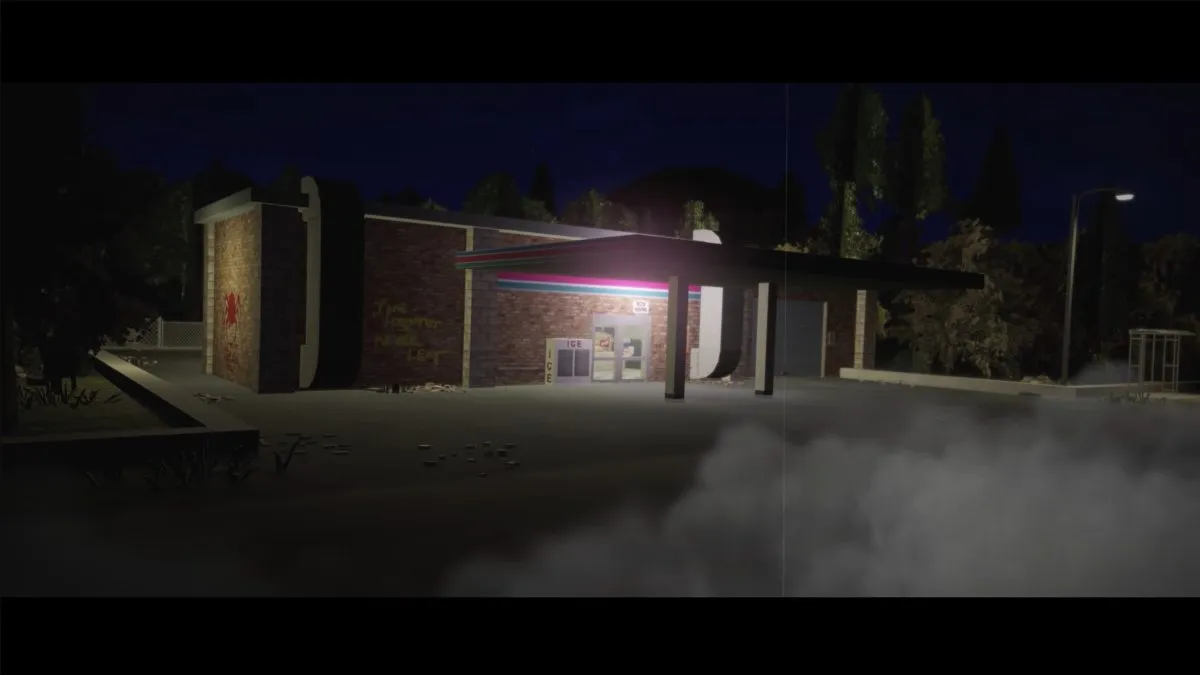
The unsettling reality of working the graveyard shift at a surreal convenience store in Shift at Midnight extends far beyond the immediate financial pressures of veterinary bills and surgical expenses. A new layer of mystery has been introduced with the disappearance of Guillermo, a beloved brown Labrador, whose absence is now starkly advertised through a missing dog poster prominently displayed within the game’s narrative. This development, unveiled on night 10 of the game, has ignited curiosity and a fervent search among the player base, prompting an examination of its potential significance within the game’s intricate lore and mechanics.
The Unveiling of Guillermo’s Disappearance
The appearance of Guillermo’s missing dog poster marks a subtle yet impactful shift in the player’s experience of Shift at Midnight. Typically, the notice board within the game serves as a crucial conduit for vital information, offering new objectives and narrative threads through directives from the Store Manager, delivered via calls or handwritten notes. However, Guillermo’s case deviates from the established pattern of active side quests that demand immediate player intervention. Despite the presence of a $50 reward, seemingly tied to the game’s bonus system for fulfilling the Store Manager’s requests, no discernible in-game mechanism allows players to actively locate or retrieve Guillermo. This has led to widespread speculation that the poster might be a narrative embellishment rather than a functional questline.
The poster itself provides specific details about the missing canine: Guillermo is described as a brown Labrador sporting a yellow collar. His disappearance is announced during night 10, a period often characterized by escalating tension and the introduction of more complex supernatural elements within the game. The visual of the poster, a common sight in real-world communities grappling with lost pets, serves to ground the otherwise fantastical elements of Shift at Midnight in a relatable, albeit unsettling, scenario.
Distinguishing Guillermo from Tofu: A Crucial Narrative Distinction
It is imperative to distinguish Guillermo from Tofu, the service dog that players are tasked with serving in the convenience store. This distinction is vital, as Shift at Midnight has been known to employ deceptive gameplay mechanics, such as the unsettling scenario where players are subtly manipulated into potentially harming the innocent Tofu. Guillermo, conversely, is presented as a distinct entity – a pet lost to its owner, rather than a character directly involved in the immediate operational challenges of the store.
The nature of Guillermo’s owner remains a point of conjecture. Given the game’s overarching theme of doppelgangers and existential threats, it is plausible that Guillermo’s owner may have been a victim of such an infiltration, leaving the dog without its familiar guardian. The Dentist, a recurring character with ambiguous motives, is frequently cited as a potential connection, or perhaps another customer whose replacement by an imposter has inadvertently led to Guillermo’s abandonment. This ambiguity fuels the narrative, suggesting that the missing dog poster is not merely a random detail but a deliberate insertion designed to deepen the player’s understanding of the game’s world and its inhabitants.
The Search for Guillermo: A Community Endeavor
The immediate inclination for many players upon encountering the missing dog poster is to actively search the surrounding game environment, particularly the adjacent forest, for any sign of a stray canine. However, the absence of any interactive dialogue options related to the poster or customer inquiries about Guillermo suggests that such an in-game investigation is not intended. This lack of direct engagement has led to the prevailing theory that Guillermo’s poster serves a purely lore-based purpose.
The implications of this are significant. The poster, by highlighting the plight of a lost pet, could be strategically designed to amplify the player’s innate protective instincts. This, in turn, could reinforce the player’s motivation to safeguard their own companion animal within the game – the very creature whose well-being is the primary impetus for enduring the perilous shifts at midnight. The game, therefore, might be leveraging the emotional resonance of pet ownership to enhance the player’s commitment to the narrative and their own character’s survival.
The dedicated community surrounding Shift at Midnight, particularly on its official Discord server, has undertaken an extensive and collaborative search for Guillermo. Despite their collective efforts, no player has reported finding any in-game representation of the missing dog. This consensus among the player base lends considerable weight to the assertion that Guillermo is not a physically present entity within the game world that can be located and rescued.
Evidence from the Poster Itself: A Clue to the Illusion
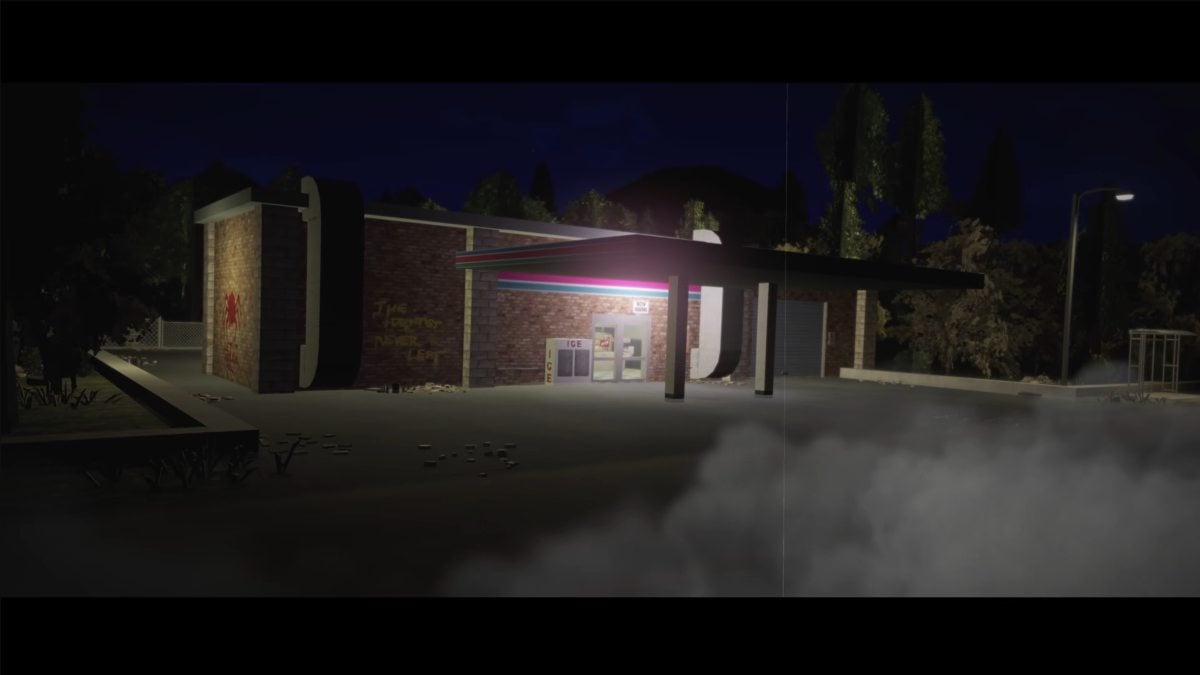
The most compelling evidence supporting the notion that Guillermo cannot be found in-game lies within the missing dog poster itself. Crucially, the poster does not provide a contact number for the owner, nor does it offer any in-game mechanism to initiate a call or communication with them. In a game that meticulously crafts interactive elements, the absence of such a fundamental feature for a missing pet scenario strongly indicates that the poster’s function is not to initiate a retrieval quest.
This detail serves as a subtle, yet definitive, confirmation that the narrative is more focused on the emotional and thematic impact of Guillermo’s absence rather than providing a tangible gameplay objective. The creators of Shift at Midnight appear to be employing the concept of a missing pet as a narrative device to evoke empathy, underscore the dangers faced by the game’s characters and their loved ones, and perhaps to subtly comment on the fragility of normalcy in a world teetering on the edge of the surreal.
Broader Implications for Narrative Design in Shift at Midnight
The inclusion of Guillermo’s missing dog poster, while seemingly a minor detail, speaks volumes about the sophisticated narrative design employed in Shift at Midnight. The game consistently blurs the lines between reality and illusion, often presenting players with information that is both intriguing and ultimately misleading. This tactic keeps players engaged, encouraging them to question every detail and to constantly re-evaluate their understanding of the game’s unfolding events.
The poster functions as a microcosm of this design philosophy. It introduces an element of emotional resonance – the concern for a lost pet – within a high-stakes, survival-oriented environment. By offering a reward that hints at gameplay progression but ultimately leads to a dead end, the game challenges player expectations and reinforces the idea that not all information presented should be taken at face value. This can foster a more cautious and analytical approach to gameplay, which is invaluable when navigating the game’s more treacherous encounters and narrative twists.
Furthermore, the Guillermo subplot can be interpreted as a thematic exploration of loss and attachment. In a world where characters are constantly at risk of being replaced or disappearing, the very idea of a pet going missing serves as a poignant reminder of what is at stake. It highlights the bonds that players form, not only with their in-game companions but also with the narrative itself. The persistent questions surrounding Guillermo’s fate, even in the absence of a concrete in-game solution, ensure that the mystery lingers, contributing to the overall atmospheric tension and the enduring sense of unease that defines Shift at Midnight.
The Role of the Notice Board in Lore Development
The notice board in Shift at Midnight has evolved from a simple information hub into a critical component of the game’s lore dissemination. It is here that players are exposed to fragments of the world outside the immediate confines of the convenience store, offering glimpses into the lives and concerns of the broader community. The appearance of Guillermo’s poster alongside other potential notices – perhaps job listings, community announcements, or even veiled warnings – creates a richer tapestry of the game’s setting.
By integrating such seemingly mundane elements, the developers craft a more believable and immersive world. The missing dog poster, a common fixture in many towns and cities, grounds the supernatural elements of Shift at Midnight in a relatable reality. This contrast between the ordinary and the extraordinary is a hallmark of effective horror and suspense, making the unsettling aspects of the game all the more impactful.
Future Possibilities and Player Interpretation
While the current evidence strongly suggests that Guillermo is not a findable entity in Shift at Midnight, the nature of game development and ongoing updates means that future content could potentially alter this interpretation. However, based on the information available and the consensus of the player community, the poster’s primary role remains rooted in narrative enrichment and thematic reinforcement.
The persistent mystery of Guillermo serves as a testament to the power of suggestion in storytelling. Even without a direct resolution, the question of his whereabouts fuels player discussion and speculation, contributing to the game’s longevity and replayability. It encourages players to think critically about the information presented to them and to consider the deeper meanings embedded within the game’s mechanics and narrative. The story of Guillermo, the missing brown Labrador with the yellow collar, thus becomes another compelling thread in the intricate and unsettling fabric of Shift at Midnight.