


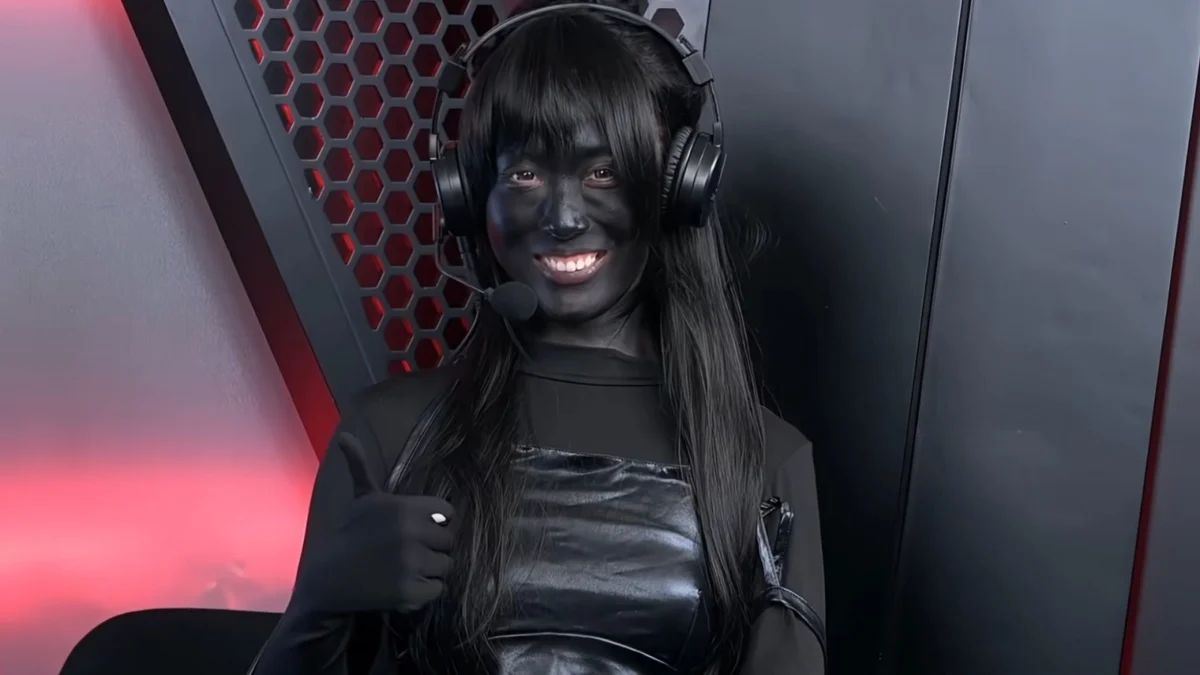
An esports host in China, identified as Zhazha, has become the subject of widespread online discussion and viral fame after a bold and satirical response to criticism regarding her on-air attire. The incident, which unfolded during a recent broadcast of the popular game Naraka: Bladepoint, saw Zhazha address accusations of inappropriate dressing by appearing in a striking, all-black outfit that covered her from head to toe, accompanied by face paint. This move, intended as a form of commentary on the nature of the criticism, has ignited a broader conversation about professional conduct, appearance standards, and the pressures faced by women in the esports industry.
The controversy began when Zhazha, a commentator known for her engaging on-air presence, appeared in a broadcast wearing a short skirt. This choice of attire quickly drew the attention of some segments of the online audience, leading to a barrage of negative comments and accusations. Critics on social media platforms, particularly Weibo, a prominent Chinese microblogging site, alleged that her outfit was designed to attract male viewers, implying a calculated attempt to boost viewership through provocative dressing. Some comments even suggested that the esports broadcaster might have mandated such attire to enhance audience engagement. These allegations framed Zhazha’s professional appearance as a deliberate strategy to exploit perceived audience demographics rather than a personal stylistic choice.
In the wake of this backlash, Zhazha took to the airwaves with a dramatic and visually impactful rebuttal. For her subsequent broadcast, she appeared alongside her male co-hosts, but her own presentation was a stark departure from her previous appearance. Clad in a full-body black ensemble, including gloves and a head covering, and with her face partially obscured by black paint, Zhazha presented a silhouette that was entirely devoid of any potentially controversial elements. This visually arresting choice was not merely a change of clothes; it was a powerful statement, designed to highlight the absurdity of the criticism she had faced. The move was widely shared and discussed across social media, quickly turning the incident into a viral phenomenon within the esports community and beyond.
Zhazha’s accompanying statement, shared on Weibo and subsequently translated, provided crucial context to her provocative on-air appearance. She explicitly refuted any claims that she was pressured by organizers or that her outfit choices were dictated by external forces. “No one has ever arranged for me to wear a short skirt,” she stated, asserting her autonomy in selecting her on-air wardrobe. “As a commentator, my outfits have always been chosen by myself.” This direct denial aimed to dispel any misconceptions about her professional independence and the integrity of her role as a host.
Furthermore, Zhazha clarified that her all-black, face-painted appearance was not a genuine embrace of such a severe style but rather a deliberate act of satire. She described it as an "extreme" response intended to comment on the nature of the criticism she had received. Her intention, she explained, was to use exaggeration to make a point about the scrutiny faced by female casters and the often-unreasonable expectations placed upon them. She emphasized that her initial choice of a short skirt was made with the intention of presenting a "better on-camera look for viewers," a common consideration for many professionals in public-facing roles, and not as a means to elicit a specific type of attention.
The broader implications of this incident extend beyond a single commentator’s wardrobe choices. It touches upon the evolving landscape of esports, a rapidly growing industry that, while embracing modernity and inclusivity, still grapples with traditional gender biases and perceptions. The pressure on female personalities in the public eye, whether in sports, entertainment, or esports, to adhere to certain aesthetic standards, and the subsequent backlash when those standards are perceived to be deviated from, is a recurring theme. Zhazha’s response can be seen as a form of empowerment, using her platform to challenge these often-unspoken rules and expectations.
This event also highlights the power of social media in shaping narratives and amplifying both criticism and support. The speed at which Zhazha’s story spread underscores the interconnectedness of the online world and the significant influence that audience perception can have on individuals working in the public sphere. Her careful explanation and plea for rational discussion suggest an awareness of this dynamic, and a desire to manage the narrative constructively.
A Timeline of Events and Reactions
The incident can be broadly understood through a chronological lens, tracing the initial criticism to Zhazha’s response and the subsequent widespread discussion.
- Initial Broadcast and Criticism: Zhazha appears on a Naraka: Bladepoint broadcast wearing a short skirt. A segment of the online audience begins to criticize her attire, accusing her of dressing provocatively to attract male viewers or implying that such choices are mandated by broadcasters for increased viewership. These criticisms are primarily disseminated through social media platforms like Weibo.
- Zhazha’s Response: In a subsequent broadcast, Zhazha appears in a full-body black outfit and face paint. This visually striking presentation is accompanied by a statement clarifying her stance and intentions.
- Viral Dissemination: Images and clips of Zhazha’s unique outfit and her statement quickly spread across esports forums, social media, and gaming news outlets. The incident garners significant attention, with many praising her for her creative and satirical response.
- Broader Discussion: The event sparks a wider conversation about gender roles, appearance standards, and the pressures faced by women in the esports industry. Commentators, fans, and industry observers weigh in on the nuances of professional attire and the nature of online criticism.
- Zhazha’s Plea for Rationality: Zhazha reiterates her desire for a rational approach to the discussion, urging viewers to avoid taking comments out of context and to refrain from escalating unnecessary controversy. She emphasizes her commitment to her role as a commentator.
Background and Context: The Esports Landscape

The esports industry, which has seen exponential growth over the past decade, is a dynamic and often scrutinized field. While it champions innovation and a forward-thinking ethos, it is not immune to the societal biases and pressures that affect other sectors. The visual aspect of esports broadcasting, including the appearance of hosts, commentators, and players, is an integral part of the viewing experience for many. This can lead to heightened scrutiny of personal presentation, particularly for female personalities who often face a more intense level of commentary on their appearance.
Naraka: Bladepoint itself is a popular battle royale game known for its fast-paced combat and distinct aesthetic. The game’s vibrant community is active on various online platforms, contributing to the rapid spread of news and discussions related to the game and its associated personalities. The competitive nature of esports broadcasts also demands a high level of professionalism from on-air talent, leading to a constant negotiation between personal style and professional presentation.
Supporting Data and Industry Trends
While specific data on outfit-related controversies in esports is limited, broader trends in media and online commentary offer relevant context. Studies on gender representation in media have consistently shown that women are often subjected to more intense scrutiny regarding their appearance than men. This phenomenon is amplified in online spaces, where anonymity can embolden harsh criticism and the rapid dissemination of content can quickly turn individual incidents into widespread discussions.
Furthermore, the growth of esports viewership has attracted a diverse range of sponsors and partners, many of whom have specific branding requirements. This can indirectly influence the aesthetic expectations for on-air talent. However, as the industry matures, there is a growing emphasis on inclusivity and authenticity, with many organizations actively working to foster environments where talent can express themselves professionally without undue pressure or judgment. Zhazha’s case highlights the ongoing tension between these evolving expectations and persistent traditional viewpoints.
Official Responses and Industry Analysis (Inferred)
While no direct official statement from the Naraka: Bladepoint broadcasting organizers has been publicly released regarding this specific incident, the broader esports industry typically responds to such controversies by emphasizing professional conduct and diversity. Inferred industry analysis suggests that such events prompt internal reviews of broadcasting guidelines and talent management practices.
From an industry perspective, Zhazha’s response, while unconventional, serves as a potent reminder of the need for respectful dialogue and the potential for satire to address complex issues. Her claim that her outfit choices are her own, and her subsequent explanation of her satirical intent, suggest a confident assertion of her professional agency. The viral nature of the event could prompt other broadcasters and organizers to consider the impact of audience criticism and the importance of supporting their talent in navigating such challenges. The incident also implicitly underscores the responsibility of platforms and communities to foster environments that are conducive to constructive discourse, rather than allowing for the proliferation of unsubstantiated accusations.
Broader Impact and Implications
Zhazha’s bold move has resonated deeply within the esports community, sparking discussions that extend far beyond a single outfit. Her satirical approach effectively highlighted the absurdity of the criticism she faced, prompting many to question the validity of judging female commentators based on their clothing choices. This incident serves as a case study in how public figures can leverage their platforms to challenge societal norms and advocate for greater respect and understanding.
The event also underscores the evolving nature of professionalism in the digital age. As esports continues to grow and gain mainstream recognition, the definition of what constitutes appropriate on-air presentation is likely to remain a topic of discussion. Zhazha’s response, by pushing the boundaries of conventional expression, has contributed to this ongoing dialogue, encouraging a more nuanced understanding of individual autonomy and the diverse ways in which professionalism can be manifested. Her plea for viewers to approach the situation rationally and avoid unnecessary controversy suggests a hope that such incidents can lead to more mature and respectful engagement within the esports community. The ultimate impact of this viral moment may well be a heightened awareness of the pressures faced by women in esports and a renewed call for constructive and respectful online discourse.