


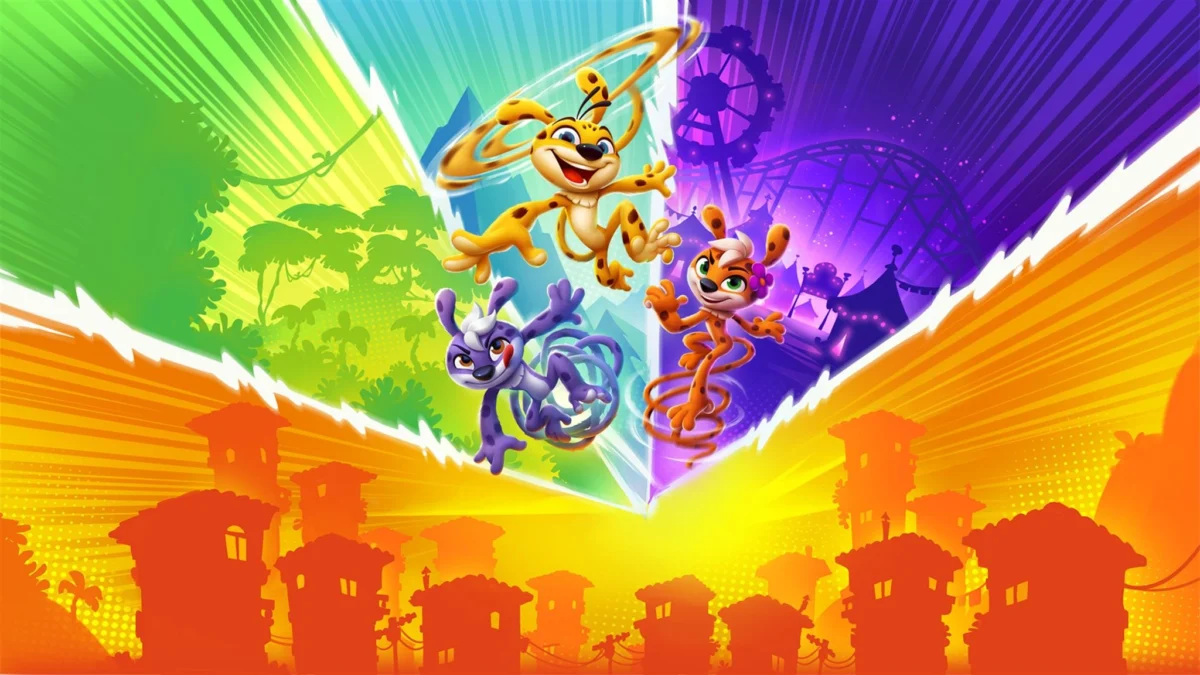
Following the global industry gathering at Gamescom, developer Ocellus Studio and publisher Microids have released their latest 2D platforming title, Marsupilami 2 – Salsa Palombia. This sequel arrives as a direct successor to the well-received Marsupilami: Hoobadventure, aiming to further refine the fluid movement and high-fidelity visual style that have become hallmarks of the studio. As the platforming genre continues to see a resurgence through both indie innovations and established mascot revivals, this latest entry seeks to balance accessible gameplay with mechanical depth, catering to both casual family audiences and dedicated genre enthusiasts.

Narrative Premise and Environmental Setting
The story of Marsupilami 2 – Salsa Palombia returns players to the lush, vibrant reaches of the Palombian forests. The narrative catalyst involves the three primary protagonists—Hope, Twister, and Punch—whose rest is interrupted by an unexpected invasion. A group of music-obsessed mummies emerges from a mysterious portal, utilizing rhythmic spells to possess the local inhabitants. This supernatural musical influence transforms the forest’s denizens into "possessed zombies" whose only drive is to succumb to the urge to dance.
Unlike many contemporary platformers that rely on complex, dark narratives, Ocellus Studio maintains the whimsical and lighthearted tone associated with the original Marsupilami comic strips created by André Franquin in 1952. The game’s objective is structured around the retrieval of musical notes, which serve as the primary currency for progression. Players must navigate four distinct worlds, each featuring its own unique note type, culminating in a confrontation with the mummy antagonists to restore order to the jungle.

Character Mechanics and the Unified Controller System
A central pillar of the gameplay experience is the implementation of a unified character controller. While Hope, Punch, and Twister share the same fundamental movement physics and jump arcs, they are distinguished by unique special abilities that fundamentally alter how the player interacts with level hazards. This design choice ensures that players do not have to relearn basic movement when switching characters, yet must remain tactically aware of which ability is best suited for the immediate obstacle.
The game utilizes a tag-team system where each level assigns two of the three marsupials to the player. By utilizing the "Y" button (on standard controllers), players can swap between characters instantaneously. This mechanic is not merely cosmetic; it is integrated into the level design to facilitate advanced platforming maneuvers.

Distinctive Character Abilities:
- Twister: Features a horizontal leap that allows for rapid traversal. His ability allows him to bypass specific horizontal hazards that would otherwise impede progress.
- Punch: Functions as the "bouncy" member of the trio. Punch can transform into a ball, allowing for verticality and, crucially, immunity to spiked surfaces. This spike immunity extends to boss encounters, providing a strategic advantage during combat phases.
- Hope: Provides a specialized high leap. Her unique trait allows her to maintain balance and hop atop flaming enemies, turning potentially lethal obstacles into temporary platforms.
The interaction between these abilities encourages a high degree of experimentation. While the game does not always mandate character swapping to reach the end of a level, the discovery of secrets and the optimization of boss encounters often rely on the player’s ability to cycle through the roster effectively.
Level Design and Progression Structure
Marsupilami 2 – Salsa Palombia is divided into four primary worlds, a structure that mirrors the pacing of classic 16-bit era platformers while utilizing modern design sensibilities. Each world introduces specific gimmicks and mechanics that are introduced early and iterated upon throughout the zone. According to early gameplay analysis, these gimmicks are designed to provide variety without becoming "obnoxious" or overstaying their welcome.

The progression system is notably streamlined for casual players. Each world has a dedicated musical note to collect, preventing the "collect-a-thon" fatigue often found in 3D platformers. However, a layer of challenge remains for completionists, as the final world imposes a specific note requirement, necessitating a thorough exploration of previous levels.
Checkpoints are placed frequently throughout each stage, reducing the frustration associated with failure. In a move toward modern accessibility, the developer has included an "infinite life" mode. This allows players to bypass the traditional "Game Over" state, focusing instead on the joy of movement and exploration. Furthermore, the inclusion of a local two-player mode suggests a focus on cooperative family play, a demographic that Microids has consistently targeted with its licensed IP portfolio.

Technical Execution and Aesthetic Cohesion
Visually, Marsupilami 2 – Salsa Palombia represents a significant achievement for Ocellus Studio. The studio, which has previously contributed art assets to high-profile titles such as Sackboy: A Big Adventure, brings a level of polish to the 2D space that rivals major first-party productions. The animations are highly reactive; enemies do not simply cycle through static loops but respond with specific "attack" animations when the player enters their proximity.
The auditory experience is equally central to the game’s identity, given the musical themes of the plot. The soundtrack transitions between electrifying guitar riffs and rapid percussion, syncing with the fast-paced nature of the gameplay.

From a technical performance standpoint, the game has been optimized for a variety of hardware configurations. Testing on Windows 11 desktop environments and handheld devices like the ROG Ally (running the Linux-based Bazzite OS) indicates a stable framerate and responsive input handling. This cross-platform stability is crucial for a genre where frame-perfect jumps are often the difference between success and failure.
Comparative Analysis and Industry Context
In the broader context of the 2D platforming market, Marsupilami 2 – Salsa Palombia occupies a middle ground between the extreme difficulty of titles like Crash Bandicoot 4: It’s About Time and the more relaxed pace of Kirby or Yoshi titles. While the source material notes that the game "isn’t a difficult game," it avoids the pitfall of being unengaging by rewarding players who master the character-swapping mechanics.

The developer’s decision to avoid "inane challenges" and forced backtracking is a deliberate departure from the design philosophy of other modern mascots. By focusing on flow and "hype," Ocellus Studio has created a title that prioritizes the player’s momentum. This approach aligns with the "Neo-Retro" movement in gaming, which seeks to capture the spirit of 90s platformers while removing the technical limitations and "player-hostile" designs of that era.
Official Positioning and Market Impact
Microids has positioned Marsupilami 2 – Salsa Palombia as a key title in its 2026 lineup, aiming to capture the late-year family market. By leveraging a classic European comic book license and pairing it with high-end production values, the publisher is continuing its strategy of revitalizing Franco-Belgian "Bandes Dessinées" (BD) properties for a global gaming audience.

Initial reactions from the gaming community and critics suggest that the title succeeds in its goal of being a "solid, packed little platformer." Its accessibility features, combined with the depth of the character controller, make it a versatile recommendation for both "2D platforming enthusiasts and families looking to do more than just the odd obby."
As the industry moves toward increasingly complex and service-based models, the arrival of a focused, polished, and traditionally structured 2D platformer serves as a reminder of the genre’s enduring appeal. Marsupilami 2 – Salsa Palombia does not attempt to reinvent the wheel; instead, it applies a high-gloss finish and rhythmic energy to a proven formula, ensuring that the legacy of the Palombian marsupial remains relevant in the modern gaming landscape.