


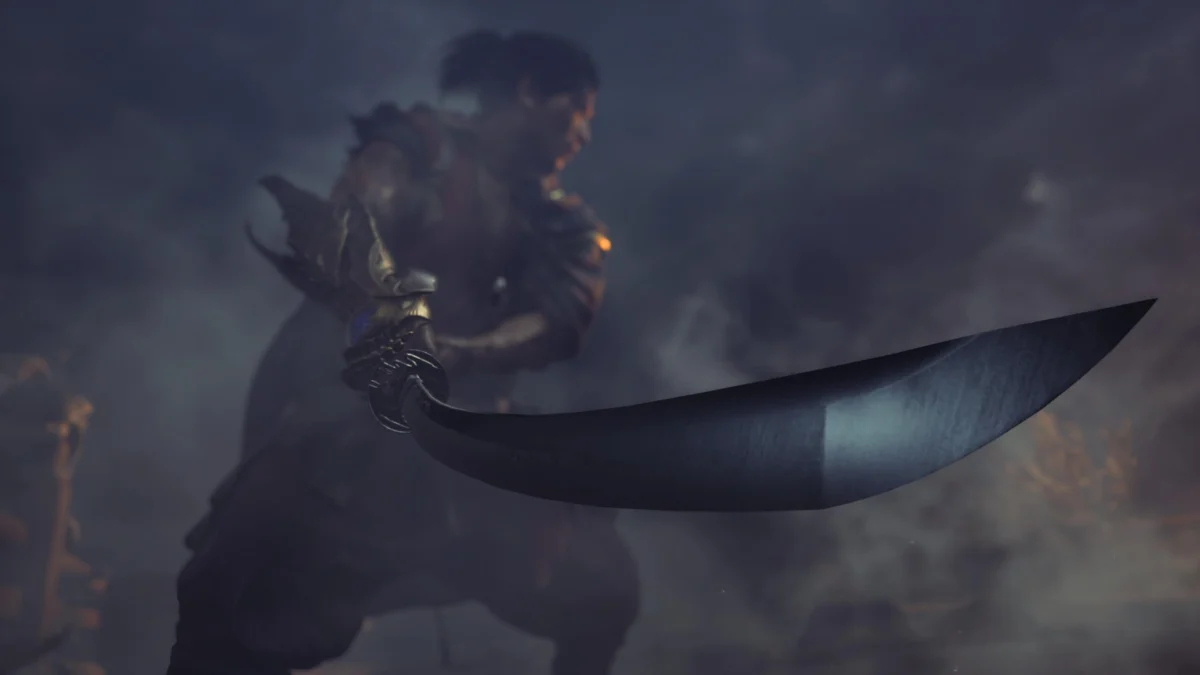
Nearly two decades after its last major installment, the Onimusha franchise makes a dramatic return with Onimusha: Way of the Sword, a title that attempts to bridge its legacy as an action-arcade series with the demanding, parry-precise combat mechanics popularized by contemporary Soulslike games. This revival mirrors the narrative of Captain America, a hero frozen in time only to awaken in a drastically altered world, forced to adapt to new paradigms. Onimusha: Way of the Sword stands as a testament to this adaptation, offering a world teeming with fantastical demons and demanding swordplay that aims to satisfy fans of titles like Elden Ring while retaining a distinct identity.
The game’s reception has been largely positive regarding its core combat, which manages to strike a balance between allowing for more accessible button-mashing during chaotic encounters and heavily rewarding—and often requiring—meticulous timing and precision. However, this satisfaction is tempered by observations of increasing repetition in later stages and some frustrating boss encounter designs, which critics note can grate on the overall experience. The initial thrill of expertly deflecting attacks and masterfully cutting down demonic foes can give way to a sense of grind when faced with numerous similar skirmishes and identical tasks, particularly against basic enemies encountered repeatedly between save points.
The Franchise’s Dormancy and the Rise of Soulslikes

The original Onimusha series, primarily flourishing on the PlayStation 2 in the early 2000s, carved out a niche with its unique blend of historical Japanese settings, supernatural elements, and hack-and-slash gameplay. Titles like Onimusha: Warlords (2001), Onimusha 2: Samurai’s Destiny (2002), and Onimusha 3: Demon Siege (2004) were known for their fixed camera angles, emphasis on absorbing souls for power-ups, and cinematic combat sequences featuring famous actors like Takeshi Kaneshiro and Jean Reno. The series enjoyed critical and commercial success, contributing to Capcom’s reputation for innovative action games. However, after Onimusha: Dawn of Dreams (2006), the franchise entered a prolonged hiatus, coinciding with a broader shift in the gaming landscape.
During this dormancy, a new subgenre, the Soulslike, emerged and eventually dominated the action RPG space. Pioneered by FromSoftware’s Demon’s Souls (2009) and Dark Souls (2011), these games redefined challenge and player engagement through demanding combat, intricate world design, cryptic storytelling, and a strong emphasis on precise timing, pattern recognition, and punishing difficulty. Titles like Bloodborne (2015), Sekiro: Shadows Die Twice (2019), and the monumental Elden Ring (2022) solidified the Soulslike formula as a benchmark for modern action experiences, influencing countless other developers. Capcom, known for its strategic revivals of classic IPs like Resident Evil and Monster Hunter, likely observed this trend closely, recognizing the potential to reintroduce Onimusha to a new generation of players accustomed to these demanding mechanics.
Gameplay Evolution: Precision and Adaptation
Onimusha: Way of the Sword positions itself within this evolving genre by updating its core swordplay to align with the precision-parry systems prevalent in Soulslikes. This choice is particularly apt given the protagonist, Miyamoto Musashi, a legendary duelist whose historical prowess translates well into a combat system demanding exacting timing. The game’s combat loop heavily relies on parrying incoming attacks to whittle down enemy stamina meters, opening them up for devastating climactic strikes. This contrasts with the more freeform action of earlier Onimusha titles, offering a deeper, more tactical engagement.

However, the game’s adherence to certain Soulslike tropes has drawn scrutiny. Critics question the necessity of nearly every boss possessing two health bars and a second, often more aggressive, phase. Similarly, the frequent requirement to deplete a boss’s stamina with parries for significant damage, reminiscent of Sekiro‘s posture system, is a design choice that, while effective in Sekiro, feels less integrated here. The rapid alternation between unblockable attacks (requiring parries) and those necessitating dodges, sometimes with ambiguous telegraphing, can lead to frustrating trial-and-error gameplay that many Soulslike purists embrace but can alienate those seeking a more traditional action experience.
To mitigate potential frustration, Capcom has included multiple difficulty settings, allowing players to switch between them on the fly without penalty. This accessibility feature is a notable departure from the rigid difficulty often associated with Soulslikes and offers a welcome reprieve for players who encounter insurmountable challenges, such as particularly tough boss fights like the one against Musashi’s rival, Ganryu. While this offers a pathway for all players to experience the narrative, it implicitly acknowledges that the core "action" difficulty might be overly demanding for some.
Narrative and Character: A Fantastical Retelling
The game’s narrative distinguishes itself amidst a resurgence of titles set in feudal Japan, including Sekiro: Shadows Die Twice, Assassin’s Creed: Shadows, and Ghost of Yotei. Onimusha: Way of the Sword offers a fantastical reimagining of historical figures, placing players in the role of a younger, uncouth Miyamoto Musashi. Portrayed as skilled with a blade but lacking refined manners, Musashi initially prioritizes strength above all else. His untimely death at the hands of demons and subsequent rebirth through the iconic, soul-gathering Oni gauntlet thrusts him into a war against a demon horde threatening the human world.

This premise provides a compelling backdrop for Musashi’s character development. The narrative introduces a colorful cast of companions who challenge his lone wolf mentality and rough edges. These include Shizuka, an elegant Oni trapped within his gauntlet; Takamura, a wise warrior wielding his own spirit gauntlet; and Okuni, a nimble kabuki dancer seeking vengeance. Even the ghost of the famed Japanese author Murasaki Shikibu plays a role, enlisting Musashi to solve peasant problems to gather material for her tales, often involving her "fluffy story-ferrying spirit hounds."
The central plot revolves around Musashi’s pursuit of Minamoto no Yoshitsune, a renowned samurai general who has seized control of Hell and unleashed his Genma demon army across Japan. It is Yoshitsune who revives Musashi with the Oni gauntlet, but he also grants similar power to Ganryu, Musashi’s self-proclaimed rival, who becomes increasingly corrupted by the gauntlet’s influence. Ganryu serves as a "dark mirror," representing the dangers of unchecked pursuit of strength. Musashi’s journey is shaped by the nobler influences of his companions; a poignant scene sees Takamura reminding him of the Buddhist concept of suffering as an inherent part of life, and the value in embracing its challenges—a thematic thesis for the game, albeit one that inadvertently applies to enduring repetitive combat sequences to reach more climactic moments.
World Design and Environmental Critique
The game’s setting primarily revolves around an expansive Eastern Kyoto, the imperial capital, which players navigate for much of the estimated 15-hour playtime. While exploring the city’s dirt streets and purging Genma scum initially offers enjoyment, the persistent respawn of enemies every time players save at a Spirit Mirror (the game’s equivalent of a Dark Souls bonfire) contributes to the sense of repetition. These Spirit Mirrors also facilitate teleportation, allowing players to traverse various corners of the city, tackling shrines and tough enemies. However, the limited variety in environmental design, with many new zones bearing striking resemblance to previously visited areas, contributes to a feeling of weariness as the game progresses.

This perceived recycling of assets and gameplay loops suggests a shrewd budget at play, with development resources prioritized on refining the combat system and ensuring cinematic finishers for every encounter. While the combat itself is largely tight and satisfying, the most novel and exciting highlights within the game often feel too brief and infrequent, leaving players wishing they were the norm rather than the exception.
One standout sequence, frequently showcased in pre-release demos, involves Musashi entering a vibrantly colored courtyard, seemingly a spirit realm, populated by cheerfully mutilated individuals. Here, a powerful Genma preys on the populace, offering macabre solutions to their petty problems by grotesquely altering their bodies. The subsequent boss fight against this fiend, with its massive body-slicing shears and a face full of mismatched grinning mouths, is lauded for its strong thematic integration and engaging combat. However, such potent combinations of atmosphere, narrative, and boss design are regrettably rare in the game’s first half.
Other environmental choices also raise questions about consistency. An underground laboratory featuring anachronistic mechanical elevators, to which Musashi himself comments, feels like a deliberate nod to Capcom’s Resident Evil franchise. While such Easter eggs can be charming, they occasionally disrupt the immersion in the feudal Japanese setting, highlighting a potential tension between genre homage and maintaining a cohesive world.
Implications for the Onimusha Franchise and Capcom’s Future Strategy

Onimusha: Way of the Sword represents a critical juncture for the long-dormant franchise. Capcom’s decision to revive Onimusha and adapt its gameplay to contemporary Soulslike trends reflects a broader industry strategy of leveraging established intellectual properties while catering to modern player expectations for challenging, skill-based combat. The commercial and critical performance of Way of the Sword will undoubtedly influence the future direction of the series, determining whether this revival is a one-off experiment or the beginning of a new chapter for Onimusha.
The game’s strengths lie in its fundamentally satisfying sword fighting, its distinct fantastical interpretation of Japanese history, and its charismatic portrayal of a younger Miyamoto Musashi. However, its tendency to lean heavily on Soulslike tropes, particularly in boss design and environmental repetition, suggests a cautious approach that might have prevented it from forging a truly radical new path. While it successfully offers an alternative within the Soulslike-influenced action genre, it arguably stops short of fully distinguishing itself with more of its own unique brand of "funky powers," deeper demon politics, or a more sustained exploration of Musashi’s morally ambiguous character before his eventual hero’s journey.
In conclusion, Onimusha: Way of the Sword is a competent and engaging update to a beloved franchise. It successfully integrates modern action mechanics to deliver a demanding yet rewarding combat experience. However, by often taking the "middle road" of compromise between its legacy and current genre trends, it leaves some wishing for a bolder, more distinct vision that fully unleashes the unique potential inherent in the Onimusha universe. Its release is a significant moment for fans and a crucial data point for Capcom as it continues to navigate the complex landscape of reviving classic IPs for a new generation.