


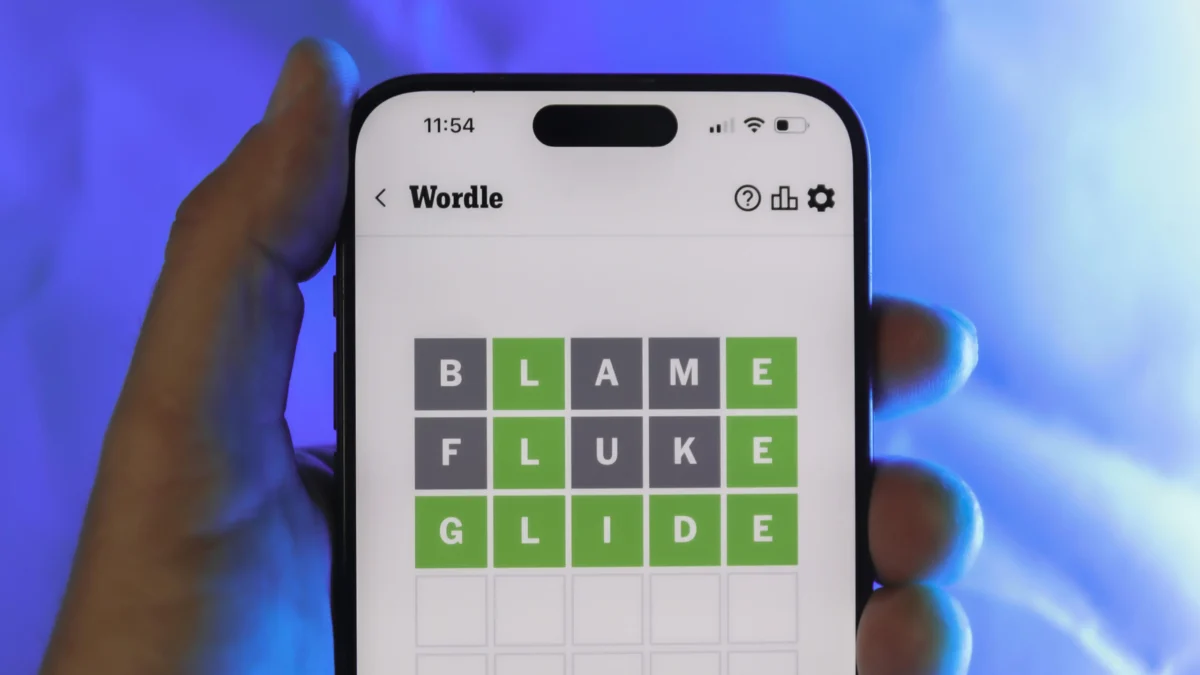
The daily digital lexicon challenge, Wordle, continues to captivate millions globally, offering a brief yet engaging mental exercise. Today’s solution, arriving on August 31, has been identified as a moderately straightforward puzzle, providing a welcome reprieve for many dedicated players. For those still wrestling with the five-letter enigma, the answer is MOUND. This follows yesterday’s solution, INTEL, for puzzle No. 1898 on August 30, underscoring the consistent rhythm of the game that has become a staple in countless daily routines.
The Daily Challenge: Unpacking Wordle No. 1899 (August 31)
The latest Wordle puzzle, No. 1899, presented a word that, while not immediately obvious to all, offered a clear path to deduction through its carefully crafted clues. The word, MOUND, is a common English term, referring to a rounded pile or raised heap of earth, stones, sand, or other materials. This definition was a critical hint for players nearing the solution.
The provided hints were structured to guide players systematically:
- No Repeated Letters: This crucial piece of information immediately eliminates a significant portion of the English lexicon, narrowing the field of potential words and preventing players from wasting guesses on words like "APPLE" or "BLOOD" (which notably was a recent answer). This hint often simplifies the search space considerably.
- Two Vowels: Identifying the number of vowels (A, E, I, O, U) is a cornerstone of Wordle strategy. With two vowels, players can prioritize words with a balanced vowel-to-consonant ratio, further refining their guesses. In "MOUND," the vowels are ‘O’ and ‘U’.
- Starts with M: Pinpointing the first letter provides an immediate anchor, allowing players to focus on a specific alphabetical segment of their mental vocabulary. ‘M’ is a relatively common starting letter, but combined with other hints, it becomes highly effective.
- Ends with D: Similarly, knowing the last letter offers another strong positional clue. ‘D’ is a frequent ending consonant in English words, and its combination with ‘M’ as the starting letter significantly reduces the possibilities.
- Meaning Hint: The contextual clue – "can refer to a rounded pile or raised heap of earth, stones, sand or other materials" – serves as the final, often decisive, piece of the puzzle. For players who have correctly identified several letters and their positions, this semantic hint usually confirms the solution.
The perceived "not terribly tough" nature of today’s Wordle likely stems from the commonality of the letters ‘M’, ‘O’, ‘U’, ‘N’, ‘D’ and the straightforwardness of the definition. Words composed of frequently occurring letters, especially in common positions, tend to be easier to solve than those featuring less common letters (like ‘Q’, ‘X’, ‘Z’) or unusual letter combinations.

Strategic Approaches to Wordle Mastery
While daily hints are helpful, seasoned Wordle players often employ a range of strategies to maximize their chances of solving the puzzle within the six-guess limit. These strategies often blend linguistic knowledge, statistical probability, and logical deduction.
- Optimal Starting Words: A cornerstone of Wordle strategy is the selection of an effective first word. Data analysis of the official Wordle word list reveals that words like "CRANE," "ADIEU," "SLATE," "RAISE," and "ARISE" are often cited as optimal choices. These words are rich in frequently used vowels (A, E, I, O, U) and common consonants (R, S, T, L, N). The goal is to uncover as many correct letters and their positions (green) or correct letters in incorrect positions (yellow) as possible in the initial guess, thus narrowing down the possibilities for subsequent attempts. For instance, "CRANE" tests for C, R, A, N, E, which are among the top-tier letters in English frequency.
- Second Guess Strategy: Following a strong first guess, the second guess should aim to test different high-frequency letters not used in the first word, particularly if the first guess yielded few clues. For example, if "CRANE" reveals nothing, a word like "BLIMP" or "FROTH" could introduce new common letters.
- Positional Logic: Understanding the feedback system is paramount. Green tiles mean the letter is correct and in the right position. Yellow tiles mean the letter is correct but in the wrong position. Gray tiles mean the letter is not in the word at all. Players must rigorously apply this feedback, eliminating possibilities and adjusting letter placements with each guess.
- Vowel and Consonant Balance: English words generally follow patterns of vowel and consonant distribution. A good strategy involves ensuring a balance of both in early guesses to quickly identify the word’s basic structure. The hint for Wordle No. 1899, specifying two vowels, directly taps into this aspect of strategy.
- Avoiding Traps: Players learn to avoid "gray-area" words that might fit multiple possibilities, especially when only a few letters remain. For example, if a player has "_ATCH" and has already determined ‘W’, ‘M’, ‘P’, ‘H’ are not in the word, they should be cautious about guessing "BATCH" if "CATCH," "LATCH," "MATCH," or "PATCH" are still viable. Focusing on words that test new letters rather than merely trying to confirm a partial word is often more effective.
The process of solving Wordle is a microcosm of linguistic and logical problem-solving, making it both accessible and profoundly engaging for a wide audience.
A Glimpse into Recent Wordle History
The sequence of Wordle answers provides a fascinating snapshot of the game’s ongoing challenges and the variety of words featured in its dictionary. The recent solutions illustrate the spectrum of difficulty and word types players encounter:
- August 30, No. 1898: INTEL – A common abbreviation for "intelligence" or "Intel Corporation." This word presents a good mix of common and less common letters, requiring careful deduction.
- August 29, No. 1897: BLOOD – A straightforward, high-frequency word, but with the challenging element of a repeated letter (‘O’). This often trips up players who rely solely on unique letter strategies.
- August 28, No. 1896: TWEEN – A contemporary term referring to pre-teenagers, which highlights Wordle’s inclusion of modern vocabulary alongside classic terms. It also features a repeated letter (‘E’).
- August 27, No. 1895: UNCUT – Another word with a repeated letter (‘U’) and a relatively common structure.
- August 26, No. 1894: CAPON – A less common word, referring to a castrated rooster fattened for eating. This type of word can be more challenging and often requires players to exhaust their options or rely heavily on positional clues.
The numbering system for these puzzles (e.g., No. 1898) suggests a long-running series, far predating the game’s public explosion in late 2021. This might indicate an internal numbering system or a specific Wordle variant being referenced. However, the core gameplay and puzzle format remain consistent, providing a familiar and engaging experience regardless of the specific sequence number. The daily release ensures a continuous stream of fresh challenges, maintaining player interest and engagement.
The Genesis of a Global Phenomenon: From Personal Project to Cultural Icon
Wordle’s journey from a personal project to a global phenomenon is a remarkable tale of viral success. The game was created by software engineer Josh Wardle for his partner, Palak Shah, who loved word games. Initially, it was a private game for them and their family.
- Initial Development (2021): Wardle first developed Wordle in 2021. He designed it to be simple, accessible, and free of distracting ads or complex mechanics. The core idea was a single daily word puzzle with six guesses.
- Public Release (October 2021): Wardle made the game publicly available in October 2021. Its simplicity and lack of monetization features made it instantly appealing.
- Viral Explosion (Late 2021 – Early 2022): The game’s popularity surged dramatically in late 2021 and early 2022, primarily driven by social media. A key innovation was the ability for players to share their results in a spoiler-free, emoji-based grid (the green, yellow, and gray squares). This visual representation of success (or struggle) became an instant meme and encouraged widespread sharing, sparking friendly competition and conversation across platforms like Twitter. By January 2022, millions were playing daily.
The game’s success can be attributed to several factors:
- Simplicity: Easy to understand rules and a clean interface.
- Accessibility: Browser-based, no app download required, free to play.
- Daily Limit: One puzzle per day creates anticipation and prevents binge-playing, preserving its novelty.
- Shareability: The iconic emoji grid fostered a strong social element.
- Cognitive Engagement: It’s a satisfying blend of vocabulary, logic, and deduction.
The New York Times Acquisition and Its Implications
The immense success of Wordle caught the attention of major media outlets. In January 2022, The New York Times Company announced its acquisition of Wordle from Josh Wardle for an undisclosed sum, reported to be in the "low seven figures."
- Motivation for Acquisition: For The New York Times, Wordle represented a significant opportunity to expand its digital games portfolio and attract new subscribers to its growing Games section, which already features popular puzzles like the Crossword and Spelling Bee. The acquisition was seen as a strategic move to boost digital subscriptions and engagement.
- Integration and Changes: The NYT committed to keeping Wordle free to play "initially." While it eventually moved to the NYT Games website, it largely retained its original free model. The transition was mostly seamless, though some users reported minor changes to the word list, with a few more obscure or potentially controversial words being removed. The core gameplay, user interface, and daily release schedule remained intact, much to the relief of its loyal player base.
- Statements from Involved Parties: At the time of the acquisition, Josh Wardle expressed his satisfaction that Wordle would be in the hands of The New York Times, a company he admired for its dedication to quality journalism and puzzles. He stated his desire for the game to remain accessible and free, a sentiment echoed by The New York Times. Jonathan Knight, general manager for The New York Times Games, emphasized the company’s commitment to maintaining the game’s integrity and appeal while integrating it into their broader suite of games.
The acquisition cemented Wordle’s status as a significant cultural phenomenon, demonstrating the value of simple, engaging digital content in today’s media landscape.

Broader Impact and Cultural Significance
Wordle’s impact extends far beyond a simple daily game; it has permeated popular culture and influenced the digital puzzle landscape.
- Cognitive Benefits: Playing Wordle regularly can offer cognitive benefits, including vocabulary expansion, improved pattern recognition, and enhanced logical deduction skills. The process of eliminating possibilities and testing hypotheses is a form of active mental exercise.
- Community and Social Connection: Wordle has fostered a unique sense of community. Millions of people around the world are tackling the same puzzle daily, creating a shared experience that sparks conversations, friendly competitions, and online camaraderie. It provides a simple, positive topic for interaction in an often-polarized digital world.
- Inspiration for Spin-offs: Wordle’s success has spawned numerous variations and inspired a new wave of daily puzzle games. These include:
- Quordle: Guessing four words simultaneously.
- Octordle: Guessing eight words simultaneously.
- Heardle: Guessing a song from short snippets.
- Nerdle: A mathematical version of Wordle.
- Worldle: Guessing a country from its outline.
These spin-offs demonstrate the enduring appeal of the core Wordle mechanic adapted to different domains.
- Pop Culture Integration: The iconic green, yellow, and gray squares have become instantly recognizable, appearing in memes, social media posts, and even mainstream media references, solidifying Wordle’s place in contemporary pop culture. It serves as a cultural touchstone, a shared daily experience that transcends demographics.
Expert Insights and Linguistic Analysis
The design of Wordle is not arbitrary; it’s rooted in linguistic principles and statistical analysis. Experts have delved into the game’s mechanics and word lists to understand its appeal and how it works.
- Word List Curation: The official Wordle word list is carefully curated. It contains common five-letter English words, avoiding obscure or offensive terms. This curation ensures that the puzzles are challenging but fair, relying on a vocabulary familiar to most native English speakers. The New York Times has continued this tradition, occasionally adjusting the list.
- Letter Frequency: The game inherently leverages the frequency of letters in the English language. Common letters like E, A, R, I, O, T, N, S, L, C, U, D, P are disproportionately represented in optimal starting words and often appear in solutions. Conversely, less frequent letters like Q, J, X, Z, K, V, B are less likely to be solutions, though their occasional appearance can make a puzzle significantly harder.
- Phonotactics and Morphology: The structure of English words (phonotactics – how sounds combine; morphology – word formation) also plays a role. Wordle’s solutions adhere to typical English word patterns, making them decipherable through logical deduction of letter combinations rather than pure guesswork.
- The Psychology of Puzzles: From a psychological perspective, Wordle offers a perfect balance of challenge and reward. The constraint of six guesses creates tension, while the eventual solution provides a satisfying sense of accomplishment. The daily nature fosters habit formation and positive reinforcement.
In conclusion, Wordle remains a testament to the power of simple, well-designed digital entertainment. From its humble beginnings as a personal project to its current status as a global phenomenon under The New York Times, it continues to provide a delightful daily challenge. The solution to today’s puzzle, MOUND, is just one more example of the engaging and accessible linguistic gymnastics that millions look forward to each day, reinforcing the game’s enduring appeal in an increasingly complex digital world.