


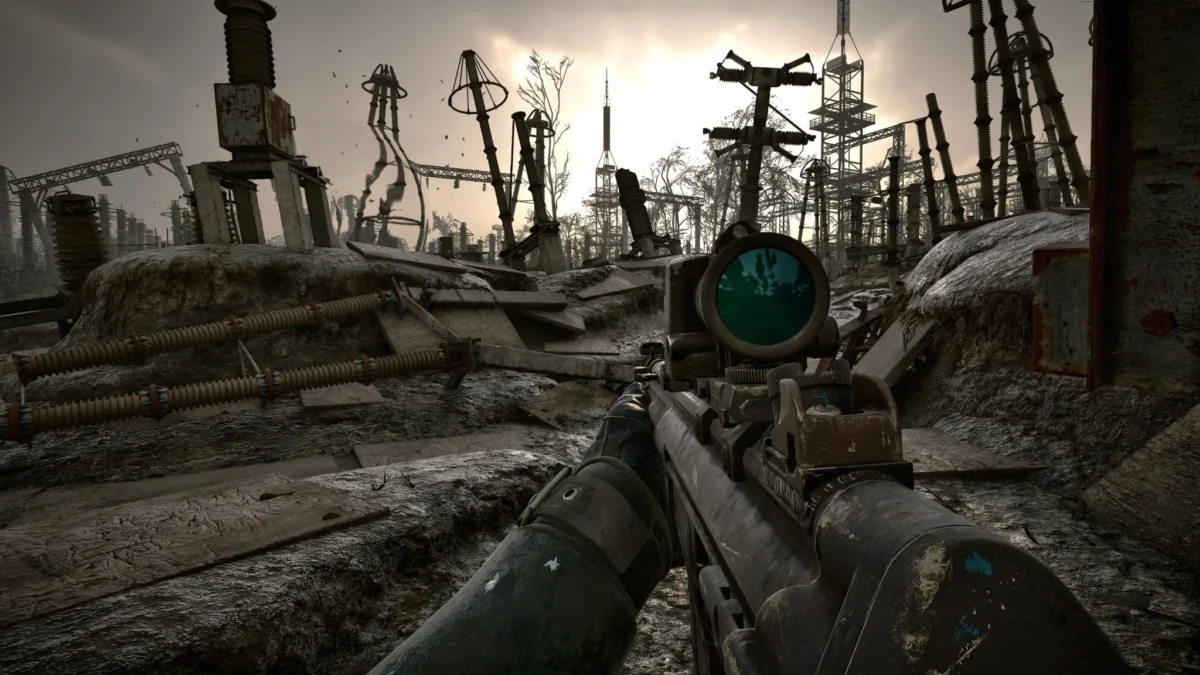
GSC Game World has officially released the highly anticipated 2.0 update for S.T.A.L.K.E.R. 2: Heart of Chornobyl, accompanied by the title’s first major narrative expansion, titled Cost of Hope. This dual release represents a significant milestone in the game’s post-launch lifecycle, mirroring the comprehensive overhaul strategies seen in contemporary titles such as Cyberpunk 2077’s Phantom Liberty. The update addresses the technical volatility that characterized the initial 1.0 launch while introducing substantial new content that deepens the lore of the Chornobyl Exclusion Zone. By migrating the project to a more advanced iteration of Unreal Engine 5 and refining the core artificial intelligence systems, the developers have sought to fulfill the ambitious promises made during the game’s protracted development cycle.

Technical Overhaul and Unreal Engine 5 Migration
The transition to Version 2.0 is defined primarily by a total overhaul of the game’s underlying architecture. GSC Game World has moved S.T.A.L.K.E.R. 2 to a newer branch of Unreal Engine 5, a move that has facilitated a more stable and visually cohesive experience. The most immediate impact of this migration is found in the game’s lighting and foliage systems. The new lighting model utilizes advanced global illumination techniques to create a more naturalistic distribution of light, particularly in the dense, overgrown areas of the Zone.
Foliage updates have moved beyond mere aesthetic improvements, with the new system allowing for more reactive and dense vegetation that integrates seamlessly with the game’s survival mechanics. In performance benchmarks conducted on high-end hardware—specifically a system equipped with an NVIDIA GeForce RTX 5080 and an AMD Ryzen 5800X—the game demonstrated a significant leap in efficiency. Running at 4K resolution with Deep Learning Super Sampling (DLSS) set to "Quality" mode, the title maintained a frame rate between 80 and 100 FPS at maximum settings. This is a marked improvement over the 1.0 version, which was frequently cited for its optimization issues and erratic frame delivery.

Beyond frame rates, the 2.0 update introduces refined atmospheric effects. A new, dynamic fog system has been implemented, which serves a dual purpose: enhancing the "creepy" aesthetic of the Zone and providing tactical opportunities for players. The fog now interacts with light sources and geometry in a way that allows players to use low-visibility conditions as cover during stealth encounters, adding a layer of depth to the game’s emergent combat.
The Evolution of the A-Life 2.0 System
A cornerstone of the S.T.A.L.K.E.R. franchise has always been the "A-Life" system, an ambitious AI framework designed to simulate a living, breathing ecosystem within the Exclusion Zone. In the initial launch of S.T.A.L.K.E.R. 2, the A-Life system was often criticized for immersion-breaking glitches, including NPCs and mutants "popping" into existence or constant, illogical firefights occurring without player intervention.

Version 2.0 introduces a modernized A-Life system that prioritizes naturalism and persistence. The frequency of open-world skirmishes has been rebalanced to ensure that the Zone feels active but not chaotic. NPCs now exhibit more logical movement patterns and survival behaviors, making the world feel like a cohesive environment rather than a series of scripted triggers. During extensive testing of the Cost of Hope expansion, the AI demonstrated a heightened ability to navigate complex terrain and respond to environmental hazards, contributing to a more predictable yet challenging gameplay loop.
Narrative Expansion: The Cost of Hope
The Cost of Hope DLC is integrated directly into the main campaign of S.T.A.L.K.E.R. 2, though it functions as a distinct narrative arc. The expansion’s timeline begins approximately one-quarter of the way through the primary story and concludes around the three-quarter mark. For returning players or those wishing to bypass previous content, GSC Game World has included an "Advance Start" option. This feature allows players to jump directly into the expansion with a pre-configured character, provided they make a pivotal campaign decision that sets the stage for the DLC’s events.

The narrative focuses on the long-standing ideological conflict between two of the Zone’s most prominent factions: Duty and Freedom. Duty, a paramilitary group dedicated to containing or destroying the Zone, finds itself at odds with Freedom, a faction that believes the Zone is a gift to humanity that should be studied and shared. The Cost of Hope takes players into previously inaccessible sectors, including the Iron Forest and the immediate vicinity of the Chornobyl Nuclear Power Plant (CNPP) itself.
The expansion is noted for its shift toward psychological horror. Many missions take place in claustrophobic, dimly lit environments that leverage the game’s new lighting engine. The reliance on equipment such as Night Vision Goggles (NVGs) becomes a central survival mechanic, as the "true black" levels provided by OLED displays can render some areas completely impassable without technological assistance. The story culminates in a major moral choice, leading to one of two distinct endings for the DLC, adding significant replay value to the package.

Chronology of Development and Community Response
The journey to S.T.A.L.K.E.R. 2 Version 2.0 has been one of the most documented in modern gaming history.
- Initial Launch (Version 1.0): Released to critical acclaim for its atmosphere but heavy criticism for its technical state. Players reported frequent crashes, broken quest lines, and severe performance degradation.
- Post-Launch Stabilization: GSC Game World released a series of hotfixes and minor patches aimed at "triage"—fixing game-breaking bugs and improving basic stability.
- The Migration Period: The development team began the process of moving the game to a more stable version of Unreal Engine 5, a complex task that required re-evaluating the game’s lighting and AI assets.
- Version 2.0 and Cost of Hope Release: The culmination of these efforts, providing a "soft relaunch" of the title.
While the update has been praised for its technical improvements, some legacy issues remain. The English voiceovers (VO) continue to be a point of contention among the community. While the actors provide earnest performances, critics and players alike have noted that the dialogue often lacks the natural flow required for deep immersion. As a result, many players have opted to use the native Ukrainian VO with English subtitles. However, this introduces a tactical challenge: in the heat of combat, players must divert their attention from the battlefield to read dialogue, which can be fatal in a game known for its high difficulty and punishing "S.T.A.L.K.E.R." settings.

New Gameplay Mechanics and Equipment
To support the expanded scope of the game, several new tools and weapons have been added. The inclusion of binoculars as a standard piece of equipment allows for better long-range scouting, a necessity given the increased scale of some of the expansion’s faction-based firefights. These large-scale encounters often involve multiple squads of mutants and rival factions clashing simultaneously, testing both the player’s tactical prowess and the game’s performance stability.
The expansion also emphasizes the importance of "Guides"—NPCs who facilitate fast travel across the Zone’s enormous map. Given the backtracking required by some of the Cost of Hope’s mission structures, utilizing these guides has become an essential strategy for efficient progression. Furthermore, the 2.0 update has introduced a variety of new anomalies and dizzying visual effects that trigger during high-intensity Zone events, further distinguishing the visual identity of the expansion areas.

Broader Impact and Industry Implications
The release of S.T.A.L.K.E.R. 2: Cost of Hope and Update 2.0 serves as a case study for the "redemption arc" model of game development. Following in the footsteps of titles like No Man’s Sky and Cyberpunk 2077, GSC Game World has demonstrated that a rocky launch can be mitigated through sustained post-launch support and a willingness to overhaul core systems.
From a technical standpoint, the successful migration to a newer UE5 branch highlights the flexibility of the engine but also underscores the hardware-intensive nature of next-generation survival titles. The requirement for high-end GPUs to achieve optimal performance suggests that the "True Zone" experience remains a premium endeavor.

For the S.T.A.L.K.E.R. franchise, this update solidifies the sequel’s position as a foundational entry that can support years of future content. By blending traditional survival mechanics with high-fidelity horror and faction-based storytelling, GSC Game World has reclaimed the series’ identity as a leader in the atmospheric shooter genre. The Cost of Hope expansion, with its focus on the iconic Iron Forest and CNPP, serves as both a love letter to long-time fans and a polished entry point for newcomers, marking a definitive turning point for the Heart of Chornobyl.