


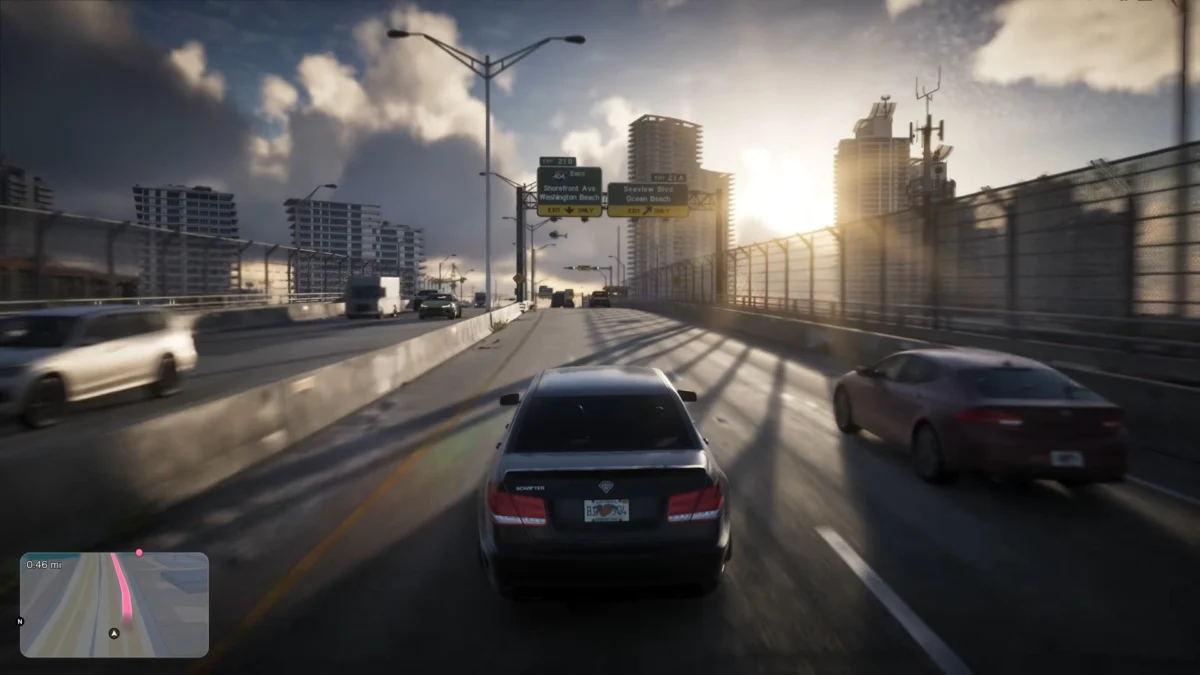
The highly anticipated "Extended Look" footage for Grand Theft Auto 6, a recent 26-minute gameplay showcase, has sparked intense technical analysis, particularly from the esteemed experts at Digital Foundry. Following its release, their in-depth examination of the PlayStation 5 footage has garnered significant attention, providing preliminary insights into the game’s potential performance targets for its eventual release. The findings suggest that Rockstar Games is aiming for an internal rendering resolution of 1440p, with a largely stable 30 frames per second (FPS), prioritizing visual fidelity and world complexity over higher frame rates on current-generation console hardware.
The "Extended Look" and Initial Impressions
The "Extended Look" presentation was, by all accounts, a monumental event, offering the most comprehensive glimpse yet into the sprawling world and intricate mechanics of Grand Theft Auto 6. Millions of viewers worldwide dissected every frame, eager to understand the technical prowess Rockstar Games is bringing to its next-generation title. From the initial impressions, the footage showcased an unprecedented level of detail in character models, environmental rendering, and dynamic interactions, further cementing the game’s status as one of the most ambitious projects in gaming history.
Digital Foundry, renowned for its meticulous technical breakdowns of video games, quickly turned its analytical lens to the preview. Their "Extended Look analysis" delves deep into the visual and performance characteristics observed, providing a data-driven perspective on what players can expect from the full game. Their initial report emphasized the extraordinary visual quality, highlighting advancements in several key areas of rendering technology.
Digital Foundry’s Technical Deep Dive: Visual Fidelity
The analysis from Digital Foundry lavished praise on various aspects of GTA 6’s graphical presentation. Specific attention was drawn to the sophisticated character rendering, which reportedly achieves a level of realism rarely seen in open-world titles. This includes highly advanced hair simulation, contributing to lifelike character appearances, and intricate skin shading that reacts dynamically to lighting conditions, enhancing immersion.
Furthermore, the report highlighted the game’s use of cutting-edge lighting techniques. Specular reflections, which govern how light bounces off shiny surfaces, appeared remarkably accurate, adding to the environmental realism. Perhaps most impressive was the implementation of diffuse global illumination, a complex lighting model that simulates how light interacts with surfaces and bounces around a scene, creating incredibly natural and vibrant environments. These elements collectively paint a picture of a game pushing the boundaries of real-time rendering on current console hardware.
Resolution and Upscaling: A Detailed Examination
One of the most significant revelations from Digital Foundry’s analysis pertains to the game’s internal rendering resolution. According to their pixel-counting methodology, the PlayStation 5 footage from the "Extended Look" appeared to be running at a native 1440p resolution. Crucially, the analysis indicated no strong evidence of Dynamic Resolution Scaling (DRS) being actively used within the preview footage. DRS is a technique commonly employed in games to dynamically adjust the rendering resolution based on the GPU workload, aiming to maintain a consistent frame rate. Its apparent absence suggests Rockstar is confident in maintaining a fixed resolution target.
Moreover, Digital Foundry found "no strong evidence of modern temporal upscalers such as FSR 2 or TAA upscaling being used." Temporal upscaling techniques like AMD’s FidelityFX Super Resolution 2 (FSR 2) or Temporal Anti-Aliasing (TAA) upscaling leverage data from previous frames to reconstruct a higher-resolution image from a lower-resolution render, often resulting in a sharper and more stable presentation than traditional spatial upscaling.
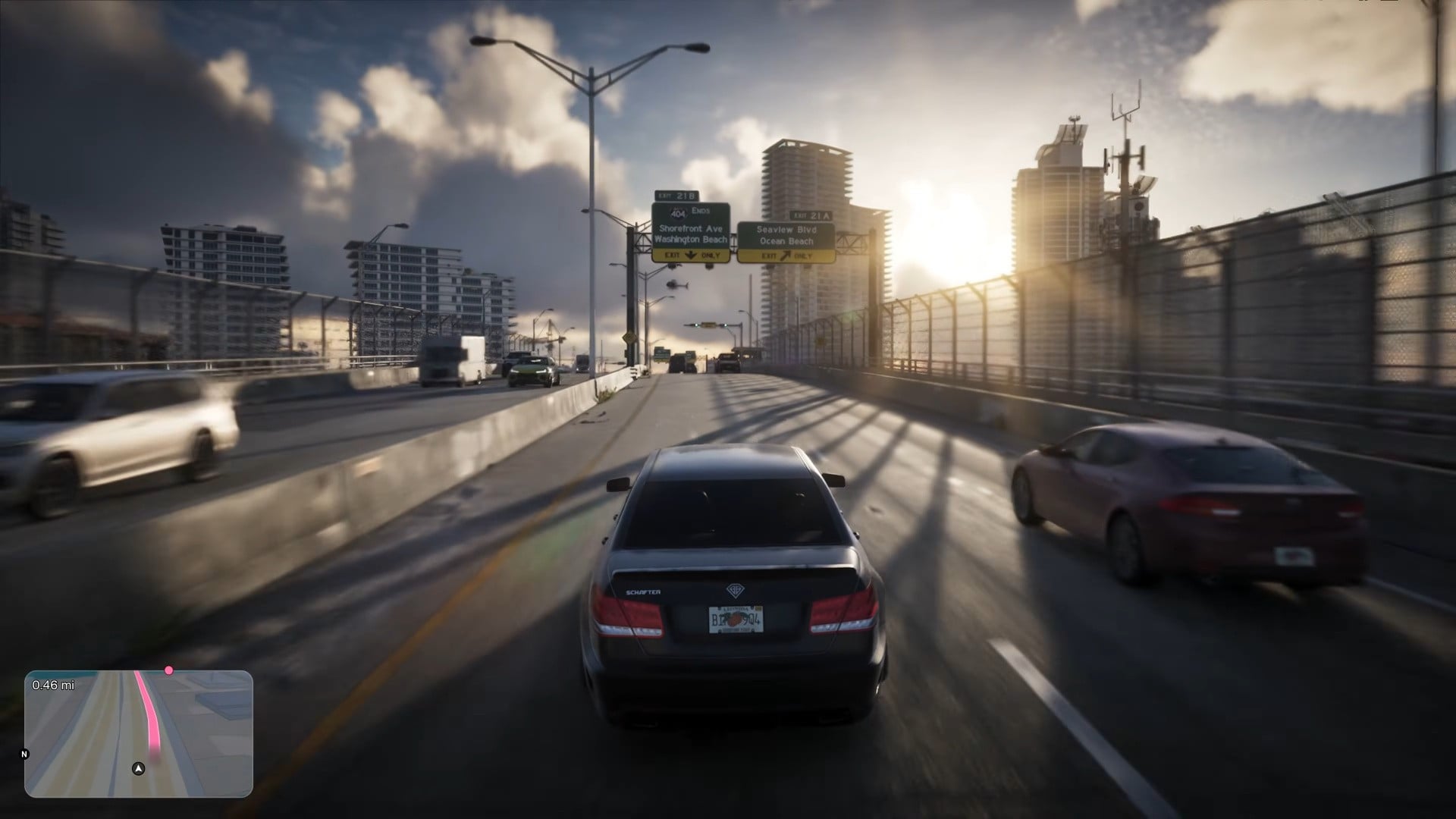
Instead, the image observed in the "Extended Look" preview was described as appearing "very much like a relatively straightforward spatial upscale from 1440p to 4K." Spatial upscaling, while common, involves simply scaling up the rendered image to fit a higher resolution display without the advanced reconstruction techniques of temporal upscalers. This method, while less computationally intensive, can introduce a "degree of softness, visible geometric aliasing and shimmer on fine details" when viewed on a 4K display. The report further noted that elements of real-time ray tracing (RT) in certain scenes exacerbated these artifacts, leading to "noisy, smeared reflections that can look worse than older screen-space solutions in some static comparisons." This detailed observation provides critical insight into the visual trade-offs made to achieve the game’s ambitious graphical targets.
Performance Targets: The 30 FPS Lock
In terms of performance, Digital Foundry categorized the "Extended Look" footage as exhibiting a "relatively stable and well-paced 30FPS output, with only very occasional single frame drops." This finding suggests that Rockstar Games is targeting a consistent 30 frames per second experience for Grand Theft Auto 6 on current-generation consoles. The analysis highlighted the stability of this target, noting that the performance appeared more consistent than the launch performance of Grand Theft Auto V on the Xbox 360, a testament to Rockstar’s optimization efforts.
The decision to target 30 FPS for a major title in 2025, while increasingly common for visually demanding open-world games, is a point of frequent debate among the gaming community. However, Digital Foundry’s report offers a strong technical rationale for this choice. They explicitly stated that a 60 FPS version of the game is "extremely unlikely on console hardware." The reasoning centers on the immense computational demands of GTA 6’s expansive world and detailed simulation.
"The evidence suggests that the game maintains its 33.3ms cadence with care," the report elaborated, referring to the time allocated for rendering each frame at 30 FPS. "Rockstar has clearly spent immense effort balancing CPU and GPU workloads to fully saturate the hardware. That makes a 60fps version extremely unlikely on console hardware – there’s no way to regain enough GPU and particularly CPU time to make a 16.7ms update rate work without compromising the world."
This statement underscores a fundamental challenge in modern game development, particularly for open-world titles. Achieving 60 FPS (requiring a frame to be rendered every 16.7 milliseconds) demands significantly more processing power from both the Graphics Processing Unit (GPU) and, critically, the Central Processing Unit (CPU). Open-world games like GTA 6 place immense strain on the CPU to manage thousands of AI routines, physics simulations, streaming assets, and complex world logic. Doubling the frame rate would necessitate halving the time available for these CPU-bound tasks, a feat that would likely require significant compromises to the game’s world density, AI complexity, and overall simulation fidelity – elements that are core to the Grand Theft Auto experience.
Hardware Considerations: PS5, Xbox Series X, and the PS5 Pro
The analysis from Digital Foundry was specifically based on PlayStation 5 footage. However, the outlet clarified that their assessment was centered around the base PS5 model, rather than the recently released PS5 Pro. Given the architectural similarities and comparable performance profiles between the PlayStation 5 and Xbox Series X, it is widely expected that the Xbox Series X will deliver a similar performance target: an internal 1440p resolution upscaled to 4K, running at a stable 30 FPS. Both consoles share similar AMD Zen 2 CPU and RDNA 2 GPU architectures, making their performance envelopes largely equivalent for demanding titles.
The mention of the PS5 Pro, however, opens up a new layer of speculation. While the base PS5 footage suggests 30 FPS, the enhanced capabilities of the PS5 Pro, with its more powerful GPU and potentially faster CPU, could theoretically allow for improved performance. Whether this translates to a 40 FPS mode, a more stable 30 FPS with enhanced visual effects, or even a targeted 60 FPS mode (albeit with resolution or fidelity compromises) remains to be seen. Historically, developers often target the lowest common denominator for console releases to ensure a consistent experience across the installed base, with "Pro" versions sometimes offering performance or quality boosts. Rockstar’s approach to optimizing for the base PS5 will likely dictate how any potential PS5 Pro enhancements are implemented.
Historical Context: Rockstar’s Legacy of Pushing Boundaries
Rockstar Games has a long-standing reputation for developing games that push the technical boundaries of their respective console generations. From Grand Theft Auto III’s groundbreaking 3D open world to Grand Theft Auto V’s unprecedented scale and detail, and Red Dead Redemption 2’s hyper-realistic environments and character animations, each major release has served as a benchmark for technical achievement.

The decision to target 1440p/30FPS for GTA 6 aligns with this historical trend. Rather than sacrificing the richness and complexity of their meticulously crafted worlds for a higher frame rate, Rockstar has consistently opted to maximize visual fidelity and environmental detail. Red Dead Redemption 2, for example, also launched with a 30 FPS target on base PS4 and Xbox One, a testament to its demanding graphical output. Even on current-gen consoles, many graphically intensive open-world titles, such as Starfield, have launched with a 30 FPS cap to maintain visual integrity and world simulation. This approach reflects a conscious trade-off that many developers of expansive, visually driven games make, prioritizing the immersive quality of the world over the fluidity of movement that 60 FPS provides.
Player Expectations and Industry Trends
The discourse surrounding 30 FPS versus 60 FPS has been a staple of console gaming debates for years, intensifying with each new generation of hardware. While some players prioritize the responsiveness and smoothness of 60 FPS gameplay, others are more tolerant of 30 FPS if it means a significantly richer and more detailed visual experience. For a game like Grand Theft Auto, where exploration, narrative, and cinematic presentation are paramount, a stable 30 FPS can often be deemed acceptable by a large segment of the audience, especially if the visual quality is exceptional.
This perceived target for GTA 6 also reflects broader industry trends. As game worlds become increasingly complex, featuring more advanced physics, AI, lighting, and environmental effects, the computational overhead grows exponentially. Current-generation consoles, while powerful, still operate within specific thermal and power envelopes. Developers are constantly balancing these constraints against their creative ambitions. The prevalence of performance and fidelity modes in many modern games highlights this ongoing struggle, offering players a choice between higher frame rates at lower resolutions/settings or enhanced visuals at a lower frame rate. For GTA 6, it appears Rockstar might be leaning heavily towards the latter, delivering a singular, highly optimized experience that maximizes graphical impact.
Broader Implications for Game Development
The preliminary findings from Digital Foundry regarding GTA 6’s performance have several broader implications for the game development landscape. Firstly, it reinforces the idea that even with current-generation hardware, achieving truly next-gen visual fidelity in expansive open worlds often necessitates a 30 FPS target. This sets expectations for other highly anticipated titles that aim for similar levels of graphical realism and world complexity.
Secondly, it highlights the continued importance of CPU optimization in open-world titles. The emphasis on CPU time as a limiting factor for 60 FPS in GTA 6 suggests that developers will continue to invest heavily in multi-threading, intelligent asset streaming, and efficient AI systems to push the boundaries of world simulation without crippling performance.
Finally, the discussion around potential PS5 Pro enhancements underscores the evolving nature of console cycles. Mid-generation upgrades like the PS5 Pro and Xbox Series X refresh could become increasingly vital for developers seeking to offer higher frame rates or even greater visual fidelity without compromising the base console experience. For a title as significant as GTA 6, its performance on both standard and enhanced hardware will be a critical talking point throughout its lifecycle.
Conclusion and Outlook
While the "Extended Look" was merely a preview, and the final game’s performance could still see further optimization, Digital Foundry’s analysis provides a highly credible indication of Rockstar Games’ current targets. An internal 1440p resolution (spatially upscaled to 4K) at a stable 30 FPS appears to be the most likely scenario for Grand Theft Auto 6 on current-generation consoles like the PS5 and Xbox Series X.
This approach reflects Rockstar’s unwavering commitment to delivering an unparalleled visual experience and a richly detailed, immersive world, even if it means adhering to a frame rate that some players might find less than ideal. As the game inches closer to its anticipated 2025 launch, further technical details and potentially more refined performance metrics will undoubtedly emerge. For now, the analysis of the "Extended Look" sets a clear expectation for a visually stunning, technically ambitious title that will push the boundaries of what current console hardware can achieve within a 30 FPS framework. The ultimate test, however, will be in the hands of players when the full game rolls around, to experience firsthand the meticulous balance Rockstar has struck between graphical grandeur and performance stability.