


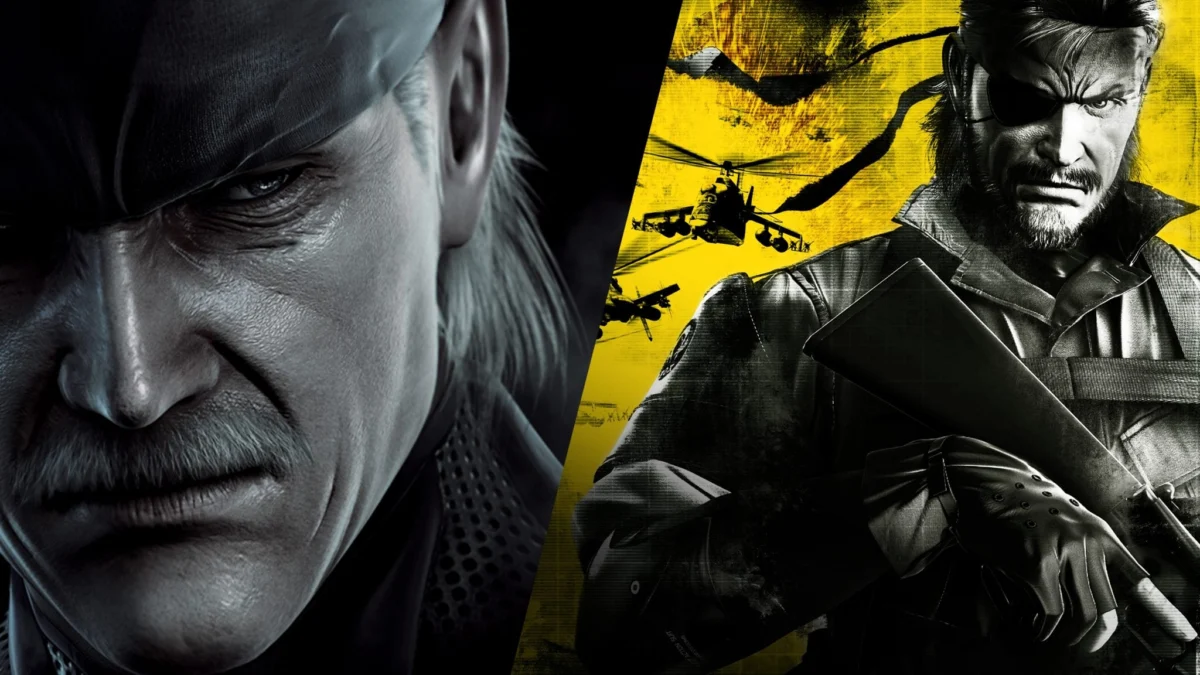
Konami Digital Entertainment has officially released Metal Gear Solid: Master Collection Vol.2, a comprehensive anthology that marks the first time several landmark titles in the stealth-action genre have been made available on contemporary gaming hardware. This second volume is headlined by the long-awaited port of Metal Gear Solid 4: Guns of the Patriots, a title that has remained a functional exclusive to the PlayStation 3 console since its initial launch in June 2008. The collection also includes Metal Gear Solid: Peace Walker, originally a PlayStation Portable (PSP) title, alongside various legacy materials and bonus content intended to preserve the complex history of the franchise.

The release represents a significant technical achievement for Konami, as the proprietary architecture of the PlayStation 3—specifically the Cell Broadband Engine—has historically presented substantial hurdles for software emulation and porting. By successfully migrating Metal Gear Solid 4 to modern systems, the developers have addressed a major gap in the series’ accessibility, allowing a new generation of players to experience the conclusion of the "Solid Snake" narrative arc.
Historical Context and the PS3 Architecture Barrier
For over fifteen years, Metal Gear Solid 4: Guns of the Patriots stood as one of the few high-profile titles tethered exclusively to the PlayStation 3. Unlike its predecessors, which saw various re-releases and HD remasters during the PlayStation 3 and Xbox 360 era, MGS4 remained locked to its original hardware. Industry analysts often cited the game’s deep integration with the PS3’s unique hardware as the primary reason for this isolation.

During the mid-2000s, Sony’s console utilized a complex multi-core architecture that required specialized programming. Consequently, many titles developed specifically for the PS3 were difficult to port to the x86 architectures used by the PlayStation 4, PlayStation 5, and modern PCs. The inclusion of MGS4 in the Master Collection Vol.2 suggests a dedicated effort to untangle these architectural dependencies, providing a stable environment for the game to run on modern GPUs and CPUs.
This porting effort follows the successful release of Volume 1, which brought the original 2D Metal Gear titles and the first three 3D entries to modern platforms. Volume 2 continues this preservationist trend, ensuring that the "Solid" saga remains playable as legacy hardware continues to age and fail.

Technical Performance and Modern Hardware Compatibility
A critical component of this release is its performance on handheld PC gaming devices and alternative operating systems. While the collection is officially supported on Windows, testing indicates high levels of compatibility with Linux-based systems, specifically those utilizing the Proton compatibility layer. Users operating on distributions such as Fedora and Bazzite have reported "plug-and-play" functionality.
On high-end handheld devices like the ROG Ally Extreme, Metal Gear Solid 4 reportedly maintains a consistent frame rate even at maximum settings. This is particularly noteworthy given the game’s original performance on the PS3, which frequently dipped below 30 frames per second during intensive combat sequences. Modern features, such as background recording via Steam and seamless docking transitions, appear to be fully functional within the collection’s wrapper.

One minor technical anomaly reported involves the lighting systems during "Mission Briefing" sequences in MGS4, where brightness levels can occasionally become overblown. However, the core gameplay, characterized by the "OctoCam" camouflage system and large-scale battlefield environments, remains intact and visually improved through higher resolution output.
Narrative Culmination: Guns of the Patriots
Metal Gear Solid 4: Guns of the Patriots serves as the chronological finale to the story of Solid Snake, now aged prematurely due to genetic degradation and rebranded as "Old Snake." The narrative, directed by Hideo Kojima, explores a future dominated by a global "War Economy," where private military companies (PMCs) have replaced national armies.

The game introduces several sophisticated mechanics that were revolutionary for the time:
- The System (SOP): A network of nanomachines that regulates the emotions, senses, and weaponry of soldiers on the battlefield.
- OctoCam: An advanced camouflage suit that allows Snake to blend into any surface by mimicking its texture and color in real-time.
- Psyche Meter: A secondary health bar representing Snake’s mental state, influenced by the stress of combat and environmental factors.
A defining characteristic of MGS4 is its cinematic approach. The game is famous for its lengthy cutscenes, some of which exceed twenty minutes in duration. To maintain player engagement, the Master Collection port retains the original interactive elements, such as "Flashbacks" triggered by specific button prompts and the ability to change camera perspectives during cinematic sequences. These features provide essential context for players who may not be intimately familiar with the convoluted lore of previous entries.

The Big Boss Legacy: Peace Walker
Accompanying the flagship PS3 port is Metal Gear Solid: Peace Walker. Originally released in 2010 for the PSP, Peace Walker is a pivotal entry in the series’ prequel timeline. It follows Big Boss (Naked Snake) as he establishes "Militaires Sans Frontières" (MSF), a stateless military organization, in Costa Rica during the mid-1970s.
Peace Walker introduced a mission-based structure and base-management mechanics that would later serve as the foundation for Metal Gear Solid V: The Phantom Pain. Players are tasked with recruiting enemy soldiers via the "Fulton Recovery System," managing research and development teams, and expanding "Mother Base."

The Master Collection version of Peace Walker features upscaled visuals that align with the aesthetic of the series’ HD remasters. The controls have been modernized to support dual-analog sticks, a significant improvement over the original PSP version’s hardware limitations. The inclusion of artwork by Yoji Shinkawa and comic-book-style cinematics ensures that the game’s distinct visual identity remains a highlight of the package.
Chronology of Major Releases in the Metal Gear Series
To understand the scope of the Master Collection Vol.2, it is helpful to view the timeline of the series’ primary releases:

- 1987: Metal Gear (MSX2) – The debut of the stealth genre.
- 1998: Metal Gear Solid (PS1) – The transition to 3D and cinematic storytelling.
- 2004: Metal Gear Solid 3: Snake Eater (PS2) – The origin story of Big Boss.
- 2008: Metal Gear Solid 4: Guns of the Patriots (PS3) – The conclusion of Solid Snake’s story.
- 2010: Metal Gear Solid: Peace Walker (PSP) – The expansion of the MSF lore.
- 2015: Metal Gear Solid V: The Phantom Pain (PC/PS4/Xbox One) – The final chapter under Kojima’s direction.
- 2023: Master Collection Vol.1 – Initial preservation effort.
- 202X: Master Collection Vol.2 – The current release bringing MGS4 to modern platforms.
Broader Impact and Industry Implications
The release of Metal Gear Solid: Master Collection Vol.2 is a landmark event for the video game industry, particularly regarding the preservation of "abandoned" software. For years, the inability to play MGS4 on modern hardware was a point of contention among fans and historians. Konami’s decision to invest in the technical labor required to port these titles suggests a shift in the company’s strategy toward leveraging its extensive back catalog.
However, the collection is not without its omissions. Metal Gear Online, the multiplayer component that originally launched with MGS4, remains offline. While this is expected for a legacy port, it highlights the challenges of preserving live-service elements of historical games. Furthermore, while the collection includes regional variants (such as the Japanese versions) and digital artbooks, it functions primarily as a direct port rather than a full remake.

For the gaming community, the availability of these games on platforms like the Steam Deck and ROG Ally represents a new frontier for the franchise. The portability of Peace Walker returns to its roots, while the portability of MGS4 fulfills a long-standing request from the "Metal Gear" community.
Conclusion
Metal Gear Solid: Master Collection Vol.2 successfully bridges a fifteen-year gap in gaming history. By liberating Metal Gear Solid 4 from the PlayStation 3 and providing a definitive version of Peace Walker for modern displays, Konami has ensured that the complex, often prophetic narratives of Hideo Kojima remain accessible. Despite minor technical quirks and the absence of defunct online modes, the collection stands as a robust technical package that prioritizes authenticity and historical preservation. As the industry moves further away from the physical hardware of the seventh console generation, collections of this nature serve as essential archives for the medium’s most influential works.