


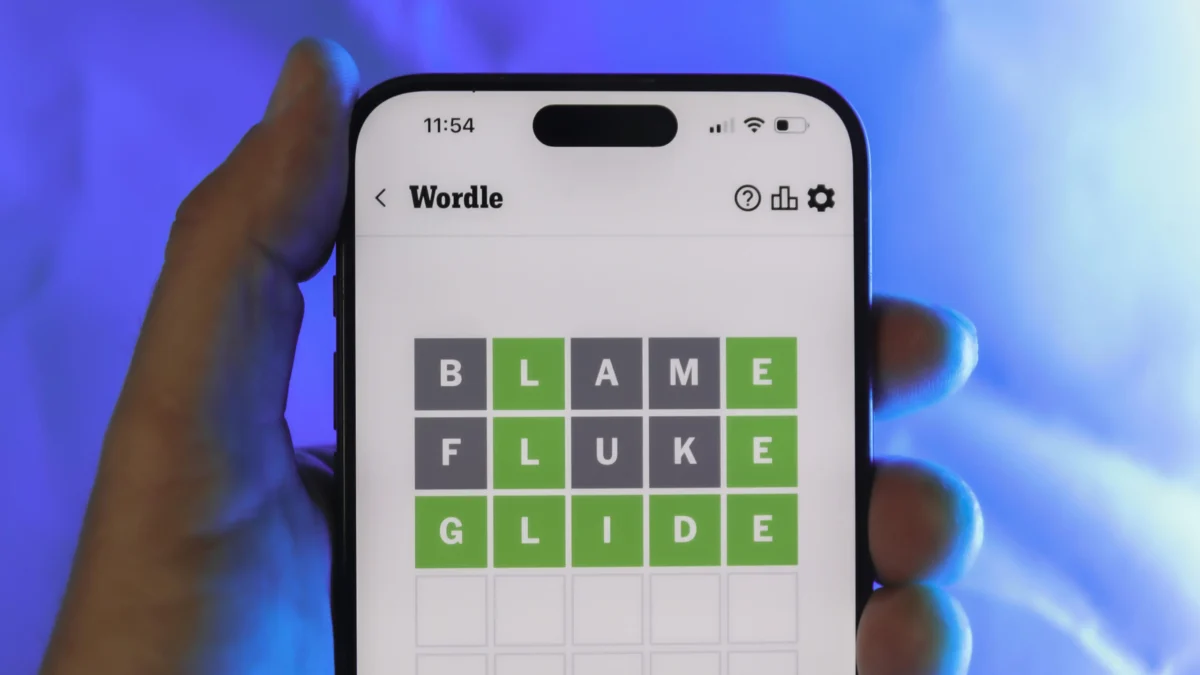
Today’s Wordle challenge, identified as puzzle number 1896, presented players with a particularly unusual word featuring a double letter, posing a significant test for many. The answer, TWEEN, required players to navigate a less common vocabulary term coupled with a letter repetition, often a tricky element in the popular daily word game. For those who found themselves stumped, the puzzle’s unique structure necessitated a blend of strategic letter guessing and an understanding of its specific linguistic properties. Yesterday’s Wordle, number 1895, was UNCUT, a more straightforward five-letter word without the added complexity of a double letter.
Unpacking Today’s Wordle: TWEEN
The design of Wordle puzzles often varies, ranging from commonly encountered words to those that might be less frequent in daily conversation, such as "TWEEN." The hints provided for today’s puzzle were crucial in guiding players towards the correct solution, especially given its distinctive characteristics.
Firstly, a key hint revealed that the word contained one repeated letter. This information immediately narrows down the possibilities, as many five-letter words do not feature such a repetition. For "TWEEN," the letter ‘E’ appears twice. Secondly, players were informed that the word contained only one vowel, which was also the repeated letter. This further refined the search, indicating that the word would be rich in consonants and that the sole vowel would occupy two positions. In the case of "TWEEN," the ‘E’ serves as the only vowel.
Additional positional hints were provided: the word began with ‘T’ and ended with ‘N’. Combining these, players could deduce a structure akin to T _N. Integrating the double vowel hint, the possibilities quickly converge. Finally, a semantic clue was offered, describing the word as referring to a child between the ages of roughly 8 and 12. This contextual hint often proves invaluable for players who have narrowed down the letter possibilities but require a final confirmation of the word’s meaning and common usage. The term "tween" precisely describes this age demographic, bridging childhood and adolescence.
The Genesis and Global Phenomenon of Wordle
Wordle, since its public release, has transcended its origins as a personal project to become a global cultural touchstone. Created by software engineer Josh Wardle for his partner, Palak Shah, during the COVID-19 pandemic, the game was initially a private pastime. Its design was intentionally simple: a daily five-letter word puzzle where players have six attempts to guess the word, receiving feedback on correct letters and their positions through a color-coded system (green for correct letter and position, yellow for correct letter but wrong position, grey for incorrect letter).

Wardle’s decision to make Wordle publicly available in October 2021 sparked an unexpected explosion in popularity. Within months, it garnered millions of daily players worldwide, attributed to its accessibility, straightforward rules, and the compelling social element of sharing results without spoilers. The game became a daily ritual for many, a brief mental exercise that fostered connection and friendly competition among friends, family, and online communities.
The game’s meteoric rise culminated in its acquisition by The New York Times Company in January 2022 for an undisclosed seven-figure sum. The Times integrated Wordle into its portfolio of digital games, aiming to expand its audience and subscription base. This acquisition marked a significant moment, cementing Wordle’s status not just as a fleeting internet trend but as a valuable digital asset within a major news organization’s strategy.
Strategic Approaches to Mastering Wordle
While today’s "TWEEN" might have been challenging, consistent Wordle success often hinges on employing strategic approaches rather than relying solely on luck. Data analysis and linguistic principles can significantly improve a player’s chances.
1. Optimal Starting Words:
One of the most widely discussed strategies involves choosing an effective first word. Experts and computational analyses have identified certain words that maximize the chances of revealing useful letters early on. These words typically incorporate a high frequency of common English letters and multiple vowels.
- ADIEU / AROSE / CRANE / SLATE: These words are frequently cited for their excellent letter distribution. They often include 3-4 common vowels (A, E, I, O, U) and highly frequent consonants (R, S, T, L, N). For instance, ‘CRANE’ contains three vowels and two common consonants.
- Benefits: A strong starting word can often eliminate or confirm 3-4 letters, providing a solid foundation for subsequent guesses. The goal is not necessarily to guess the word on the first try, but to gather as much information as possible.
2. Leveraging Letter Frequency:
Understanding the frequency of letters in the English language is a cornerstone of effective Wordle play. The most common letters are E, T, A, O, I, N, S, H, R. Less common letters include Q, J, Z, X, V.
- Application: When choosing words, especially after the first guess, prioritize letters that are statistically more likely to appear. If a letter like ‘E’ or ‘A’ hasn’t been used, it’s often a good candidate for the next guess. Conversely, avoid uncommon letters until absolutely necessary, unless previous guesses strongly suggest their presence.
3. Strategic Use of Feedback:
The color-coded feedback is the game’s core mechanism, and mastering its interpretation is crucial.
- Green (Correct Letter, Correct Position): These letters are fixed. Integrate them into your mental framework for the word.
- Yellow (Correct Letter, Wrong Position): These letters must be included in subsequent guesses but not in the positions they previously occupied. Many players make the mistake of reusing a yellow-flagged letter in the same incorrect position, wasting a guess.
- Grey (Incorrect Letter): These letters are eliminated. Never use them again in any subsequent guess for that puzzle. Some players might subconsciously re-enter a grey letter, which is a significant error.
4. Pattern Recognition and Deductive Reasoning:
As guesses accumulate, players should actively look for patterns and use deductive reasoning.
- Vowel/Consonant Distribution: If a word has many grey vowels, the remaining vowels become more critical. If many consonants are grey, the word might have a double consonant or be vowel-heavy.
- Word Families: Consider common word endings (-ING, -ED, -ER, -LY) or prefixes (RE-, UN-, IN-).
- Elimination: Each guess should aim to eliminate as many possibilities as possible, either by confirming correct letters or by ruling out incorrect ones. Don’t just guess random words; each guess should be a calculated move to gain information.
5. Avoiding Common Pitfalls:
- Tunnel Vision: Don’t get stuck on one particular word you think it might be, especially if clues contradict it.
- Repetitive Guesses: Avoid using words that don’t introduce new letters or provide new information. Each guess should be unique in its letter composition, especially early on.
- Ignoring Double Letters: Words like "TWEEN" or "RUNNY" (a recent answer) highlight the importance of considering double letters. If initial guesses don’t yield many unique letters, a double letter might be a strong possibility.
Recent Wordle Answers: A Glimpse into Puzzle Variety
The recent sequence of Wordle answers demonstrates the variety players encounter, encompassing words of varying difficulty and letter structures. This diversity keeps the game fresh and prevents players from relying on overly narrow strategies.
- August 23, No. 1891: OLDEN – A relatively common adjective, but perhaps less frequent in daily speech than some other words.
- August 24, No. 1892: RUNNY – This word, like "TWEEN," features a double letter (‘N’), making it a good example of the recurring challenge of repeated characters.
- August 25, No. 1893: CLICK – A straightforward, highly common verb and noun, generally considered an easier solve.
- August 26, No. 1894: CAPON – This might have been a more challenging word for some, referring to a castrated rooster fattened for food, indicating the game’s occasional delve into less common vocabulary.
- August 27, No. 1895: UNCUT – A relatively common adjective, presenting a moderate challenge.
This chronological list illustrates how Wordle puzzles oscillate between widely recognized words and those that might require a slightly broader vocabulary or more precise application of letter-guessing strategies.
The New York Times’ Stewardship and Broader Implications
Since its acquisition, The New York Times has largely maintained the core mechanics and aesthetic of Wordle, understanding that much of its appeal lies in its simplicity and familiarity. The Times stated its intent to "keep Wordle free to play for now" and to integrate it into its growing portfolio of games, which includes the popular crossword and ‘Spelling Bee.’ The strategic move was aimed at bolstering the Times’ digital subscription model by attracting new users to its ecosystem of engaging content.
One notable change under NYT’s stewardship has been a subtle curation of the word list. The Times has, on occasion, removed words deemed too obscure, insensitive, or potentially controversial, aiming to maintain the game’s broad appeal and ensure a consistent player experience. For example, words that could be considered offensive or words that were too obscure for the average player have been quietly retired. While this has occasionally led to minor discrepancies between the NYT version and older, archived versions of the game, the overarching goal has been to ensure Wordle remains a universally enjoyable and accessible puzzle.

The success of Wordle has also had a significant impact on the digital gaming landscape. It catalyzed a surge in similar daily puzzle games, often dubbed "Wordle-likes," each offering a unique twist on the original formula. These include games like Quordle (guess four words simultaneously), Octordle (eight words), Heardle (guess a song from snippets), and many others. This proliferation underscores Wordle’s influence in demonstrating the enduring appeal of simple, daily, and shareable digital challenges.
Furthermore, Wordle has cemented its place in popular culture, becoming a topic of daily conversation, a fixture on social media feeds, and even inspiring academic discussions on language, probability, and cognitive psychology. Its low barrier to entry, combined with the satisfaction of solving a daily puzzle, resonates deeply with a diverse global audience.
The Enduring Appeal and Future of Wordle
The longevity of Wordle, especially in the fast-paced world of digital trends, is a testament to its elegant design and psychological appeal. It offers a brief, yet stimulating, mental workout that is both challenging and achievable. The daily refresh ensures players return, fostering a habit that integrates seamlessly into morning routines or coffee breaks.
As The New York Times continues to manage Wordle, its future likely involves maintaining this delicate balance between consistency and subtle evolution. The game’s success is rooted in its simplicity, and any major deviation from its core mechanics could risk alienating its dedicated player base. Instead, the Times will likely continue to leverage Wordle as a gateway to its broader digital offerings, using its immense popularity to drive engagement across its content ecosystem.
In an increasingly complex digital world, Wordle stands out as a refreshing antidote: a straightforward, engaging, and universally accessible game that offers a moment of daily intellectual satisfaction. Today’s "TWEEN" puzzle, with its nuanced challenge, serves as a reminder of the game’s capacity to both delight and subtly test the linguistic prowess of its millions of players worldwide.