


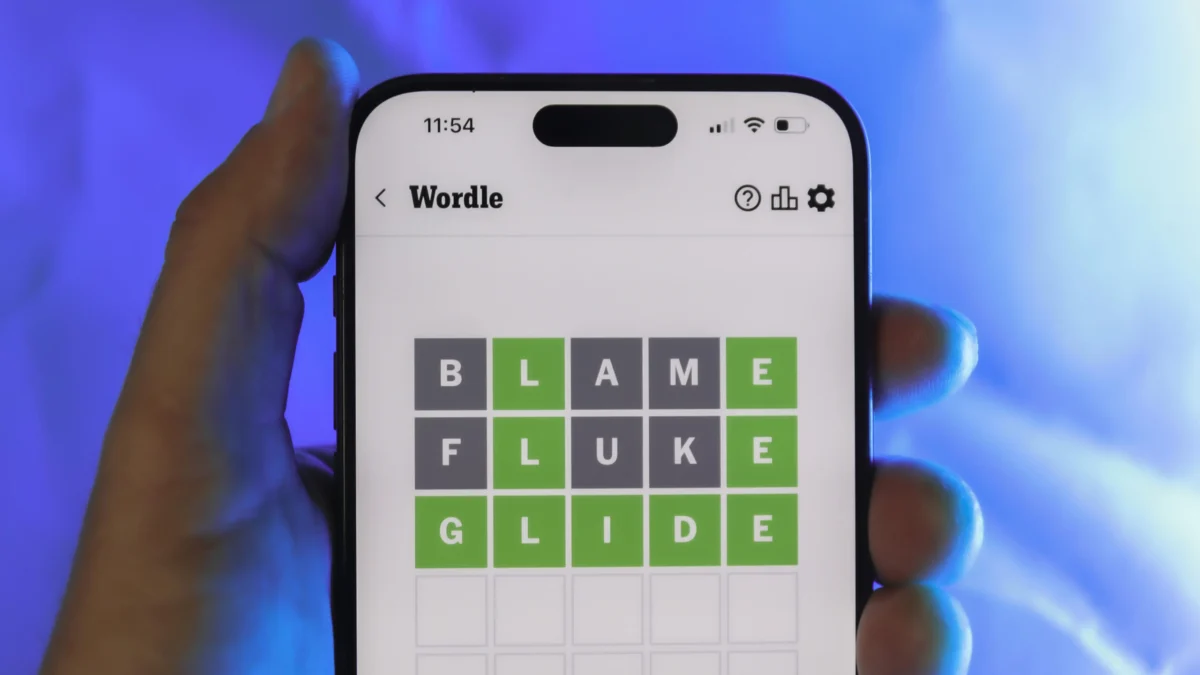
The daily Wordle challenge, a cultural phenomenon that has captivated millions worldwide, presented players on a recent date with a particularly nuanced puzzle: the word "UNCUT." This five-letter solution, characterized by its distinctive letter configuration and a repeated vowel, offered a notable test for both seasoned strategists and casual guessers alike. The nature of "UNCUT," a word describing a complete and unedited version of media, highlights Wordle’s consistent ability to blend common vocabulary with occasionally challenging structural elements, maintaining its reputation as a deceptively simple yet profoundly engaging linguistic exercise.
Dissecting Today’s Wordle: UNCUT
The solution "UNCUT" emerged as the answer for Wordle No. 1895, posing a moderate challenge due primarily to its specific letter composition. For many players, the key to unlocking this puzzle lay in carefully applying the game’s iterative feedback system, particularly when confronted with the provided hints.
- Repeated Letter: A crucial hint for "UNCUT" was the presence of a repeated letter. This immediately narrows down the possibilities, as many common five-letter words do not feature such a repetition. Identifying this characteristic early in the game can significantly streamline the guessing process.
- Vowel Count and Repetition: The puzzle contained only one distinct vowel, ‘U’, which was also the repeated letter, appearing twice. This specific vowel configuration—one vowel repeated—is less common than words with multiple distinct vowels or a single vowel appearing once. Players adept at vowel-heavy starting words might have found their initial guesses less fruitful if they didn’t quickly pivot to consonant-rich options or focus on identifying the specific repeated vowel.
- First Letter: ‘U’: The revelation that the word began with ‘U’ provided a significant breakthrough. ‘U’ is not among the most frequently occurring starting letters in English five-letter words, making this hint particularly potent for eliminating a vast number of potential solutions.
- Last Letter: ‘T’: Complementing the first letter, the ending letter ‘T’ further constrained the search space. ‘T’ is a relatively common ending letter, but in conjunction with a ‘U’ start and a repeated ‘U’, it helped to form a unique structural pattern.
- Meaning Hint: The semantic clue, describing "a book, play or film shown in full without any deleted scenes or censored parts," directly pointed to "UNCUT." This type of hint is often the final piece of the puzzle for players who have narrowed down the letter structure but need confirmation of the specific word.
The combination of a less common starting letter (‘U’), a repeated and singular vowel (‘U’), and the specific definition presented a solvable but far from trivial challenge. This design philosophy underscores Wordle’s brilliance: it rarely uses truly obscure words, but it frequently employs words that, while familiar, might not immediately spring to mind given typical letter patterns.
The Phenomenon of Wordle: A Brief Chronology

Wordle’s journey from a personal project to a global sensation is a testament to the power of simple, well-executed design and organic virality.
- October 2021: Josh Wardle, a software engineer based in Brooklyn, quietly released Wordle to the public. He had initially created the game for his partner, Palak Shah, who enjoyed word puzzles. The game’s name is a playful pun on his surname.
- Late 2021: Wordle began to gain traction, primarily through word-of-mouth. Its shareable emoji grid, which allowed players to boast about their daily results without revealing the answer, was a critical factor in its early spread.
- January 2022: The game exploded in popularity, becoming a daily ritual for millions. Its peak coincided with a period when many people were still navigating pandemic-related lockdowns and seeking accessible, engaging distractions. The daily limit of one puzzle per day fostered anticipation and prevented burnout, a clever psychological trick.
- February 2022: The New York Times Company acquired Wordle from Josh Wardle for an undisclosed seven-figure sum. The acquisition was a strategic move by the NYT to expand its portfolio of games and attract new digital subscribers, recognizing the immense cultural impact and user engagement the puzzle had generated. The Times committed to keeping the game free to play and preserving its original charm.
- Ongoing: Wordle continues to be a staple for many, generating daily discussions on social media and spawning numerous clones and variations. Its consistent, accessible format ensures its enduring appeal.
Strategic Play: Mastering the Five-Letter Grid
The widespread adoption of Wordle has naturally led to extensive discussion and analysis of optimal strategies. While luck plays a role, a methodical approach can significantly improve a player’s chances of solving the puzzle in fewer guesses.
One of the most debated aspects is the choice of starting word. Data scientists and linguists have analyzed letter frequencies in the English language to identify words that maximize the information gained from the first guess. Common recommendations often include words rich in high-frequency vowels (E, A, I, O, U) and common consonants (R, S, T, L, N, C).
- Vowel-Heavy Starters: Words like "ADIEU," "CRANE," "SLATE," "ARISE," and "TEARS" are popular choices because they incorporate several common vowels and consonants, providing a broad initial sweep of the most likely letters. For example, "ADIEU" uses four vowels, while "CRANE" covers two vowels and three high-frequency consonants.
- Consonant-Rich Starters: Some players prefer words that prioritize common consonants, such as "TRAIN" or "ROAST," aiming to quickly identify positional information for these critical letters.
- Balanced Approaches: Many strategies advocate for a balance, selecting words that include a mix of the most common vowels and consonants without necessarily repeating letters in the initial guess, unless strategically planned for the second or third attempt.
Beyond the first word, effective Wordle play involves:
- Elimination: Systematically removing letters that have been identified as not present in the word (grey squares).
- Positioning: Using letters identified as present but in the wrong position (yellow squares) to inform subsequent guesses, carefully trying them in different slots.
- Confirmation: Utilizing letters identified as present and in the correct position (green squares) as anchors for constructing new words.
- Vowel and Consonant Focus: After the initial guess, players often shift their focus. If many vowels were missed, subsequent guesses might prioritize trying different vowels. If common consonants are still elusive, targeting them becomes key.
- Avoiding Repetition (of guesses): While seemingly obvious, it’s crucial not to re-guess words that have already been eliminated or to use letters in positions already ruled out.
The "Winning Wordle The Best Starting Words To Use and Why" content from Mashable highlights the ongoing interest in optimizing Wordle performance. The game’s simplicity belies a deeper strategic layer that appeals to those who enjoy logical deduction and linguistic analysis.
The Nuance of Difficulty: What Makes a Word "Tricky"?
The original article noted that "Today’s Wordle answer might be a little tricky thanks to some rare letters." While the individual letters in "UNCUT" (U, N, C, T) are not inherently rare in the English lexicon, the combination and structure can indeed present a higher degree of difficulty.
Factors contributing to a "tricky" Wordle include:
- Repeated Letters: Words with double letters, especially double vowels or less common double consonants, can significantly increase difficulty. Players often try to use distinct letters in their early guesses, so encountering a repeated letter (like the double ‘U’ in "UNCUT") can disrupt typical strategies.
- Less Common Letter Combinations: While ‘U’ is not a rare letter, starting a five-letter word with ‘U’ is less frequent than starting with ‘S’, ‘C’, ‘P’, or ‘T’. Similarly, the sequence ‘NCUT’ might not immediately jump out as a common pattern.
- Unusual Vowel/Consonant Distribution: Words with only one vowel (especially if it’s repeated) or an atypical ratio of vowels to consonants can be harder to deduce.
- Obscure but Valid Words: While The New York Times has reportedly curated the word list to remove truly obscure or offensive words, some solutions can still be less common in everyday usage, forcing players to dig deeper into their vocabulary.
- Homophones/Near-Homophones: Words that sound similar but are spelled differently can sometimes cause confusion, although this is less common as a primary source of "trickiness" in Wordle’s design.
"UNCUT" fits into the category of a word made tricky by its structure and specific letter usage rather than individual letter rarity. The double ‘U’ and the ‘U’ as the sole vowel, combined with its specific starting and ending letters, make it a word that demands careful deduction and perhaps a departure from standard opening strategies.
A Glimpse at Recent Wordle Solutions
To provide context for the daily challenge, it’s useful to look at the variety of words Wordle presents. The game’s appeal lies in its consistent stream of new puzzles, each with its unique linguistic fingerprint.

- August 26, No. 1894: CAPON – A less common culinary term, illustrating how Wordle occasionally delves into specialized vocabulary.
- August 25, No. 1893: CLICK – A high-frequency, common verb, often easier for players to guess.
- August 24, No. 1892: RUNNY – Features a repeated letter (‘N’) and a double ‘Y’ ending, which can be tricky for some.
- August 23, No. 1891: OLDEN – A more classical or literary term, again showcasing the breadth of Wordle’s dictionary.
- August 22, No. 1890: PRAWN – A common noun, generally considered an accessible word.
This recent list demonstrates Wordle’s commitment to variety, mixing common words with those that might require a slightly broader vocabulary or more precise letter deduction, thus keeping the game fresh and engaging day after day.
Beyond the Game: Wordle’s Cultural and Cognitive Impact
Wordle is more than just a game; it has become a significant cultural touchstone and a daily ritual for millions. Its impact extends beyond mere entertainment, touching upon cognitive benefits and social interaction.
- Cognitive Engagement: Daily word puzzles like Wordle stimulate cognitive functions, including vocabulary recall, pattern recognition, logical deduction, and problem-solving skills. Engaging in such activities can contribute to maintaining mental agility and can be particularly beneficial for memory and language processing.
- Social Connection: The shareable emoji grid fostered a unique form of social interaction. Players compare results, discuss strategies, and celebrate successes (or commiserate over failures) without spoiling the game for others. This communal aspect transformed a solo puzzle into a shared experience, strengthening bonds and creating a sense of global participation.
- A Daily Ritual: For many, Wordle has seamlessly integrated into their daily routines, providing a brief, enjoyable mental break. Its one-a-day format prevents obsessive play and ensures that the anticipation for the next puzzle remains high.
- Media and Engagement Strategy: For publishers like The New York Times, Wordle represents a successful model for digital engagement. Offering compelling, free-to-play content can draw in new audiences, potentially converting them into subscribers for other digital offerings, including news, cooking, and other games. The success of Wordle has undoubtedly influenced the development and promotion of other daily digital puzzles.
- Linguistic Exploration: The game subtly encourages players to explore the nuances of the English language, from letter frequencies to word structures and definitions, fostering a deeper appreciation for vocabulary.
The enduring popularity of Wordle, even after its initial viral peak, speaks volumes about its fundamental appeal. It taps into a universal human desire for challenge, discovery, and connection, all wrapped in a beautifully simple package.
The Future of Daily Digital Puzzles
Wordle’s success has undeniably paved the way for a new era of digital puzzles and casual gaming. Its minimalist design, daily cadence, and social sharing features have set a benchmark. As technology evolves, we can expect to see more innovative approaches to daily challenges, perhaps integrating new forms of media or leveraging artificial intelligence to create personalized puzzle experiences. However, the core principles of Wordle – accessibility, intellectual stimulation, and a touch of social magic – will likely remain central to the appeal of any future digital pastime aiming for similar widespread success. The daily unveiling of words like "UNCUT" ensures that the Wordle phenomenon continues to engage and entertain, one five-letter mystery at a time.