


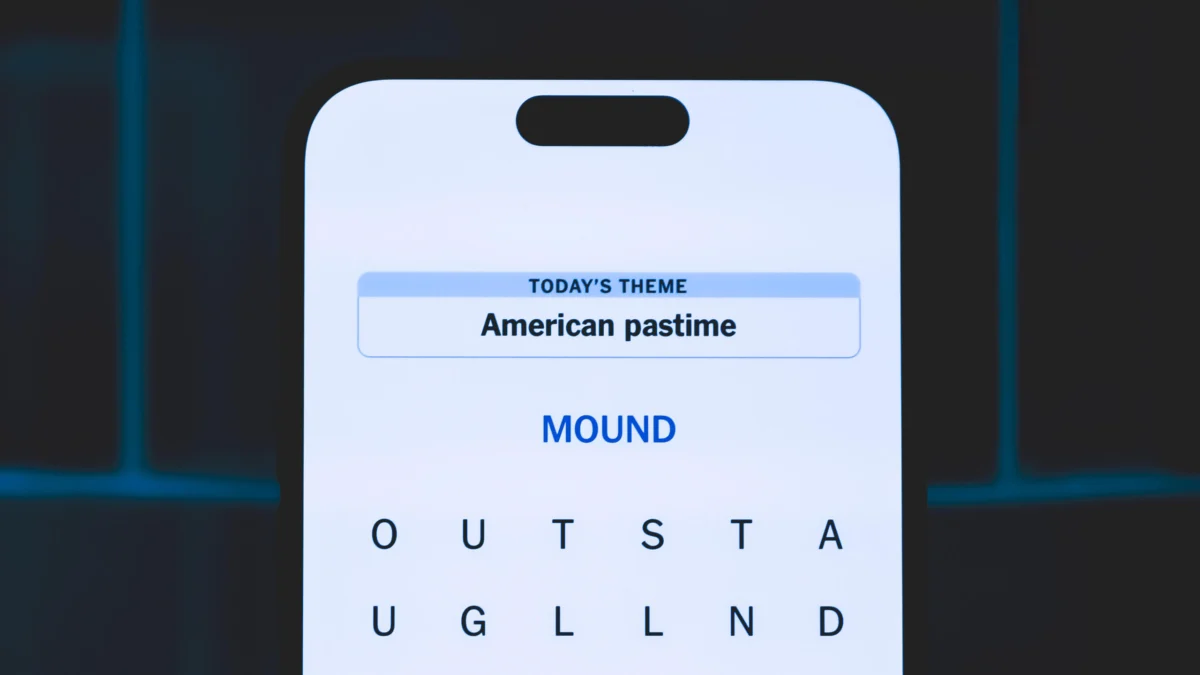
The daily Strands puzzle from The New York Times, released on August 19, 2026, presented players with a theme centered on common daily activities and responsibilities. While described as "fairly simple" overall, the puzzle featured at least one particularly lengthy word requiring careful unscrambling, adding a layer of challenge for enthusiasts. The theme, "All in a day’s work," immediately resonated with players, offering a relatable framework for identifying the hidden words within the grid. Complementing this theme, the specific clue provided was "To-do list," further guiding solvers toward words associated with tasks, duties, and the routine elements of everyday life. The ultimate goal, as with all Strands puzzles, was to uncover a series of theme-related words, culminating in the discovery of a "spangram" that stretches across the puzzle board.
For the August 19, 2026, edition, the spangram—a crucial theme word that connects from one side of the puzzle to the other, using letters across the entire board—was identified as PARTOFTHEJOB. This spangram succinctly encapsulates the overarching theme, implying the various duties and expectations inherent in daily routines, whether professional or personal. Players were directed to locate this spangram by starting with the ‘P’ in the top row and navigating through the interwoven letters. The successful completion of a Strands puzzle requires not only finding all the theme words but also ensuring every letter on the board is utilized, a testament to the puzzle’s intricate design.
The Evolution of Digital Word Puzzles and The New York Times’ Role
The New York Times has long been a venerable institution in the world of puzzles, a tradition that predates the digital era by many decades. Its iconic crossword puzzle, first published in 1942, established a benchmark for intellectual engagement and became a daily ritual for millions. In the 21st century, as digital media transformed consumption habits, The New York Times successfully pivoted and expanded its puzzle offerings, cementing its position as a leader in the casual gaming space. This strategic expansion began with the digital versions of its classic crossword and mini crossword, later introducing popular new formats like the Spelling Bee, Letter Box, and Sudoku.

A significant milestone in this digital transformation was the acquisition of Wordle in early 2022. Wordle, a simple yet addictive daily word-guessing game, exploded in popularity during the pandemic, attracting millions of daily players globally. Its integration into The New York Times Games platform not only boosted subscriber numbers but also demonstrated the immense appetite for accessible, engaging, and cognitively stimulating daily puzzles. The success of Wordle provided a blueprint and impetus for developing new original games, leading to the conceptualization and launch of Strands.
Strands, a relatively newer addition to the NYT Games portfolio, was introduced to offer a fresh challenge distinct from its predecessors. It launched as a more open-ended word search variant, requiring players to identify a hidden theme and then locate words that fit that theme within a jumbled grid of letters. This approach differentiates it from games like Wordle, which focuses on deduction, or the Spelling Bee, which emphasizes word formation from a limited set of letters. Strands appeals to players who enjoy visual pattern recognition, thematic interpretation, and a more exploratory approach to word-finding.
Understanding Strands Mechanics and Strategy
At its core, Strands is a thematic word-search puzzle. Players are presented with a 6×8 grid of letters, and their primary objective is to identify a set number of "theme words" and a single "spangram." The spangram is unique because it spans across the entire board, touching opposite edges, and serves as the most direct clue to the puzzle’s overarching concept. Unlike traditional word searches where words are explicitly listed, Strands only provides a general theme and a more specific clue. Players must deduce the words that fit these parameters.
The interaction with the puzzle involves dragging lines through adjacent letters, either horizontally, vertically, or diagonally, to form words. A critical rule is that once a letter is used as part of a theme word or the spangram, it cannot be reused for another theme word. All letters on the board must ultimately be part of a valid theme word or the spangram. This "no leftover letters" rule is what often makes the final stages of a Strands puzzle particularly challenging, as players must ensure their chosen words fit together perfectly to clear the board.
For instances where players find themselves stuck, Strands incorporates a hint system. By identifying three "clue words"—any valid English words of four letters or more that are not part of the main theme—players can earn a hint. A hint, once activated, will reveal the letters of one of the theme words, highlighting them on the board. This mechanism provides a strategic layer, encouraging players to actively search for words even if they don’t immediately see the theme, thereby rewarding persistent exploration. The balance between offering assistance and maintaining challenge is a key design philosophy for the NYT Games team, ensuring puzzles remain engaging without becoming overly frustrating.
Analyzing the "All in a Day’s Work" Theme
The August 19, 2026, theme, "All in a day’s work," coupled with the clue "To-do list," points to a rich semantic field. This theme likely encompassed a variety of words related to daily tasks, professional duties, household chores, personal responsibilities, and even the tools or concepts associated with getting things done. Given the spangram "PARTOFTHEJOB," the puzzle leaned heavily into the more structured and perhaps unavoidable aspects of daily life.
Without the explicit list of non-spangram theme words for this specific date, one can infer the types of words players would have been seeking. These might include:
- Verbs of Action: PLAN, ORGANIZE, EXECUTE, COMPLETE, DELEGATE, SCHEDULE, PRIORITIZE.
- Nouns of Task/Duty: CHORES, ERRANDS, ASSIGNMENT, PROJECT, DEADLINE, RESPONSIBILITY, MEETING, REPORT.
- Tools/Concepts: CALENDAR, AGENDA, CHECKLIST, EFFICIENCY, PRODUCTIVITY, MANAGEMENT.
- Work-related terms: DUTY, TASK, SHIFT, GIG, VOCATION, OCCUPATION.
The mention of one "quite long" word suggests a more complex or less obvious term related to the theme, challenging players to think beyond common synonyms. For example, a word like "ACCOUNTABILITY" or "OBLIGATION" could fit both the length description and the thematic context, requiring players to carefully trace a longer path through the grid. The cleverness of Strands often lies in these nuanced word choices, pushing players to expand their vocabulary and consider various interpretations of the given theme.

The Cognitive and Social Impact of Daily Puzzles
The enduring popularity of daily word puzzles, including Strands, speaks to a fundamental human need for mental stimulation and a sense of accomplishment. Research in cognitive psychology suggests that engaging with puzzles offers numerous benefits:
- Cognitive Enhancement: Puzzles like Strands can improve vocabulary, enhance problem-solving skills, boost memory retention, and sharpen critical thinking. The act of searching for patterns and connections within a jumbled set of letters exercises different parts of the brain.
- Stress Reduction: For many, the focused concentration required to solve a puzzle acts as a form of mindfulness, diverting attention from daily stressors and providing a brief mental escape.
- Routine and Ritual: The daily release of puzzles establishes a comforting routine. For millions, starting the day with a NYT puzzle has become a cherished ritual, providing a sense of structure and a small, achievable goal.
- Social Connection: Despite being solitary activities, word puzzles foster a strong sense of community. Players often share their results, discuss strategies, and express their frustrations or triumphs on social media platforms. The common experience of tackling the same daily challenge creates a shared bond, enhancing the overall engagement.
- Accessibility: Digital puzzles are highly accessible, available on smartphones, tablets, and computers, allowing people from all walks of life to participate, regardless of their location or schedule.
The New York Times has masterfully tapped into these aspects, transforming its games section into a significant driver of digital subscriptions and user engagement. The daily cycle of anticipation, challenge, and resolution keeps players returning, fostering a loyal community around its puzzle ecosystem.
Broader Implications and Future Outlook
The continued success and innovation within The New York Times Games division, exemplified by Strands, highlight several broader implications for digital media and content strategy. First, it underscores the value of diversified content offerings beyond traditional news reporting. In an increasingly competitive digital landscape, media organizations must find new ways to engage audiences and create compelling reasons for subscription. Casual games have proven to be a highly effective strategy, appealing to a broad demographic.

Second, the design philosophy behind Strands—offering hints, a clear theme, and a daily challenge—reflects a sophisticated understanding of user psychology. It balances accessibility for new players with sufficient depth to retain seasoned puzzle enthusiasts. The iterative development and continuous feedback from the player base allow developers to fine-tune the puzzle mechanics and maintain novelty.
Third, the integration of games like Strands into a broader subscription bundle reinforces the value proposition of The New York Times. Subscribers gain access not only to world-class journalism but also to a curated suite of entertaining and intellectually stimulating games, creating a holistic digital experience. This bundling strategy is crucial for subscriber retention and growth in a market saturated with fragmented content.
Looking ahead, the evolution of digital puzzles will likely continue to explore new formats and incorporate advanced technologies. Artificial intelligence could play a role in generating more nuanced and challenging puzzles, while augmented reality or virtual reality might offer immersive new ways to interact with word games. However, the core appeal of a well-crafted word puzzle, demanding wit, vocabulary, and a keen eye for patterns, is likely to remain timeless. The August 19, 2026, Strands puzzle, with its "All in a day’s work" theme, serves as another testament to the enduring charm and intellectual satisfaction derived from these daily linguistic challenges. As The New York Times continues to innovate in this space, it reaffirms the power of puzzles to connect, entertain, and intellectually stimulate audiences in the digital age.