


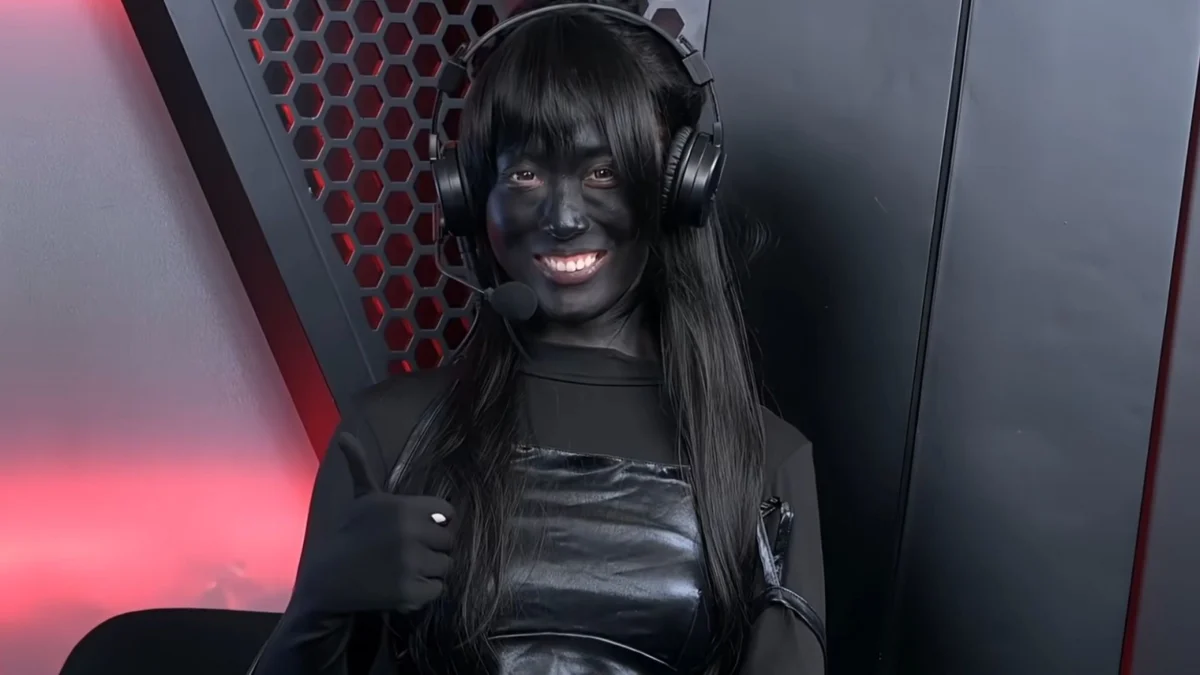
An esports commentator in China has ignited a firestorm of online discussion and garnered widespread attention after a bold and satirical response to criticism regarding her on-air attire. The incident, which unfolded during a recent broadcast of the popular game Naraka: Bladepoint, saw the caster, known online as Zhazha, address accusations of inappropriate dress by appearing on screen in a striking, head-to-toe black ensemble, complete with face paint, effectively challenging the nature of the backlash she faced.
The controversy began when Zhazha, known for her professional commentary and engaging on-screen presence, appeared in a broadcast wearing a relatively short skirt. This choice, while not uncommon in many entertainment contexts, drew a swift and polarized reaction from a segment of the online audience. Detractors, primarily on Chinese social media platforms like Weibo, accused her of deliberately dressing provocatively to attract male viewers, thereby attempting to boost viewership figures through sensationalism rather than professional merit. Some comments also ventured into speculation, suggesting that the broadcast organizers might have mandated such attire, or at least encouraged it, to achieve similar commercial objectives. This line of criticism often carries an implicit bias against women in public-facing roles, particularly within the male-dominated esports industry.
Zhazha’s response, which has since gone viral and been widely reported across esports and general news outlets, was both immediate and impactful. In a subsequent broadcast, she presented herself in stark contrast to her previous appearance. Clad entirely in black, from a full-coverage garment to matching face paint that obscured her features, she adopted a visually arresting and symbolic stance. This deliberate choice served as a powerful visual commentary on the accusations leveled against her. It highlighted the absurdity of the criticism by demonstrating an extreme interpretation of "modesty" or "appropriateness," thereby satirizing the very nature of the online debate.
Official Statements and Personal Stance
Following the widespread dissemination of clips and discussions surrounding her outfit, Zhazha issued a translated statement on Weibo, providing clarity and context to her actions. She unequivocally stated that her clothing choices were entirely her own decision and that she had not been subjected to any external pressure from the organizers or broadcast network. "No one has ever arranged for me to wear a short skirt," Zhazha asserted in her statement. "As a commentator, my outfits have always been chosen by myself." This direct refutation aimed to dispel rumors that she was being exploited or coerced into wearing revealing clothing.
She further elaborated on her motivations for choosing a short skirt in the first instance, emphasizing her desire to present a professional and aesthetically pleasing appearance for the audience. "The reason I chose a short skirt was to present a better on-camera look for viewers," she explained. This statement underscores a common practice in broadcast journalism and entertainment, where presenters often curate their wardrobe to enhance their visual presentation and engage viewers. Zhazha’s perspective suggests that her initial choice was rooted in a desire for professionalism and viewer engagement, rather than a conscious attempt at overt provocation.
The subsequent all-black attire, she clarified, was an intentional and calculated move to address the criticism head-on. She described it as an "extreme choice meant as a form of satire." This highlights her strategic approach to the situation, using the broadcast platform not just to commentate on the game, but also to subtly engage with and critique the online discourse surrounding her. The extreme nature of the outfit served to underscore the perceived irrationality of the backlash, by presenting an equally extreme, yet completely opposite, form of attire.
Broader Implications for Female Casters and Industry Standards
The incident involving Zhazha brings to the forefront a recurring issue within the esports industry and broader media landscape: the scrutiny and judgment faced by female presenters and commentators regarding their appearance. Historically, women in esports have often been subjected to a higher degree of commentary on their clothing and looks compared to their male counterparts. This can create a challenging environment, where professional competence can be overshadowed by subjective opinions on appearance.
Zhazha’s situation is not isolated. Numerous female esports personalities have spoken out about facing similar pressures, including unwanted attention, objectification, and criticism for their attire. The narrative often shifts from their expertise in the game or their commentary skills to their physical appearance, which can detract from their professional contributions and create an unwelcoming atmosphere. This dynamic can deter talented individuals from pursuing careers in esports or lead them to feel compelled to conform to certain aesthetic expectations, which may not align with their personal style or professional identity.

The discourse surrounding Zhazha’s outfit also touches upon the evolving standards of professionalism in esports broadcasting. As the industry matures and gains wider mainstream acceptance, there is an ongoing discussion about appropriate on-air presentation. While some argue for a more formal or traditional approach, others advocate for greater flexibility and diversity in attire, reflecting the dynamic and often youth-oriented nature of the esports community. Zhazha’s response suggests a desire for a more nuanced conversation, one that acknowledges individual choice and professional intent, rather than imposing rigid and potentially biased expectations.
The Role of Social Media and Online Communities
The rapid spread of Zhazha’s story underscores the immense power of social media platforms like Weibo in shaping public opinion and disseminating information within the esports community. While these platforms can foster community and provide a direct channel for fan interaction, they can also become breeding grounds for criticism, harassment, and the rapid amplification of unverified claims. The initial backlash against Zhazha demonstrates how quickly a narrative can form and gain traction online, often without a full understanding of the context or individual circumstances.
Zhazha’s appeal for viewers to "look at this rationally" and "not take things out of context or stir up unnecessary controversy" is a poignant plea for a more thoughtful and respectful online environment. Her request for "reasonable" comments and her self-identification as a "regular staff member who wants to focus on commentary and do my job well" highlights the human element behind the public persona. It serves as a reminder that online commentary, however detached it may seem, can have a tangible impact on individuals’ professional lives and well-being.
Analysis of the Satirical Response
Zhazha’s decision to don an all-black, face-obscuring outfit can be interpreted as a sophisticated form of satire, a rhetorical device used to expose and criticize foolishness or vice through humor, irony, exaggeration, or ridicule. By adopting an appearance that was the antithesis of what critics implied she was seeking (attention through revealing attire), she effectively inverted the premise of their criticism. The extreme concealment of her person served to draw attention to the superficiality of judging a commentator based on her clothing. It suggested that if the concern was about "attracting attention," then a complete lack of visible features could be seen as an even more radical way to achieve that, thus exposing the illogical nature of the original accusations.
This form of protest is not unique. Artists, activists, and public figures have historically used symbolic acts and extreme gestures to draw attention to social issues and challenge prevailing norms. Zhazha’s approach, within the context of a live esports broadcast, was a creative and memorable way to make a statement that resonated with many viewers who have experienced or witnessed similar online judgments. The viral nature of her response indicates that her message struck a chord, sparking broader conversations about online conduct, gender dynamics in esports, and the importance of focusing on professional merit.
Future Outlook and Industry Reflection
The incident involving Zhazha serves as a valuable case study for the esports industry. It highlights the need for robust community guidelines and moderation policies on online platforms to prevent harassment and the spread of misinformation. Furthermore, it calls for ongoing dialogue and education regarding gender equality and respectful engagement within the esports community.
Broadcasters and tournament organizers also have a role to play in creating supportive environments for their talent. This includes providing clear guidelines on professional conduct and appearance, while also empowering their casters and hosts to express their individuality and make choices that align with their professional identity. Clear communication channels and support systems for talent facing online abuse are also crucial.
Ultimately, Zhazha’s viral moment has transcended the immediate controversy, sparking a wider discussion about the standards and expectations placed upon women in the public eye, particularly within the rapidly evolving world of esports. Her courageous and witty response has not only defended her professional integrity but also contributed to a larger conversation about creating a more equitable and respectful online environment for all participants in the gaming and esports ecosystem. The incident underscores the ongoing need for critical engagement with online discourse and a commitment to valuing professionalism and talent above superficial judgments.