


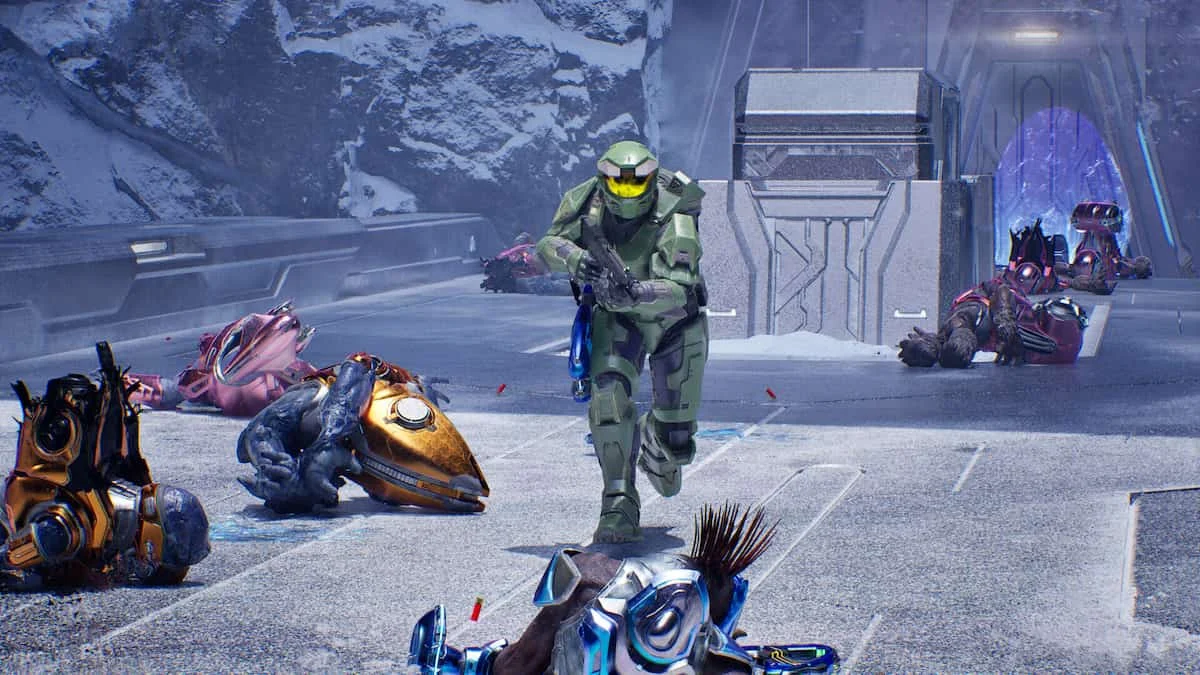
The latest release in the venerable Halo franchise, Halo: Campaign Evolved, has been met with a somber reality for many of its developers: a new round of layoffs. This latest reduction in force at Halo Studios, confirmed through developer social media posts and corroborated by industry reports, signals a continuation of Xbox CEO Asha Sharma’s strategic “reset” of the company’s gaming division. The news comes just days after the highly anticipated launch of the game, adding a layer of stark irony to the situation and underscoring the challenging economic climate currently gripping the video game industry.
A Shadow Over Success: Layoffs Emerge Post-Launch
The impact of these layoffs became apparent through candid posts on professional networking platforms, primarily LinkedIn. Developers who had dedicated years to the Halo franchise publicly shared their departures from Halo Studios. These announcements painted a picture of an unknown but significant number of individuals being let go in the immediate aftermath of Halo: Campaign Evolved‘s release. This event is not an isolated incident but rather a direct extension of a broader restructuring effort initiated by Microsoft’s gaming arm.
This wave of dismissals follows a massive initial layoff event in January of the current fiscal year, which saw approximately 1,600 employees across various Microsoft gaming divisions terminated. Xbox CEO Asha Sharma herself confirmed this earlier action, emphasizing that further adjustments were anticipated. The recent events at Halo Studios indicate that this period of significant organizational change is ongoing, impacting established studios and long-serving employees.
One such developer, producer Nick Treitman, shared his experience on LinkedIn, stating, "After 6.5 years working on Halo and dodging just as many rounds of layoffs – it has finally caught up to me." Treitman expressed his continued affection for the franchise and his former colleagues, acknowledging the harsh realities of the current gaming landscape. "I have nothing but love for Halo and the folks at the studio, this is just a tough reality in the gaming industry right now," he added, reflecting a sentiment echoed by many in the industry facing similar uncertainties.
The impact extends beyond Halo Studios, as the restructuring appears to be a company-wide initiative affecting numerous Xbox-associated development teams. Reports indicate that a significant number of studios have been subjected to workforce reductions, while others have undergone more radical transformations, including being spun off or granted greater independence. Notable studios that have reportedly experienced layoffs or significant organizational shifts include Arkane, Compulsion Games, Double Fine, Ninja Theory, Undead Labs, and id Software, highlighting the pervasive nature of these strategic adjustments across Microsoft’s diverse gaming portfolio.
Another producer, Paul Morris, also took to LinkedIn to announce his departure, stating, "Today, I learned my time at Halo Studios will be coming to an end following the successful launch of our latest game, Halo: Campaign Evolved." Morris acknowledged the difficulties of the current job market but expressed resilience: "I know this is one of the most challenging job markets our industry has seen, and I know the road ahead won’t be easy. But I’m not done, and my purpose has not changed." His statement underscores the personal toll these corporate decisions take on individuals who have invested their careers in game development.
Context and Chronology of the "Reset"
The current layoffs are deeply intertwined with Xbox CEO Asha Sharma’s pronouncements regarding the need for a fundamental restructuring of the Xbox business. In an internal memo shared with employees on July 6th, Sharma articulated a stark assessment of the division’s financial health and strategic direction. She characterized the business as "not healthy" and highlighted significant disparities in profit margins compared to industry peers, stating, "We are operating at margins that are 3–10x lower than comparable platform and publishing businesses."

Sharma’s memo traced the challenges back to the commencement of the current console generation, known as Gen 9. She pointed to a smaller initial install base and a higher cost structure as foundational issues. The strategy to address these challenges, she explained, involved significant bets on Game Pass, a multi-platform approach, and a diversified content portfolio. While these initiatives have generated "meaningful value," Sharma admitted they "did not grow at the pace we expected." This slower-than-anticipated growth, coupled with the weakening of the core business, led to increased investment and extended development timelines in an effort to achieve better outcomes. The memo also acknowledged the broader industry headwinds, including "the most severe hardware crisis in its history," which further necessitated a decisive course correction. "We must reset Xbox," Sharma concluded, setting the stage for the significant organizational changes that have since unfolded.
The timeline of these events can be broadly outlined:
- Early Fiscal Year [Specific Date, e.g., January 2024]: The initial wave of approximately 1,600 layoffs across Microsoft’s gaming divisions. This marked the beginning of Sharma’s stated "reset."
- July 6th [Year]: Xbox CEO Asha Sharma’s internal memo detailing the rationale behind the restructuring, citing unhealthy financial margins, slower-than-expected growth in key strategic areas, and industry-wide challenges, and declaring the need to "reset Xbox."
- Days preceding [Current Date]: The launch of Halo: Campaign Evolved.
- Immediately following the launch of Halo: Campaign Evolved: The latest round of layoffs at Halo Studios, impacting an undisclosed number of developers. These layoffs are framed as a continuation of the broader "reset" initiative.
Performance of Halo: Campaign Evolved and Industry Metrics
The timing of the layoffs, immediately following the launch of Halo: Campaign Evolved, raises questions about the game’s reception and its potential role in these decisions. While the game itself received positive critical reviews, suggesting a high level of quality in its development, player reception has been more varied. On PC platforms, Halo: Campaign Evolved garnered a "Mixed" rating on Steam, indicating a divided player base. Aggregated user scores on Metacritic also reflected this sentiment, with a user score of 5.7, placing it in the realm of "mixed or average" reviews from the audience.
This reception, while not outright negative, contrasts with the traditionally strong performance and broad appeal of the Halo franchise. The mixed player response, coupled with the ongoing strategic overhaul under Sharma, may have contributed to the company’s decision to proceed with workforce reductions, irrespective of the game’s critical acclaim. It highlights a complex interplay of factors influencing these decisions, where critical reception, player feedback, and overarching financial and strategic imperatives all play a role.
The broader gaming industry has been experiencing significant turbulence, with numerous major companies announcing substantial layoffs throughout the past year and into the current one. Factors contributing to this industry-wide trend include the post-pandemic slowdown in consumer spending on entertainment, increased development costs, and a market saturation of new releases. Companies are re-evaluating their portfolios, streamlining operations, and focusing on profitability in a more challenging economic environment. Microsoft’s actions at Xbox are thus situated within a larger, industry-wide recalibration.
Analysis of Implications and Future Outlook
The persistent layoffs across Microsoft’s gaming division, including the recent events at Halo Studios, signal a significant shift in the company’s approach to its gaming business. CEO Asha Sharma’s "reset" appears to be a comprehensive effort to realign operations with profitability and sustainable growth, even at the cost of significant workforce reductions.
Key Implications:
- Impact on Morale and Talent Retention: Repeated rounds of layoffs can severely damage employee morale, leading to uncertainty and potentially driving talented developers to seek opportunities elsewhere. This can create a cycle of talent drain, making it harder for studios to attract and retain top talent in the future.
- Strategic Focus on Profitability: The emphasis on margins and cost structures suggests a stronger focus on financial performance over rapid expansion. This could lead to a more conservative approach to game development and investment, potentially impacting the scale and ambition of future projects.
- Consolidation and Specialization: The trend of studios being spun off or allowed to go independent, alongside internal layoffs, might indicate a move towards a more consolidated or specialized gaming ecosystem for Xbox. This could mean a greater reliance on first-party studios for specific types of content or a more curated selection of third-party partnerships.
- Long-Term Impact on the Halo Franchise: While Halo: Campaign Evolved was launched, the ongoing instability within Halo Studios could have long-term implications for the future development and direction of the iconic franchise. The loss of experienced developers and the potential for further restructuring could affect the continuity and innovation within the series.
- Broader Industry Signal: Microsoft’s aggressive restructuring sends a strong signal to the rest of the industry. It underscores the pressure on major players to demonstrate profitability and adapt to a changing market, potentially encouraging similar strategic adjustments at other companies.
The industry faces a period of significant flux. While the stated goal of Sharma’s "reset" is to create a healthier and more sustainable Xbox business, the human cost of these decisions is undeniable. The coming fiscal year will be crucial in determining the success of this strategy and its long-term impact on Microsoft’s position in the competitive gaming landscape. The industry will be closely watching how Xbox navigates these challenges and whether its redefined path leads to renewed growth and stability, or further disruption.