



Twenty-five years after Master Chief Petty Officer John-117 first graced the original Xbox, a groundbreaking title that redefined the first-person shooter genre, a meticulously crafted remake has arrived. Halo: Campaign Evolved is not merely a visual upgrade; it represents a comprehensive reimagining of the seminal Halo: Combat Evolved campaign, offering a deep dive into the game that launched a thousand franchises and cemented its place in gaming history. This ambitious project, developed by 343 Industries and leveraging the power of Unreal Engine 5, aims to rekindle the magic of the original while introducing a suite of modern enhancements, serving as a potential harbinger for future remakes of the legendary original trilogy.
A Ground-Up Reconstruction of a Genre-Defining Classic
The genesis of Halo: Campaign Evolved lies in the enduring legacy of Halo: Combat Evolved, which debuted on November 15, 2001, alongside the original Xbox. This release was a pivotal moment, not only for Microsoft’s fledgling console but for the entire video game industry, showcasing console-native first-person shooter gameplay that was both accessible and deeply engaging. Twenty-five years later, the decision to revisit this foundational experience in a more substantial manner than previous iterations like Halo: Combat Evolved Anniversary and Halo 2: Anniversary signals a commitment to preserving and enhancing the core narrative and gameplay that captivated millions.
Unlike prior "remasters" that primarily focused on upscaling existing assets and minor optimizations, Halo: Campaign Evolved is presented as a ground-up remake. The development team has meticulously recreated the campaign’s environments, character models, and weaponry, leveraging Unreal Engine 5 to achieve breathtaking visual fidelity. The result is a game that is, by all accounts, visually stunning, particularly when experienced on high-end hardware such as the PlayStation 5 Pro, demonstrating the versatility of the engine across different platforms. Beyond the graphical overhaul, a significant effort has been made to revitalize the auditory experience; the dialogue has been entirely re-recorded, breathing new life into the iconic exchanges between Master Chief, Cortana, and the rest of the UNSC forces. This dedication to a holistic remake, encompassing both sight and sound, ensures that Halo: Campaign Evolved feels less like a graphical facelift and more like a genuine resurrection of a beloved classic.

Enhancements Rooted in Respect for the Original
While the core structure of Halo: Campaign Evolved remains a faithful one-to-one recreation of the original campaign, subtle yet impactful enhancements have been introduced to refine the gameplay experience. These additions are carefully curated to avoid alienating the purist fanbase while offering tangible improvements. A notable inclusion is the addition of a sprint mechanic, a staple in modern FPS titles that has been implemented with the option to toggle it off for those who prefer the original pacing. This caters to a wider range of player preferences, allowing for both a familiar experience and a more dynamic approach to combat.
Furthermore, nine new weapons have been integrated from across the broader Halo franchise, enriching the combat encounters. These additions include fan favorites such as the Battle Rifle and the Energy Sword, alongside the Needle Rifle and others. Their inclusion is particularly welcome given the campaign’s structure, which often necessitates strategic weapon swapping due to ammunition scarcity across its 10 missions. These new armaments not only provide players with more tactical options but also inject a fresh sense of discovery into familiar firefights.
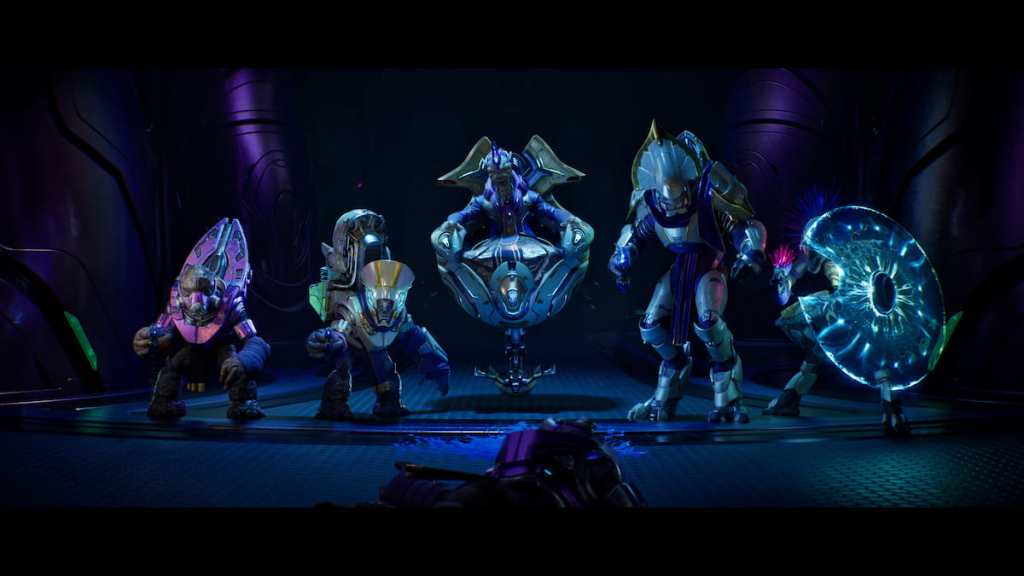
The artificial intelligence of the Covenant forces has also undergone a significant revamp, with enemies now exhibiting more reactive behaviors. This heightened AI complements the dynamic scaling of enemy encounters, which adjust based on the number of players in a party. Supporting up to four-player co-op with full crossplay, the game intelligently ramps up the challenge as more Master Chiefs join the fray, ensuring that even veteran players will find fresh tactical considerations in each encounter. These carefully implemented gameplay adjustments serve to modernize the core mechanics without compromising the strategic depth that defined the original.
The Enduring Appeal of the Pillar of Autumn and Beyond
Despite the technological advancements and gameplay refinements, Halo: Campaign Evolved remains, at its heart, Halo 1. The iconic missions, memorable vehicle segments, and the notoriously challenging "The Library" level are all present, preserved in their original glory but now rendered with unprecedented visual fidelity. This commitment to preserving the original game’s essence is particularly fitting given that this year marks its silver anniversary. The care and attention to detail evident in this remake have fueled speculation and anticipation for potential remakes of Halo 2 and Halo 3, titles that many fans consider to have even more robust and engaging campaigns than their predecessor, which relied heavily on its nascent mystery and simplicity before the narrative evolved into more complex and action-packed sequels.
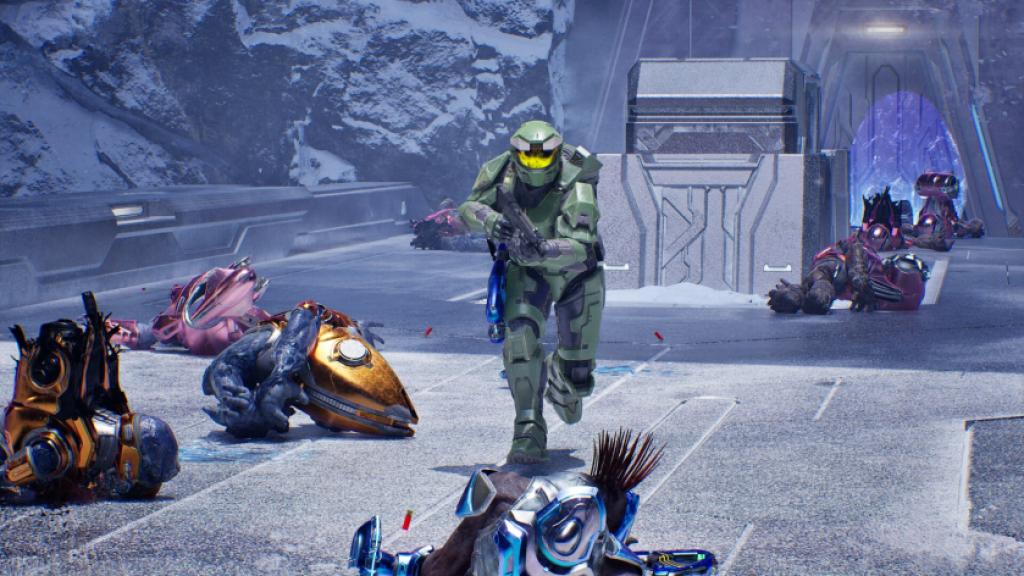
Replayability is further enhanced through the inclusion of Skulls, a beloved feature from the original game that allows players to alter gameplay modifiers. In Halo: Campaign Evolved, 28 new Skulls have been added, offering a vast array of options to either increase or decrease the challenge, or simply to experiment with unique gameplay scenarios. A particularly noteworthy addition is a Skull that enables a third-person perspective, offering a novel way to experience the campaign and potentially justify the $50 launch price for those seeking extensive replay value.
It is important to note that Xbox has been transparent about the scope of Halo: Campaign Evolved, explicitly stating that it focuses solely on the campaign and does not include any form of competitive multiplayer. While the inclusion of four-player co-op with crossplay is a significant draw, the absence of the classic multiplayer experience, a cornerstone of the Halo franchise’s enduring appeal, will undoubtedly be a point of contention for many long-time fans. For a generation of players, Halo was synonymous with intense multiplayer showdowns, flag captures, and strategic power weapon control. While these elements remain accessible through the Master Chief Collection on other platforms, their omission from this dedicated campaign remake, particularly for players on platforms like the PlayStation, represents a significant void for those who associate the franchise’s legendary status with its competitive multiplayer.
Operation: Meteorite – A Prequel Expansion
A significant differentiator between Halo: Campaign Evolved and its predecessor is the inclusion of "Operation: Meteorite," a series of three new missions that serve as a prequel to the main campaign, taking place approximately one year prior to the events of Combat Evolved. These missions star Master Chief and Sergeant Major Avery Johnson, offering a compelling narrative expansion and a welcome prologue.
The Operation: Meteorite missions are a resounding success, delivering the signature Halo blend of cheesy military dialogue, intense enemy ambushes, and bombastic combat. While the setting – a Covenant agriculture ship – offers a mix of mundane alien corridors and unexpectedly beautiful open vistas, the narrative effectively highlights the prowess of ancillary UNSC Marines while setting the stage for the impending conflict.
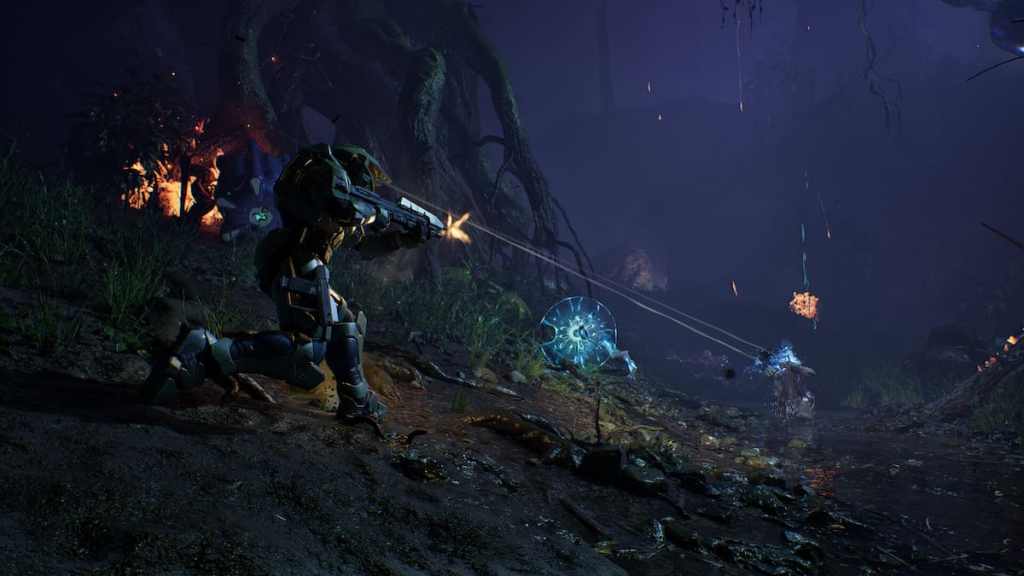
The undeniable highlight of Operation: Meteorite is a climactic space dogfighting mission set within a Covenant Seraph fighter. This sequence offers a tantalizing glimpse into the potential of future Halo titles and remakes, as vehicle combat of this caliber has been notably underutilized in the franchise. The mission, which expertly blends hectic infantry combat with exhilarating aerial maneuvers, stands out as a personal favorite and provides a strong indication of where the series could innovate in the future.
While the Operation: Meteorite missions do not introduce revolutionary lore that fundamentally alters the Halo universe, they are a valuable addition for both newcomers and long-time veterans. They provide a compelling narrative bridge and a showcase for ambitious gameplay design, reinforcing the hope that future installments will further explore these promising avenues.
The Broader Impact and Future Implications
The release of Halo: Campaign Evolved arrives at a significant juncture for the franchise. With the original Halo: Combat Evolved celebrating its 25th anniversary, this remake serves as both a commemoration and a strategic re-engagement with the series’ foundational elements. The successful implementation of Unreal Engine 5 for such a comprehensive remake suggests a robust technological foundation for future projects within the Halo universe.
The decision to focus solely on the campaign, while understandable from a development perspective and clearly communicated to consumers, raises questions about the future monetization and content strategy for the Halo franchise. The absence of multiplayer, a key driver of player retention and community engagement for decades, may necessitate a re-evaluation of how Halo content is packaged and delivered moving forward.
The critical and commercial reception of Halo: Campaign Evolved will undoubtedly inform subsequent development decisions. If the remake proves to be a success, it could pave the way for similar comprehensive remakes of Halo 2 and Halo 3, offering a complete, modernized trilogy experience for a new generation of players. Furthermore, the innovative gameplay elements introduced, particularly in Operation: Meteorite, could influence the design philosophy of future original Halo titles, potentially reintroducing and expanding upon underutilized mechanics. The $50 price point, while standard for modern AAA remakes, will also be a key metric in assessing player value and satisfaction. Ultimately, Halo: Campaign Evolved stands as a testament to the enduring power of the original Halo and a promising, albeit incomplete, step towards revitalizing the franchise for the modern era.