


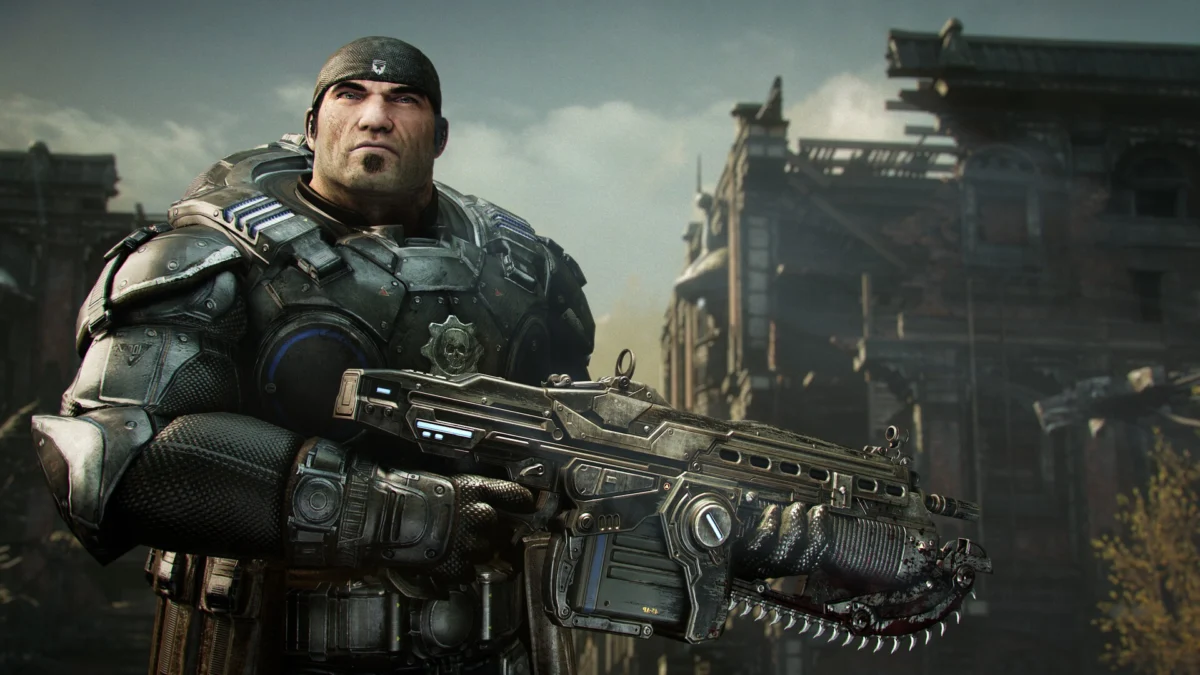
One year has passed since the release of Gears of War: Reloaded, a title that marked a significant turning point for both the franchise and Microsoft’s broader gaming strategy. Launched in August 2025, the game arrived during a period of transition for the industry, serving as both a technical showcase for the Xbox Series X|S and a historic debut for the storied franchise on the PlayStation 5. As the gaming community looks toward the upcoming release of Gears of War: E-Day in late 2026, the anniversary of Reloaded provides an opportunity to analyze its lasting impact on the market, its reception among long-term fans, and its role in sustaining the Gears of War legacy during a period of platform expansion.
Gears of War: Reloaded was initially met with a degree of skepticism when it was first announced. Many industry analysts and fans questioned the necessity of another revisit to the 2006 original, especially given the existence of 2015’s Gears of War: Ultimate Edition. However, the 2025 release was positioned not merely as a graphical update, but as a strategic bridge designed to unify the player base across different hardware ecosystems. By bringing the foundation of the Gears of War lore to the PlayStation 5, Microsoft sought to cultivate a new audience while providing existing fans on Xbox and PC with a modernized, high-performance version of the game that defined the cover-shooter genre.
A Strategic Pivot in Platform Availability
The most notable aspect of the Gears of War: Reloaded launch was its status as the first entry in the series to be released on a non-Microsoft console. This move was part of a wider industry trend toward multi-platform accessibility for legacy titles. By launching on the PlayStation 5, Reloaded successfully introduced the world of Sera, the COG (Coalition of Ordered Governments), and the Locust Horde to millions of players who had previously been isolated from the franchise.
From a business perspective, the decision proved fruitful. Internal data and market reports from late 2025 indicated that the PlayStation 5 version of Reloaded saw significant engagement, particularly in European and Asian markets where Xbox hardware penetration has historically been lower. This influx of new players revitalized the multiplayer ecosystem, ensuring that matchmaking times remained low and that the competitive scene saw a surge in participation. For Xbox, the release served as a "Trojan horse" of sorts, showcasing the quality of their first-party IP to a rival audience while maintaining the definitive experience on their own hardware through Game Pass integration.
Technical Innovations and Quality-of-Life Improvements
While the core gameplay of Reloaded remained faithful to the 18-year-old original, the technical enhancements were substantial enough to garner critical acclaim. Critics, including those at Pure Xbox, awarded the game high marks, often citing a 9/10 rating. The consensus was that while the experience was "basic" compared to the sprawling narratives and complex mechanics of Gears 5, the purity of the original design shone through when paired with modern technology.

Technical specifications for Reloaded included a full transition to the latest iteration of Unreal Engine, providing 4K resolution at a stable 60 frames per second on consoles, with a dedicated 120Hz mode for competitive multiplayer. Lighting and shadow effects were completely overhauled, utilizing ray-tracing to enhance the "destroyed beauty" aesthetic that series creator Epic Games originally championed. Furthermore, quality-of-life improvements such as modernized matchmaking, cross-play between Xbox, PlayStation, and PC, and an updated ranking system addressed long-standing grievances with previous versions of the game.
The Chronology of the Gears of War Franchise
To understand the placement of Reloaded, one must look at the timeline of the franchise’s development over the last two decades:
- November 2006: Gears of War launches on Xbox 360, revolutionizing the third-person shooter genre.
- August 2015: Gears of War: Ultimate Edition is released for Xbox One, offering the first major remaster of the original title.
- September 2019: Gears of War 5 (Gears 5) launches, expanding the lore and introducing more open-ended gameplay elements.
- August 2025: Gears of War: Reloaded launches on Xbox Series X|S, PC, and PlayStation 5, aiming to modernize the original for a multi-platform era.
- Late 2026 (Scheduled): Gears of War: E-Day is set to release, serving as a prequel that explores the immediate aftermath of Emergence Day.
This timeline illustrates a clear strategy by The Coalition and Xbox Game Studios to keep the franchise’s roots relevant while preparing the ground for major new narrative entries. Reloaded acted as a refresher course for the lore, ensuring that the emotional weight of E-Day would be felt by both veterans and newcomers alike.
Market Reception and Community Sentiment
A year after its release, the community’s sentiment toward Reloaded remains generally positive, though some observers note that its "staying power" on Xbox and PC may have been hampered by its familiarity. For many Xbox veterans, Reloaded was the third time they had been invited to purchase or play the same campaign. While the "Excellent" reviews highlighted the polish of the package, the lack of new campaign content or significant mechanical shifts meant that the initial hype cooled faster than it might have for a brand-new entry.
Conversely, the multiplayer component has demonstrated remarkable longevity. The "Gears 1" style of play—characterized by its slower pace, emphasis on the Gnasher shotgun, and tactical movement—remains a favorite for purists. By integrating PlayStation 5 players into this ecosystem, Microsoft effectively doubled the potential player pool for these classic maps. Data from the first half of 2026 suggests that the daily active user (DAU) count for Reloaded has remained higher than that of the Ultimate Edition during its corresponding lifecycle, largely due to the cross-platform nature of the release.
Official Responses and Developer Perspective
In the months following the launch, representatives from The Coalition emphasized that Reloaded was never intended to replace the forward-looking trajectory of the series. Instead, it was described as a "tribute to the foundation" and a necessary step in the franchise’s evolution. Speaking at a developer roundtable in early 2026, studio leads noted that the feedback gathered from Reloaded—particularly regarding player movement and weapon balance—was being directly funneled into the development of Gears of War: E-Day.

The developer’s focus on "quality-of-life improvements to online play" was a recurring theme in their post-launch support. Regular patches throughout late 2025 and early 2026 refined the netcode and addressed "wall-bouncing" exploits that had plagued previous iterations. This commitment to the competitive integrity of the game has helped maintain a dedicated, albeit niche, professional circuit for the title.
Broader Impact on the Gaming Industry
The legacy of Gears of War: Reloaded extends beyond the confines of the franchise itself. It stands as a case study for the "platform-agnostic" future that many industry leaders are now predicting. By successfully porting one of its most "sacred" IPs to a competitor’s hardware, Microsoft signaled a shift in priority from hardware sales to software ecosystem growth.
The success of Reloaded has likely paved the way for other legacy Xbox franchises to make similar jumps. It proved that a well-executed remaster of a classic title can serve as a potent marketing tool for upcoming sequels. As players on all platforms finish their first year with Reloaded, the narrative groundwork has been laid for E-Day. The prequel is now positioned to be one of the biggest multi-platform launches of 2026, thanks in no small part to the "onboarding" process facilitated by Reloaded.
Conclusion: A Worthwhile Endeavor
As we look back at the August 2025 release, it is clear that Gears of War: Reloaded was more than a simple cash-in on nostalgia. It was a calculated move to broaden the franchise’s reach and modernize its most iconic moments for a new generation of hardware. While the "minimal changes" compared to the Ultimate Edition may have limited its novelty for some long-time Xbox users, the technical polish and the expansion of the player base have ensured its status as a successful entry in the series.
With Gears of War: E-Day on the horizon, Reloaded remains the definitive way to experience the beginning of the Marcus Fenix saga. Whether it maintains its current level of engagement once the new prequel arrives remains to be seen, but for the past twelve months, it has successfully kept the "chainsaw bayonets" revving in the hearts of gamers across the globe. The poll currently circulating among the community will likely reflect this duality: a game that is perhaps overly familiar to some, yet undeniably essential to the continued health of the Gears of War brand.